


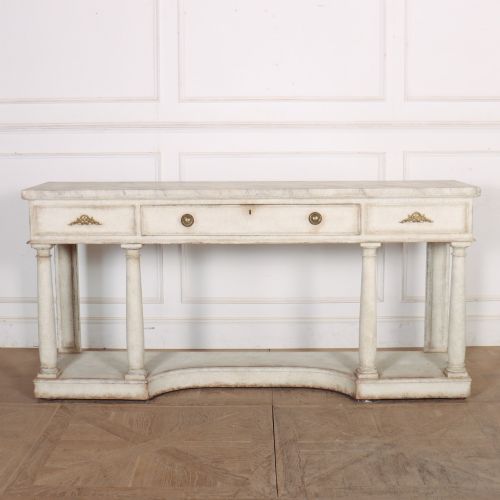
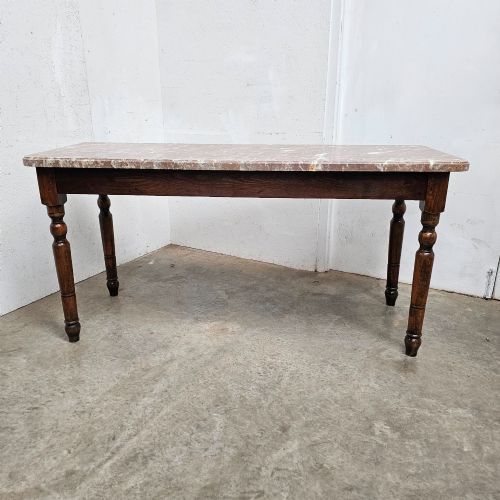
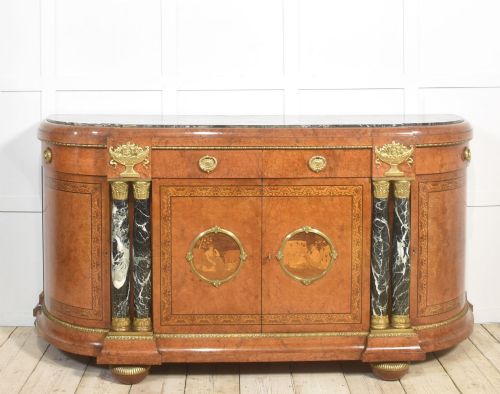
Antique Marble Top Server
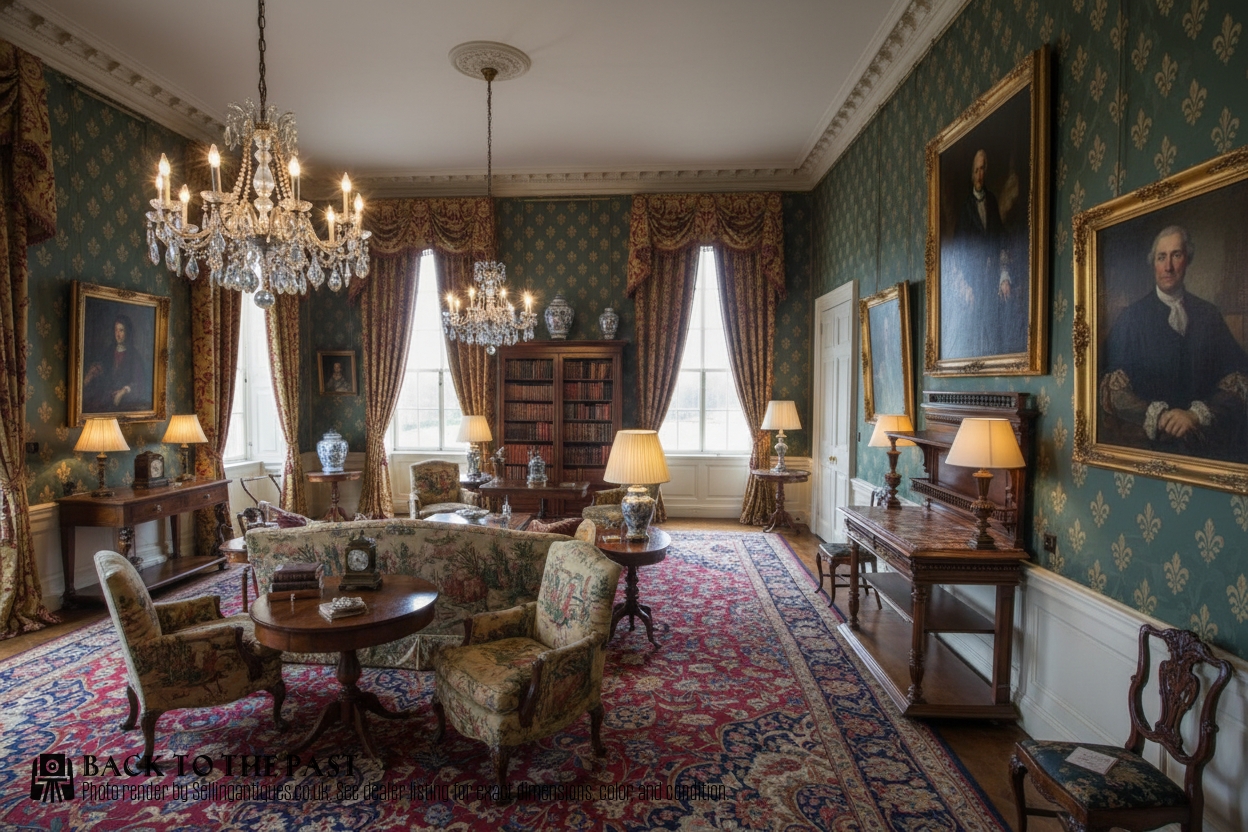
An antique marble top server brings solid timber and cool stone together to anchor a room.
Antique Marble Top Server
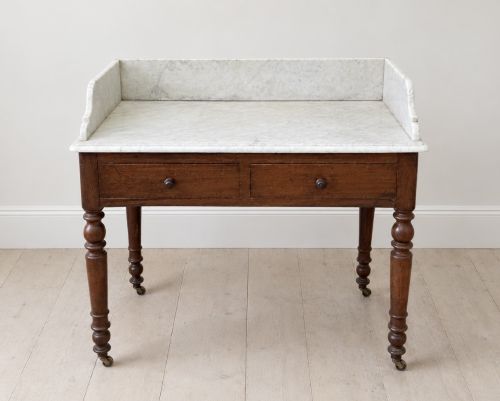
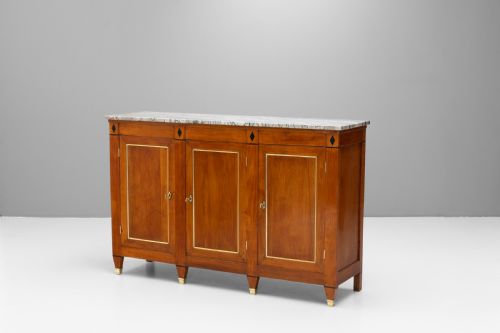
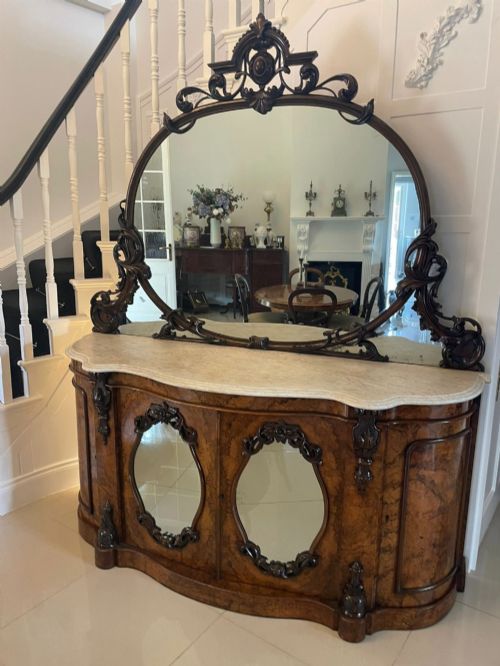
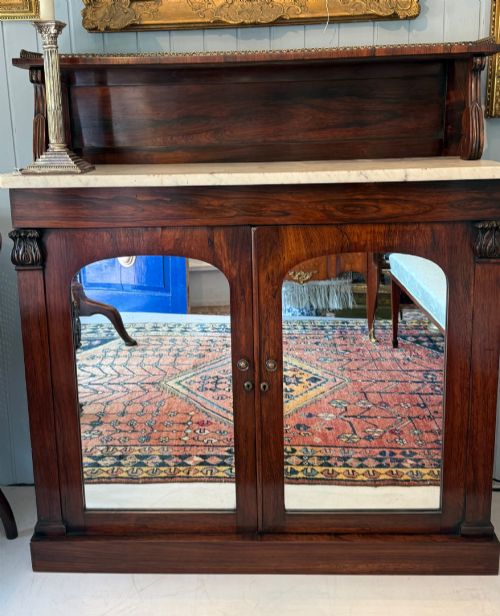
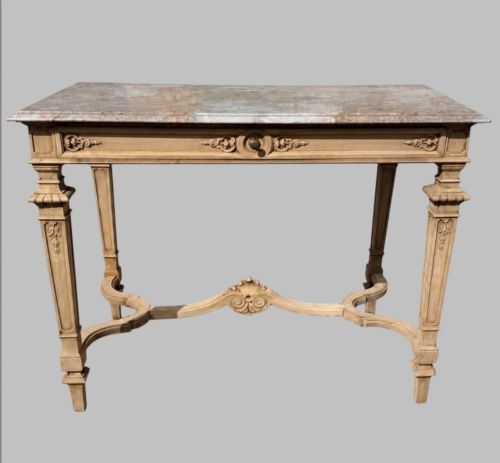
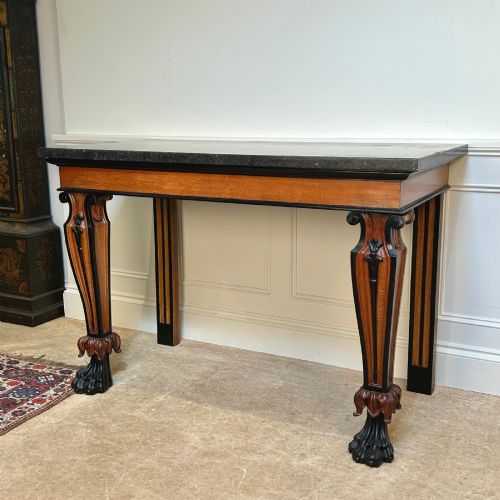
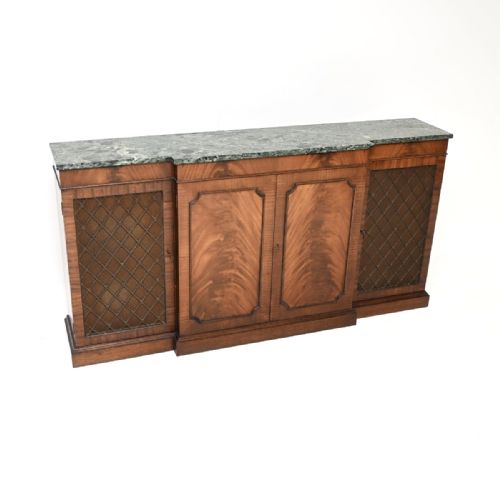
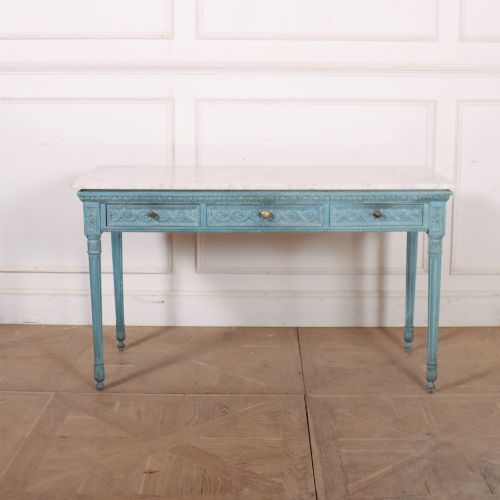
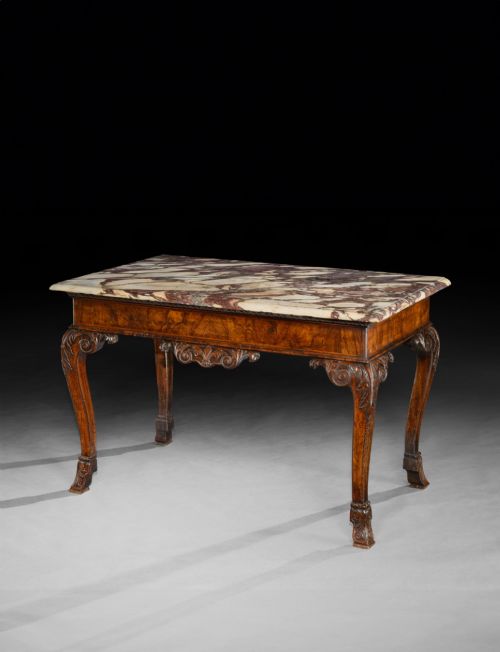
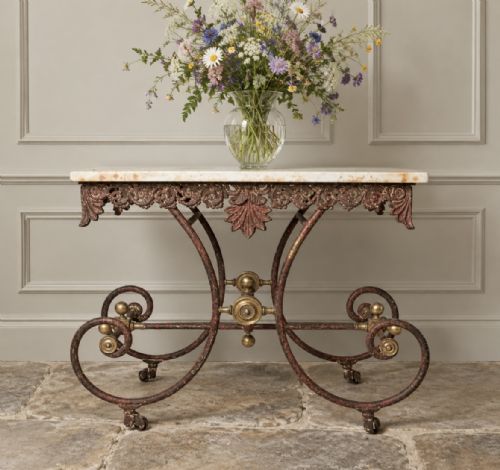
An antique marble top server takes several forms across the periods, appearing most often as a buffet sideboard, side cabinet, or console table. These pieces combine heavy stone tops with sturdy wooden frames built to serve and display.
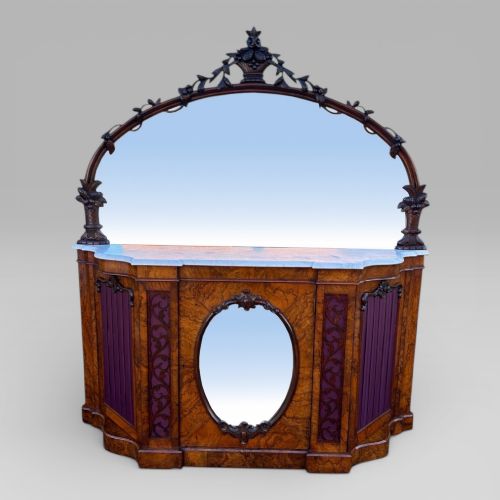
The examples gathered here span centuries from the eighteenth century through the Victorian era and into the early twentieth century. Walnut and oak form the backbone of these pieces, alongside rosewood and burr walnut.
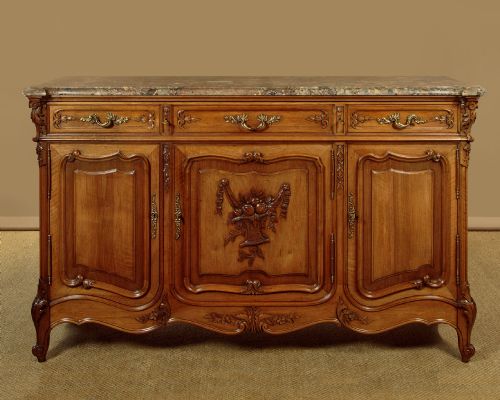
French regional styles dominate the selection, bringing Louis XV, French Rococo, and French Provincial design to the form alongside William IV and Victorian British pieces. Console tables and serving tables sit alongside larger sideboards and cupboards.
How they were made
Carpenters shaped these servers using traditional hardwoods including walnut, oak, and rosewood, often pairing them with decorative burr walnut veneers. Carved details adorn the timber frames of the earlier and revival pieces.
Heavy marble slabs form the distinctive tops, fitted to rest upon the timber bases. Brass and ormolu mounts add metallic contrast to the woodwork, while glass occasionally appears in associated cabinet doors.
Antique Marble Top Server Retail Price Guide 2026
Typical asking prices for marble top server among the pieces listed under this phrase on Sellingantiques today, from the lower quarter to the upper quarter. They describe what is for sale here now, not the wider market.
The materials recorded in these listings include marble, walnut, brass, burr walnut, ormolu, oak, rosewood, and glass.
What varies in quality
The depth of hand-carved ornamentation across the timber frame separates standard production from finer work. Rich figuring in the walnut or burr walnut veneers adds visual weight to the better examples.
The selection and thickness of the marble top dictate the physical presence of the server. Fine mounts in ormolu or cast brass elevate the decorative ambition of the piece.

The Antique Marble Top Server Glossary
- Console table
- A wall-mounted or freestanding table designed to stand against a wall, frequently topped with marble in these examples. They offer narrow display space rather than deep storage.
- Ormolu
- Gilded bronze mounts applied to furniture for decorative effect. It catches the light against dark woods like rosewood and walnut.
- Burr walnut
- Timber taken from a growth on the walnut tree, showing twisted, intricate grain patterns. It is sliced into veneers for cabinets and sideboards.
- Buffet sideboard
- A heavy storage piece used for serving food and holding dining wares. The marble top provides a durable surface for practical use.
Antique Marble Top Server: Frequently Asked Questions
What is an antique marble top server used for?
These pieces function as serving surfaces and display units in dining rooms and hallways. The stone top provides a durable area for resting dishes or decorative objects.
The wooden base below supplies storage through cupboards and drawers depending on whether the piece is a sideboard, buffet, or console table.
How do I care for a marble top?
Marble requires gentle cleaning with damp cloths and mild soap rather than acidic cleaners. The stone is porous and benefits from periodic sealing to prevent staining.
Wooden bases should be dusted regularly and kept away from direct heat sources to protect the polish and prevent timber movement.
How do I date an antique server?
Dating relies on stylistic clues, construction methods, and the choice of timber. Pieces from the eighteenth century show deep hand-carving in oak, while Victorian and later nineteenth-century examples often feature rosewood or walnut.
Revival styles from the early twentieth century frequently borrow motifs from Louis XV and French Rococo designs.
Where do these servers originate?
Many pieces in this selection trace their design lineage to France, encompassing French Provincial, Louis XV, and Rococo revival traditions. British cabinetmaking is also represented through William IV and Victorian pieces.
Regional workshops across Europe adapted these formal styles for domestic dining spaces.