



Green Ceramic Jug
A green ceramic jug brings tactile warmth to a room, combining earthy glazes and domestic utility across centuries of production.
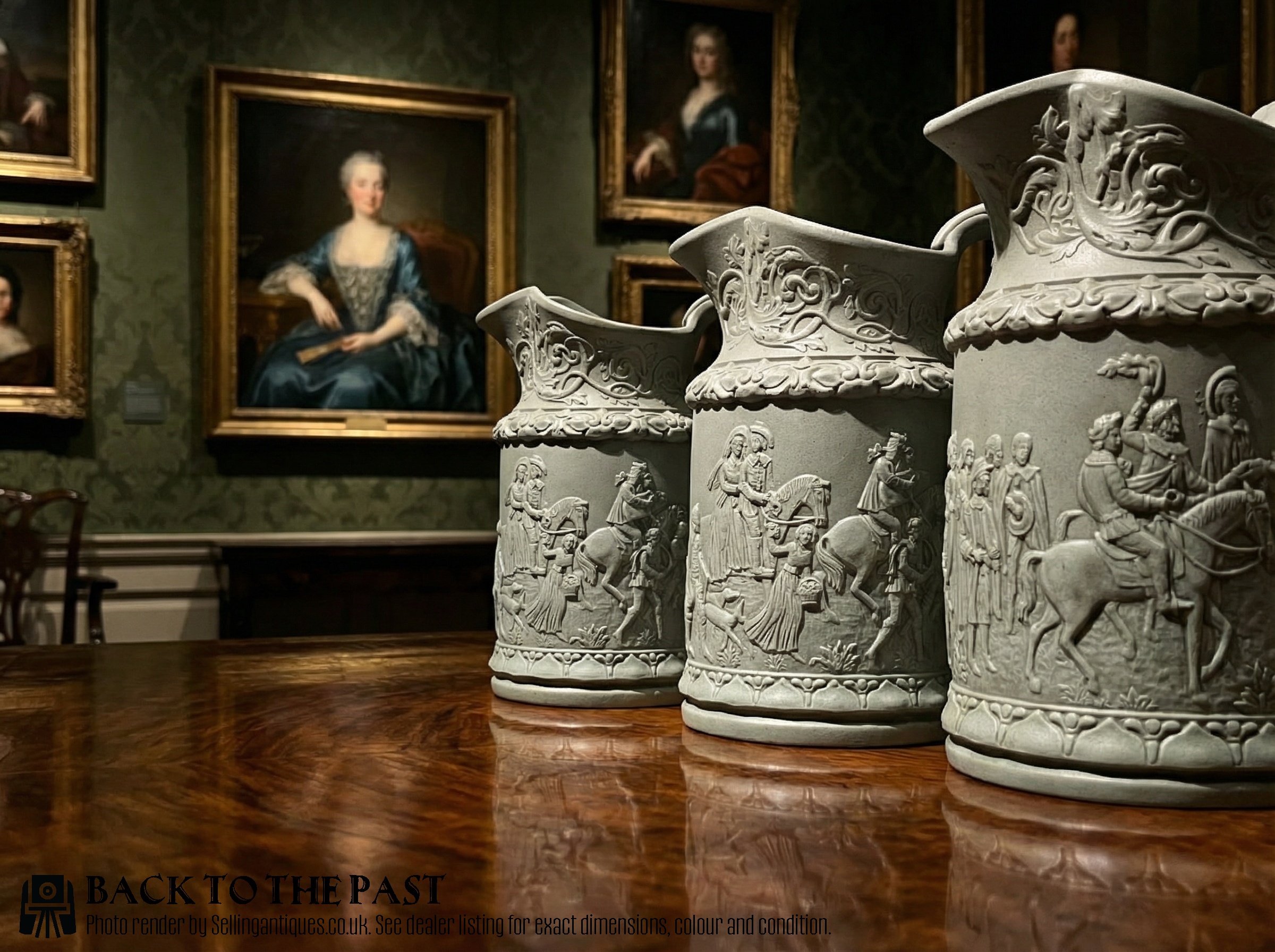
Green Ceramic Jug
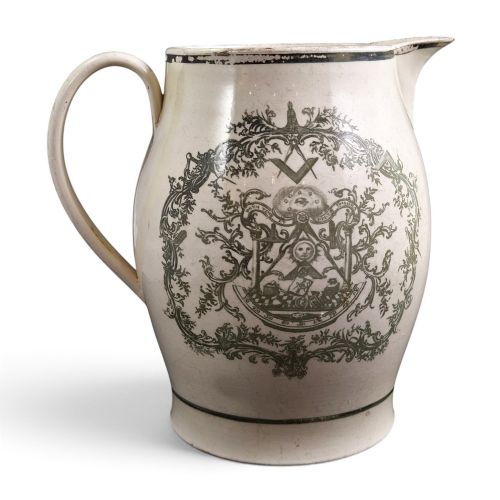
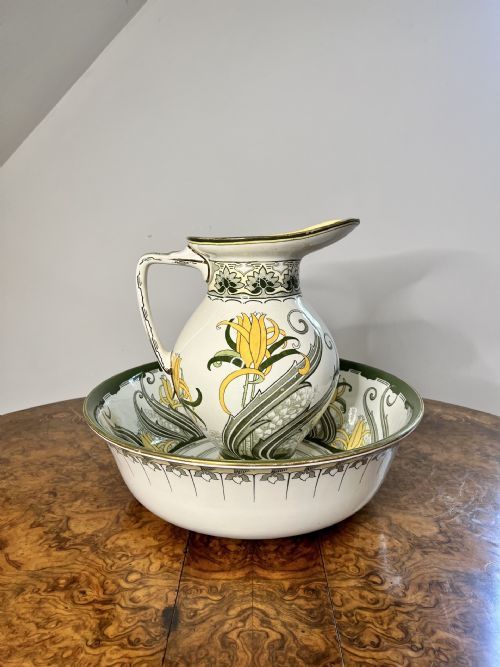
When you search for a green ceramic jug, you encounter a diverse selection of utilitarian vessels, decorative ewers, and tea service pieces spanning multiple centuries. The objects range from early creamware and pearlware examples to Victorian majolica, Edwardian toilet sets, and studio pottery.
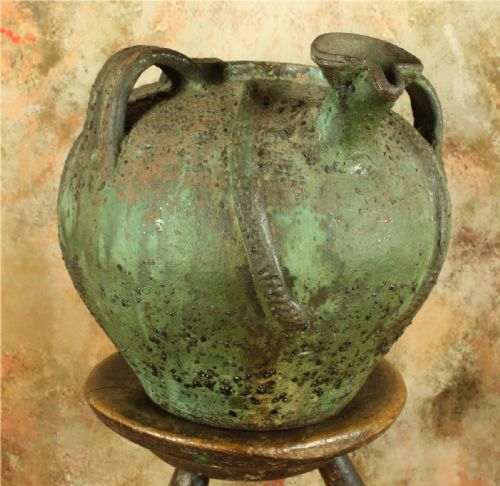
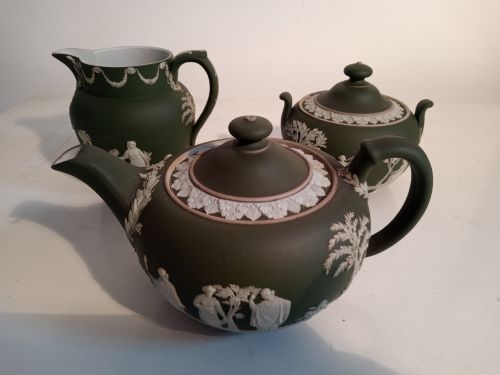
You are most likely to meet pieces finished in olive, sage, or light green glazes, originating from English potteries like Doulton Lambeth, Wedgwood, and Staffordshire, alongside continental European workshops. Forms vary from simple milk and cream jugs to large multi-handled oil pots and elaborate art pottery ewers.
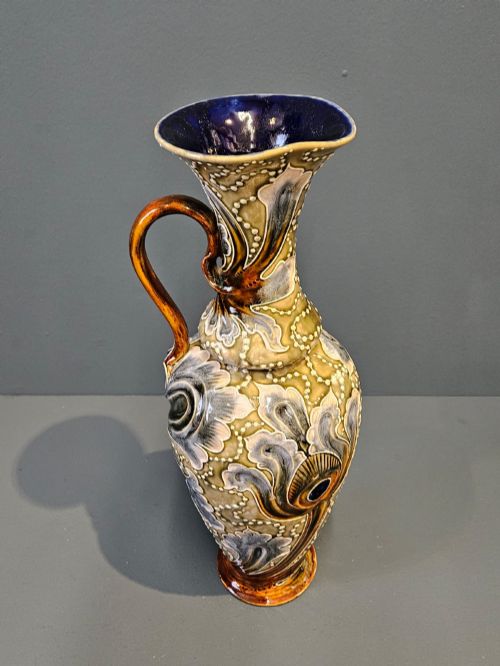
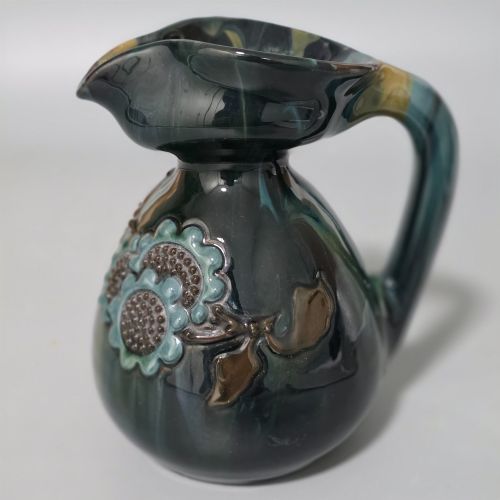
The category encompasses both humble domestic items and highly ornamental studio creations by makers such as Sir Edmund Elton. These vessels demonstrate how potters utilised different shades of green to accentuate relief decoration, slip casting, and hand-painted motifs.
Materials and Techniques
Potters constructed these vessels using earthenware, stoneware, and porcelain bodies, shaping them on the wheel or forming them in moulds. Ironstone, creamware, and pearlware provided durable foundations for domestic tableware and figural creamers.
Glazing defined the surface finish, with lead and tin glazes producing glossy green depths, whilst majolica techniques added colourful enamel highlights over moulded reliefs. Artisans occasionally applied gold leaf details or hand-painted botanical and figurative scenes onto the fired ceramic body.
Cows appear frequently in early ceramic pouring vessels, serving faithfully as utilitarian creamers with tails acting as handles.
Factors of Quality
Quality rests upon the crispness of the moulded or thrown form and the evenness of the glaze application across complex surfaces. Pieces featuring intricate botanical reliefs, such as majolica bulrushes and lilies, demand precise control during firing to maintain sharp definition in the clay.
The distinction between standard domestic production and top-tier studio or factory output lies in the artistic ambition of the glaze and the individuality of the design. Studio pottery by named makers exhibits experimental slips and organic surface textures that elevate a simple pouring vessel into a sculptural work of art.
Sir Edmund Elton·Doulon Burslem·Doulton Lambeth·Wedgwood·Minton·George Jones·Royal Worcester·Chamberlain Worcester·Mason's·Keith Murray
The Green Ceramic Jug Glossary
- Creamware
- A refined light-coloured earthenware developed in the eighteenth century with a pale yellow or cream tone. It provided a smooth surface suitable for delicate enamelling and green glaze applications.
- Majolica
- A type of earthenware covered with an opaque tin-lead glaze and decorated with brightly coloured metal oxide enamels. Victorian potters utilised this technique to create heavily moulded naturalistic jugs.
- Pearlware
- An eighteenth-century refined earthenware featuring a bluish-white glaze that pooled in recesses to create a pearl-like appearance. It formed the body for early Staffordshire figures and utilitarian creamers.
- Ewer
- A large ornamental jug with a wide spout and curved handle, historically designed for pouring water. Victorian and Art Nouveau examples often functioned purely as decorative display pieces.
- Slip
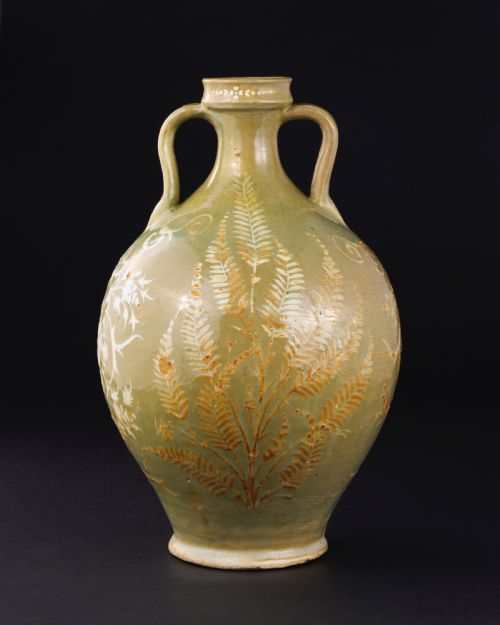
- A liquid mixture of clay and water applied to pottery before firing to smooth the surface or create contrasting decorative patterns. Studio potters used slip to build textured finishes on green ceramic jugs.
Green Ceramic Jug: Frequently Asked Questions
How were green ceramic jugs used?
These vessels served diverse domestic and decorative functions, from pouring cream at the tea table to supplying water for washstand bowl sets. Large multi-handled examples held household liquids such as oil.
Finer decorative ewers and art pottery pieces occupied prominent positions on sideboard displays rather than fulfilling practical daily kitchen duties.
How do I care for antique jugs?
Wash ceramic pieces gently by hand using lukewarm water and mild soap to protect fragile glazes and historical surfaces. Avoid abrasive scourers or immersion in automated dishwashers.
Display the vessels away from direct sunlight and sudden temperature shifts to prevent crazing in the antique glaze.
What defines Edwardian toilet sets?
Edwardian wash sets comprise a large matching jug and bowl designed for bedroom personal hygiene before indoor plumbing became universal. They frequently display light green, sage, or floral transfer-printed designs.
Collectors often display the matching components together as decorative centerpieces on large tables.