
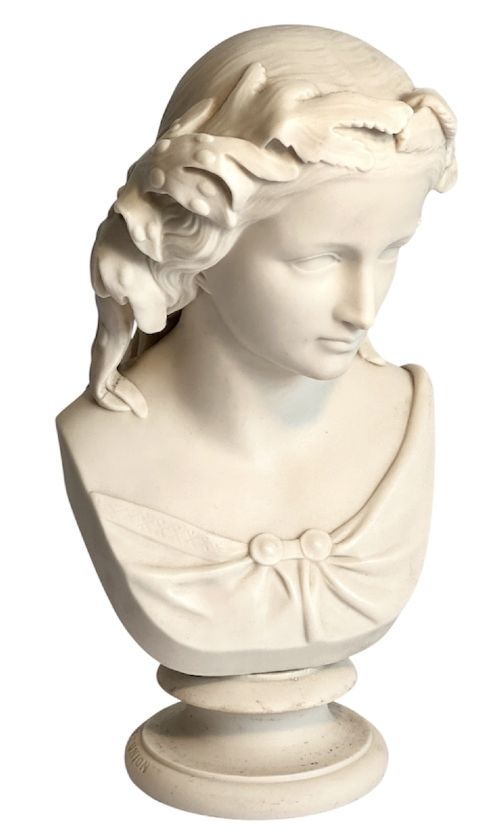


English Parian Ceramic
English parian ceramic pieces are biscuit-finished porcelain figures and vessels offering a classic marble-like texture that appeals to collectors of Victorian sculpture.
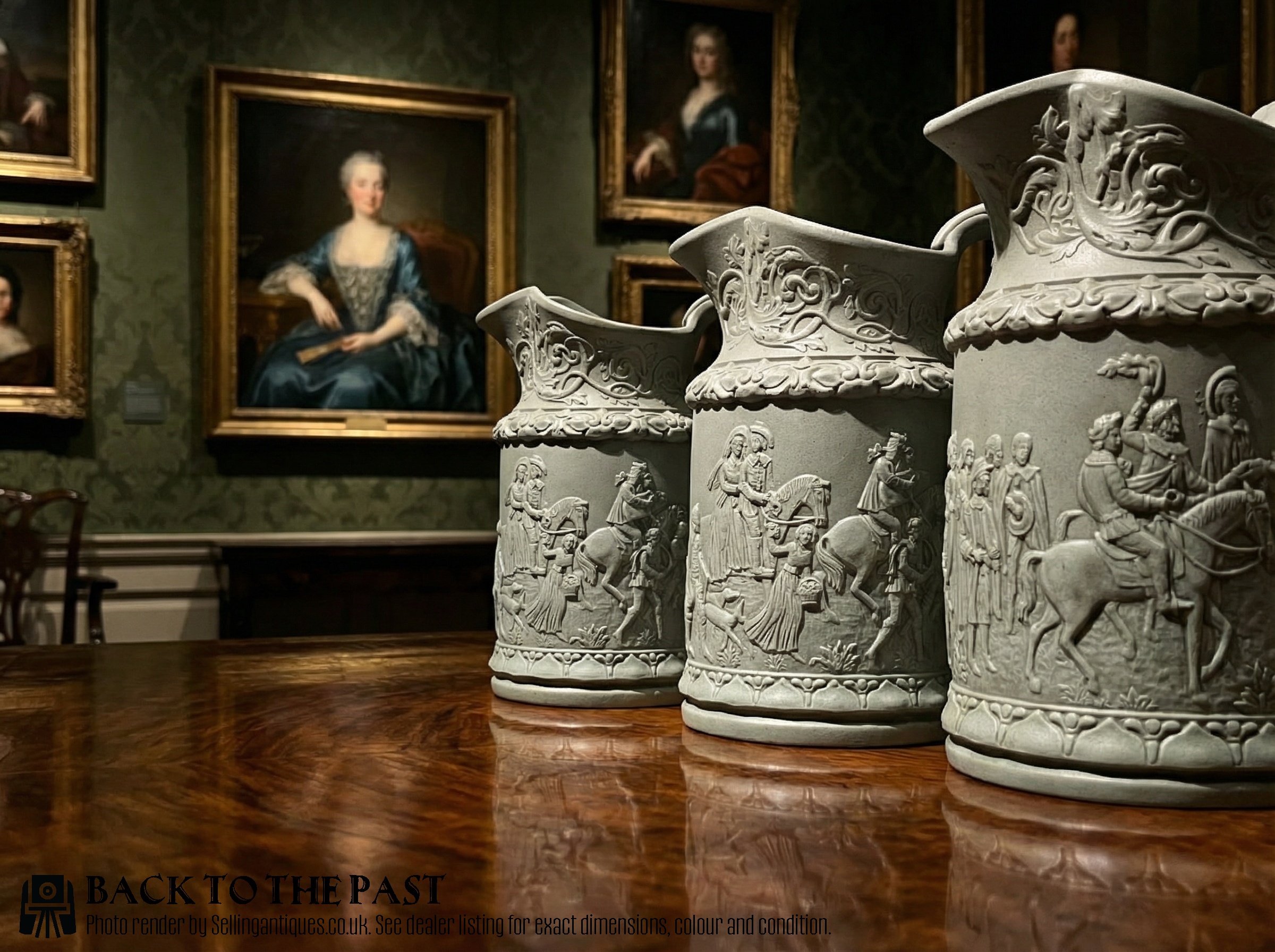
English Parian Ceramic
When you search for English parian ceramic, you encounter mid-to-late Victorian decorative works created to emulate carved marble without the prohibitive cost. These items take the form of busts, jugs and pitchers, centrepieces, and figurative sculptures produced across the nineteenth century.
The most common examples on this page date from the eighteen-fifties to eighteen-seventies, reflecting the height of domestic display for neoclassical subjects and literary figures. Manufacturers shaped these figures and vessels to bring classical dignity into Victorian parlours through unglazed ceramic bodies.
Makers utilised this dense porcelain to capture fine details in drapery and facial expressions that rival traditional stone carving. Collectors select these pieces for their matte finish and sculptural depth.
How They Were Made
Potters cast parian porcelain in multiple-piece plaster moulds using a carefully proportioned slip that matured at a lower temperature than standard porcelain. This composition produced a self-glazing, fine-grained biscuit body with a tactile quality similar to Carrara marble.
Certain vessels and figures incorporate coloured parian bodies, enamel accents, or gilding to highlight specific decorative elements such as clothing and foliage. Careful firing ensured the delicate limbs of figures and the slender handles of jugs retained their form without distortion.
Materials recorded across the inventory include parian porcelain, bisque porcelain, enamel, and gold leaf applied to nineteenth-century works.
What Varies in Quality
The sophistication of the subject matter and the presence of coloured clays or delicate enamelling elevate certain figures and jugs above standard plain white forms. Finer examples maintain an even, smooth texture without surface blemishes or distortion from the kiln.
Copeland·Royal Worcester·Kerr & Binns·Ridgway
The English Parian Ceramic Glossary
- Parian ware
- A fine-grained, unglazed porcelain developed in England to imitate carved marble. It matures at a lower heat to create a smooth, matte finish suitable for detailed sculptural casting.
- Bisque porcelain
- Unglazed ceramic fired once to create a porous, matte surface. This material absorbs light softly, making it ideal for neoclassical figures and portrait busts.
- Centrepiece
- A large decorative object placed in the middle of a dining table or sideboard. These items often feature figural groups or naturalistic motifs.
- Neoclassical
- A style drawing inspiration from classical antiquity. It emphasises proportion, restraint, and subjects from Greek and Roman mythology or history.
English Parian Ceramic: Frequently Asked Questions
What is parian ceramic?
Parian ceramic is a type of unglazed porcelain developed during the nineteenth century to imitate white marble. It was widely used in England for portrait busts, literary figures, and decorative jugs.
The material takes its name from Paros, a Greek island renowned for its fine white marble. Manufacturers achieved this texture by adjusting the proportion of feldspar in the porcelain body.
How do I clean parian ware?
Cleaning unglazed parian porcelain requires gentle methods because the porous surface absorbs dirt and moisture easily. A soft brush or dry sponge removes dust without harming the fine details.
Water and harsh detergents should be avoided unless necessary, as they can penetrate the unglazed body and leave permanent stains. Professional advice is recommended for heavily soiled or stained pieces.
Were these pieces used daily?
Most parian items served as decorative ornaments for Victorian mantelpieces, drawing rooms, and sideboards rather than for daily utility. Portrait busts and sculptural groups were displayed to demonstrate cultural literacy and refined taste.
Parian jugs and centrepieces occasionally saw service on dining tables during formal meals, but their delicate biscuit surfaces meant owners handled them with care.
How do I date these ceramics?
Dating English parian ceramics relies on manufacturer marks, registration diamonds, and stylistic markers associated with the Victorian period. Pieces from the eighteen-fifties often display sharper neoclassical influences and crisp mouldings.
Later Victorian examples from the eighteen-seventies and eighteen-hundreds sometimes incorporate coloured parian bodies or elaborate naturalistic subjects like animals and children.