
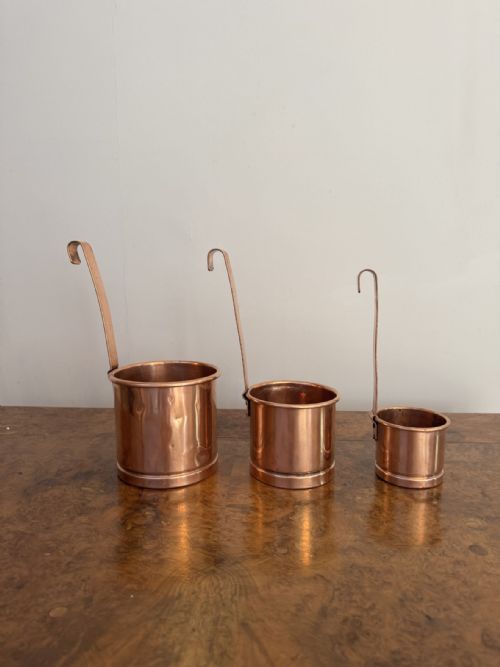


Graduated Jug Set
These graduated jug set pieces arrange multiple vessels by size, offering a practical display of period craftsmanship that collectors prize for utility and form.
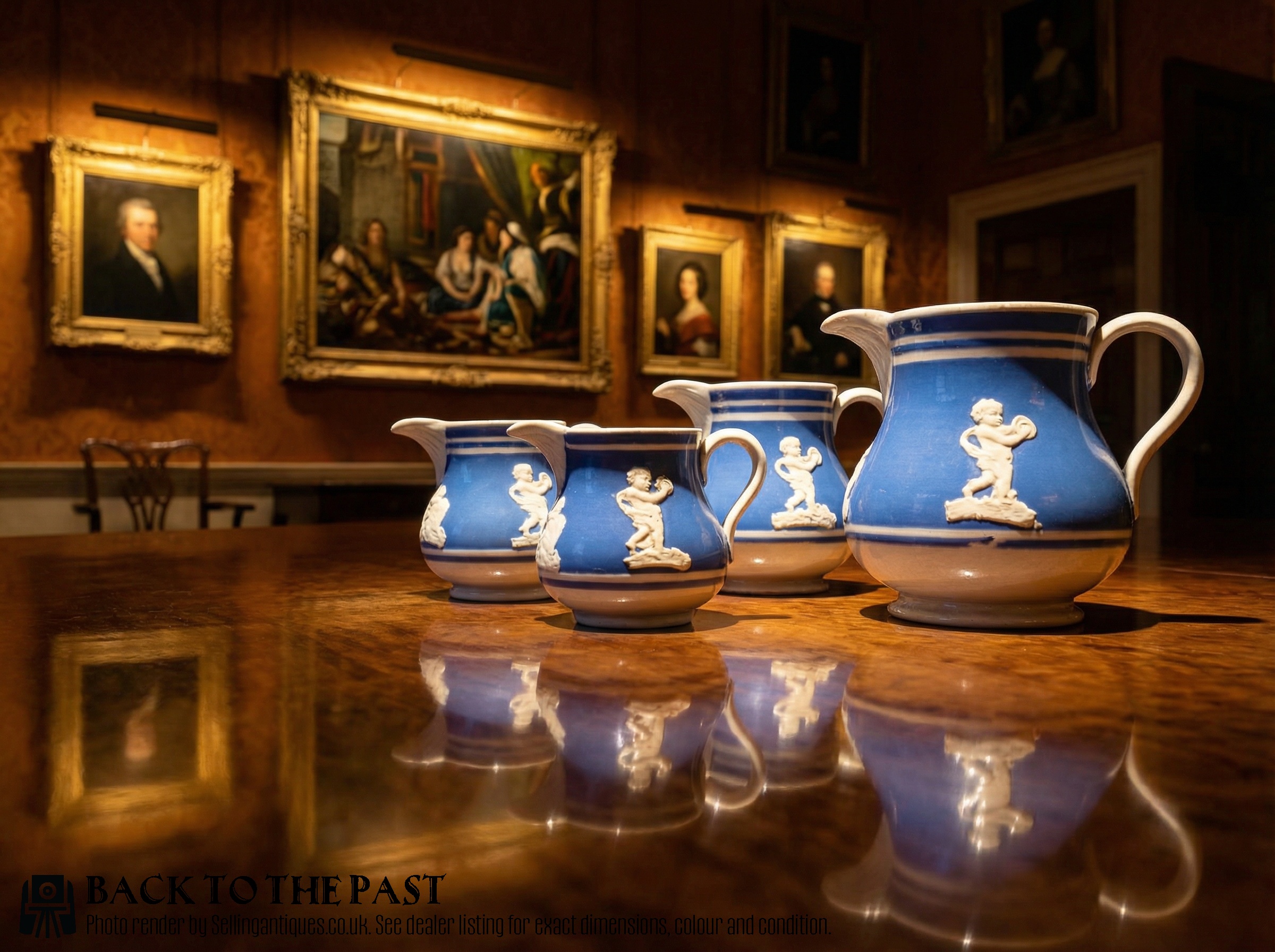
Graduated Jug Set
A graduated jug set brings together multiple vessels designed in proportion, allowing smaller pieces to nest within or sit neatly beside larger counterparts. When you search for a graduated jug set, you encounter matched collections spanning the nineteenth century and earlier Georgian eras.
The materials vary widely across the surviving examples, ranging from utilitarian copper and pewter measures to decorative ironstone, earthenware, and sterling silver. Sets typically comprise between three and seven pieces, created for service, measurement, or display.
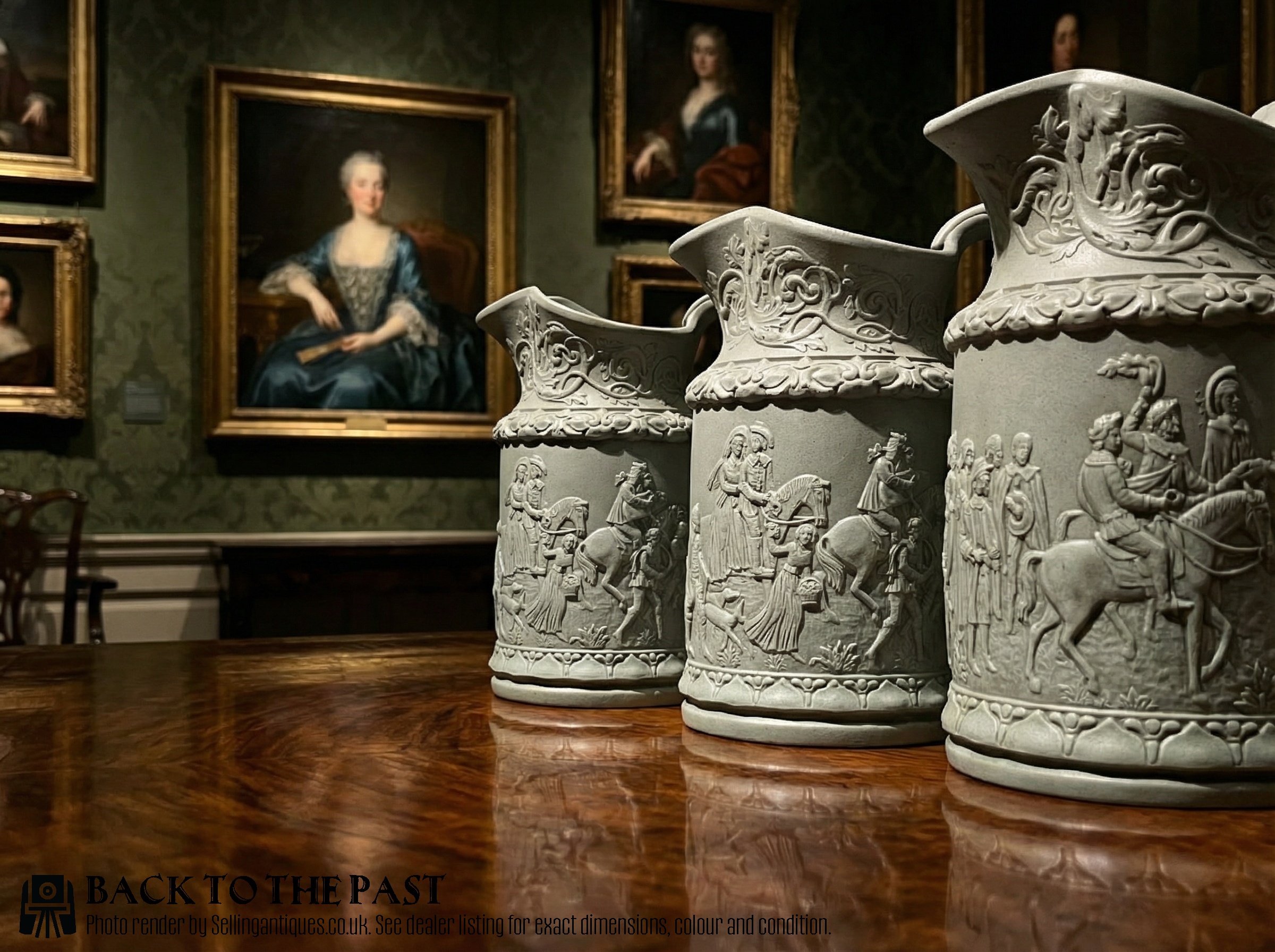
Materials and Making
Metal sets rely on heavy gauge copper, brass, or pewter, shaped through hammering, spinning, or casting. Copper and pewter measures often display soldered seams, reassuring weight, and official verification stamps punched directly into the metal.
Ceramic sets utilise ironstone, earthenware, or parian bodies, shaped in moulds and finished with glazes, transfer printing, or hand-painted enamel colours. Ironstone offers dense durability, while earthenware allows for softer bodies and detailed relief moulded designs.
Listings feature nineteen-century ironstone, copper, and pewter examples, spanning utilitarian tavern measures to decorative Staffordshire ceramics.
Judging Quality
Quality rests upon the completeness of the original grouping and the crispness of the form. A true set maintains uniform design details and consistent wear across every piece, rather than assembled replacements.
In metalwork, thickness of gauge and clarity of touchmarks elevate an example, while ceramics depend on the sharpness of moulded relief and the vibrancy of glaze or transfer application.
Mason's·Davenport·Copeland Spode·Ridgway·Staffordshire·Myott & Sons
The Graduated Jug Set Glossary
- Hydra jug
- A ceramic form featuring a snake-handle, popularised by nineteenth-century potteries. This shape offers a distinctive scroll handle that draws the eye.
- Pewter measure
- A cylindrical or tankard-shaped vessel used for dispensing liquids in taverns and households. These items often bear monarchical verification marks.
- Ironstone
- A dense, durable ceramic perfected in the nineteenth century to imitate porcelain. It provides a sturdy body suitable for everyday domestic service.
- Parian
- A fine white ceramic developed to resemble carved marble. It is prized for unglazed statuary and decorative table wares.
- Copper lustre
- A metallic glaze technique imparting a reflective, iridescent copper sheen to earthenware. This finish creates a warm, shimmering display.
Graduated Jug Set: Frequently Asked Questions
What were graduated jug sets used for?
These sets served both practical and decorative functions in domestic and commercial settings. Many metal examples acted as standard liquid measures in taverns and homes.
Ceramic sets were designed for table service, pouring cream or water, or simply arranged on dresser shelves for display.
How do I care for antique metal jugs?
Metal vessels require gentle dusting and occasional cleaning with appropriate non-abrasive polishes. Avoid harsh chemical cleaners that strip historical patina.
Store them in stable humidity conditions to prevent oxidation and protect any soldered joints from strain.
How can I tell a complete set from a matched one?
Examine the proportions, handle shapes, and decorative motifs carefully across every piece in the grouping. True sets display consistent wear patterns and identical manufacturing traits.
Slight variations in scale or glaze tone often suggest individual vessels brought together at a later date.
Are these jugs safe for daily food use?
Most antique ceramic and metal vessels are best reserved for display or dry storage rather than modern food service. Older metals may contain lead, and historic glazes can be vulnerable to acids.
Appreciate them as historical objects rather than everyday kitchen utensils.