


Victorian Blue White Jugs
Victorian blue white jugs are domestic and decorative vessels combining utility with rich cobalt transfers, offering a tangible link to nineteenth-century daily life.
Victorian Blue White Jugs
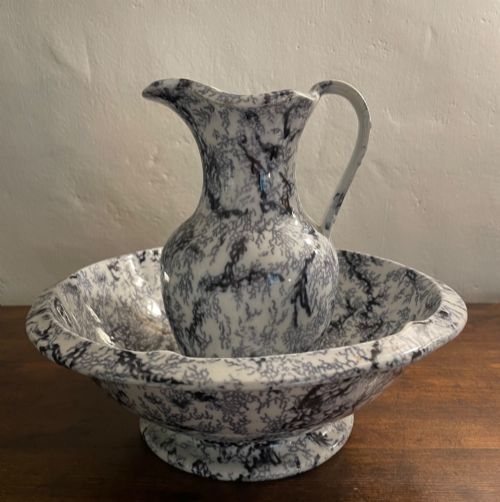
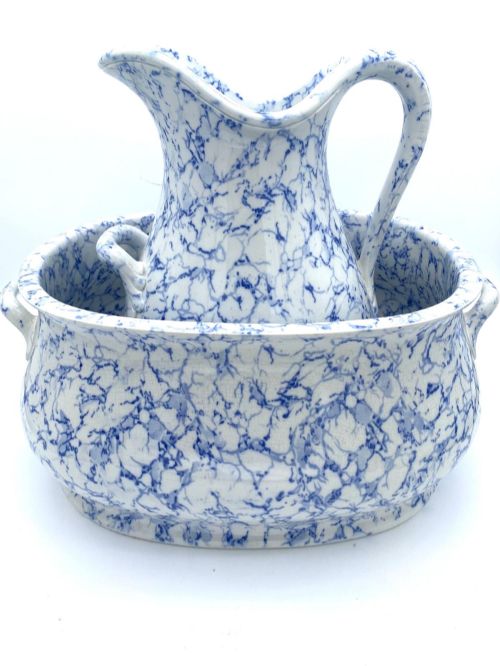
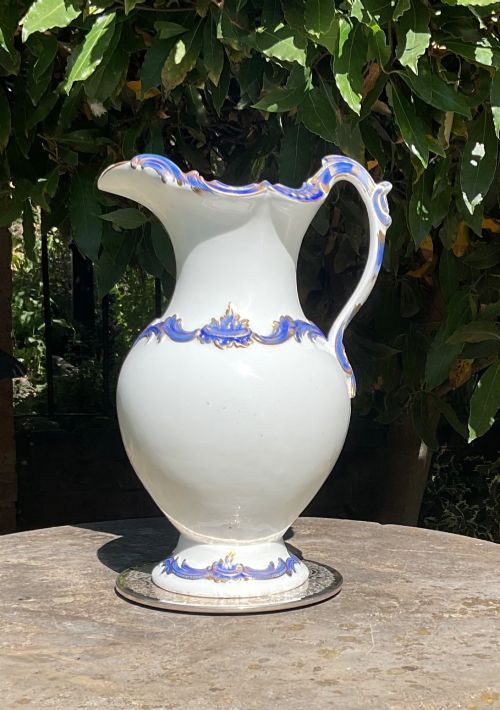
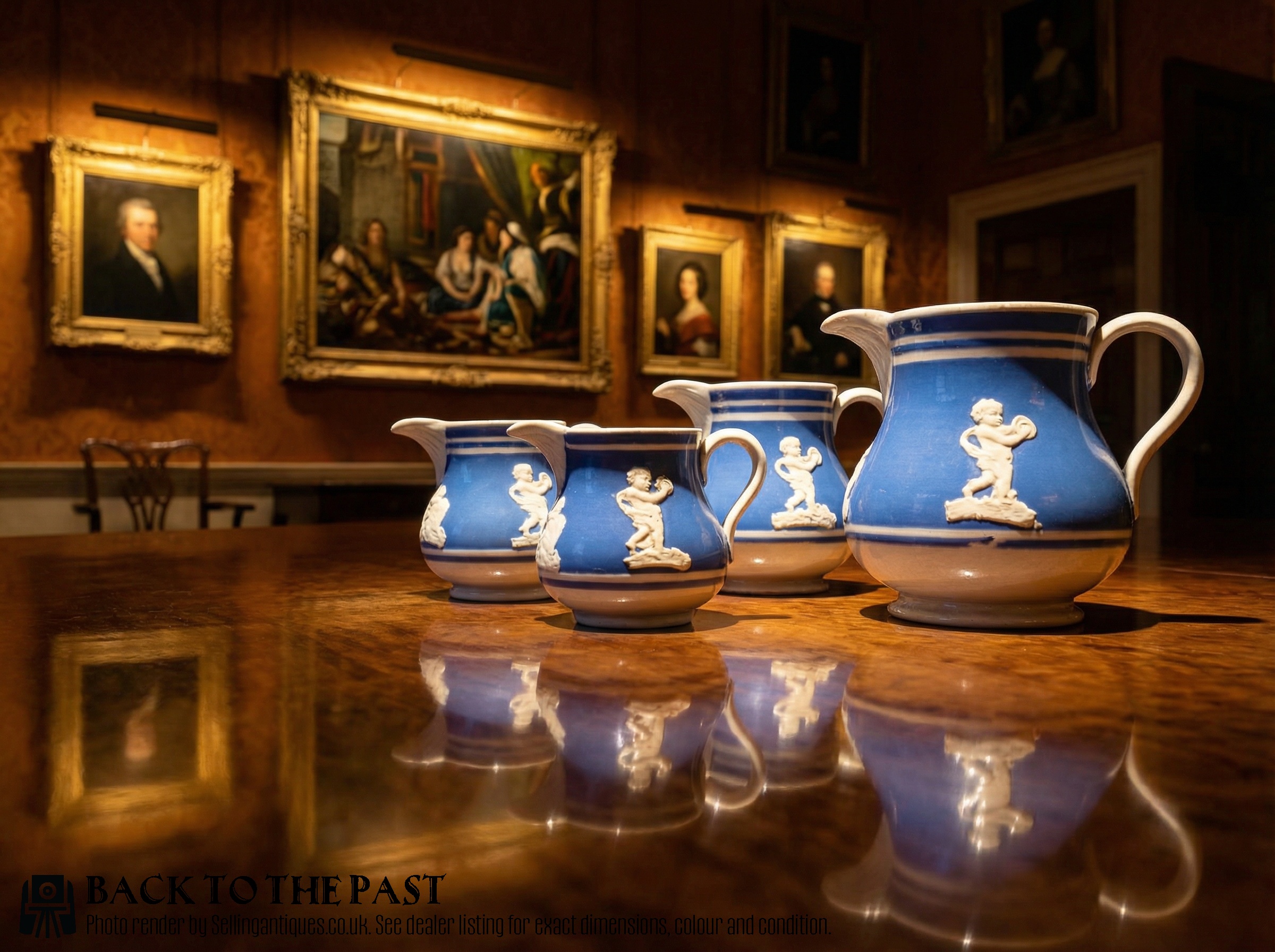
When searching for victorian blue white jugs, you encounter functional earthenware, ironstone and ceramic vessels produced during the nineteenth century. These items encompass large water jugs from washstand sets, footbaths, and graduated sets designed for daily use.
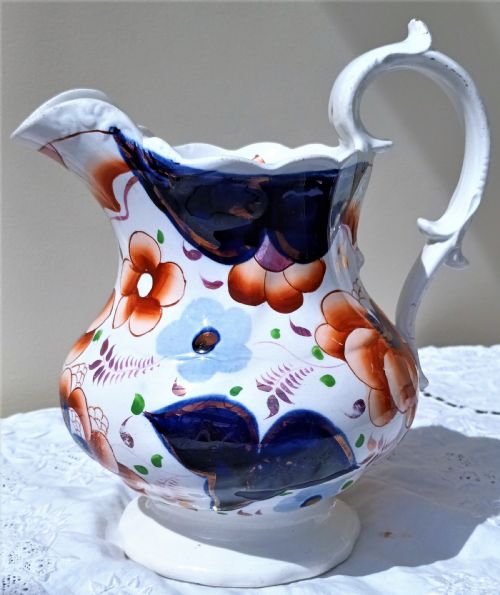
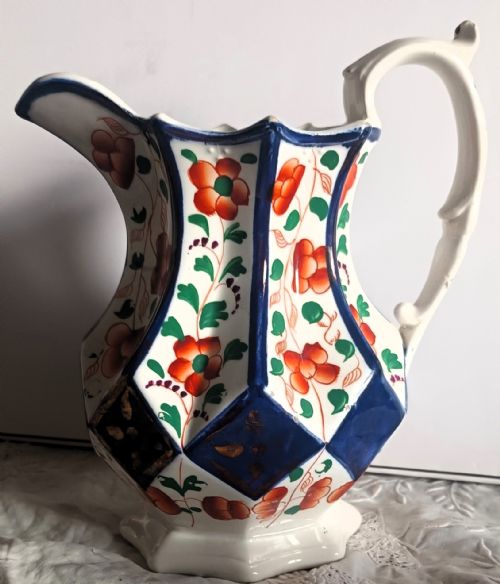
The most common examples on this page date from the mid to late nineteenth century, spanning periods such as 1860, 1880, and 1890. They range from Staffordshire earthenware and Masons ironstone to Doulton Burslem bathroom sets and Gaudy Welsh pottery.
Forms vary from robust pitchers and wash set ewers to specialised items like flow blue jugs, Toby jugs, and Hydra jugs. Stylistic influences include Victorian Chinoiserie, Dutch Delftware, and Arts & Crafts designs.
Materials and technique
Potters utilised earthenware, ironstone, and porcelain as the primary ceramic bodies for shaping these vessels. Glaze and enamel were applied to seal the ceramic and introduce decorative colour before firing.
Transfer printing techniques allowed makers to apply intricate blue and white patterns onto the ceramic surface. Additional details sometimes included gilt highlights or copper lustre accents to enhance the finished piece.
Salesman's sample plaque jugs allowed travelling reps to demonstrate factory patterns without lugging heavy wash sets across the countryside.
Factors of quality
Quality rests in the crispness of the blue and white transfer print and the uniformity of the glaze. Finer pieces display sharp pattern registration without smudging or fading across complex contours.
The weight and refinement of the ceramic body distinguish standard utilitarian earthenware from superior ironstone or porcelain. Well-balanced handles, clean casting lines, and intact matching basins indicate higher workshop standards.
Minton·Doulton Lambeth·Doulton Burslem
The Victorian Blue White Jugs Glossary
- Flow blue
- A type of cobalt blue transferware pottery where the blue colour bleeds slightly into the white glaze during firing. This technique created a soft, hazy effect popular in the nineteenth century.
- Ironstone
- A patented ceramic body invented in the nineteenth century that mimics porcelain while offering greater durability. It served as a sturdy base for heavy domestic jugs and bathroom sets.
- Hydra jug
- A ceramic pitcher featuring a specific moulded handle shape and classical profile. These vessels often appeared in graduated sets during the Victorian period.
- Gaudy Welsh
- A style of colourful pottery decorated with cobalt blue, copper lustre, and enamel highlights. It gained popularity in Welsh and English households for domestic display.
- Parian ware
- A fine white bisque porcelain developed to resemble carved marble. It was utilised for decorative drinks jugs and portrait figures.
Victorian Blue White Jugs: Frequently Asked Questions
How were Victorian washstand jugs used?
These large water jugs stood on bedroom washstands alongside matching basins for morning and evening personal ablutions. Servants filled them with fresh water from the kitchen or pump.
Over time, indoor plumbing replaced washstands, turning these practical ewers into decorative ornaments or flower vases in modern homes.
What is flow blue pottery?
Flow blue refers to nineteenth-century ceramics where the cobalt blue pigment intentionally blurred into the surrounding white glaze. Potters achieved this hazy aesthetic by introducing volatile chemicals into the kiln atmosphere during firing.
Collectors prize the resulting painterly effect, which varied unpredictably with each kiln load.
How do I date these ceramic jugs?
Dating relies on combining pottery registration marks, factory backstamps, and stylistic clues such as handle shape and transfer motifs. Mid-nineteenth-century examples often display deep ironstone bodies and rich cobalt transfer scenes.
Later Victorian pieces from the 1880s and 1890s frequently incorporate aesthetic movement patterns or complete bathroom sets.
Are these jugs dishwasher safe?
Antique ceramic and glass jugs require gentle hand washing in lukewarm water with mild soap. Sudden temperature changes can crack the historic ceramic body or vintage glaze.
Harsh dishwasher detergents and cycles will damage fragile enamel painted details, gilt borders, and copper lustre finishes.