




Relief Moulded Stoneware
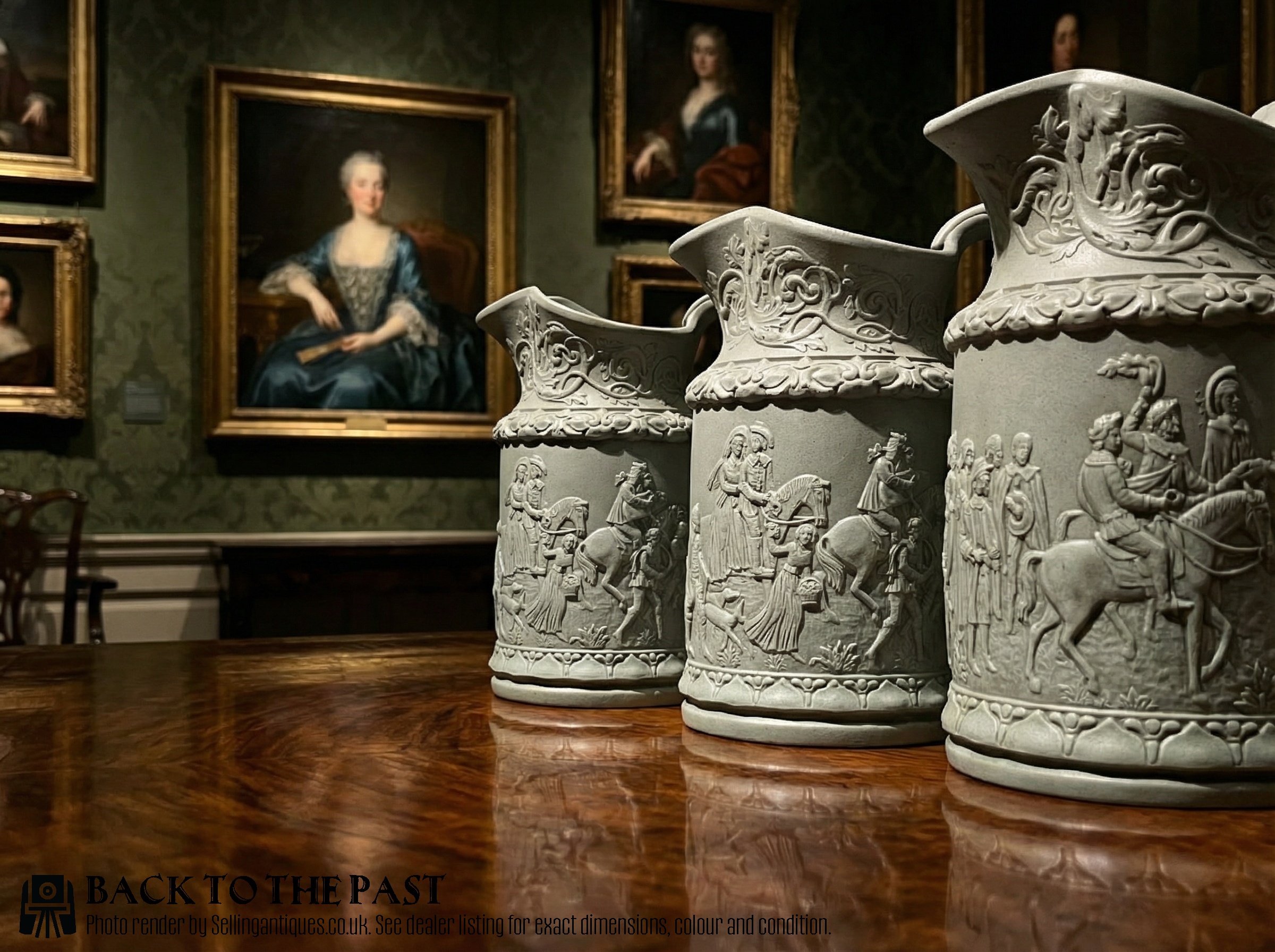
Relief moulded stoneware pieces are tactile jugs and vessels defined by raised decorative motifs, offering substantial weight and classic utility.
Relief Moulded Stoneware
Relief moulded stoneware encompasses robust ceramic vessels, particularly jugs, pitchers, teapots, and cache pots, created with distinct raised patterns upon the body. These items span various eras including the Georgian, Regency, Victorian, and Art Deco periods.
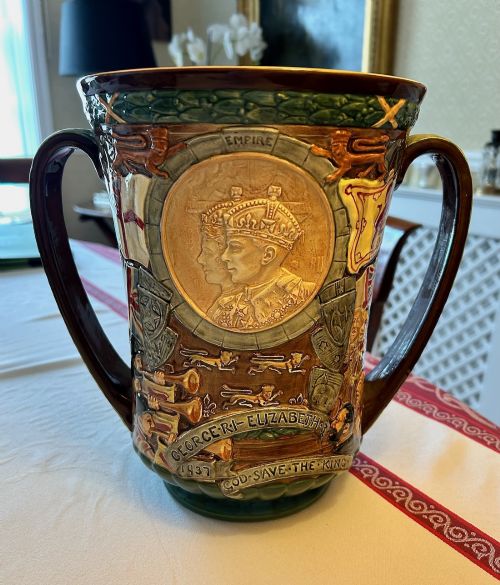
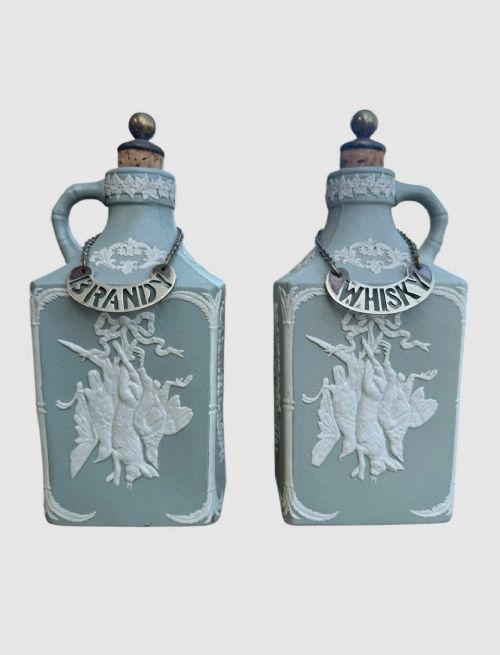
Buyers frequently encounter nineteenth-century pieces on this page, such as buff-coloured stoneware jugs, jasper spirit flagons, and caneware game pie dishes. Forms range from utilitarian ale jugs to commemorative loving cups and large exhibition vessels.
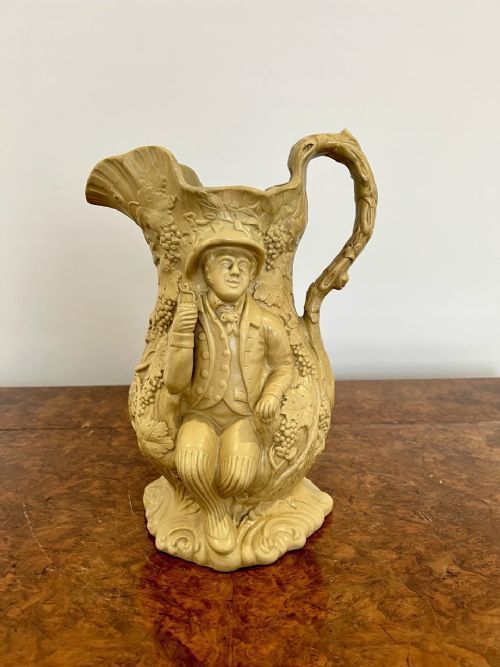
Origins trace across notable British manufactories producing ceramic wares with applied or moulded figural and botanical ornamentation. The selections often feature classical motifs, bacchanalian scenes, and hunting subjects executed in stoneware, earthenware, and jasperware.
What varies in quality
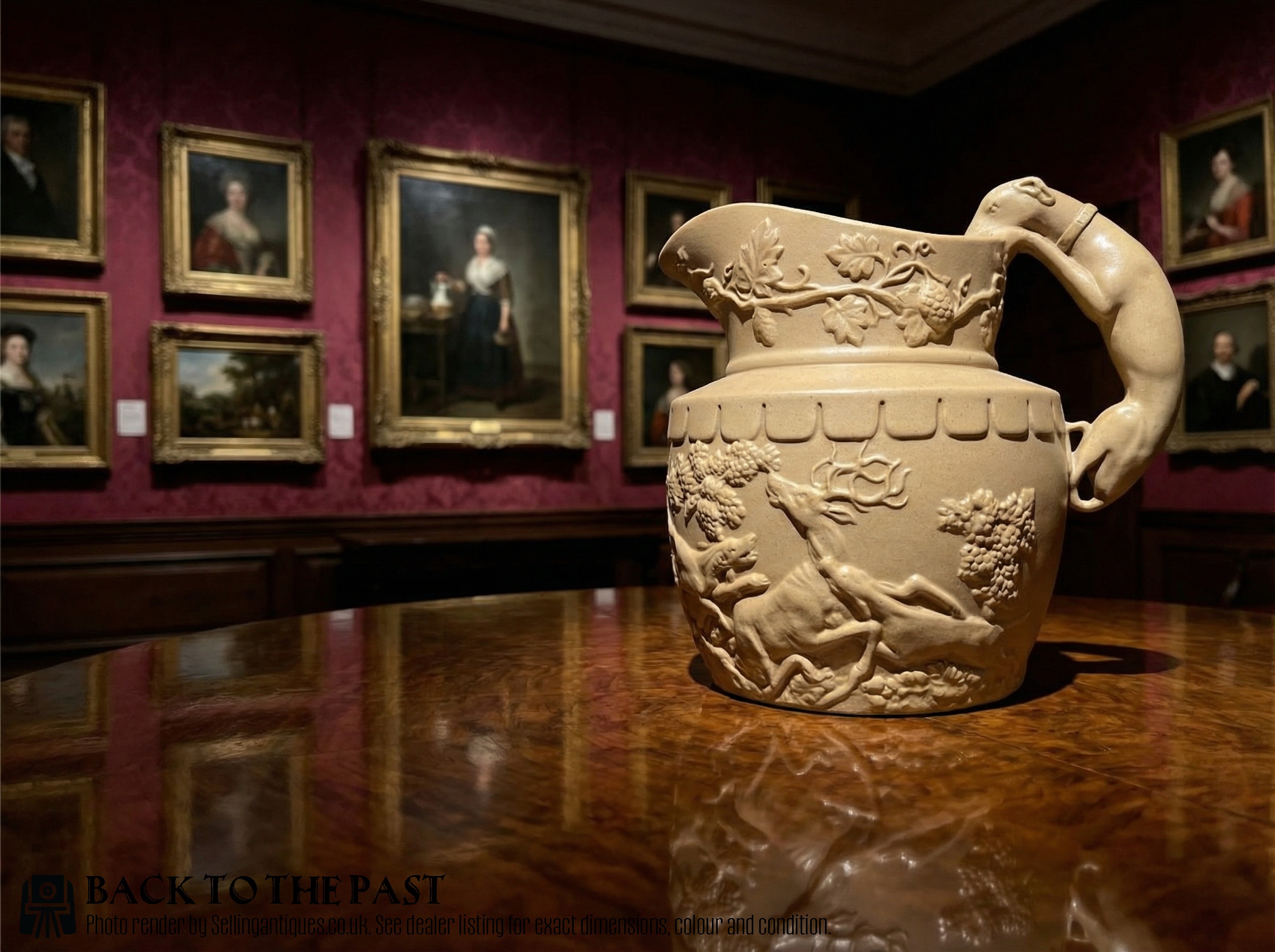
The crispness of the moulding defines the visual merit, separating sharp, deeply articulated figural scenes from softer, worn impressions. Superior examples maintain intricate detail in complex bacchanalian dances or historical commemorations without blurring at the edges.
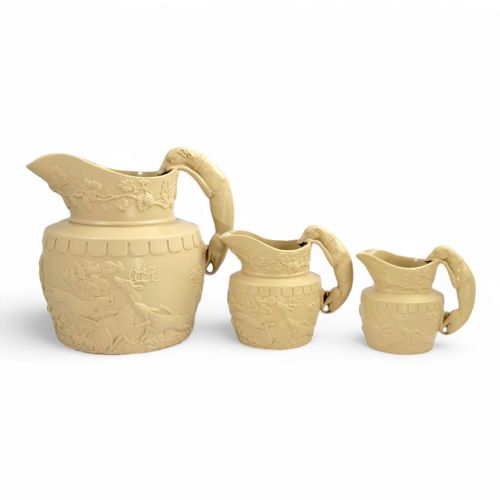
Material finish and colour consistency dictate the grade of the piece, from the evenness of salt-glazed surfaces to the purity of tone in caneware and jasperware. Well-executed handles, such as hound motifs, and balanced proportions further distinguish finer productions.
Object forms include jugs, teapots, cache pots, biscuit barrels, and game pie dishes with raised botanical and figural motifs.
Royal Doulton·Copeland Spode·Charles Meigh·Ridgway & Sons·Enoch Wood & Sons·Jones & Walley·Minton·Wedgwood·Phillips & Bagster
The Relief Moulded Stoneware Glossary
- Stoneware
- A dense, hard pottery fired at high temperatures until semi-vitrified and waterproof. It provides a durable canvas for detailed moulding.
- Jasperware
- A fine-grained, unglazed stoneware developed with metallic oxides to produce coloured bodies with contrasting white reliefs. It is famously associated with neoclassical designs.
- Caneware
- A fine earthenware body coloured in a warm, yellowish buff tone resembling bamboo or unbleached biscuit. It appeared frequently on nineteenth-century game pie dishes and tableware.
- Sprigging
- The technique of applying separately moulded clay reliefs onto the wet or leather-hard body of a vessel. This adds layered depth to the decoration.
- Salt glaze
- A glassy, slightly textured finish achieved by throwing common salt into the kiln during high-temperature firing. It creates a durable protective coating on stoneware.
Relief Moulded Stoneware: Frequently Asked Questions
What is relief moulded stoneware?
Relief moulded stoneware consists of ceramic vessels shaped with raised surface decorations, typically produced by pressing clay into carved moulds. These objects include utilitarian jugs, pitchers, and decorative ware.
They reflect historical design trends ranging from Georgian classical revival styles to Victorian Gothic motifs, utilising durable stoneware and earthenware materials.
How were these jugs used?
These vessels served practical domestic purposes for pouring ale, water, spirits, and tea during daily meals and social gatherings. Larger pieces functioned as display items or specialised containers like spirit flagons and game pie dishes.
Their robust construction made them suitable for heavy daily use in nineteenth-century households while offering ornamental appeal.
How do I identify nineteenth-century pieces?
Nineteenth-century examples often display specific stylistic markers such as bacchanalian scenes, classical revival motifs, or commemorative subjects tied to historical events. Materials commonly include salt-glazed stoneware, caneware, and jasperware.
Examining the crispness of the moulded relief and the composition of the ceramic body helps determine the period of manufacture.
How do I clean and care for antique stoneware?
Antique stoneware requires gentle cleaning with warm water and a soft cloth to preserve the raised surface details and original glaze or unglazed finish. Harsh detergents and abrasive scrubbers should be avoided.
Displaying pieces away from extreme temperature fluctuations protects the ceramic body and any delicate applied handles from accidental damage.