




Relief Moulded Pottery Pitcher
A relief moulded pottery pitcher brings tactile depth and utilitarian form together, offering collectors the chance to handle functional vessels rich in historic ornament.
Relief Moulded Pottery Pitcher
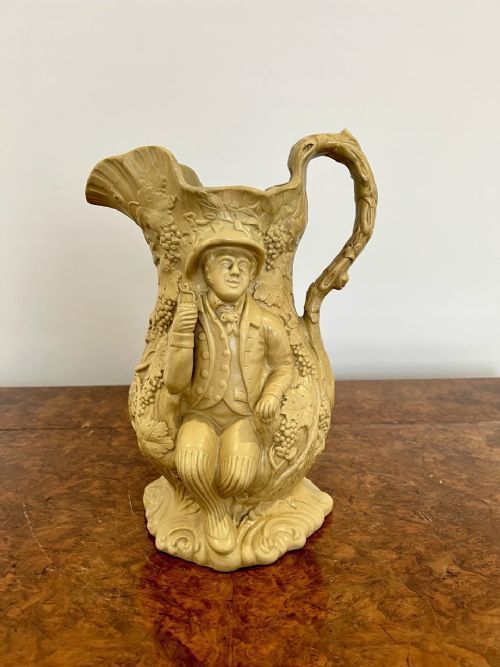
A relief moulded pottery pitcher is a functional pouring vessel adorned with raised surface designs created through press moulding or slip casting in metal or plaster moulds. When you search for this phrase, you encounter vessels produced primarily during the Victorian and Georgian eras, spanning the nineteenth century.
You are most likely to meet earthenware and stoneware bodies on this page, often finished with salt glaze, slip clay, or colourful glazes. The decorative motifs vary widely, incorporating figural scenes, animal subjects, and botanical themes that capture the ornamental tastes of the nineteenth century.
How they were made
Potters utilised earthenware and stoneware bodies, shaping them within relief moulds to impart sharp, raised exterior patterns onto the vessel walls. This technique allowed workshops to produce consistent decorative designs across domestic and exhibition items alike.
Surface finishes include traditional salt glaze, slip clay, and polychrome glazes such as those seen on Victorian Majolica pieces. Cream sprigged stoneware details were often applied separately to the body before firing, adding further tactile contrast to the finished pitcher.
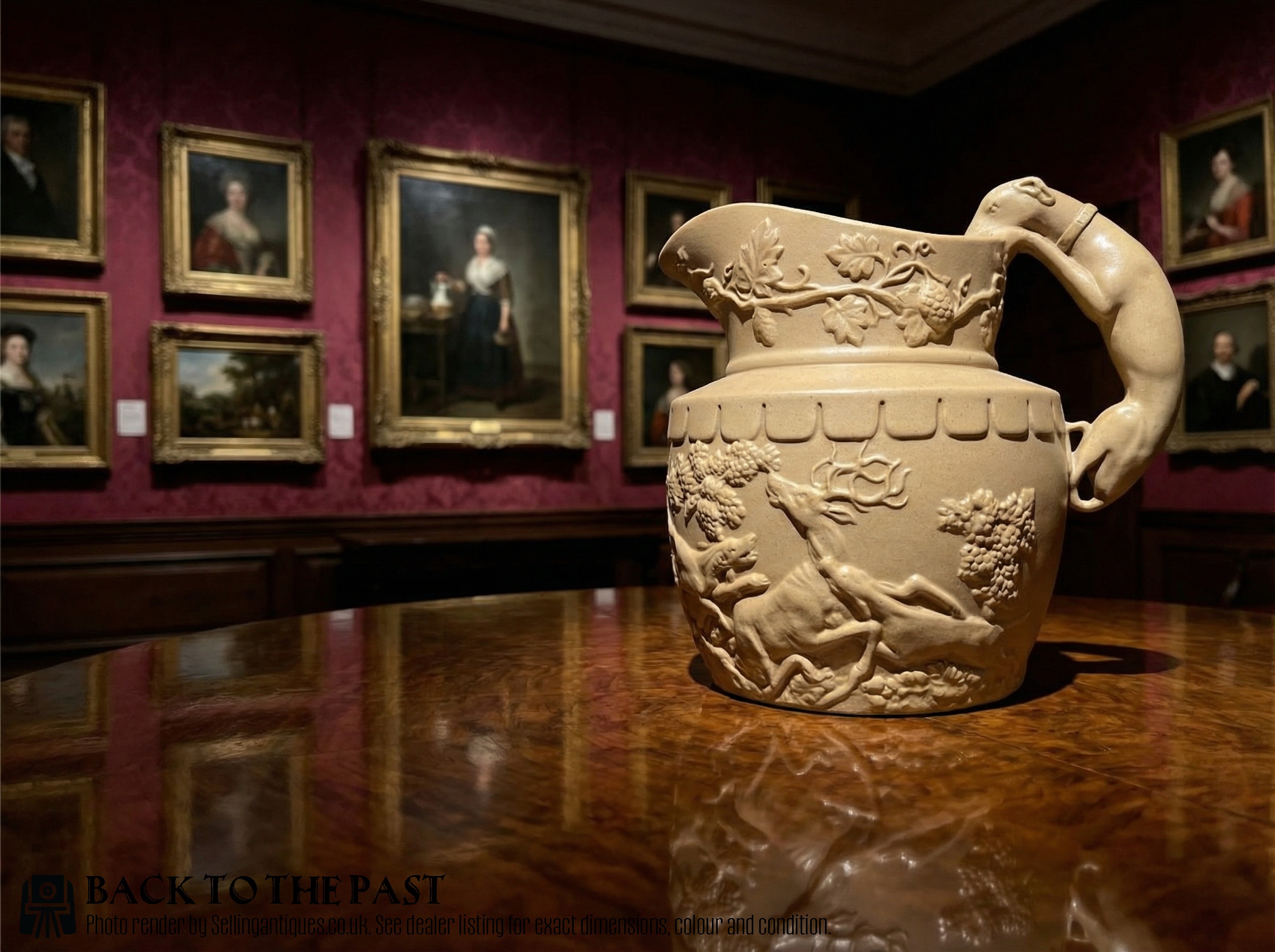
Hound handles and dancing figures ensure your morning milk jug doubles as a theatrical performance.
What varies in quality
The crispness of the moulded relief defines the visual success of a pitcher, separating sharp, deeply detailed ornamentation from softer, worn impressions. Superior examples maintain clean separation between the background and the raised motifs.
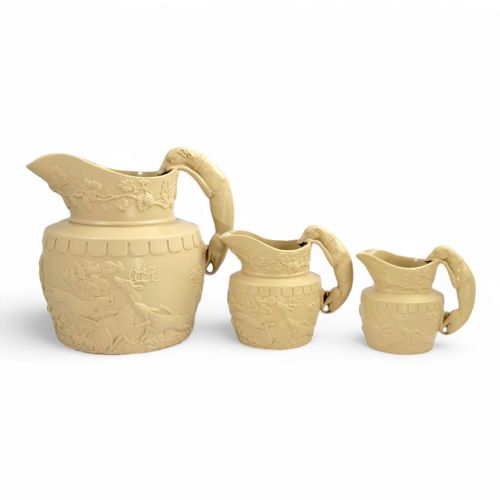
Material composition and glaze application also set individual pieces apart, from plain salt glazed stoneware to complex, multicoloured majolica finishes. Handling exhibition scale vessels or matching sets reveals the ambition of the original production.
JONES & WALLEY·MINTON·Phillips & Bagster·GEORGE JONES
The Relief Moulded Pottery Pitcher Glossary
- Relief moulded
- A manufacturing method where pottery is shaped in a mould to produce raised decorative patterns on the exterior surface. This technique defined much of nineteenth century utilitarian tableware.
- Salt glaze
- A vitreous coating formed by throwing common salt into the kiln during high temperature firing, creating a pitted, orange peel texture on stoneware. It provides a durable, waterproof surface.
- Majolica
- A colourful lead glazed earthenware popularized during the Victorian period, known for vibrant hues and naturalistic botanical or animal motifs. It brings intense colour to ceramic forms.
- Sprigged
- A decorative technique where separately moulded clay ornaments are applied to the unfired body using liquid slip as an adhesive. This adds layered relief detail to stoneware jugs.
- Stoneware
- A heavy, dense ceramic fired at high temperatures until semi vitreous, making it naturally waterproof and robust. It serves as a durable body for utilitarian pitchers.
Relief Moulded Pottery Pitcher: Frequently Asked Questions
What is a relief moulded pottery pitcher?
A relief moulded pottery pitcher is a nineteenth century pouring vessel featuring raised surface decoration shaped by a mould during production. These items combine everyday utility with the sculptural tastes of the Georgian and Victorian periods.
They appear in various ceramic bodies, including earthenware and salt glazed stoneware, often finished with coloured glazes or simple sprigged details.
How do I date a relief moulded pottery pitcher?
Dating relies on stylistic clues, ceramic bodies, and the distinct manufacturing methods characteristic of periods like the Georgian era, the Regency period, or late Victorian times. Glaze types and decorative themes also offer firm chronological indicators.
Comparison with documented nineteenth century production styles helps narrow down the decade of manufacture for unmarked pieces.
How were these pitchers used historically?
These vessels served practical domestic roles for pouring water, milk, or ale at the table, as well as functioning as decorative items in nineteenth century homes. Larger exhibition pieces demonstrated the technical skill of the pottery.
Graduated sets allowed households to deploy different sizes depending on the occasion, from daily breakfast service to formal dining.
How do I care for antique pottery pitchers?
Antique pottery pitchers require gentle handling and hand washing with mild soap to preserve delicate surface glazes and raised moulded details. Harsh detergents and modern dishwashers should be avoided entirely.
Displaying them away from direct sunlight and extreme temperature fluctuations protects both the ceramic body and the historic finish.