
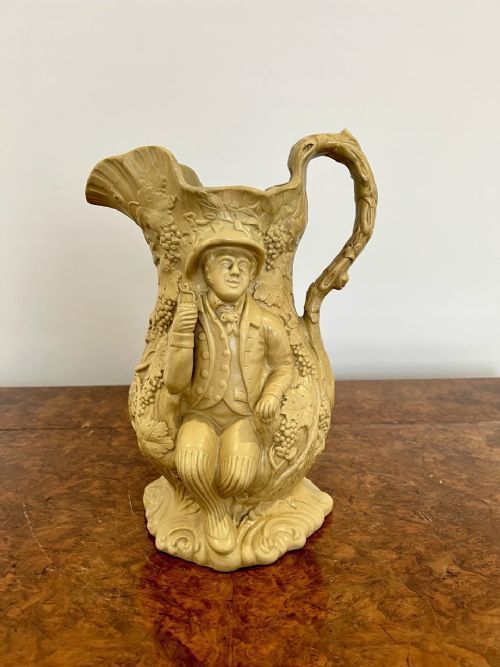


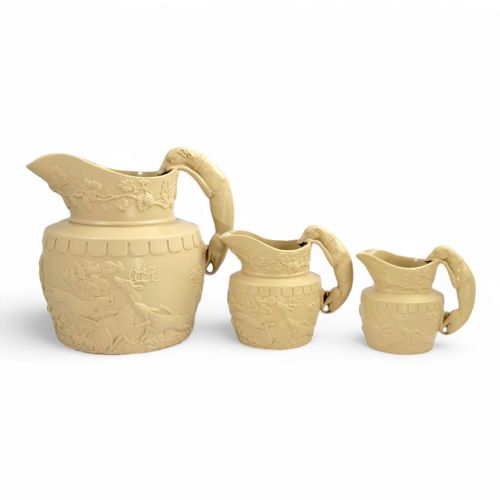


Moulded Stoneware Pitcher
These moulded stoneware pitcher examples bring tactile relief decoration and sturdy utilitarian form to the table, offering both robust service and classic revival motifs.
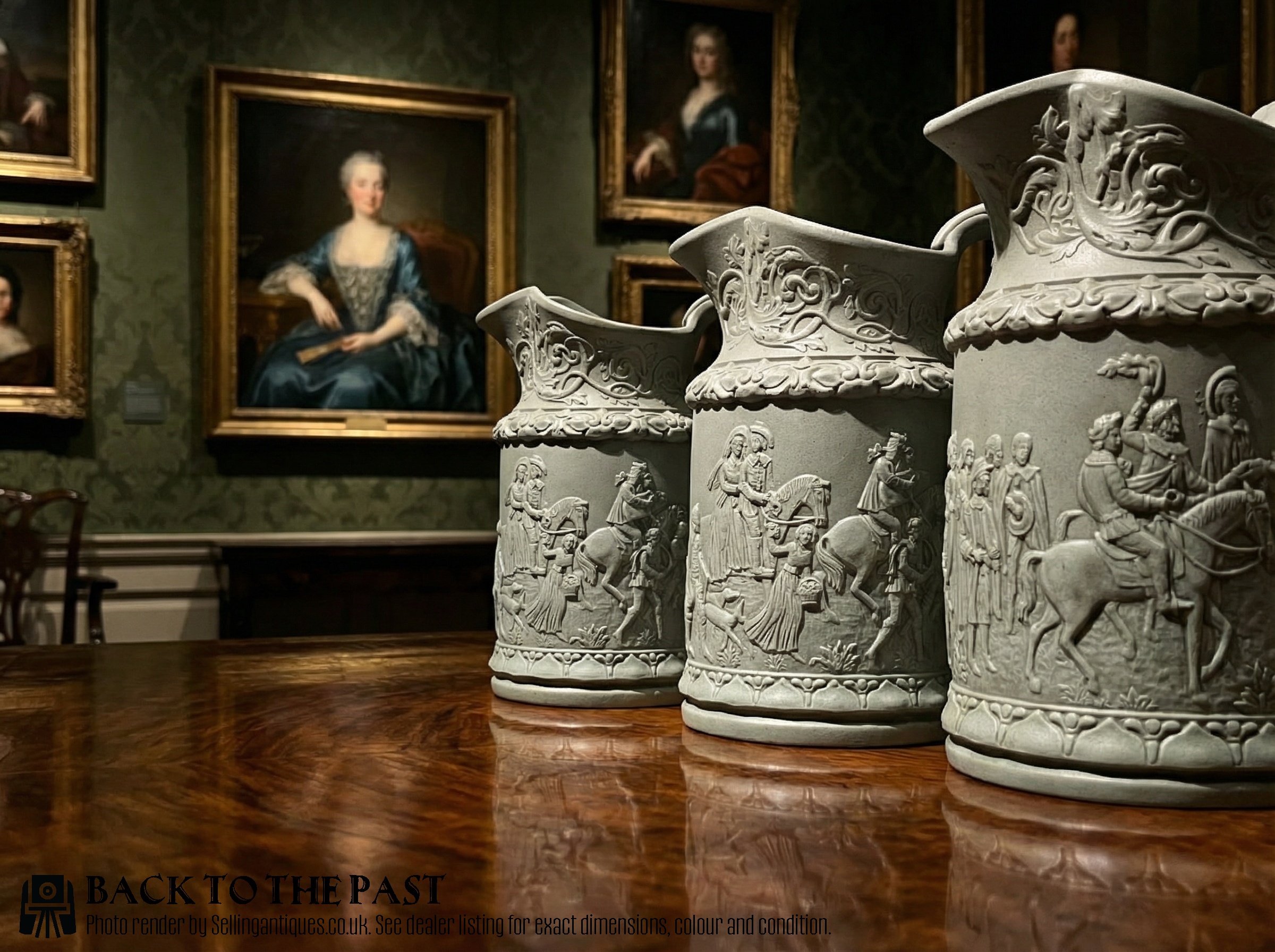
Materials and manufacture
Potters utilised durable stoneware and buff-coloured clay bodies, shaping the vessels in multi-part moulds that allowed crisp, raised figural reliefs to emerge directly on the surface. These relief details were frequently applied using sprigging techniques or formed within the body of the mould itself before firing.
Glazing varied from clear salt glazes producing a textured orange-peel finish to coloured majolica glazes and smooth ceramic coatings. Pewter mounts sometimes supplemented the ceramic lids or rims, adding weight and functional permanence to the jugs.
Judging quality and character
Quality rests primarily in the sharpness of the moulded relief and the depth of the narrative scene, where finer examples preserve crisp mythological figures or hunting motifs without blurring. The precision of the handle attachment, often modelled as hound figures or leafy scrolls, similarly separates standard utilitarian vessels from exhibition pieces.
The subtlety of the body colour and the uniformity of the glaze application also dictate the standing of a piece, with delicate sage greens, yellow wares, and well-fired salt glazes representing superior execution. Makers known for exceptional ceramic chemistry and detailed sculptural design achieve a higher level of artistic ambition.
Makers represented include Charles Meigh and Minton, alongside commemorative pieces depicting historical figures like Victoria and Wellington.
Charles Meigh·Ridgway and Sons·Jones and Walley·Minton·Phillips and Bagster
The Moulded Stoneware Pitcher Glossary
- Stoneware
- A heavy, vitrified ceramic fired at high temperatures until impervious to liquid. It provides a durable ground for the detailed relief moulding seen on these jugs.
- Relief moulded
- A technique where decorative motifs stand raised above the background surface. This is achieved by pressing clay into an ornamented mould before assembly.
- Sprigged
- The method of applying separately moulded clay details onto the unfired body of a vessel using slip as an adhesive. It creates tactile, layered ornamentation.
- Majolica
- A colourful, opaque lead glaze applied over earthenware or stoneware bodies during the Victorian period. It yields vibrant greens, browns, and blues.
- Salt glaze
- A glassy, slightly textured finish created by throwing common salt into the kiln during high-temperature firing. The sodium reacts with the silica in the clay body.
Moulded Stoneware Pitcher: Frequently Asked Questions
What were moulded stoneware pitchers used for?
These vessels served primarily for pouring ale, water, or cider at the table during the Georgian and Victorian periods.
Their robust ceramic walls helped maintain liquid temperatures while the decorative reliefs provided conversational ornamentation during communal dining.
How do I date a moulded stoneware pitcher?
Dating relies on stylistic clues such as Victorian gothic revival motifs, classical bacchanalian scenes, and specific maker marks stamped into the base.
Colour palettes, including buff stoneware, sage green parian, and bright majolica glazes, also point to specific decades within the nineteenth century.
Are these pitchers safe for daily use?
While the dense stoneware body remains structurally robust, antique pieces are generally best reserved for display or careful service.
Historical glazes and porous antique materials can react to modern detergents or acidic liquids over time.
What is the difference between stoneware and earthenware?
Stoneware fires at much higher temperatures until the clay vitrifies, making it non-porous and exceptionally durable without requiring a complete interior glaze.
Earthenware remains more porous and softer, often requiring an opaque glaze to hold liquids effectively.