
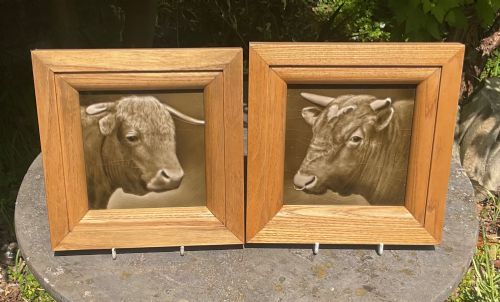


Victorian Relief Pottery
Victorian relief pottery brings together moulded surfaces and nineteenth-century forms, offering collectors tactile decoration from jugs to cheese domes.
Victorian Relief Pottery
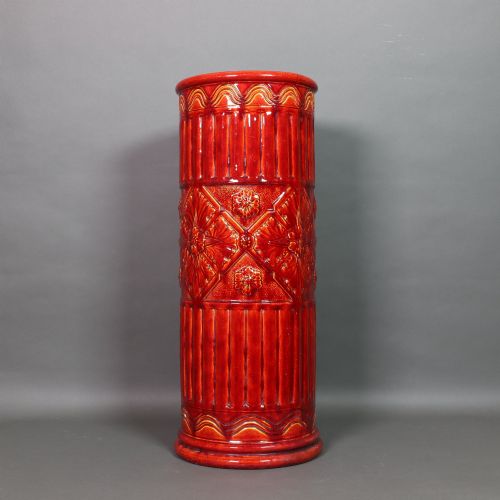
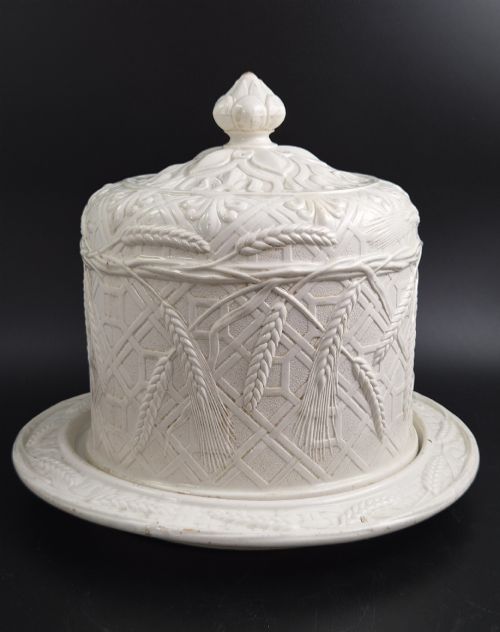
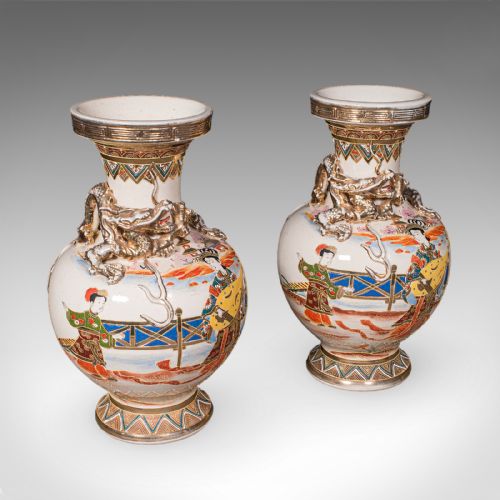
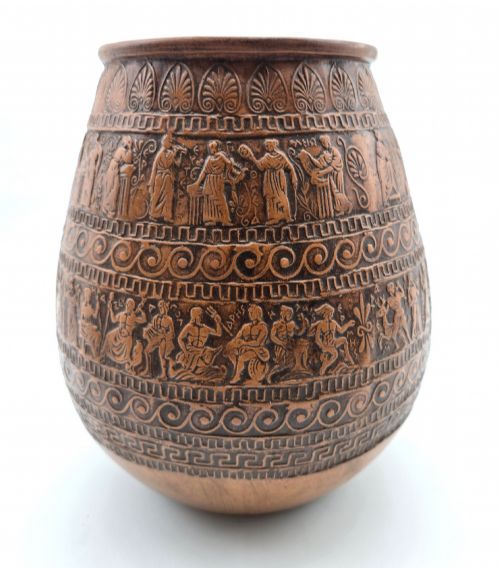
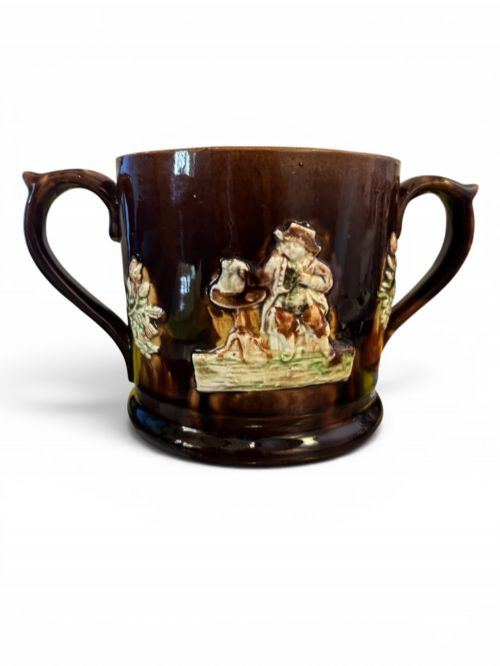
When you search for victorian relief pottery, you encounter items shaped with raised ornamentation across earthenware, stoneware, and terracotta. These pieces span utility and display, taking the form of jugs, biscuit barrels, cheese domes, and wall plaques.
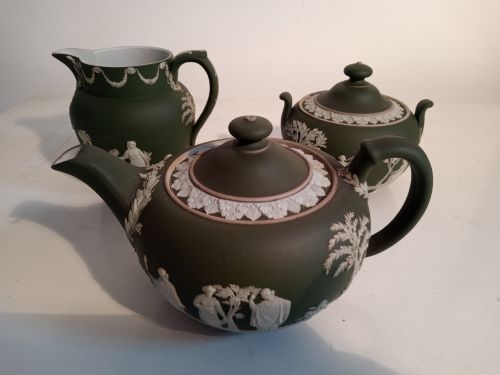
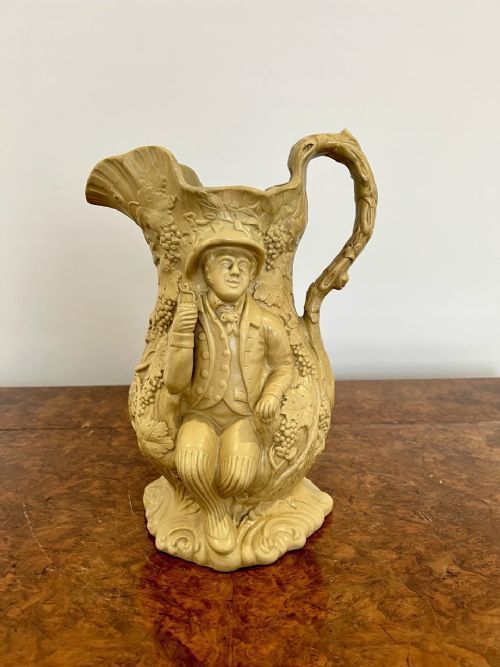
The objects date from the nineteenth century, encompassing styles from Victorian Neoclassical and Arts and Crafts to Art Nouveau. Stoneware harvest jugs and classical jasperware vessels dominate the selection, showing the range of moulded ceramics produced during the period.
How they were made
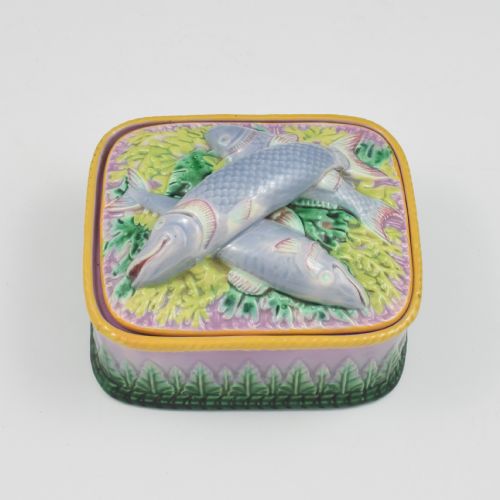
Potters utilised moulds to press clay into raised patterns, creating crisp botanical, figural, or geometric motifs against contrasting backgrounds. Stoneware and earthenware bodies received salt glaze, majolica coloured glazes, or matte finishes to highlight the modelled details.
Makers applied sprigged ornaments separately onto the main body before firing, building up layers of low relief. Artisans then finished pieces with hand-painting or controlled glazing to accentuate the contours of the moulded design.
Listings feature earthenware, stoneware, and terracotta forms spanning the Victorian era from the eighteen-fifties to nineteen-hundred.
What varies in quality
The sharpness of the moulding dictates the calibre of the piece, separating crisp, deep relief from worn or shallow impressions. Clean separation between the raised figures and the background glaze shows careful handling during production.
The complexity of the glaze application and the precision of applied sprigs also distinguish finer examples. Superior specimens display well-balanced proportions and careful finishing around handles and rims.
Wedgwood·George Jones·Sherwin and Cotton·Doulton Lambeth·James Dudson·Minton·Bernhard Bloch
The Victorian Relief Pottery Glossary
- Jasperware
- A fine stoneware developed with a matte surface, typically featuring white classical sprigged reliefs against a coloured ground. Wedgwood popularised this ceramic body during the nineteenth century.
- Majolica
- A heavy earthenware pottery covered with colourful opaque lead glazes. It often depicts naturalistic themes like foliage, animals, and figural scenes.
- Sprigging
- A technique where separately moulded clay motifs are applied to the surface of an unfired vessel using slip as an adhesive. This method builds up low relief decoration.
- Salt glaze
- A vitreous coating formed by throwing common salt into the kiln during high-temperature firing. It produces a textured finish resembling orange peel.
Victorian Relief Pottery: Frequently Asked Questions
What is victorian relief pottery?
These items are nineteenth-century ceramic pieces featuring raised decorative motifs pressed or applied onto the surface. They include functional wares like jugs and cheese domes alongside decorative plaques and vases.
Potters used earthenware, stoneware, and terracotta to create the bodies, adding colourful glazes or matte finishes. The style ranges from classical neoclassical designs to organic art nouveau patterns.
How were these pieces used?
Many items served practical domestic functions at the dining table or in the kitchen, holding ale, water, biscuits, or cheese. Others functioned purely as decorative ornaments, such as wall plaques, jardinieres, and mantel vases.
Stoneware harvest jugs and teasets saw everyday use, while majolica jardinières and large vases decorated Victorian interiors. Their sturdy ceramic construction made them durable for daily household routines.
How do I date a piece?
Dating relies on stylistic clues, factory marks stamped into the ceramic base, and the specific glazing techniques employed. Nineteenth-century pieces often combine Victorian revival styles with manufacturing methods characteristic of the era.
Makers frequently included registry marks or specific stamps that indicate the decade of production. Examining the material, whether jasperware, salt-glazed stoneware, or majolica, helps narrow down the period.
How should I clean them?
Cleaning requires gentle handling with lukewarm water and a soft cloth to protect the raised relief and delicate glazes. Harsh chemical cleaners or abrasive scouring pads must be avoided to prevent surface damage.
Earthenware and majolica items need particular care because older glazes can be sensitive to prolonged soaking. Patting the piece dry immediately after washing preserves the integrity of the ceramic body.