


Victorian Tavern Jug
These Victorian tavern jugs are robust vessels that brought strong drink to thirsty public house patrons across the nineteenth century.
Victorian Tavern Jug
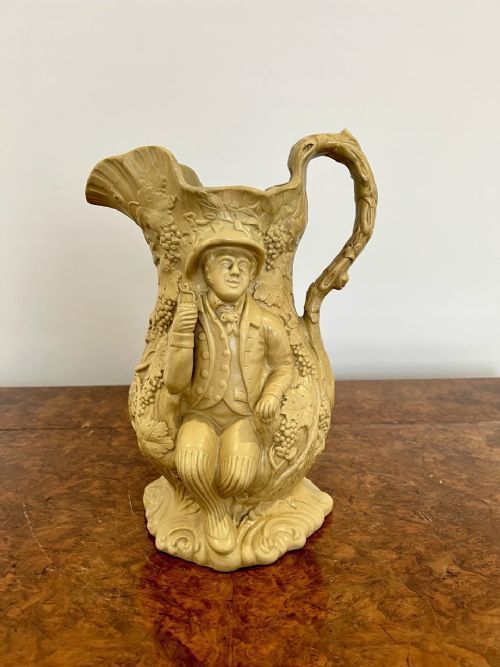
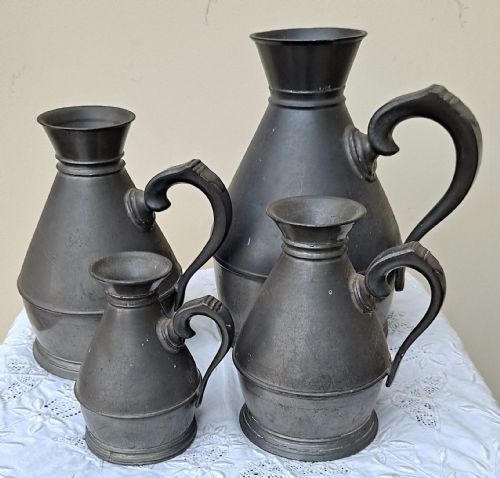
When you search for a Victorian tavern jug, you are looking at practical drinking vessels and public house measures fashioned during the nineteenth century. These pieces encompass sturdy stoneware Harvest jugs, heavy metal haystack measures, and ceramic puzzle jugs designed for communal drinking. Most examples you will encounter here hail from the Victorian period, reflecting the bustling pub culture of the era.
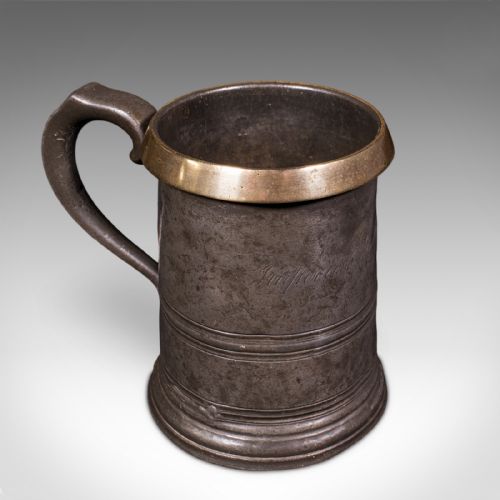
The selection ranges from salt glaze stoneware and majolica to gleaming copper, brass, and pewter tankards. Many bear the marks of public houses, royal ciphers, or brewers, linking them directly to historic trade. Whether configured as single pint measures or large multi-gallon flagons, these items served a strictly utilitarian purpose before finding a place in modern collections.
How they were made
Potters shaped these vessels using traditional earthenware, stoneware, and salt glaze techniques, often throwing them on a wheel or forming them in relief moulds. Stoneware pieces like those from Doulton Lambeth received durable salt glazes fired at high temperatures to withstand heavy tavern use. Majolica examples added colourful lead-glazed surfaces to moulded clay bodies.
Metalworkers hammered and spun sheets of copper, brass, and pewter into durable haystack measures and tankards, sometimes reinforcing rims with silver. Pewterers cast their wares in moulds and finished the surfaces by hand, stamping them with imperial verification marks to guarantee exact liquid capacity.
What varies in quality
The standard of a Victorian tavern jug rests upon the crispness of its moulding and the integrity of its materials. Finer ceramic pieces display sharp relief decoration and even salt glazes without excessive warping from the kiln. Metal vessels show their pedigree through thick, heavy gauge walls and well-joined handles that balance properly in the hand.
Provenance and official touchmarks elevate certain pieces above standard utilitarian wares. Measures bearing clear maker stamps, regional verification ciphers, or named public house origins command greater attention from collectors. The quality is ultimately measured by how cleanly the maker executed a purely functional object.
Doulton Lambeth·J. Bower·Thomas Smily
The Victorian Tavern Jug Glossary
- Haystack measure
- A distinctively shaped nineteenth-century British liquid measure with a curved body resembling a hayrick. These metal vessels were made in sets and calibrated for precise public house service.
- Salt glaze
- A vitreous coating formed by throwing common salt into the kiln during high-temperature stoneware firing. This creates an orange-peel texture that resists moisture and acids.
- Puzzle jug
- An earthenware drinking vessel with a perforated neck and hollow rim that forces the drinker to solve a riddle to imbibe without spilling. These novelty pieces were popular tavern entertainments.
- Breweriana
- Collectable items associated with the brewing and serving of beer, including tavern jugs, tankards, and public house advertising. This broad category covers the material culture of historical drinking establishments.
- Imperial measure
- A standardised system of liquid measurement established in Britain to regulate public house portions. Measures from this era often carry VR verification stamps for Victoria Regina.
Victorian Tavern Jug: Frequently Asked Questions
What is a Victorian tavern jug?
A Victorian tavern jug is a sturdy ceramic or metal vessel used for holding and serving beer, spirits, or cider in nineteenth-century public houses.
These pieces range from salt-glazed stoneware pitchers to heavy pewter measures and copper flagons designed for daily commercial use.
How were pewter measures used?
Publicans utilised pewter measures to dispense exact quantities of ale and spirits to patrons seated at tables or gathered around the bar.
The heavy metal construction ensured the vessels could survive the rough handling of busy nineteenth-century drinking establishments.
Are these jugs safe for drinks?
Most antique ceramic and metal tavern jugs are best appreciated as decorative objects or historical display pieces rather than for daily beverage consumption.
Pewter from older periods may contain trace elements, and historic ceramic glazes are not tested to modern food safety standards.
How do I identify a haystack measure?
Haystack measures are recognised by their distinctive bulbous bodies tapering toward the top, reminiscent of traditional agricultural hayricks.
They are commonly found in sets made from copper, brass, or pewter, often bearing verification stamps from the nineteenth century.