




Moulded Ceramic Water Pitcher
A moulded ceramic water pitcher brings tangible texture and period weight to a table, combining utilitarian function with spirited relief decoration.
Moulded Ceramic Water Pitcher
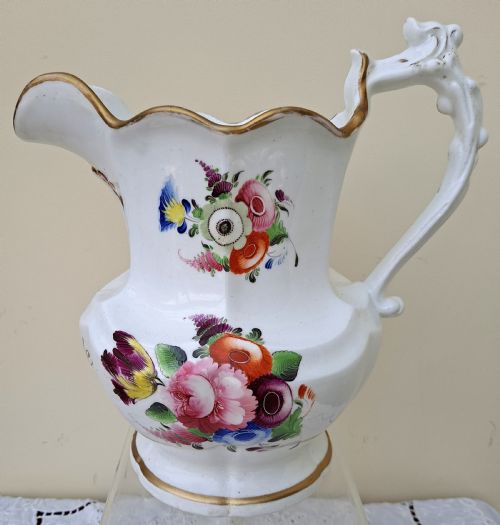
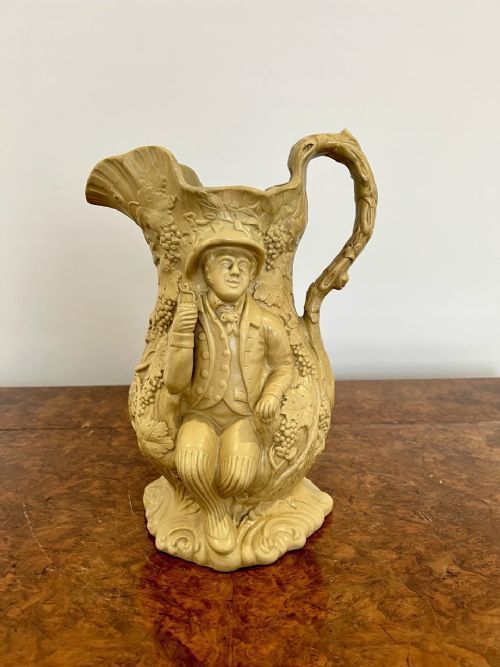
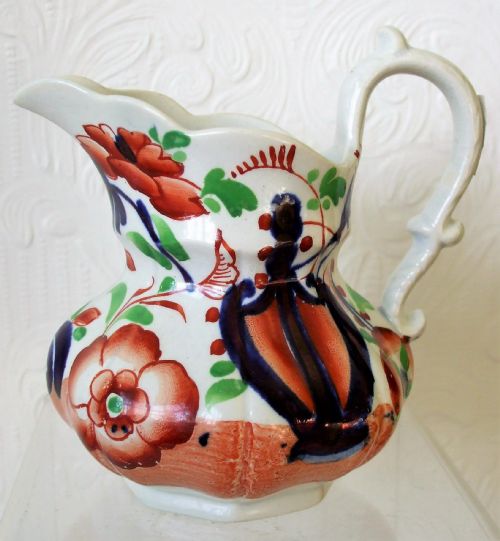
A moulded ceramic water pitcher is a substantial vessel designed for service, frequently encountered in earthenware, stoneware, and porcelain across the Georgian, Victorian, and Edwardian eras. These pieces range from robust tavern jugs to decorative parlor pitchers, featuring elaborate surface ornamentation shaped directly in the clay.
The selections span distinct stylistic movements, including Georgian neoclassical motifs, Victorian Gothic revivals, and colourful majolica pieces. Collectors encounter both everyday domestic versions and large exhibition-scale pitchers bearing classical or rustic scenes.
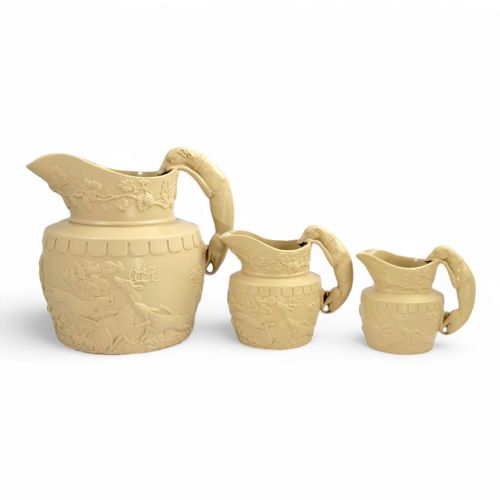
Forms vary from standard bulbous bodies to specialised pouch jugs and tall handled pitchers. Many pieces utilise traditional animal or figural handles, such as hound motifs, adding sculptural interest to the utilitarian form.
Materials and production methods
Potters utilised clay bodies such as durable stoneware, refined earthenware, and cream-coloured pearlware, shaping them through press-moulding techniques to achieve crisp relief decoration. Salt glazing and colourful enamel finishes were frequently applied to seal the porous body and accentuate the raised surface designs.
Specialised techniques included sprigging, where separately moulded clay ornaments were applied to the wet body before firing, alongside detailed hand-painting over transfer prints. Gold leaf was occasionally added to highlight specific architectural or figural details on exhibition-quality porcelain.
Listings feature earthenware, stoneware, and porcelain pieces spanning the Georgian, Victorian, and Edwardian periods.
Distinctions in quality
Quality rests upon the crispness of the relief moulding and the depth of the narrative scenes pressed into the clay. Sharp undercuts and well-defined figural details separate superior vessels from softer, worn productions.
The choice of glaze and the application of enamels or gold leaf also dictate standard. Evenly finished surfaces and precise colour placement reflect greater workshop skill during production.
John Baley·Charles Meigh·Ridgway & Sons·Jones & Walley·Phillips & Bagster·George Jones
The Moulded Ceramic Water Pitcher Glossary
- Relief-moulding
- A technique where clay is pressed into a carved mould to raise the decorative motifs above the background surface. This creates tactile scenes of figures, foliage, or historical events.
- Pearlware
- A refined earthenware developed in the late eighteenth century featuring a subtle bluish glaze that pools in crevices. It provided a paler, whiter surface than traditional creamware.
- Salt glaze
- A glassy, textured finish achieved by throwing common salt into the kiln during high-temperature firing. It leaves a distinctive orange-peel texture across stoneware bodies.
- Majolica
- A colourful lead-glazed earthenware characterised by rich, vibrant tones applied directly to moulded botanical or animal forms. Popularised during the Victorian period, it offers high visual impact.
- Parian
- A fine white porcelain body developed to imitate carved marble, frequently utilised for classical portrait busts and ornamental jugs. It fires to a smooth, unglazed biscuit finish with a subtle sheen.
Moulded Ceramic Water Pitcher: Frequently Asked Questions
How do I clean a ceramic pitcher?
Wash the vessel gently by hand using warm water and a mild soap, avoiding harsh scrubbing brushes that might damage historical glazes.
Dry the piece thoroughly with a soft cloth to protect any delicate enamel or gold leaf details.
Can I use these pitchers for serving water?
Most antique pitchers remain structurally sound for serving water, though older earthenware and porous bodies should be handled with care.
Inspect the interior for any hairline cracks before filling, and avoid subjecting the antique ceramic to sudden temperature extremes.
What defines a Victorian majolica jug?
Majolica jugs feature vibrant, mottled lead glazes over heavily moulded naturalistic designs such as leaves, bulrushes, or animals. They are typically heavier than standard earthenware due to the dense clay body and thick glaze layers.
Introduced in the mid-nineteenth century, these pieces prioritised bold colour and tactile surface decoration over classical restraint.
How do I date a relief moulded jug?
Examine the style of the relief decoration, base markings, and the specific composition of the ceramic body, such as pearlware versus later ironstone. Georgian pieces often lean toward neoclassical motifs, while Victorian examples embrace gothic revival or naturalistic themes.
Maker marks and registration diamonds stamped on the base provide precise chronological markers for pieces produced after the mid-nineteenth century.