




19th Century Relief Pitcher
A 19th century relief pitcher brings robust tactile ornamentation and classic form to the table, prized for deep sculptural moulding.
19th Century Relief Pitcher
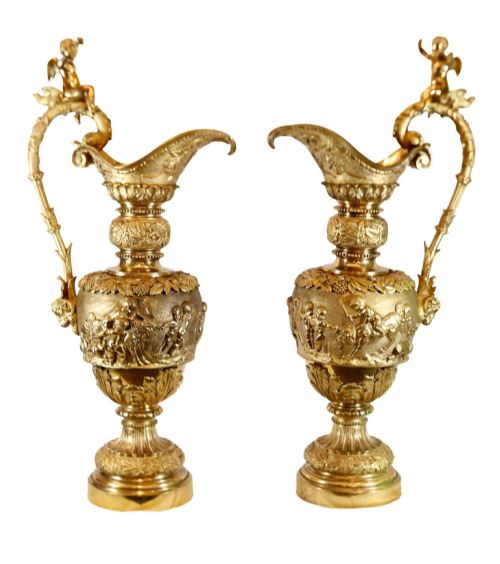
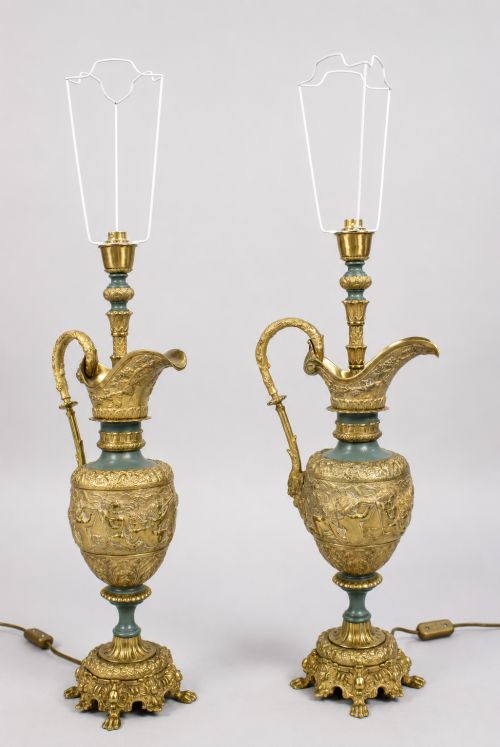
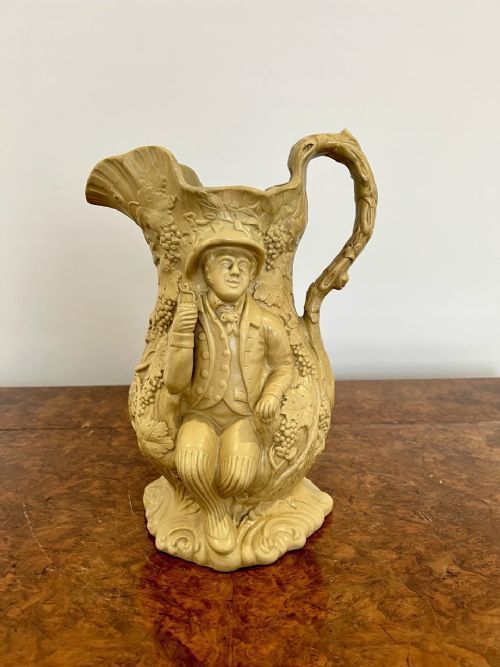
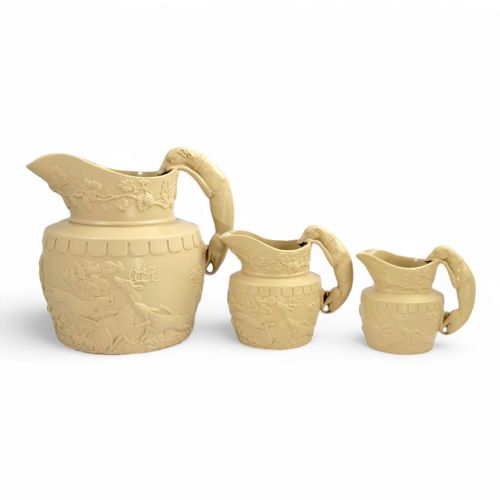
A 19th century relief pitcher displays raised sculptural decoration cast directly into the body, depicting classical scenes, bacchanalian dances, or hunt motifs. Most examples encountered here take the form of jugs and pitchers created during the Victorian period, alongside ornamental ewers and table lamps.
Makers utilised various regional styles ranging from Georgian restraint to Victorian neoclassical and majolica expression. Buyers will find substantial stoneware, earthenware, and glazed ceramic vessels designed for functional service or grand display.
What Varies in Quality
The sharpness of the moulded detail distinguishes superior examples from softer, worn castings where the narrative scenes lose their crisp definition. Depth of relief and the precision of the applied sprig work dictate the overall sculptural success of the vessel.
Glaze application and colour distribution contribute heavily to visual appeal, particularly in majolica and glazed ceramic editions where even coverage enhances the underlying form. The integration of specialised handles, such as hound motifs, requires anatomical balance and secure attachment.
Watch for hound handles peering intently back at anyone bold enough to pour a morning ale.
Charles Meigh·Ridgway & Sons·Jones & Walley·Minton·Phillips & Bagster·Copeland Spode
The 19th Century Relief Pitcher Glossary
- Relief moulded
- A technique where decorative motifs are raised above the flat surface of the ceramic body using a mould. This method defined much of the mid-Victorian tableware production.
- Parian ware
- A fine white bisque porcelain developed to resemble carved marble. It is particularly valued for neoclassical figure groups and smooth texture.
- Majolica
- A heavy earthenware pottery covered with an opaque coloured tin glaze. Introduced widely in the Victorian era, it yields rich green, brown, and ochre tones.
- Sprigged
- A decorative method where separately moulded clay ornaments are applied to the wet body of a vessel before firing. It creates a distinct layered silhouette.
- Salt glaze
- A vitreous coating formed by throwing common salt into the kiln during high-temperature firing. The vapour reacts with the silica in the clay to produce an orange-peel texture.
19th Century Relief Pitcher: Frequently Asked Questions
What were 19th century relief pitchers used for?
These vessels served practical functions for pouring ale, water, or cider at the table, while larger monumental versions held specific liquid volumes for household service.
Many examples functioned primarily as decorative showpieces on sideboards or mantelpieces, displaying mythological or sporting narratives to guests.
How do I identify a Victorian relief pitcher?
Victorian examples frequently display dense classical revivals, Gothic tracery, or naturalistic bacchanalian themes rendered in heavy stoneware or coloured earthenware.
Stylistic cues include moulded maker marks, distinct registration diamonds, and richly textured bodies that contrast sharply with earlier Georgian simplicity.
Are these pitchers safe for serving drinks?
Most antique pitchers composed of dense stoneware or glazed ceramic remain structurally sound for holding liquids during modern gatherings.
Collectors generally restrict functional use to preserve delicate relief work, historic glazes, and fragile handle joints from accidental impact.
How should I display a relief pitcher?
Positioning these pieces in well-lit cabinets or stable open shelving allows natural light to catch the shadows within the raised sculptural motifs.
Ensuring adequate clearance from heavy foot traffic protects protruding handles, such as modelled hounds or floral loops, from accidental bumps.