


Late Victorian Art Pottery
Late Victorian art pottery brings experimental glazes and organic forms into the home, offering collectors a tangible piece of late nineteenth-century craft innovation.
Late Victorian Art Pottery
Late Victorian art pottery encompasses decorative vessels, jardiniere stands, salad bowls, and umbrella stands produced predominantly during the 1880s, 1890s, and the turn of the twentieth century. These objects bridge the gap between traditional factory production and individual studio pottery, reflecting the shifting aesthetic priorities of the period.
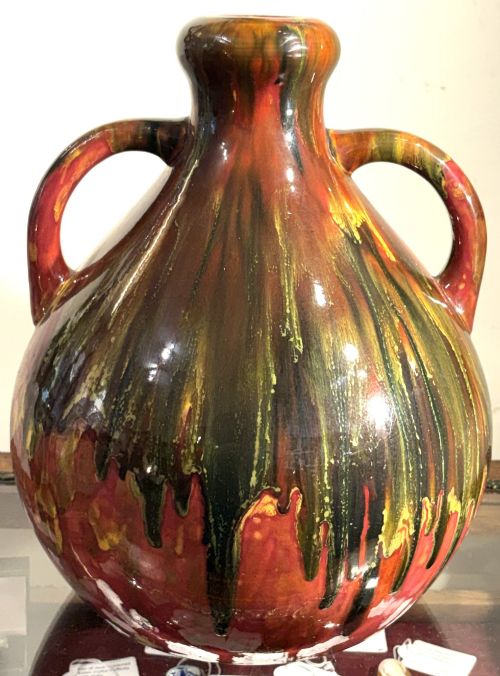
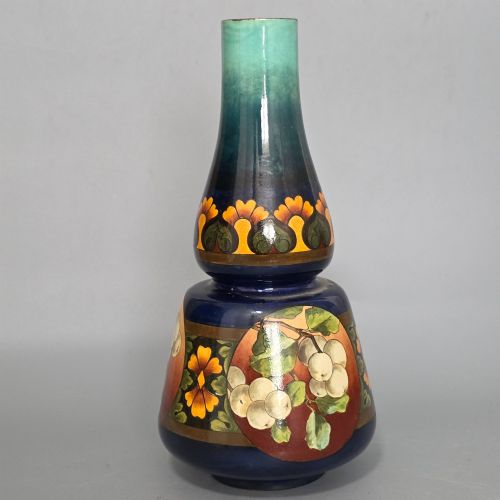
The pieces appearing on this page most commonly manifest as glazed earthenware, stoneware, and porcelain vases decorated within the overarching styles of Arts and Crafts, Art Nouveau, and Victorian revivalism. Collectors frequently encounter substantial Burmantofts faience vessels, Doulton Lambeth salt-glazed stoneware, and continental European works from Austrian and French potteries.
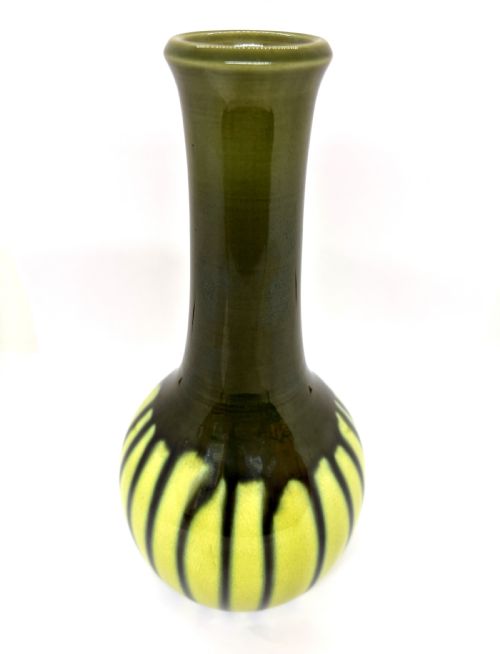
Forms range from tall pedestals and bottle vases to decorative jugs and twin-handled centerpieces. Each item serves as a functional or purely ornamental centrepiece that displays the era's fascination with natural motifs such as sunflowers and birds.
What varies in quality
Quality rests upon the ambition of the form and the technical success of the glaze, distinguishing standard factory output from exceptional studio pieces. Potteries experimenting with metallic lustre, intricate slip-carving, and complex multi-fired glazes achieved results that required high technical mastery and artistic vision.
The clarity of the hand-painted or incised decoration and the crispness of the moulded relief define the upper tier of these wares. Pieces that retain their original scale without distortion during the firing process demonstrate superior workshop practice.
Listings feature periods spanning from 1880 through 1900, alongside nineteenth-century pieces executed in earthenware, stoneware, and porcelain.
Burmantofts Pottery·Doulton Lambeth·Sir Edmund Elton·Clement Massier·Ernst Wahliss·Moorcroft Macintyre·Royal Bonn
The Late Victorian Art Pottery Glossary
- Faience
- Earthenware decorated with opaque coloured glazes. This technique allowed potteries to achieve smooth, brightly coloured surfaces reminiscent of majolica.
- Stoneware
- A robust, vitrified pottery body fired at high temperatures. It is impermeable to liquids even without glaze and accepts salt-glazing exceptionally well.
- Lustre glaze
- A metallic film applied to ceramics to produce an iridescent sheen. Potters control kiln atmospheres to create shimmering, light-reflective surface effects.
- Intarsio
- A specialised Doulton Lambeth ceramic technique resembling inlaid wood. It produced multi-coloured, patterned earthenware designs with distinct outlines.
- Slip
- Liquid clay applied to a ceramic body for decoration or surfacing. Artists trailed or carved through the slip to create textured graphic contrasts.
Late Victorian Art Pottery: Frequently Asked Questions
How do I identify late victorian art pottery?
Examine the piece for characteristic styles such as Art Nouveau plant motifs or Arts and Crafts incised lettering. Look underneath for impressed factory marks, decorator initials, and period style indicators.
Material composition also offers clues, as heavy salt-glazed stoneware and colourful faience earthenware dominate this era's output.
Were these pieces used daily?
Many items, including salad bowls and umbrella stands, served practical functions in domestic spaces alongside purely decorative vases. Their durable ceramic and stoneware bodies made them suitable for everyday use in late nineteenth-century households.
Over time, changing interior fashions shifted these utilitarian objects into the realm of display and collection.
How should I display them at home?
Large pedestal vases and umbrella stands suit entryways or corners where their height creates architectural impact. Smaller bottle vases and jugs command attention on sideboards, mantelpieces, or dedicated display shelves.
Positioning them near natural light allows the lustre glazes and hand-painted details to catch the eye.
What is the difference between earthenware and stoneware here?
Earthenware uses a porous clay body fired at lower temperatures and requires glazes to hold liquids. Stoneware is fired much hotter until the clay vitrifies, producing a dense, waterproof material.
Potters utilised both depending on whether they wanted smooth lustre surfaces or robust, textured salt-glazed finishes.