


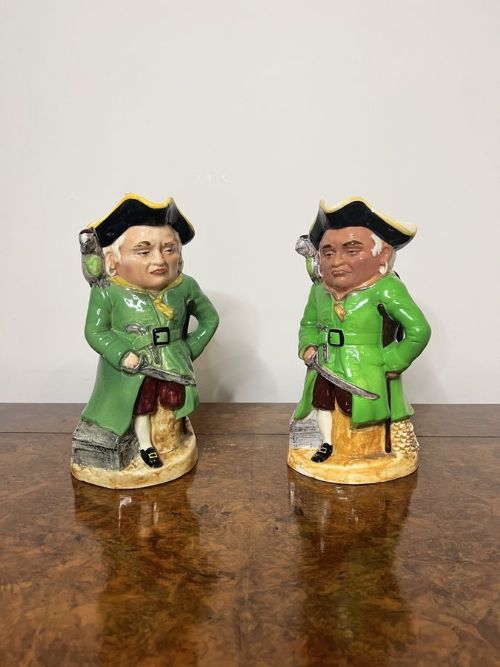


Green Glazed Pitcher
These green glazed pitchers span utilitarian storage vessels and ornamental studio ceramics, offering rich lead and salt glazes across earthenware and stoneware bodies.
Green Glazed Pitcher
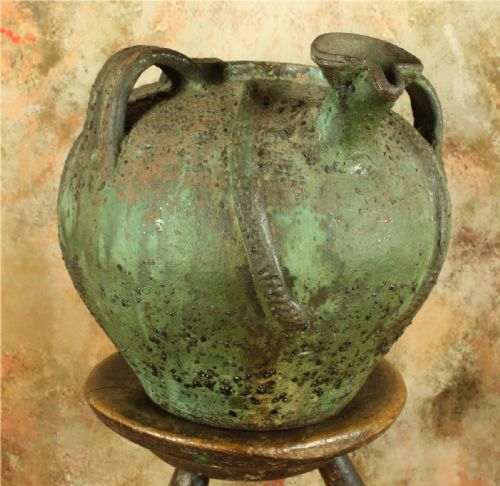
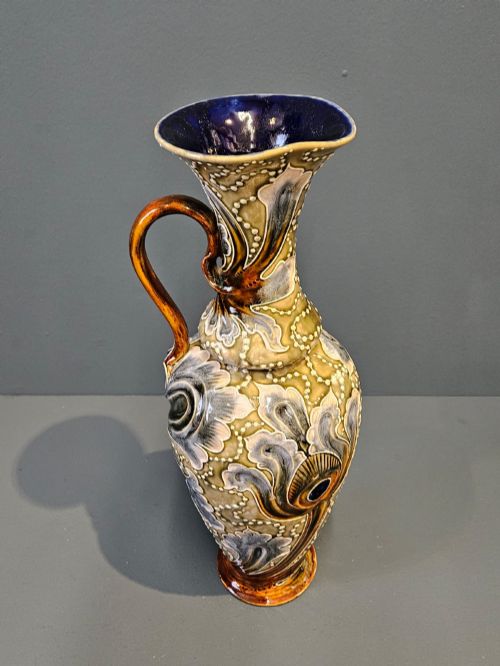
A green glazed pitcher encompasses functional vessels and ornamental ewers originating from the eighteenth, nineteenth, and early twentieth centuries. The selection ranges from robust French provincial oil pots to intricate Victorian majolica and studio art pottery from makers like Doulton and Sir Edmund Elton.
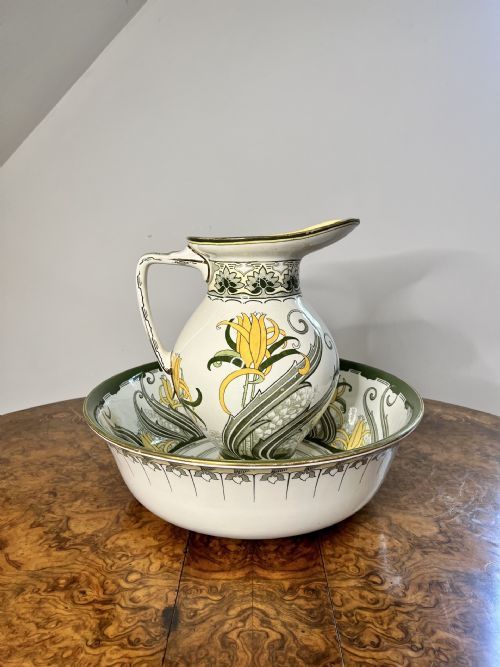
You will frequently encounter Victorian majolica vessels featuring naturalistic motifs, alongside simpler Edwardian jug and bowl sets and salt-glaze ceramic pieces. Forms stretch from cream jugs and decorative ewers to large multi-handled olive pots and figural creamers.
Originating across England and France, these items bridge domestic utility and artistic display. Their green glazes vary from deep emerald tones to mottled olive hues, reflecting both regional folk traditions and late nineteenth-century aesthetic movements.
How they were made
Potters shaped these bodies from earthenware, pearlware, and stoneware using local clays, often throwing them on a potter's wheel or casting them in moulds. Salt-glaze ceramic pieces received an application of common salt during the high-temperature kiln firing, creating a pitted, orange-peel texture on the stoneware body.
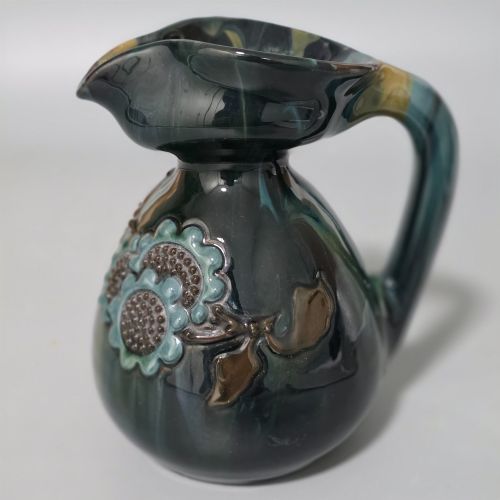
Majolica and earthenware vessels required a secondary opaque tin or lead glaze fired over modelled relief decoration, producing glossy surfaces in rich botanical shades. Studio pieces relied on specialist slip formulations and experimental kiln conditions to achieve complex, iridescent green surface effects.
Cow creamers poured milk directly from their mouths while a milkmaid figure clung precariously to their backs.
What varies in quality
The sophistication of the modelling and the depth of the glaze application distinguish standard utility wares from exhibition pieces. High-ranking examples display crisp relief work, controlled glaze pooling, and distinct artistic authorship rather than generic commercial output.
Studio pottery quality rests upon experimental kiln chemistry and the individuality of the throw, whereas nineteenth-century factory production relies on precision moulding and consistent pigment saturation. The integration of handle design with the primary vessel body also indicates the maker's technical capability.
Doulton Lambeth·Sir Edmund Elton·Minton·George Jones·Staffordshire
The Green Glazed Pitcher Glossary
- Majolica
- A type of earthenware coated with an opaque tin glaze and painted with metallic oxide colours, popular during the Victorian era for bright botanical designs.
- Salt-Glaze Ceramic
- Stoneware that developed a glossy, slightly textured surface when common salt was introduced into the kiln during high-temperature firing.
- Earthenware
- Porous pottery fired at lower temperatures, requiring a glazed surface to hold liquids effectively.
- Pearlware
- A refined earthenware developed in the late eighteenth century, possessing a pale bluish glaze that made the underlying clay body appear whiter.
- Slip
- A liquid mixture of clay and water applied to ceramic bodies for decorative or sealing purposes before firing.
Green Glazed Pitcher: Frequently Asked Questions
How were these pitchers used originally?
These vessels served various domestic and agricultural purposes, ranging from pouring cream and storing olive oil to washing in a bedroom set.
Larger examples functioned as decorative ewers or bulk storage containers, while smaller cream jugs and creamers met daily table service needs.
How do I clean a glazed earthenware jug?
Wash the vessel gently by hand using warm water and a mild detergent, avoiding harsh scouring pads that might scratch the historic glaze.
Submerging antique ceramics for extended periods is unwise, as moisture can penetrate old earthenware bodies through microscopic crazing lines.
What is the difference between earthenware and stoneware?
Earthenware is fired at lower temperatures, leaving the clay body porous and requiring a glaze to achieve watertightness.
Stoneware undergoes high-temperature firing until the clay vitrifies, producing a dense, non-porous material that resists liquid absorption even without glaze.
How can I tell Victorian majolica from earlier pieces?
Victorian majolica typically exhibits vibrant coloured lead glazes over heavily moulded plant or animal relief decoration, reflecting mid to late nineteenth-century tastes.
Earlier eighteenth-century vessels, such as French oil pots or salt-glaze pieces, display simpler utilitarian forms with restrained colour palettes.