


Edwardian Ceramic Pitcher
An edwardian ceramic pitcher brings domestic craft to the washstand, offering hand-painted detail and durable earthenware for everyday utility.
Edwardian Ceramic Pitcher
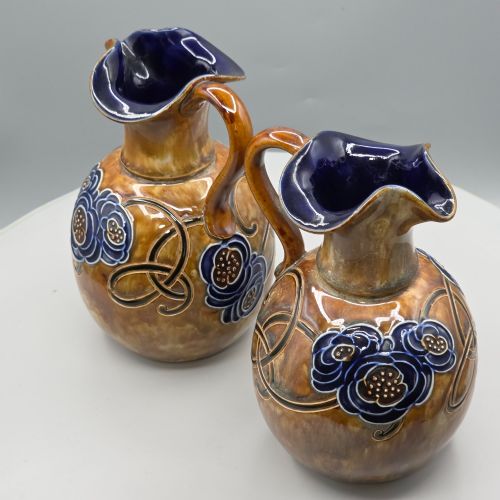
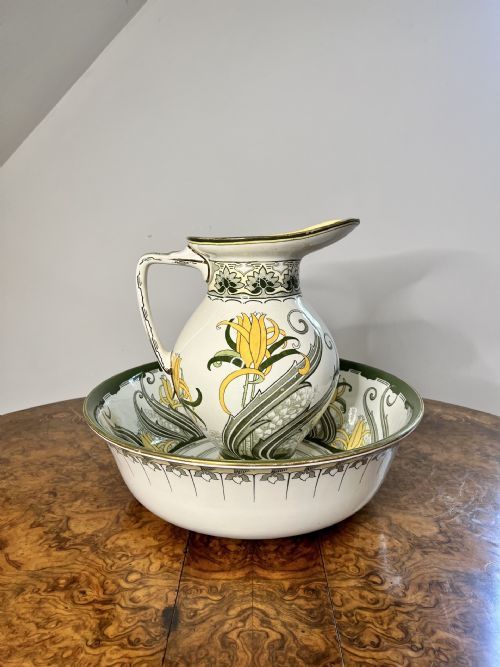
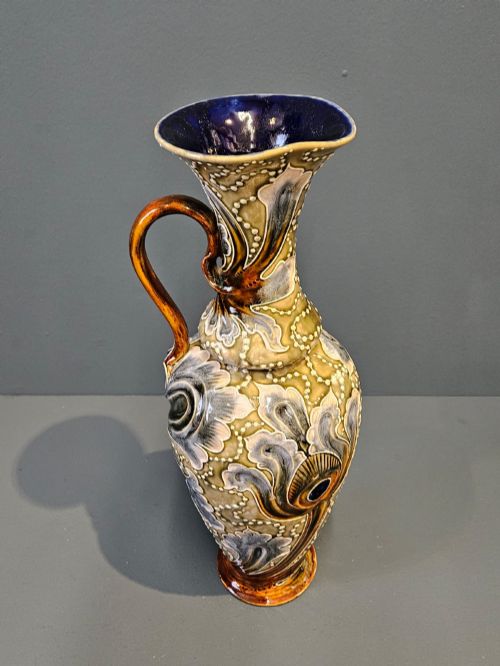
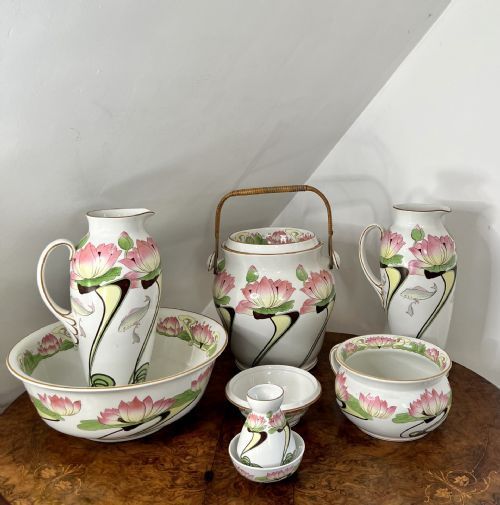
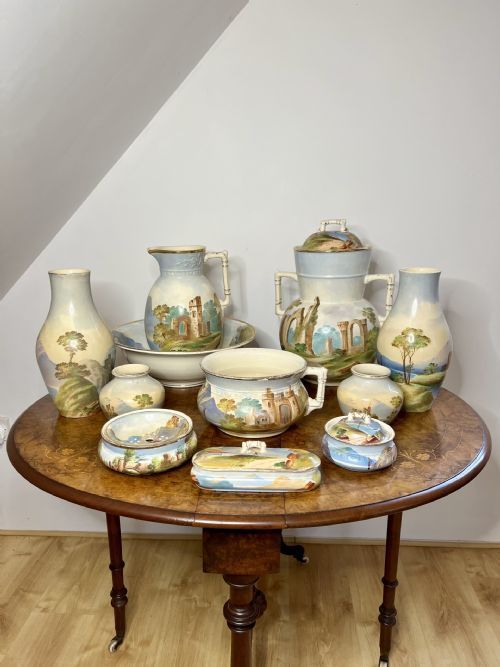
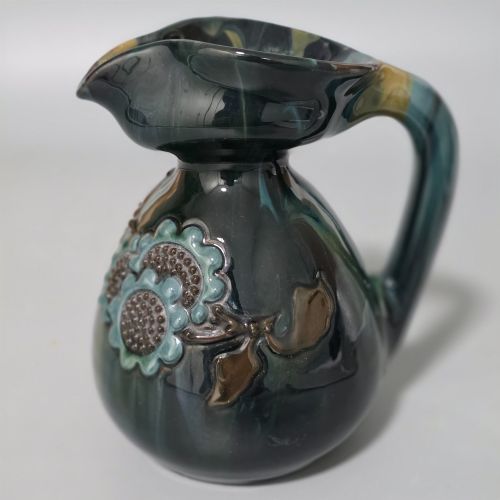
The edwardian ceramic pitcher spans standalone vessels, matched wash sets, and decorative ewers produced around the turn of the twentieth century. These pieces appear in earthenware, stoneware, and porcelain, often taking forms derived from earlier Victorian utility or emerging Art Nouveau lines.
Buyers meet jugs decorated with blue and white transfers, majolica glazes, or hand-painted floral motifs by notable potteries. Sets frequently include a matching basin for the washstand, while standalone pitchers serve as decorative vases or display pieces.
Origins stretch from large commercial factories in Staffordshire and Worcester to studio pottery ventures. The surviving examples document both mass production for domestic hygiene and artistic output from specialised ceramicists.
What varies in quality
The standard of painting and hand-finishing separates basic utility wares from artist-signed pieces. Precision in the glaze application and the crispness of moulded relief details indicate workshop skill.
Completeness alters the character of the object, particularly for wash sets that rely on the survival of both jug and basin. The reputation of the pottery and the presence of recognizable signatures elevate the standing of individual pitchers.
Listings feature works in earthenware, stoneware, and porcelain, spanning Victorian, Edwardian, and Art Nouveau styles.
Royal Doulton·Royal Worcester·Sunflower Pottery·William Moorcroft·Coalport
The Edwardian Ceramic Pitcher Glossary
- Earthenware
- Porous pottery fired at lower temperatures, requiring a glaze to hold liquids. It forms the body of many domestic wash pitchers.
- Salt glaze
- A vitreous coating formed by throwing salt into the kiln during high-temperature firing. It creates a textured, durable finish often seen on stoneware jugs.
- Majolica
- A heavy earthenware type covered with an opaque coloured lead glaze. It yields rich green, brown, and ochre tones on nineteenth-century vessels.
- Blush ivory
- A tinted porcelain body developed by Royal Worcester featuring soft cream and pink shading beneath gilt highlights. It became popular for decorative ewers and vases.
- Ewer
- A large jug with a wide spout and flared base, traditionally used for water alongside a basin. In later periods, it functioned primarily as a decorative ornament.
Edwardian Ceramic Pitcher: Frequently Asked Questions
How do I use an antique pitcher safely?
These ceramic vessels suit dry display or holding cut flowers rather than heavy daily service. Thermal shock from hot water can crack older earthenware bodies.
Wash them gently by hand using mild soap, avoiding abrasive pads that might scratch the glaze or wear away gold leaf accents.
Were all pitchers part of wash sets?
Many pitchers formed part of larger washstand sets that included matching basins, slop buckets, and soap dishes. These items equipped Victorian and Edwardian bedrooms before plumbed bathrooms became standard.
Other vessels served as standalone ewers, puzzle jugs, or decorative vases intended for display rather than washing.
How do I distinguish Edwardian from Victorian pieces?
Victorian ceramics frequently display heavy ornament, rich majolica glazes, or elaborate historic revival styles. Edwardian pieces often shift toward lighter palettes, simpler forms, or flowing Art Nouveau and Arts and Crafts motifs.
Maker marks and registration numbers stamped underneath help pin down the exact decade of manufacture.
What causes crazing on ceramic pitchers?
Crazing appears as a fine network of cracks in the glaze layer caused by tension between the clay body and the outer coating over time. It is a natural ageing process common in older earthenware.
While crazing allows harmless absorption of moisture in some environments, it means the vessel should avoid holding liquids for long periods.