
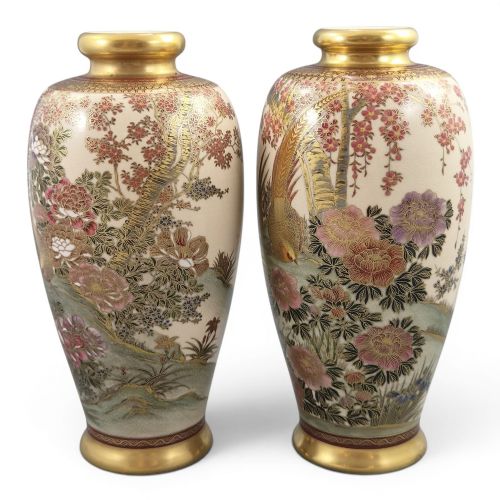


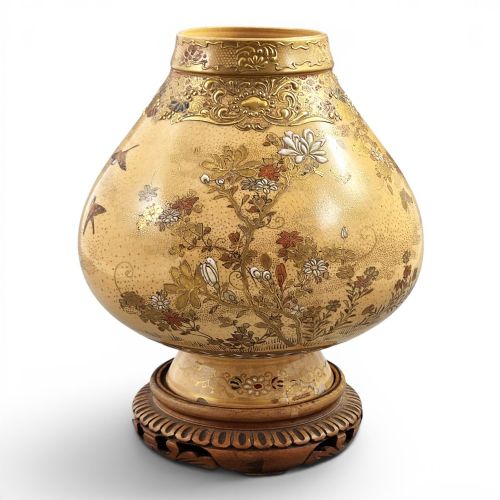


Gilt Ceramic Japanese Urn
When seeking a gilt ceramic japanese urn, you find hand-painted earthenware and porcelain vessels decorated with gold leaf and enamel from the Meiji and Taisho periods.
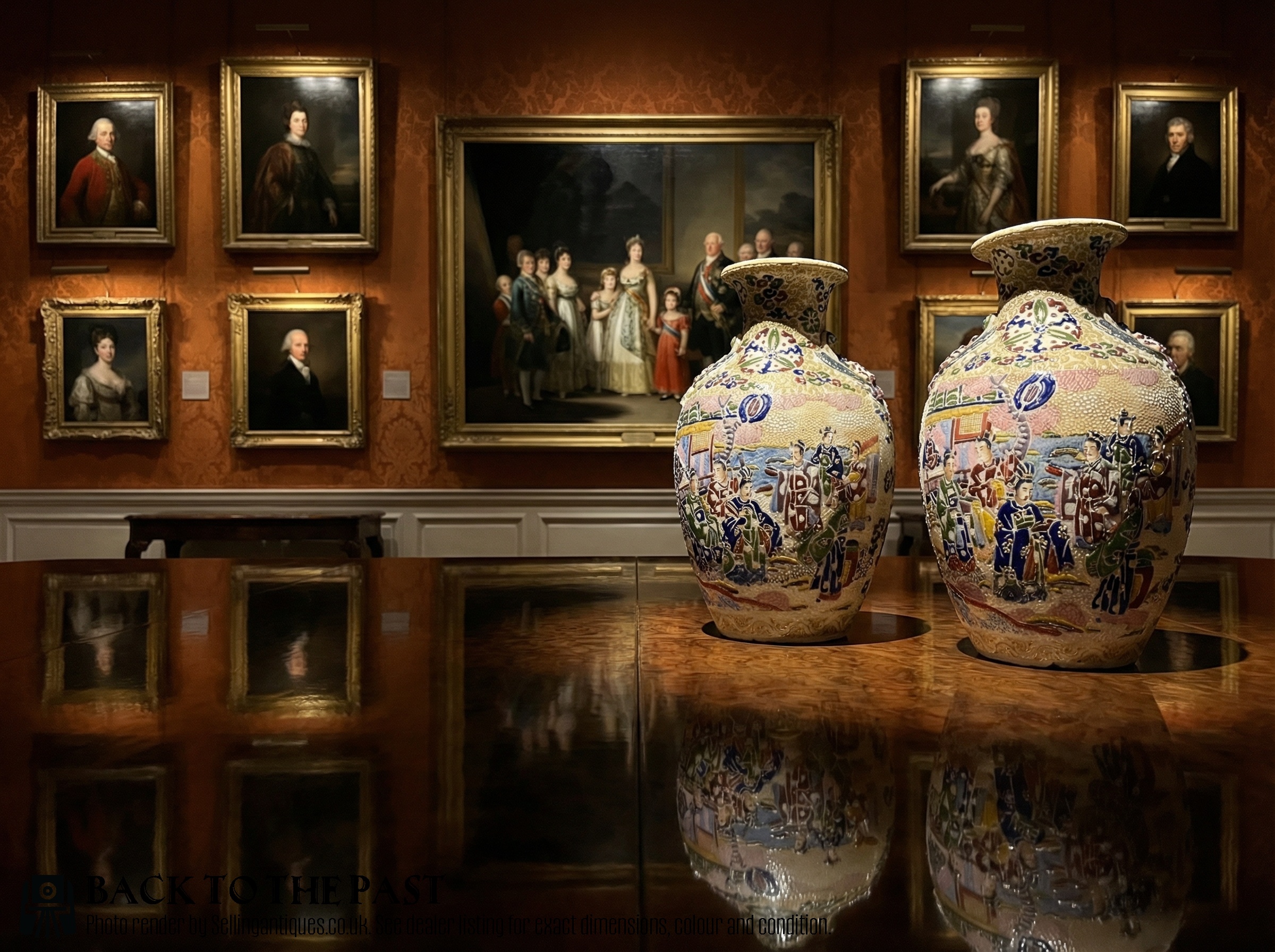
Gilt Ceramic Japanese Urn
A gilt ceramic japanese urn encompasses decorative vases, lidded jars, and incense burners originating from Japan during the nineteenth and early twentieth centuries. These forms reflect traditional eastern aesthetics alongside styles produced for export during the Meiji and Taisho periods.
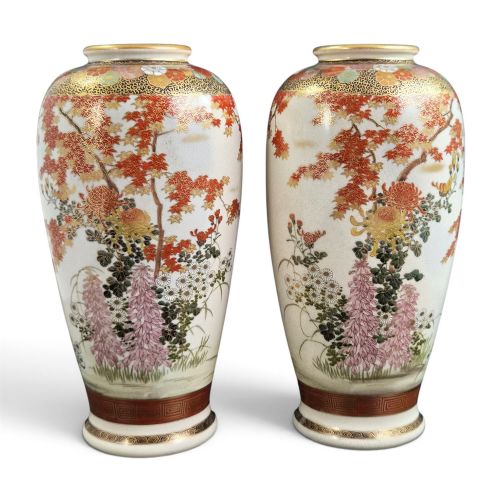
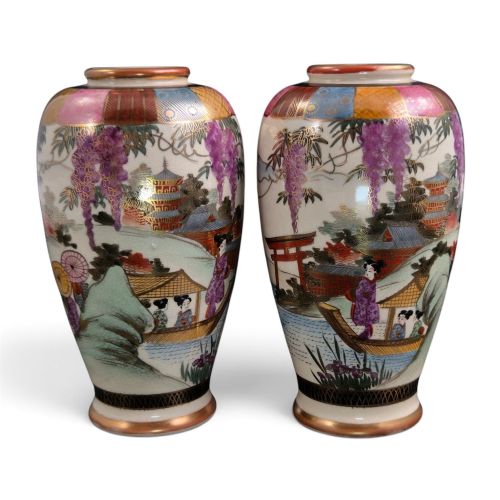
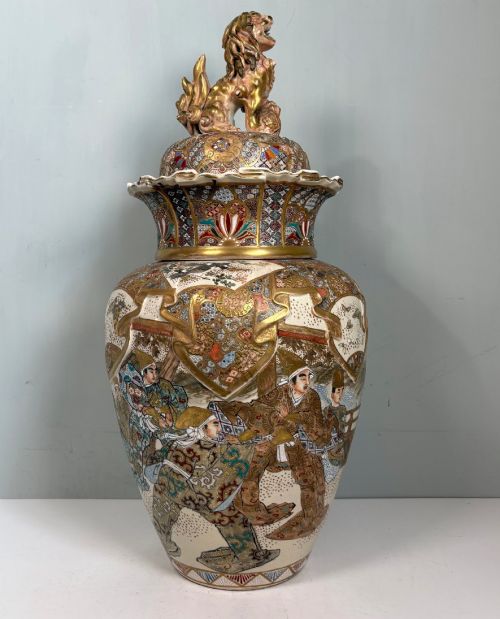
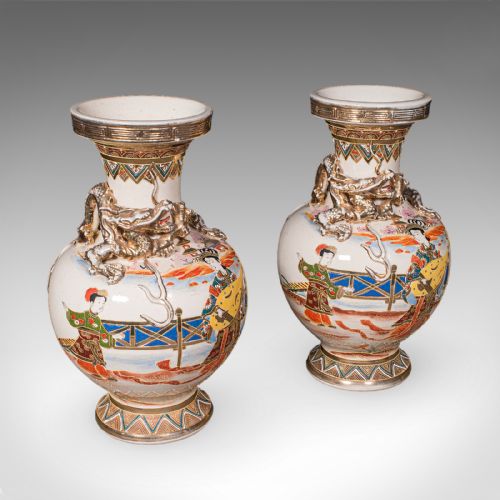
The version most frequently met on this page is the Satsuma earthenware vase, typically painted with intricate court figures, landscapes, and floral motifs enhanced by gold leaf. These ceramic vessels range from small cabinet miniatures to monumental display pieces.
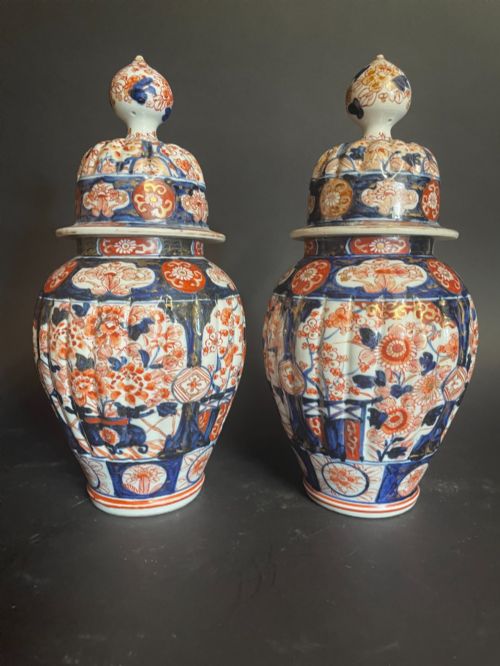
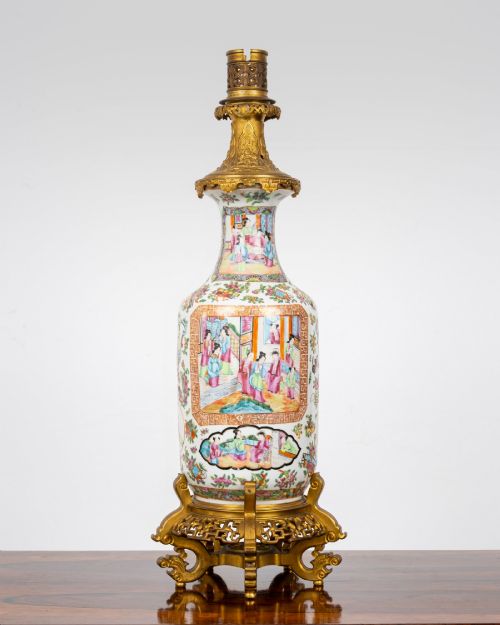
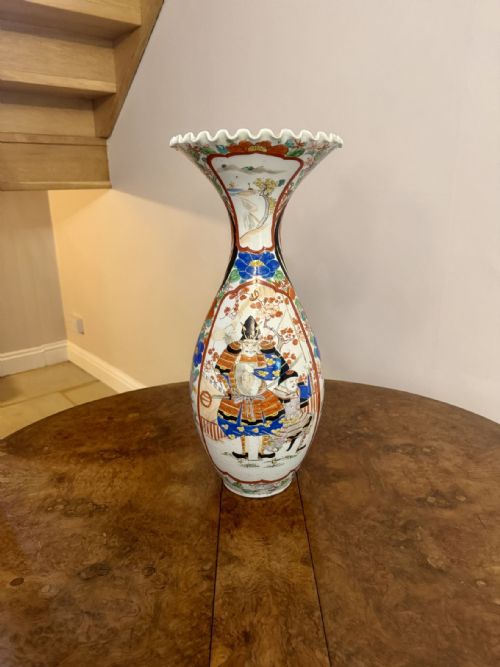
Alongside Satsuma ware, the selection includes Imari and Kutani porcelain vessels featuring cobalt blue and gilt decoration. Table lamps converted from antique vases also appear among these categories.
How they were made
Potters shaped earthenware and porcelain bodies on the wheel or in moulds before firing the clay to create baluster, hexagonal, and jar forms. Earthenware pieces such as Satsuma ware received an ivory-coloured crackle glaze as a base for subsequent painting.
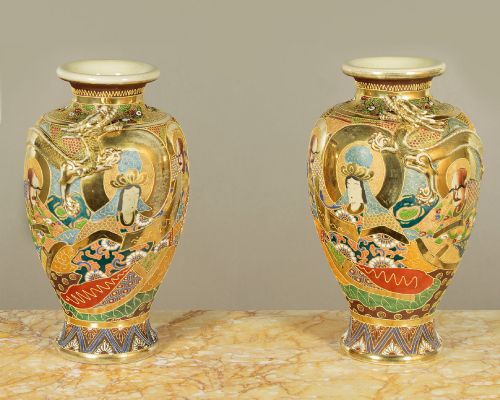
Artisans applied polychrome enamel pigments and gold leaf by hand, often building up raised moriage details to create tactile relief. Kiln firing fixed the enamel and gilt decoration to the ceramic surface.
Listings feature earthenware and porcelain materials from the nineteenth and early twentieth centuries, including the Meiji, Taisho, and Showa periods.
What varies in quality
Quality rests upon the precision of the hand-painted brushwork and the density of the gilding applied to the ceramic body. Pieces produced by recognised workshops in Kyoto and Kobe display finer detail in figural scenes and more complex moriage relief.
The distinction between standard export wares and exhibition-quality pieces lies in the refinement of the paste, the complexity of the narrative panels, and the presence of artist signatures from notable makers.
Maruni Kobe·Manpei·Kinkōzan·Chosei·Nanzan·Seiko-en Chokei·Kizan·Hakusan·Hododa·Tashiro
The Gilt Ceramic Japanese Urn Glossary
- Satsuma ware
- Earthenware pottery originating from Satsuma Province, characterised by an ivory crackle-glaze and detailed enamel and gilt painting. This ceramic type forms the majority of the Japanese vases listed.
- Moriage
- A decorative technique where slip is piped onto the ceramic surface to create raised, three-dimensional patterns before gilding. This method adds texture to robes and architectural elements.
- Imari
- Japanese porcelain decorated in underglaze blue, iron red, and gold, produced primarily in Arita. These pieces display traditional floral and geometric panel designs.
- Kutani
- Japanese porcelain known for vibrant overglaze enamel palettes, frequently featuring green, yellow, red, and purple hues alongside gold details. The style developed in Ishikawa Prefecture.
- Koro
- A traditional Japanese incense burner, usually featuring a pierced cover and supported on small feet. These vessels appear in ceramic and bronze-mounted formats.
Gilt Ceramic Japanese Urn: Frequently Asked Questions
What is the difference between Satsuma and Imari ceramics?
Satsuma ware utilises a cream-coloured earthenware body with a fine crackle glaze, decorated with detailed enamel figures and heavy gilding. Imari ware employs a hard-glazed porcelain body painted in deep cobalt blue, iron red, and gold.
Satsuma pieces tend to focus on narrative figural scenes and landscapes, while Imari designs rely on symmetrical floral and geometric patterns.
How can I identify the Meiji period on these pieces?
The Meiji period spans from 1868 to 1912, a time when Japanese ceramic production expanded significantly for international export. Pieces from this era frequently feature intricate hand-painted court scenes combined with dense gold leaf and moriage decoration.
Many works from this timeframe carry artist signatures or workshop marks from Kyoto and Kobe on the base.
Were these vessels made for export?
A substantial portion of the Satsuma and Kutani pieces produced in the late nineteenth century was created specifically for Western export markets following international trade exhibitions. Artisans adapted traditional forms and decorative themes to appeal to European and American collectors.
These export wares often display more elaborate gilding and narrative complexity than items made strictly for domestic use.
How should I display ceramic urns and vases at home?
Display these decorative ceramic pieces on stable surfaces away from direct sunlight to preserve the enamel colours and gold leaf over time. Larger baluster vases and lidded jars function effectively as floor pieces or focal points on sturdy wooden furniture.
Some antique vases have been converted into table lamps, integrating historical ceramic bodies with functional electrical fittings.