


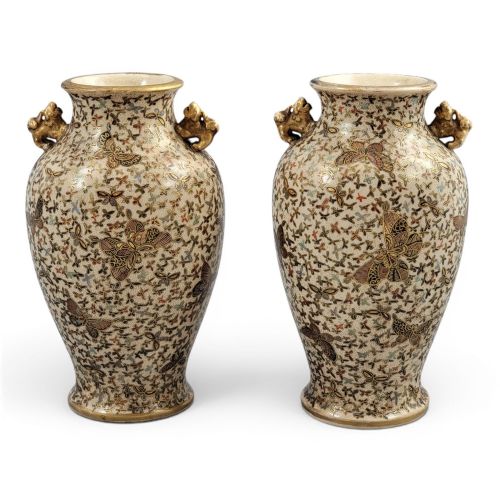


Pair Satsuma Vases
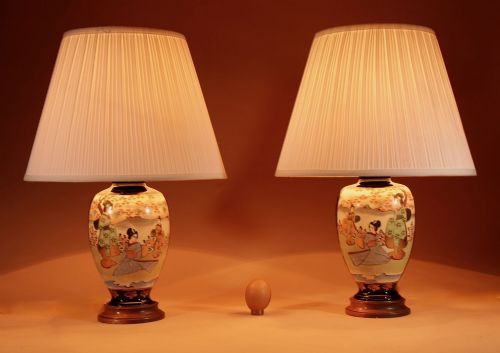
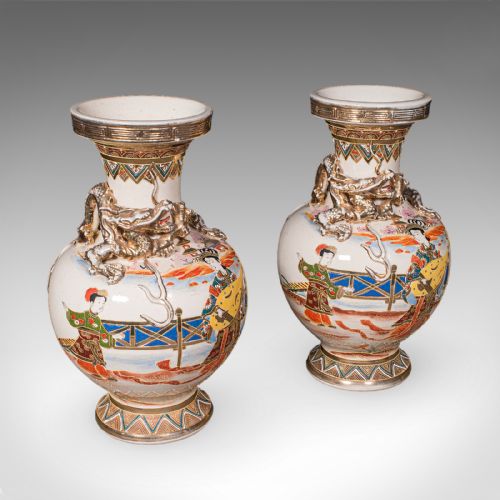
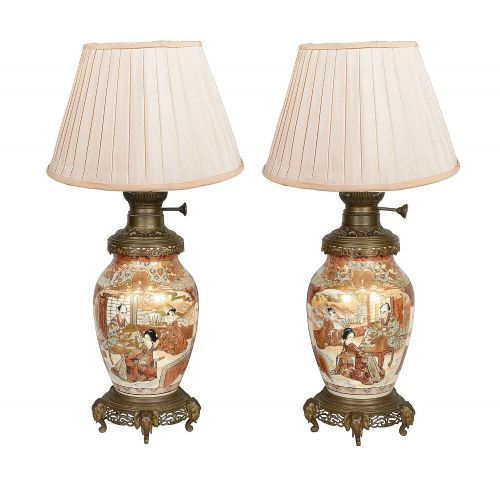
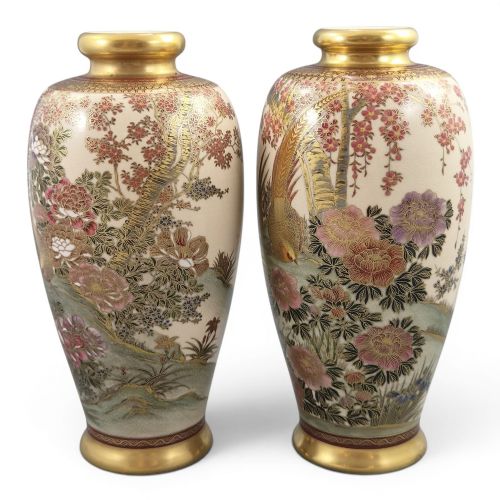
These pair satsuma vases are finely decorated Japanese earthenware vessels finished with enamel and gold leaf, offering collectors balanced symmetry.
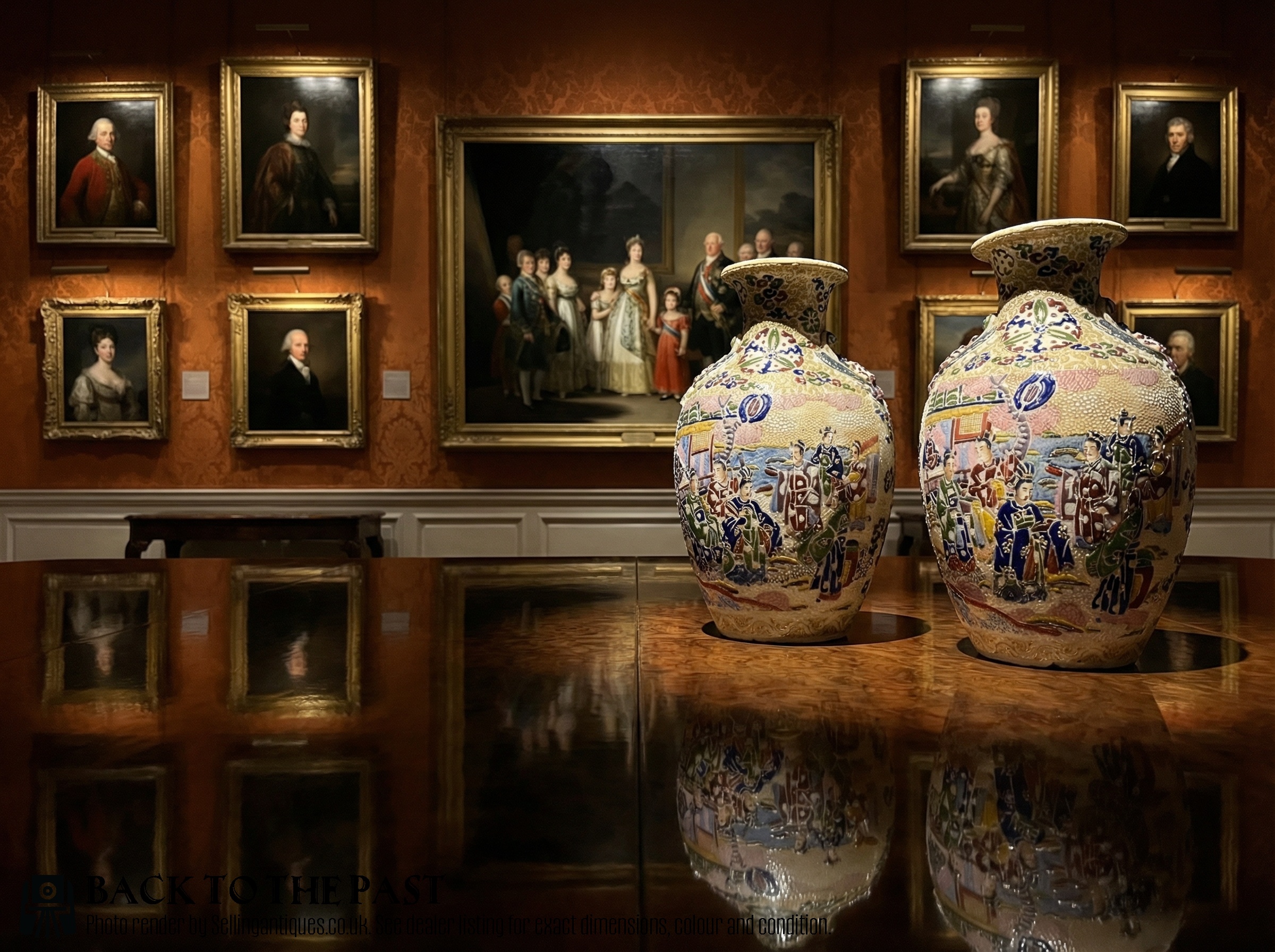
What these pieces are
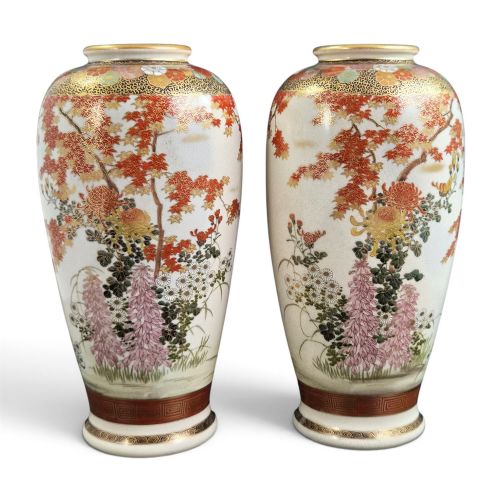
Pair satsuma vases appear primarily in nineteenth century and early twentieth century forms, spanning the Meiji period and Edwardian eras. Collectors encounter standard baluster shapes alongside moon flask vases and lidded containers originating from workshops in Kyoto.
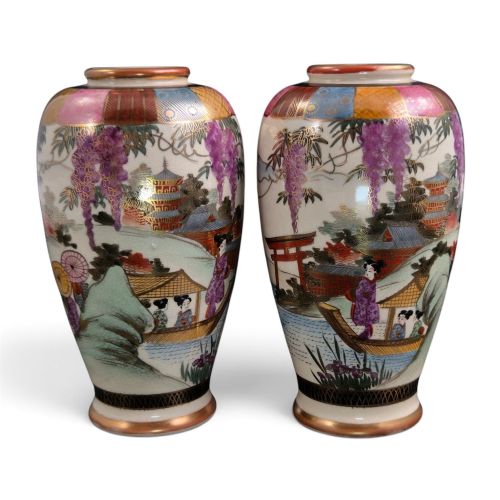
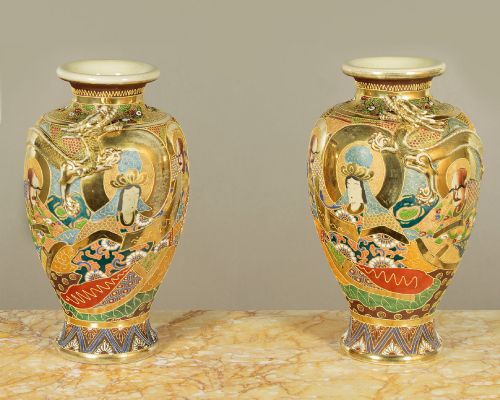
The objects frequently display traditional motifs such as wisteria, cranes, plum blossom, and figures of gods. Many examples bear signatures or factory marks from known makers active during the late Meiji and Taisho periods.

What varies in quality
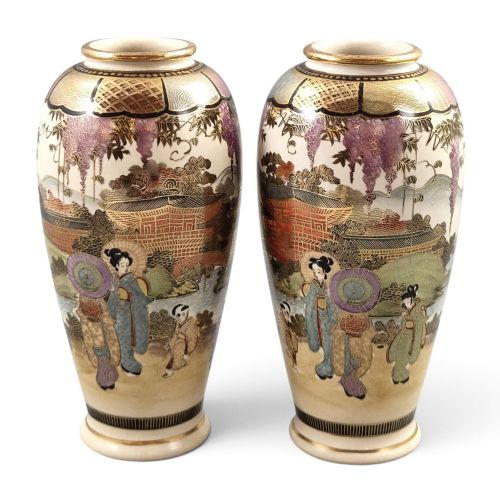
The sophistication of the hand painted decoration dictates the distinction between standard production and top tier pieces. Precision in the brushwork of floral panels and figurative scenes separates ordinary examples from finer works.
The application of gold leaf and the refinement of the underlying crackle glaze contribute to the overall visual depth. Maker signatures from prominent Kyoto workshops often indicate a higher standard of execution.
Retail Price Guide 2026
Typical UK retail prices for pair satsuma vases, calculated from the Sellingantiques database of over a million retail prices indexed since 2003. This retail price guide relies exclusively on Sellingantiques data; no external sources or auction records are used, so the figures do not describe the wider market.
Watch for miniature moon flask vases that prove grand artistic ambition fits comfortably within the palm of a hand.
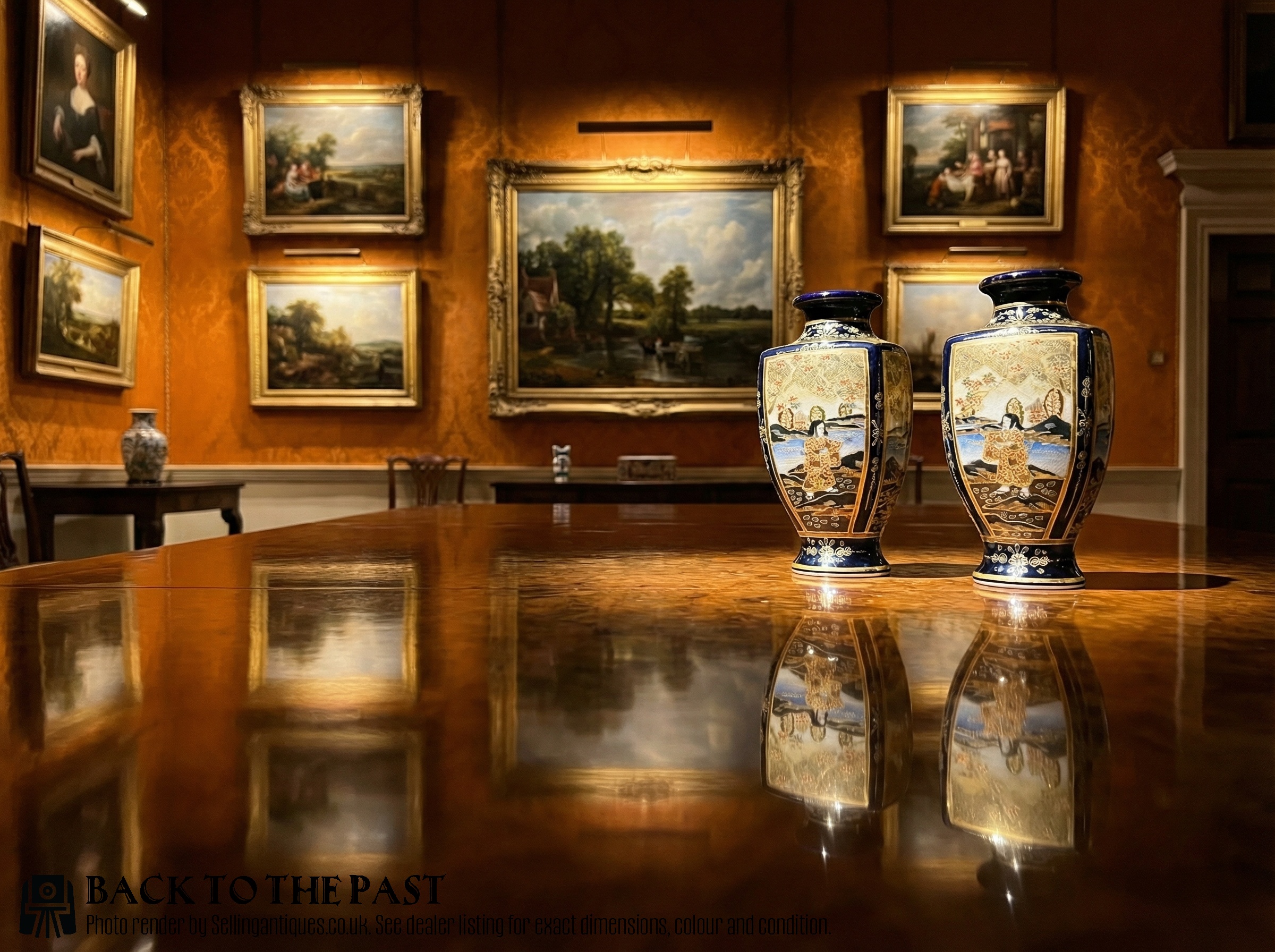
Kinkozan Kyoto·Tagawa Kyoto·Hodota Shoten·Ishiyama
The Pair Satsuma Vases Glossary
- Satsuma ware
- Japanese pottery originating from the Satsuma Province, traditionally characterised by a cream coloured, crackled earthenware body with enamel and gilt decoration.
- Meiji Period
- The era in Japanese history lasting from 1868 to 1912, marked by significant artistic production for export markets.
- Moon Flask
- A flat, round vessel form with a short neck, occasionally produced as matched pairs with decorative handles.
- Shimazu Crest
- The heraldic badge of the Shimazu clan, frequently found on higher quality Satsuma items.
- Earthenware
- Porous ceramic material fired at lower temperatures, serving as the base medium for these glazed vessels.
Frequently Asked Questions
How do I date pair satsuma vases?
Dating relies on stylistic clues, signatures, and material traits recorded across the Meiji period and early twentieth century. Nineteenth century examples often display denser crackle glazes and heavier enamel applications compared to later export pieces.
Examining the base for specific workshop marks or artist signatures provides further chronological context. Edwardian pieces frequently align with the continuation of Meiji aesthetic traditions into the 1900s.
Where were pair satsuma vases made?
These vessels originate primarily from Japan, with notable production centres in Kyoto. Workshops such as Kinkozan produced a significant volume of export ware during the late nineteenth and early twentieth centuries.
While the style derives its name from Satsuma Province, much of the finest decorated pottery destined for Western markets was created in other urban manufacturing hubs.
How should I display pair satsuma vases?
Displaying these objects as matched pairs requires stable surfaces that support their earthenware weight. Placing them on dedicated stands helps elevate larger items and prevents accidental tipping on polished furniture.
Keeping them away from direct sunlight preserves the vibrancy of the enamel colours and gold leaf highlights over time.
What motifs appear on satsuma vases?
Common decorative themes include botanical subjects like wisteria, plum blossom, and foliage alongside birds such as cranes and peacocks. Figural scenes depicting traditional deities and legendary figures also recur frequently.
Background patterns often incorporate dense geometric borders framing the main pictorial panels executed in gilt and enamel.