



Polychrome Satsuma Vase
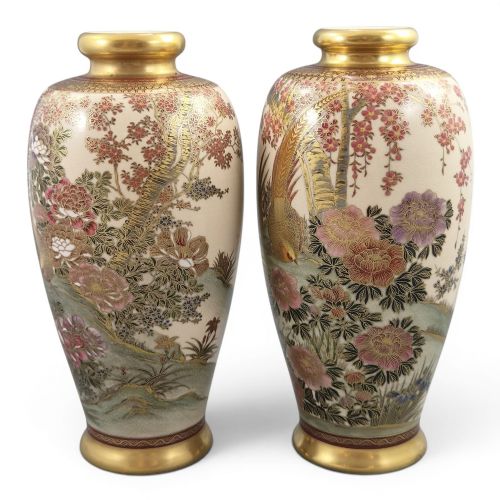
A polychrome satsuma vase brings together intricate Japanese ceramic traditions and rich gilded enamel work, offering a striking display piece for collectors.
Polychrome Satsuma Vase
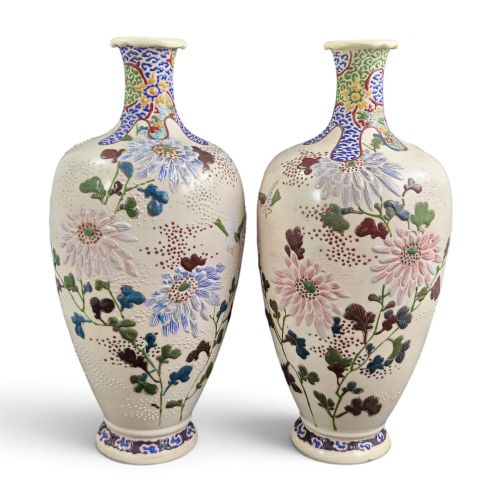
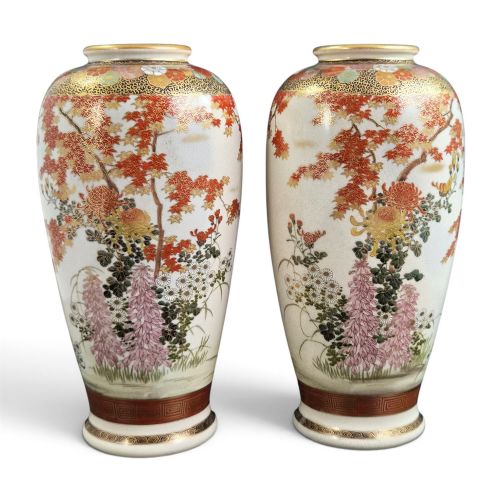
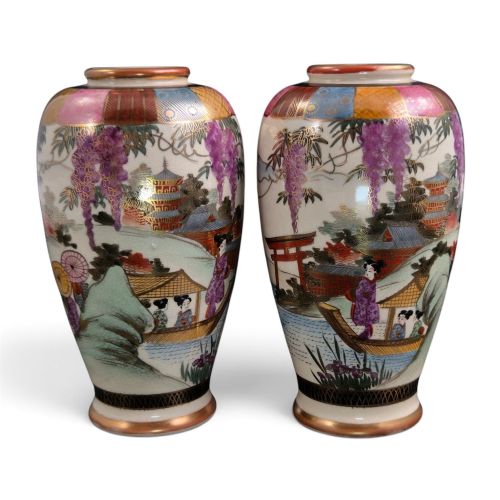
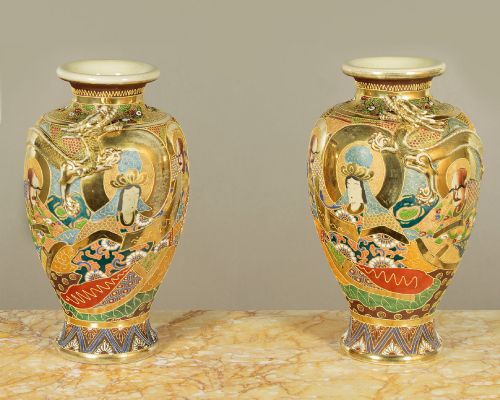
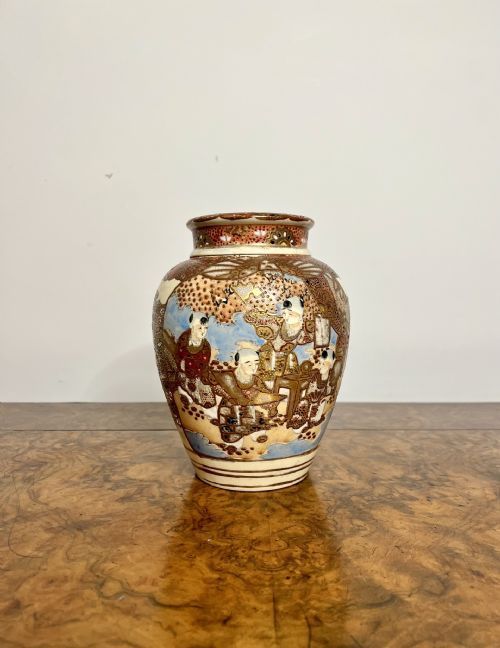
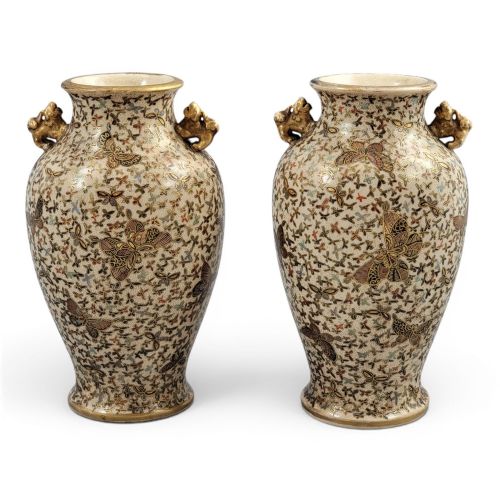
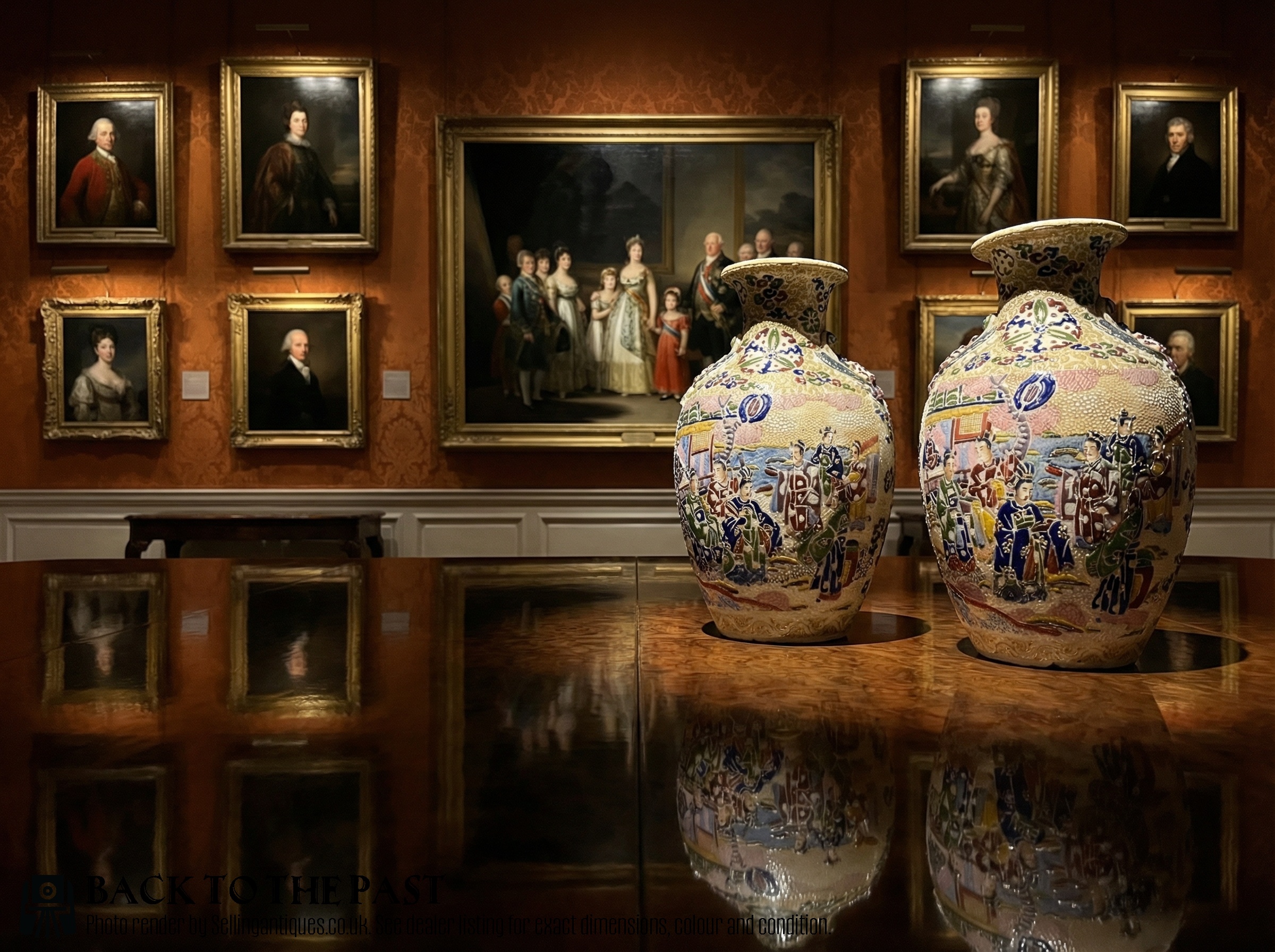
A polychrome satsuma vase represents a distinct category of earthenware vessels originating from Japan, commonly appearing from the nineteenth century through the early twentieth century. These pieces encompass various forms, ranging from standard decorative vases and ginger jars to large floor vases and converted table lamps.
The selections available here span multiple stylistic periods, notably the Meiji and Taisho eras, alongside pieces catalogued under Victorian and Edwardian dates. Buyers frequently encounter matched pairs decorated with traditional motifs such as landscapes, floral arrangements, and figures.
Makers and studios from regional centres like Kyoto and Kobe produced these works for both domestic and export markets. The resulting objects combine traditional Japanese iconography with forms suited to Western interiors of the period.
Materials and methods
Potters built these vessels using cream-coloured earthenware, applying a characteristic fine-crackle glaze over the clay body. This porous base accepted detailed overglaze enamel painting successfully.
Artisans decorated the surfaces using polychrome enamel pigments combined extensively with gold leaf and gilt work. Fine brushwork delineated intricate patterns such as butterflies, deities, and botanical scenes across the ceramic body.
Some miniature vessels pack the entire pantheon of the Seven Gods of Good Fortune into a tiny space barely larger than an egg.
Evaluating craftsmanship
Quality rests primarily upon the precision and density of the painted decoration, where master artists achieved remarkable detail in miniature portraiture and foliage. The restraint and balance of the gilding relative to the enamel colours further separate standard production from exhibition-grade examples.
The finesse of the underlying earthenware body and the evenness of the crackle glaze indicate the skill of the kiln. Pieces bearing identifiable signatures from prominent studios or artists command particular attention for their superior execution.
Maruni Kobe·Manpei·Kinzan·Yamashu·Choshuzan·Jissei·Yoshisada·Hododa·Hayakawa·Kinkozan
The Polychrome Satsuma Vase Glossary
- Satsuma
- A type of Japanese earthenware featuring an ivory-coloured crackle glaze. It served as the primary canvas for elaborate enamel and gilt decoration.
- Meiji Period
- The era in Japanese history spanning from 1868 to 1912. This period saw a massive expansion of decorative arts created for export.
- Shimazu Mon
- The crest of the Shimazu clan, typically depicted as a circle enclosing a cross. It appears frequently on the base or body of Satsuma wares.
- Kinkozan
- A prominent Kyoto pottery family and workshop active in producing high-quality Satsuma ceramics. Their pieces often display dense floral or landscape painting.
Polychrome Satsuma Vase: Frequently Asked Questions
How do I identify a Meiji period piece?
Meiji period examples often display dense, meticulous hand-painted details combined with heavy gilding on earthenware bodies. Dating relies on stylistic markers and historical export stamps characteristic of the late nineteenth century.
Examining the base for studio signatures or the Shimazu clan crest provides further clues. Comparison with documented pieces from Kyoto and Kobe workshops helps confirm the era.
What causes the crackled glaze effect?
The distinct crackle pattern occurs naturally during the cooling process as the glaze contracts at a different rate than the underlying earthenware body. Potters intentionally utilised this absorbent matrix to receive subsequent enamel decoration.
Over time, microscopic staining can enhance the visibility of these fine lines. This crazing is a defining technical feature rather than a fault.
Were these vessels meant for practical use?
Most Satsuma pieces served strictly as ornamental items for display in drawing rooms and parlours rather than functional vessels for holding water. Their porous earthenware bodies and delicate overglaze enamels made them unsuitable for daily utilitarian tasks.
Export demand in the West drove the creation of large decorative vases and jardinières. Many surviving examples retain their original matching covers or stands.