



Kyoto Satsuma Earthenware
Kyoto satsuma earthenware pieces are finely decorated Japanese ceramics featuring intricate enamel and gold leaf, offering collectors rich narrative scenes.
Kyoto Satsuma Earthenware
Kyoto satsuma earthenware represents a distinct category of Japanese ceramics produced primarily during the nineteenth century and the Meiji period. When searching for kyoto satsuma earthenware, buyers encounter diverse forms ranging from large monumental vases to small decorative bowls and incense burners.
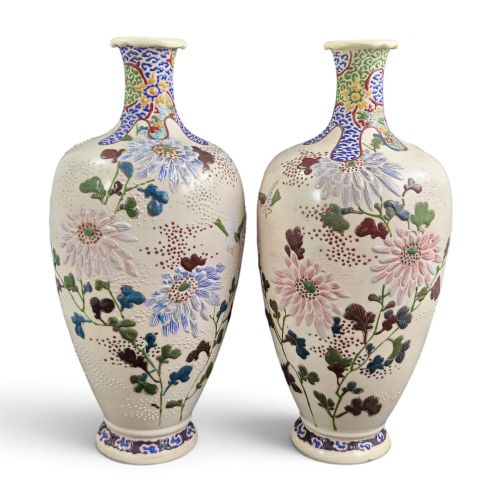
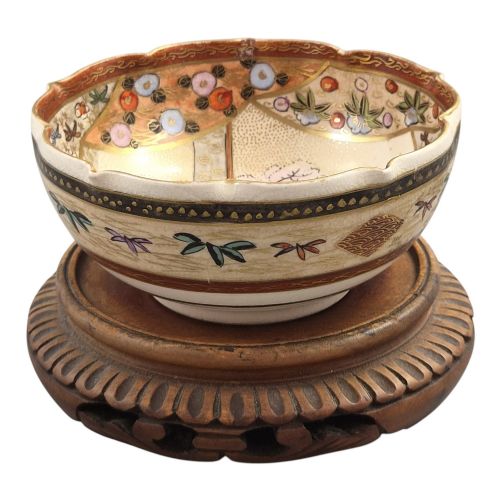
The objects on this page span several specific nineteenth-century decades alongside Edwardian and Victorian designations. Typical formats include pairs of vases, koro burners with lids, and miniature pieces depicting figures, landscapes, and floral motifs.
Makers and studios based in Kyoto utilised traditional techniques to ornament these earthenware bodies. The resulting ceramic works combine elaborate surface painting with narrative subjects such as samurai battles and family scenes.
Materials and Construction Techniques
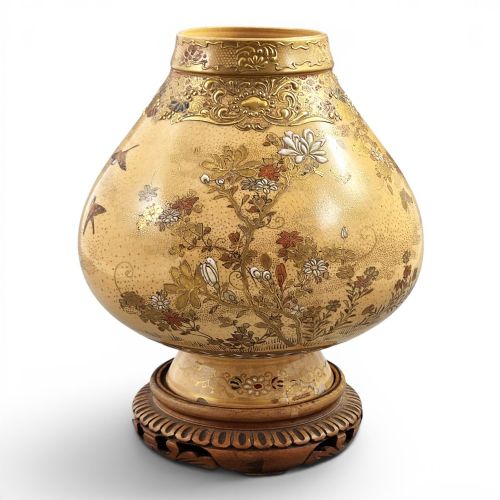
The foundation of these items is earthenware, which receives complex surface decoration through the application of glaze and enamel. Artisans layered extensive gold leaf, gold gilt, and gilding to highlight specific details across the ceramic body.
Many examples incorporate moriage technique, building up raised clay details before applying colours and metallic accents. Wood components also appear alongside ceramic forms, particularly in certain lids and stands associated with these works.
Materials recorded across the inventory include earthenware, enamel, gold leaf, and wood.
Assessing Quality and Execution
Quality in kyoto satsuma earthenware rests upon the precision of the enamel work and the density of the gold leaf application. Finer pieces demonstrate meticulous control in miniature figural painting and complex landscape panels.
The distinction between standard production and top workshop execution lies in the depth of the moriage relief and the clarity of the signature. Pieces produced by recognised Kyoto studios display superior compositional balance across the ceramic surface.
Kinkozan Workshop·Chosei·Seiko-en Chokei·Yamashu·Choshuzan·Jissei·Yoshisada·Hakusan·Tagawa·Kotobuki-do·Shozan·Hayakawa
The Kyoto Satsuma Earthenware Glossary
- Earthenware
- Porous pottery fired at relatively low temperatures. It serves as the base body for the enamel and gilding found on these items.
- Moriage
- A decorative technique using piped clay to create raised relief patterns. This method adds tactile dimension to floral and geometric borders.
- Koro
- A traditional Japanese incense burner typically featuring a pierced lid and three legs. These vessels often include sculptural elements such as Shi-shi lions.
- Mon
- A Japanese heraldic badge or family crest. The Shimazu clan mon frequently appears on Satsuma wares.
- Shi-shi
- A mythical guardian lion or dog figure often sculpted on the lids of incense burners. These protective animals derive from traditional Buddhist iconography.
Kyoto Satsuma Earthenware: Frequently Asked Questions
What is kyoto satsuma earthenware?
Kyoto satsuma earthenware refers to decorated Japanese ceramics produced in Kyoto during the nineteenth century and the Meiji period. These items are distinguished by intricate enamel painting and heavy gilding.
Maker signatures and studio marks often accompany these pieces, which include vases, bowls, and incense burners depicting narrative scenes.
How do I identify a koro?
A koro is a specific type of incense burner equipped with a fitted lid and tripod feet. They frequently incorporate sculptural elements like Shi-shi lions on top.
These vessels were designed for burning incense during traditional Japanese ceremonies and often feature detailed landscape panels.
What is moriage decoration?
Moriage is a ceramic technique where slip is piped onto the surface to create raised, three-dimensional patterns. This method gives vases and bowls a textured feel.
Artisans often paint and gild over these raised clay lines to accentuate floral designs and decorative borders.
How can I date these pieces?
Dating relies on stylistic markers from the Meiji period, Victorian era, and Edwardian periods alongside recorded workshop signatures. Most listed items date from the late nineteenth century around eighteen-eighty to nineteen-hundred.
Specific signatures linked to Kyoto studios help narrow the production window for individual jars and vases.