


Japanese Ceramic Censer
A Japanese ceramic censer brings centuries of sculptural incense-burning tradition to a room through intricate porcelain and earthenware forms.
Japanese Ceramic Censer
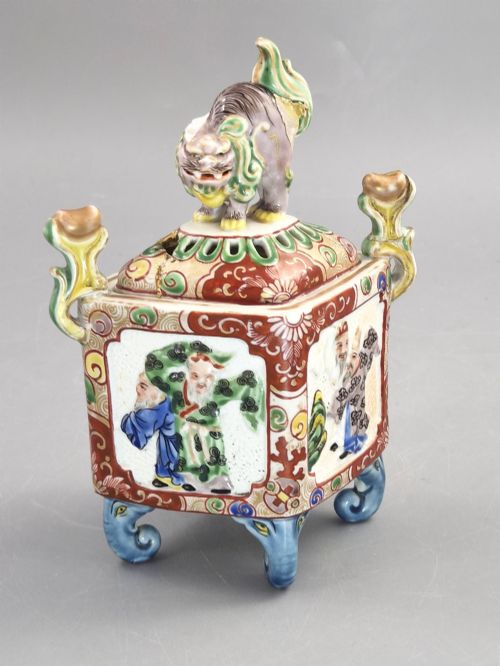
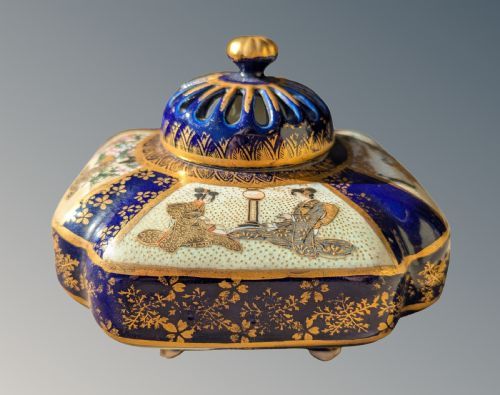
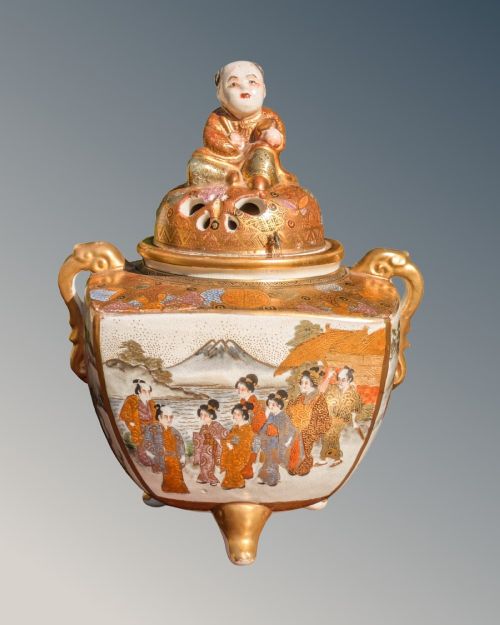
When you search for a japanese ceramic censer, you encounter vessels designed for burning incense across several distinct eras, notably the Edo and Meiji periods. The forms range from traditional tripod bowls and lidded koro to figurative designs shaped like treasure ships.
The pieces appearing on this page encompass porcelain and earthenware productions spanning the eighteenth century through to the Edwardian era. Many examples feature fitted covers, often surmounted by sculpted guardian lions or karashishi finials.
Origins include notable ceramic centres such as Arita, alongside Kutani and Kyoto workshops. Buyers find both large lidded vessels and miniature incense burners designed for scholar's desks.
Materials and construction methods
Potters utilised fine porcelain and earthenware as the primary bases for these vessels, shaping them by hand or on the wheel before firing. Cobalt underglaze, polychrome enamel and intricate gilding were then applied to decorate the surfaces.
Certain pieces incorporate reticulated lattice work or applied sculptural elements like elephant head feet and sculpted dragons. Artisans also integrated delicate gold leaf and bronze accents to elevate the finished appearance of the koro.
Materials represented across the inventory include porcelain, earthenware, cobalt underglaze, enamel, bronze, and gold leaf.
Factors of distinction
Signatures from recognised kiln makers or studios add significant distinction to Satsuma and Kutani pieces. The richness of the cobalt underglaze and the subtlety of the gilding further separate standard production wares from exceptional studio output.
Kinkozan·Kizan·Kotobuki do·Shizan
The Japanese Ceramic Censer Glossary
- Koro
- A traditional Japanese incense burner, typically featuring a body, cover, and three or more feet. These vessels are formed from ceramic or bronze and often display pierced lids for releasing fragrance.
- Satsuma
- An earthenware ceramic type originating from Satsuma Province, characterised by an ivory crackle glaze and elaborate polychrome and gilt enamel decoration. Later Satsuma wares were produced extensively in Kyoto.
- Kutani
- A style of Japanese porcelain and earthenware renowned for vibrant coloured enamels, particularly greens, blues, yellows, and purples, often set against intricate gold backgrounds.
- Imari
- A traditional style of Japanese porcelain featuring cobalt blue underglaze and iron red overglaze, frequently accented with gold. These wares were produced in Arita for both domestic use and export.
- Reticulated
- Describes ceramic work featuring an openwork or pierced lattice design created before glazing and firing. This technique demonstrates high technical skill in shaping the clay without distortion.
- Karashishi
- A mythical guardian lion or dog depicted in Japanese art and sculpture. They frequently appear as sculptural finials on the lids of incense burners.
Japanese Ceramic Censer: Frequently Asked Questions
What is a koro?
A koro is a traditional Japanese incense burner designed with a body, a matching cover, and supporting feet. They were utilised in homes and temples for holding aromatic woods and incense.
Most examples feature pierced lids that allow scented smoke to drift into the surrounding space. Ceramic versions often double as decorative art objects when not in active use.
How do I care for my censer?
Keep the ceramic surface clean by dusting gently with a soft, dry cloth. Avoid using liquid cleaners or chemical polishes that might damage delicate enamel and gilt decoration.
If you burn incense inside the vessel, place a layer of ash at the base to protect the historic ceramic body from direct heat. Handle lidded pieces with care to prevent chipping the rim.
How do I distinguish Satsuma from Kutani?
Satsuma ware typically presents an ivory-coloured earthenware body covered in a fine network of crackled glaze. The decoration relies heavily on detailed enamel work and raised gold.
Kutani ware is usually porcelain rather than earthenware, featuring bold, saturated enamel palettes dominated by greens, reds, and blues. The underlying clay and weight often help separate the two styles.
What is the Shimazu crest?
The Shimazu crest depicts a circle enclosing a cross and represents the powerful clan that ruled the Satsuma Domain. It frequently appears on Satsuma pottery produced under their patronage.
Finding this mon on a ceramic piece indicates a direct historical link to the region's prominent ruling family and kiln operations.