


Tripod Ceramic Censer
These tripod ceramic censer vessels bring ancient ritual forms into domestic spaces through glazed stoneware, porcelain, and earthenware.
Tripod Ceramic Censer
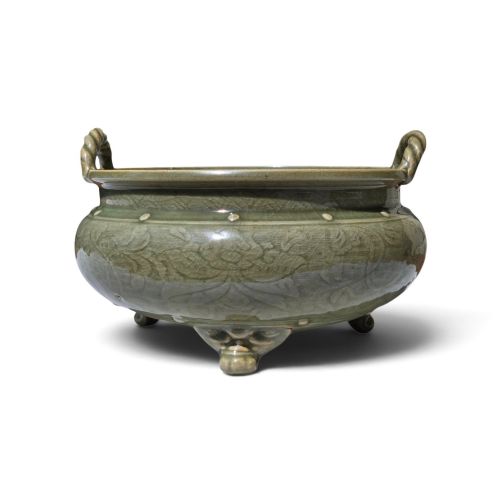
A tripod ceramic censer represents a vessel form rooted in ancient ritual use, taking shape as a bowl or koro supported by three feet. Buyers seeking this form encounter pieces originating from Chinese dynasties and Japanese periods.
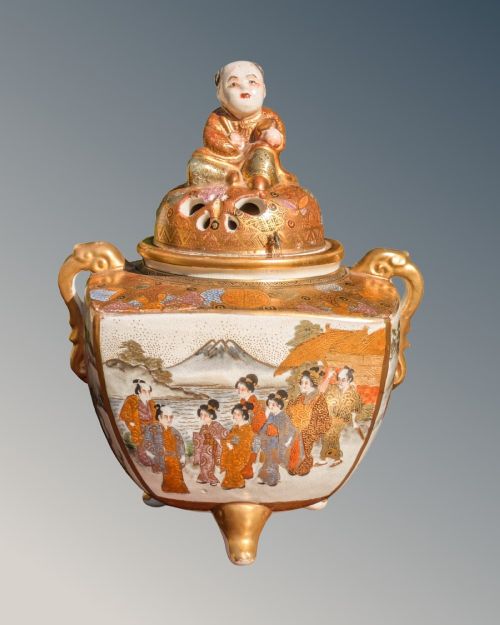
The selections range from early green-glazed stonewares like Longquan celadon to white Dehua porcelains and vibrant Japanese Imari and Satsuma wares. These vessels served primarily for burning incense, evolving over centuries into highly decorative objects.
Most examples found on this page date from the seventeenth, eighteenth, and nineteenth centuries, with occasional earlier sixteenth-century specimens. Collectors will notice distinct regional interpretations, balancing Chinese potting traditions with Japanese ceramic artistry.
Materials and construction
Potters shaped these vessels using stoneware, earthenware, and fine porcelain bodies, often finishing them with celadon or blue and white glazes. Artisans applied gold leaf and gilding to accentuate specific surface details on later Japanese koro.
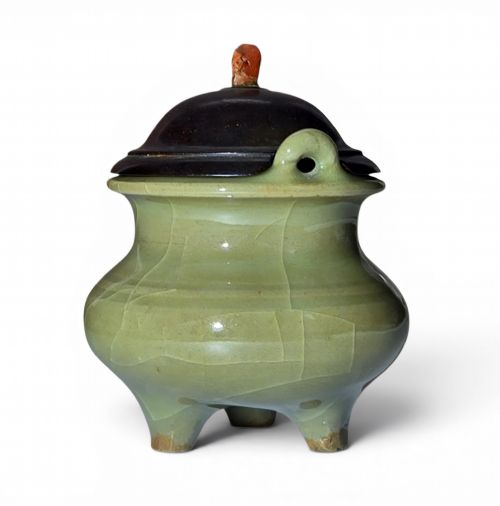
Firing techniques varied significantly, yielding deep crackle glazes on wares such as Ge-type pieces or translucent white surfaces on Blanc de Chine examples. Skilled hands potted bamboo-moulded bodies and sculpted intricate lion covers to complete the structures.
Materials documented across the selection include porcelain, earthenware, celadon glazed stoneware, and gold leaf.
Judging quality and finish
Quality rests upon the refinement of the ceramic body, the evenness of the glaze application, and the crispness of moulded or carved details. Early stonewares rely on subtle glaze depth and tactile presence.
Porcelain examples show distinction through painting precision, particularly in blue and white or Imari colour palettes. The inclusion of bespoke period covers, such as carved zitan wood with coral, elevates the standing of a vessel.
The Tripod Ceramic Censer Glossary
- Celadon
- A transparent green glaze over a stoneware body, often featuring subtle crackle patterns developed during firing. This finish originates from ancient Chinese kilns and mimics jade.
- Koro
- A Japanese incense burner, typically fitted with a cover and supported on three or more feet. These vessels often feature decorative handles or sculpted guardian lion finials.
- Blanc de Chine
- A white porcelain produced at Dehua in China, valued for its milky tone and smooth texture. It translates directly to white from China.
- Imari
- A type of Japanese export porcelain decorated in underglaze blue, iron red, and gold. The style developed in Arita during the Edo period.
- Zitan
- A dense, heavy tropical hardwood prized by Chinese craftsmen for small furnishings and bespoke covers. Its dark purple-black colour ages richly over centuries.
Tripod Ceramic Censer: Frequently Asked Questions
What was a tripod ceramic censer used for?
These vessels functioned primarily to burn aromatic incense sticks or powders during domestic rituals, meditation, or scholarly gatherings.
Over time, they transitioned from utilitarian ritual implements into highly valued decorative objects displayed in reception rooms and studies.
How do I distinguish Chinese from Japanese censers?
Chinese examples often feature monochromatic glazes like celadon or Blanc de Chine, focusing on form and subtle texture.
Japanese pieces, frequently called koro, typically display vibrant polychrome enamels, Imari patterns, or Satsuma crackle glazes with gilt detailing.
Are all tripod censers made of porcelain?
Materials vary across periods and regions, encompassing heavy stoneware, refined porcelain, and traditional earthenware bodies.
Earlier pieces tend to utilise stonewares with thick celadon glazes, while later Japanese export items are predominantly porcelain or earthenware.
How should I display a censer at home?
Place the vessel on a stable surface where its three feet and overall silhouette can be viewed from multiple angles.
Keep them away from direct sunlight and heavy foot traffic to protect delicate glazes, gilding, or accompanying wooden covers.