




Gold Enamel Vase
A gold enamel vase brings together the careful brilliance of enamel work and the rich warmth of gilding across glass, porcelain, and metal.
Gold Enamel Vase
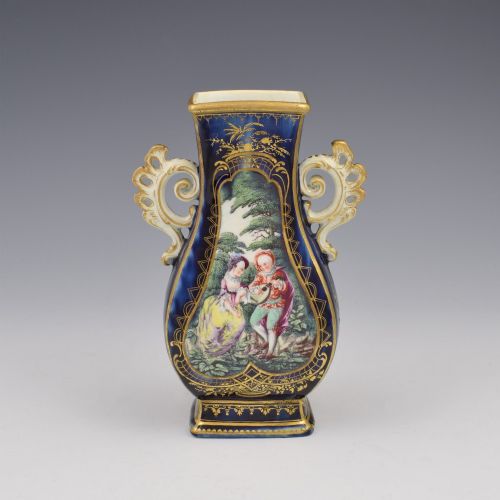
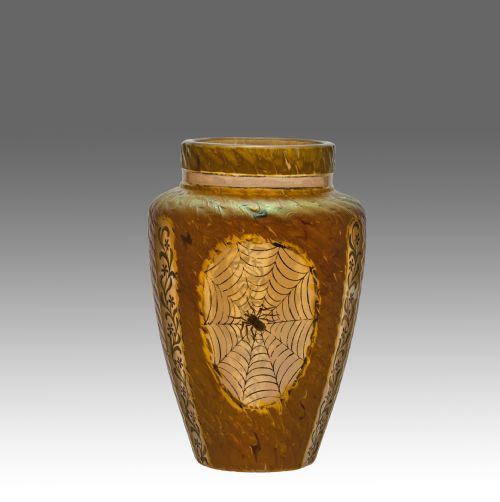
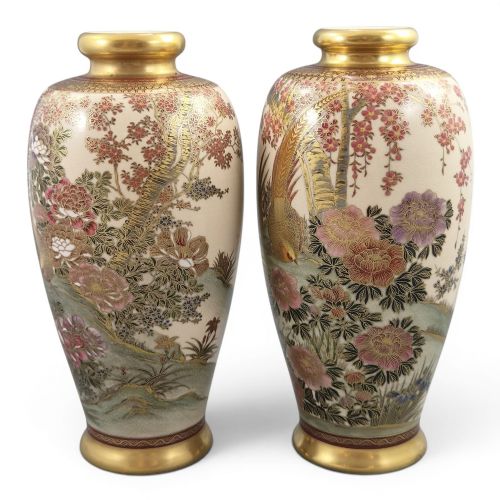
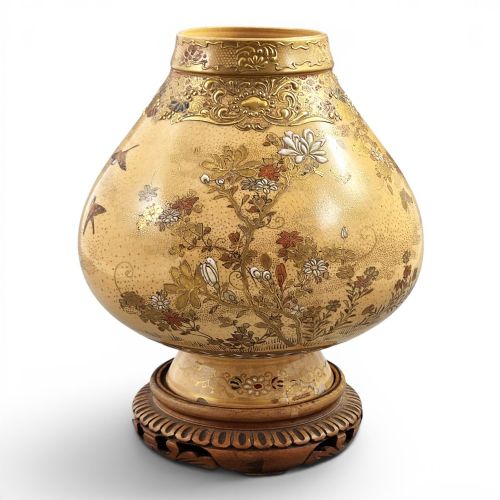
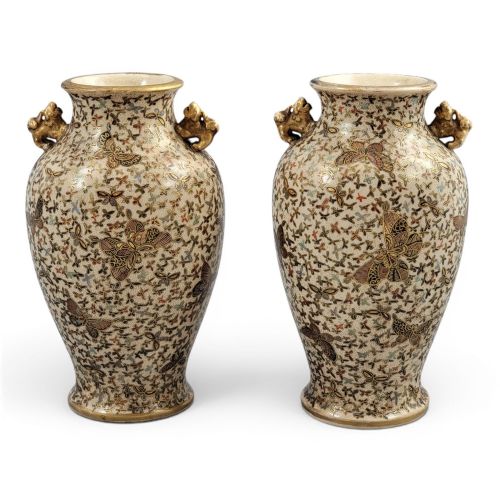
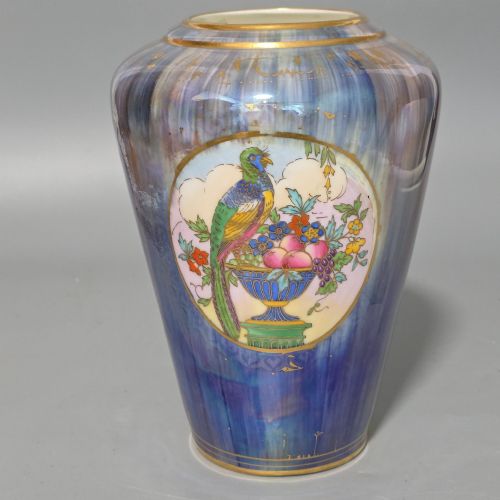
When you search for a gold enamel vase, you encounter a varied selection spanning the eighteenth to the twentieth centuries, crossing British, French, Chinese, and Japanese traditions. The pieces range from English porcelain and stoneware to French glass and gilt bronze, alongside extensive examples of Japanese Satsuma earthenware.
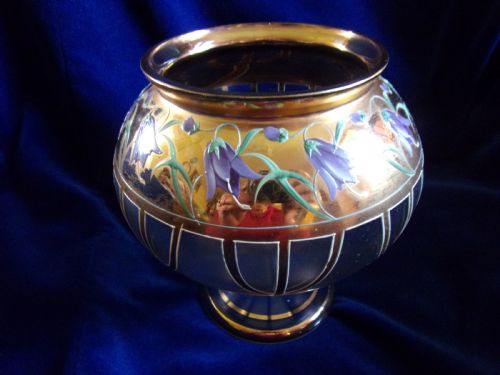
The most frequent versions on this page are Japanese Satsuma earthenware pieces from the Meiji and Edwardian periods, decorated with intricate gilt and enamel motifs. Alongside these sit European glass and porcelain works from the nineteenth and early twentieth centuries, incorporating enamel floral and abstract designs.
Forms include traditional vases, lidded urns, and decorative bowls, reflecting the diverse decorative arts of their respective periods. Each object displays the union of metallic detailing with coloured enamel decoration.
Materials and construction
The construction relies on a diverse base of materials including porcelain, soft-paste porcelain, earthenware, stoneware, glass, crystal, and gilt bronze. Makers applied enamel paints and gold leaf or gilt details directly onto these surfaces, frequently firing them multiple times to fuse the decoration.
Techniques range from the fine brushwork seen on English porcelain and French glass to the raised moriage decoration and champlevé metalwork characteristic of nineteenth-century pieces. The integration of gold gilt and enamel required precise kiln control to achieve durable adhesion and vibrant colour.
Distinctions in quality
Quality rests upon the precision of the enamel work and the application of the gold leaf or gilt. Superior pieces display crisp brushwork, balanced compositions, and well-preserved metallic highlights without excessive rubbing or loss.
The distinction between standard production and top-tier examples also lies in the depth of the modelled body, whether it is hand-painted porcelain, heavy crystal, or intricate earthenware. Signed studio pieces and exhibition-quality items demonstrate a higher level of control in both the body formation and the surface decoration.
Kralik Glass·Kinkōzan Workshop·St Louis glassworks·Royal Doulton Lambeth·Daum
The Gold Enamel Vase Glossary
- Enameled
- Decorated with a vitrified substance fused to the surface of metal, glass, or pottery through firing. This technique provides durable colour and a glossy finish.
- Gilt
- Covered thinly with gold leaf or gold paint to give the appearance of solid gold. It appears frequently on ceramics and glass to highlight raised motifs.
- Moriage
- A Japanese decorating technique using clay applied in dots or lines to create raised patterns beneath the glaze and enamel. It is typical of Satsuma pottery.
- Champlevé
- An enamelling technique where troughs are carved into a metal surface and filled with enamel powder before firing. The surrounding metal remains visible as part of the design.
- Soft-paste porcelain
- A ceramic material made from a mixture of clay and glass frit, fired at lower temperatures than hard-paste porcelain. It has a slightly warmer tone and softer glaze.
Gold Enamel Vase: Frequently Asked Questions
How do I care for a gold enamel vase?
Dust the surface gently with a soft, dry cloth to prevent accumulation. Avoid chemical cleaners and water immersion, as older enamels and gold leaf can be sensitive to moisture.
Keep the piece away from direct sunlight to preserve the vibrancy of the enamel colours. Handle by the body rather than delicate handles or rims.
What is the difference between porcelain and earthenware?
Porcelain is fired at high temperatures until the body becomes vitrified and non-porous. Earthenware is fired at lower temperatures, resulting in a more porous material that requires a glaze to hold liquids.
In these listings, porcelain items often originate from European factories, while earthenware forms a large portion of the Japanese Satsuma selections.
Where were champleve vases made?
Champlevé enamelling on metal was widely practiced in nineteenth-century France, particularly in Paris workshops producing decorative bronze wares. These pieces often combine cast metal mounts with coloured enamel panels.
The technique has a much older history across Europe and Asia, but the examples here lean towards nineteenth-century French decorative arts.