



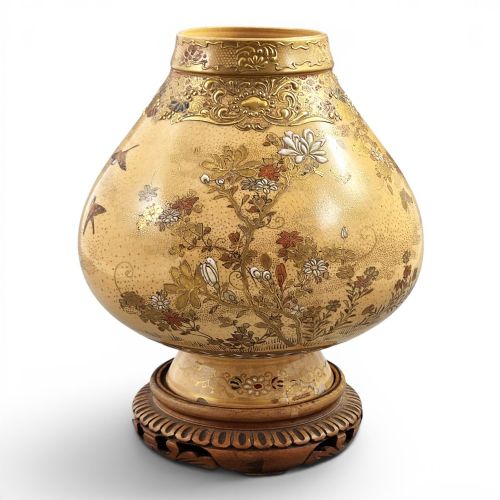
Gilded Japanese Pottery
These gilded japanese pottery pieces bring together intricate earthenware forms and rich gold leaf detailing from the nineteenth and early twentieth centuries.
Gilded Japanese Pottery
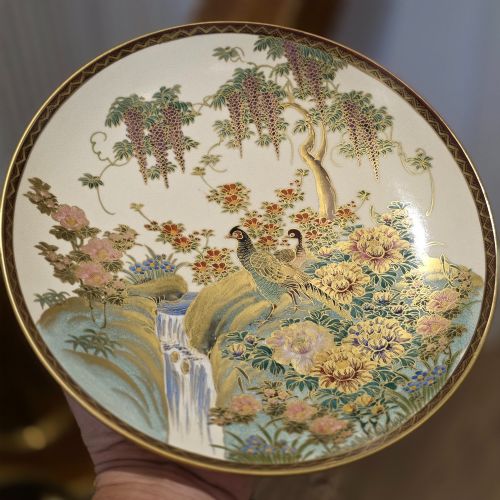
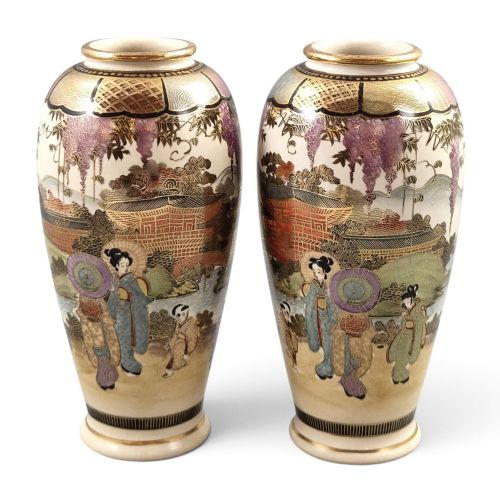
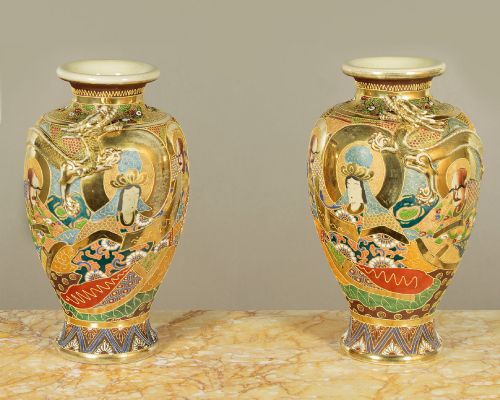
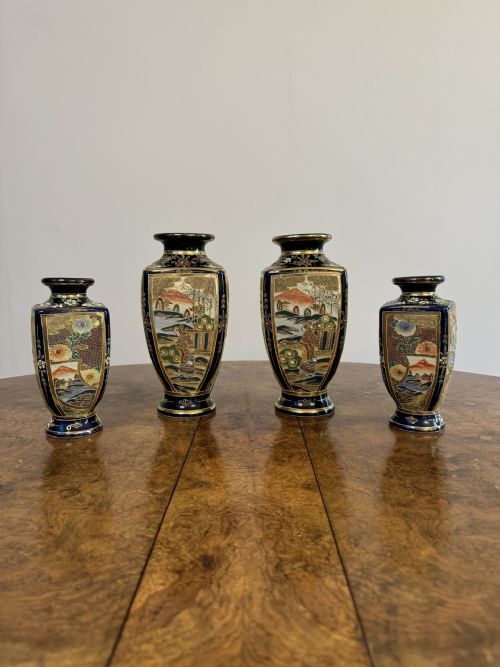
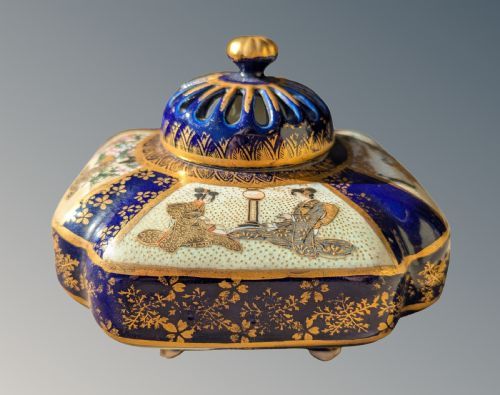
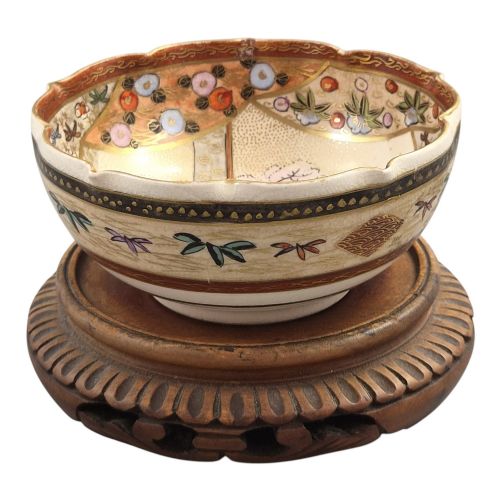
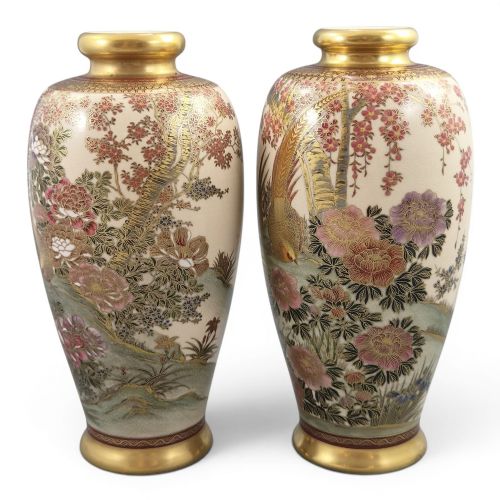
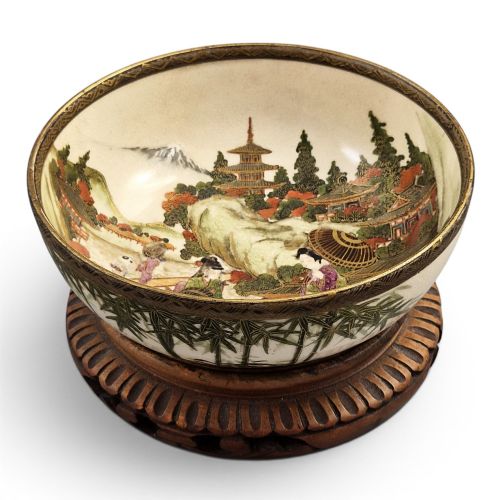
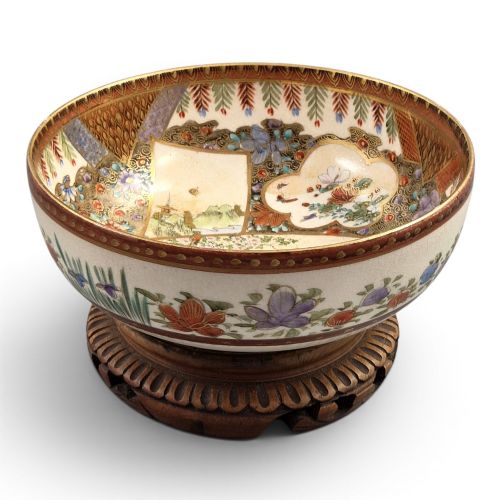
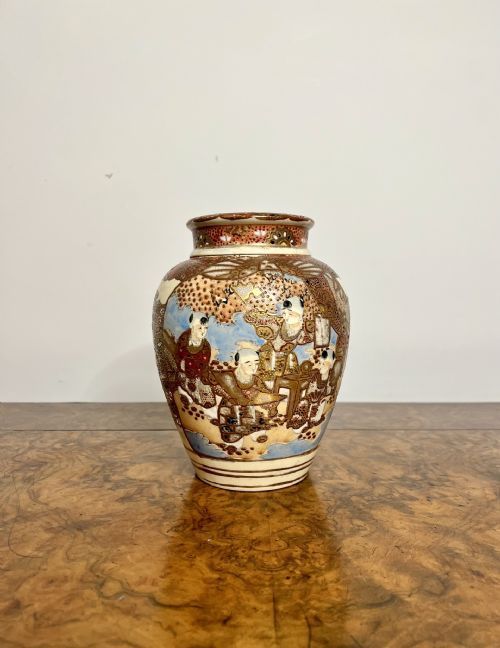
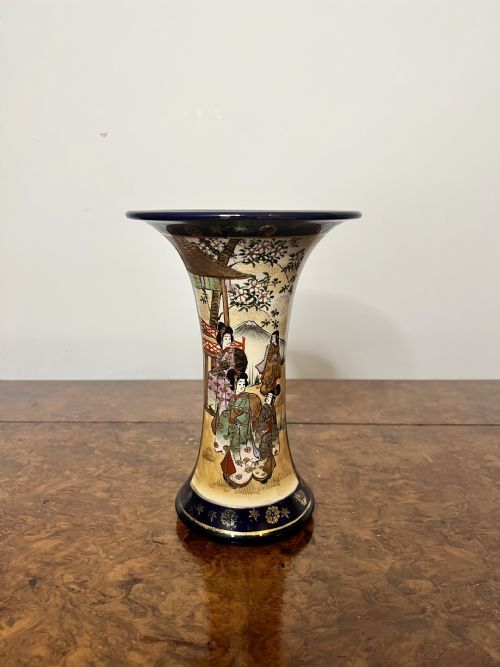
When you search for gilded japanese pottery, you encounter a selection of decorative vessels, bowls, and objects primarily rooted in the Meiji and Taisho periods. These items range from small tea caddies and miniature vases to large garnitures and plates.
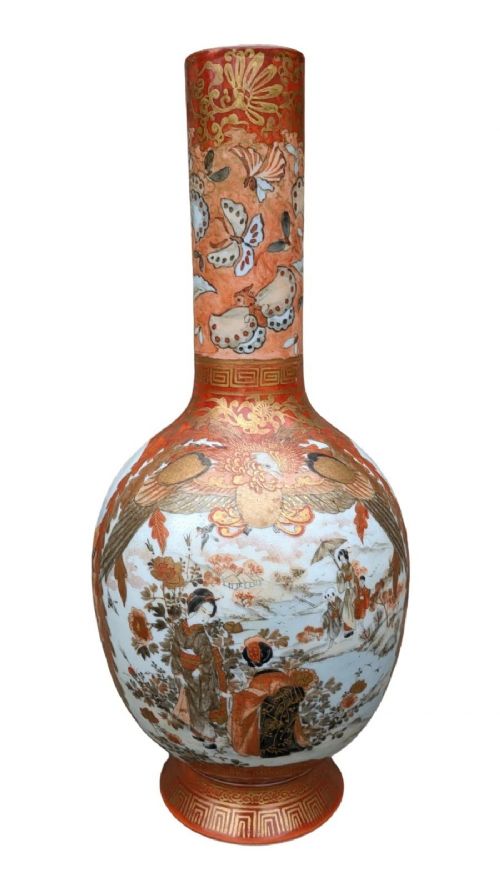
The most common examples on this page are Satsuma wares, characterised by their earthenware bodies and detailed enamel painting enriched with gold leaf. Alongside these, Kutani and Imari pieces appear, offering alternative traditions of ceramic decoration.
Makers and workshops from Kyoto and other ceramic centres produced these items for both domestic use and export during the late nineteenth and early twentieth centuries. The forms serve primarily as decorative objects, table lamps, and traditional containers.
How they were made
The foundation of these pieces relies on earthenware and porcelain bodies shaped by hand or mould before receiving initial firing. Artisans then applied colourful enamel paints alongside gold leaf and gilt highlights to build up complex pictorial scenes.
Many Satsuma items utilise a fine crackle glaze across the earthenware surface, providing a textured background for the painted figures and floral motifs. Subsequent low-temperature firings fixed the enamel and gold layers to the ceramic body.
Keep an eye out for tiny painted butterflies that seem ready to flutter right off the porcelain.
What varies in quality
The standard of painting on these ceramics differs significantly between standard export items and pieces produced by named workshops and master artists. Finer examples display meticulous brushwork in the figures, foliage, and intricate gold borders.
The application of the gilt and gold leaf also separates the output, with superior items maintaining crisp detail and abundant coverage without crowding the composition. The weight, balance, and refinement of the earthenware or porcelain body further distinguish the tiers of production.
Koshida·Shozan·Kizan·Kinkozan·Manpei·Kozan·Kinzan·Hotoda·Toshozan·Makuzu Kozan II·Ryuzan·Chosei
The Gilded Japanese Pottery Glossary
- Satsuma ware
- Earthenware pottery originating from the Satsuma province, typically featuring a ivory crackle glaze decorated with polychrome enamels and gilt. It became especially popular for export during the Meiji period.
- Moriage
- A ceramic decorating technique where slip is piped onto the surface to create raised decorative patterns, often highlighted with gold. This method adds tangible relief to figures and robes.
- Kutani ware
- Japanese porcelain and pottery traditionally marked by bold colour palettes, particularly iron red and gold. These pieces often depict natural scenes or geometric borders.
- Koro
- A traditional Japanese incense burner, usually fitted with a pierced cover to allow fragrance to escape. They appear in various ceramic styles including Satsuma.
- Natsume
- A small tea caddy used in Japanese tea ceremonies, traditionally shaped like a jujube fruit. Ceramic versions often feature delicate painted and gilded designs.
- Okimono
- A small decorative statue or carving designed for display in a household alcove or room. These ceramic figures depict deities, animals, or historical subjects.
Gilded Japanese Pottery: Frequently Asked Questions
What is Satsuma ware?
Satsuma ware is a type of Japanese earthenware traditionally known for its ivory-coloured body and distinctive fine crackle glaze. Artisans decorated these surfaces with detailed enamel painting and gold leaf.
These pieces were produced in large quantities for export during the late nineteenth century. They include vases, bowls, and decorative boxes featuring figures and landscapes.
How do I care for gilded ceramics?
These delicate ceramic items require gentle handling and dry dusting with a soft cloth to protect the enamel and gold leaf. Avoid using water, cleaning agents, or abrasive materials on the surface.
Display the pieces away from direct sunlight and areas of high humidity to preserve the integrity of the glaze and gilt.
What is the Meiji period?
The Meiji period spans from 1868 to 1912, marking an era of rapid modernisation and increased international trade in Japan. Craftsmen produced exceptional decorative arts specifically for Western markets.
Ceramics from this time often display complex gilding and fine narrative painting. Workshops competed to create intricate works for international expositions.
Are these pieces signed?
Many fine Japanese ceramics feature artist signatures or workshop seals painted on the base. These signatures typically name the kiln, the decorator, or the studio responsible for the item.
Identifying these marks helps connect specific pieces to notable Meiji period makers. However, unsigned export pieces are also common.