


Japanese Figure Painted Vases
Japanese figure painted vases bring hand-painted narrative scenes and rich gilding into a room.
Japanese Figure Painted Vases
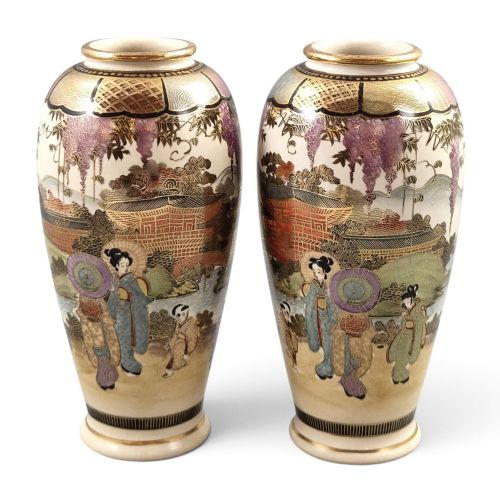
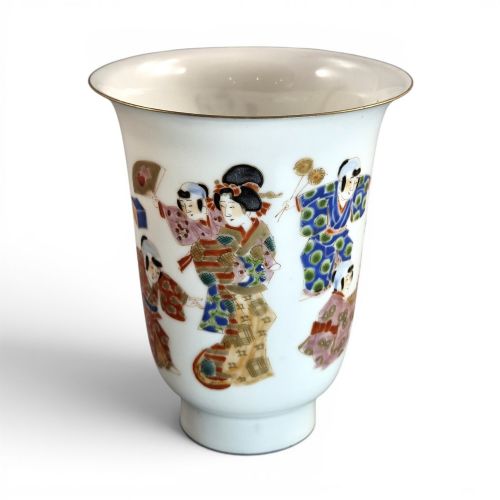
Japanese figure painted vases encompass decorative vessels originating primarily from the Meiji period and the wider nineteenth century. These objects combine traditional ceramic forms with detailed figurative artwork, often depicting women, children, and historical scenes.
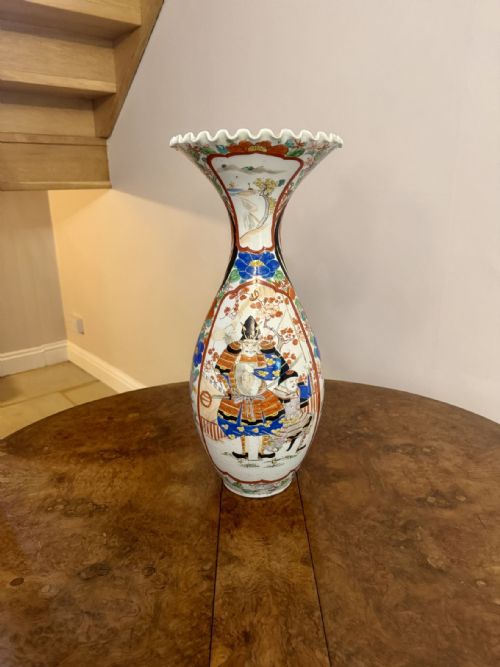
The pieces appearing on this page range from small hand-painted Kutani vessels to large Satsuma garnitures and Imari lidded jars. Buyers frequently encounter pairs of vases and cylindrical forms created for export and domestic display during the Victorian era.
What varies in quality
The precision of the brushwork defines the upper tier of these vases, particularly in the rendering of facial expressions and the folds of garments. Denser application of gold leaf and finer enamel detailing separate superior Satsuma and Kutani pieces from standard production.
Scale and proportion also influence the overall standing of a vase, with large garniture sets and delicate eggshell porcelain demonstrating greater technical accomplishment by the maker.
The listings span earthenware and porcelain bodies decorated with enamel, gold leaf, and glaze across the nineteenth and early twentieth centuries.
Shozan·Hichozan Shinpo
The Japanese Figure Painted Vases Glossary
- Satsuma
- A type of earthenware with a crackle glaze, typically decorated with polychrome enamels and gold. It originated in the Satsuma Province and became popular for export during the Meiji period.
- Kutani
- Japanese porcelain or earthenware distinguished by bold painted designs, often featuring red and gold palettes alongside figurative scenes.
- Imari
- A traditional style of Japanese export porcelain characterised by underglaze blue and iron red, complemented by additional colours and gold.
- Meiji Period
- The era in Japanese history spanning from 1868 to 1912, associated with rapid artistic production and international trade.
- Eggshell Porcelain
- An extremely thin and delicate ceramic body used for specialised vases, prized for its lightness and translucency.
Japanese Figure Painted Vases: Frequently Asked Questions
What are Satsuma vases?
Satsuma vases are earthenware vessels featuring a distinctive creamy crackle glaze. They serve as a primary canvas for elaborate painted figures and heavy gilding.
These pieces were produced in large numbers during the nineteenth century, catering to both domestic and international collectors seeking decorative status objects.
How do I identify Kutani vases?
Kutani vases are recognised by their distinct colour palette, which frequently combines strong iron reds with extensive gold highlights. The motifs often incorporate panels of figures, birds, and natural landscapes.
Many examples date from the Meiji period and display a high degree of pictorial detail across cylindrical and globular bodies.
Where should I display these vases?
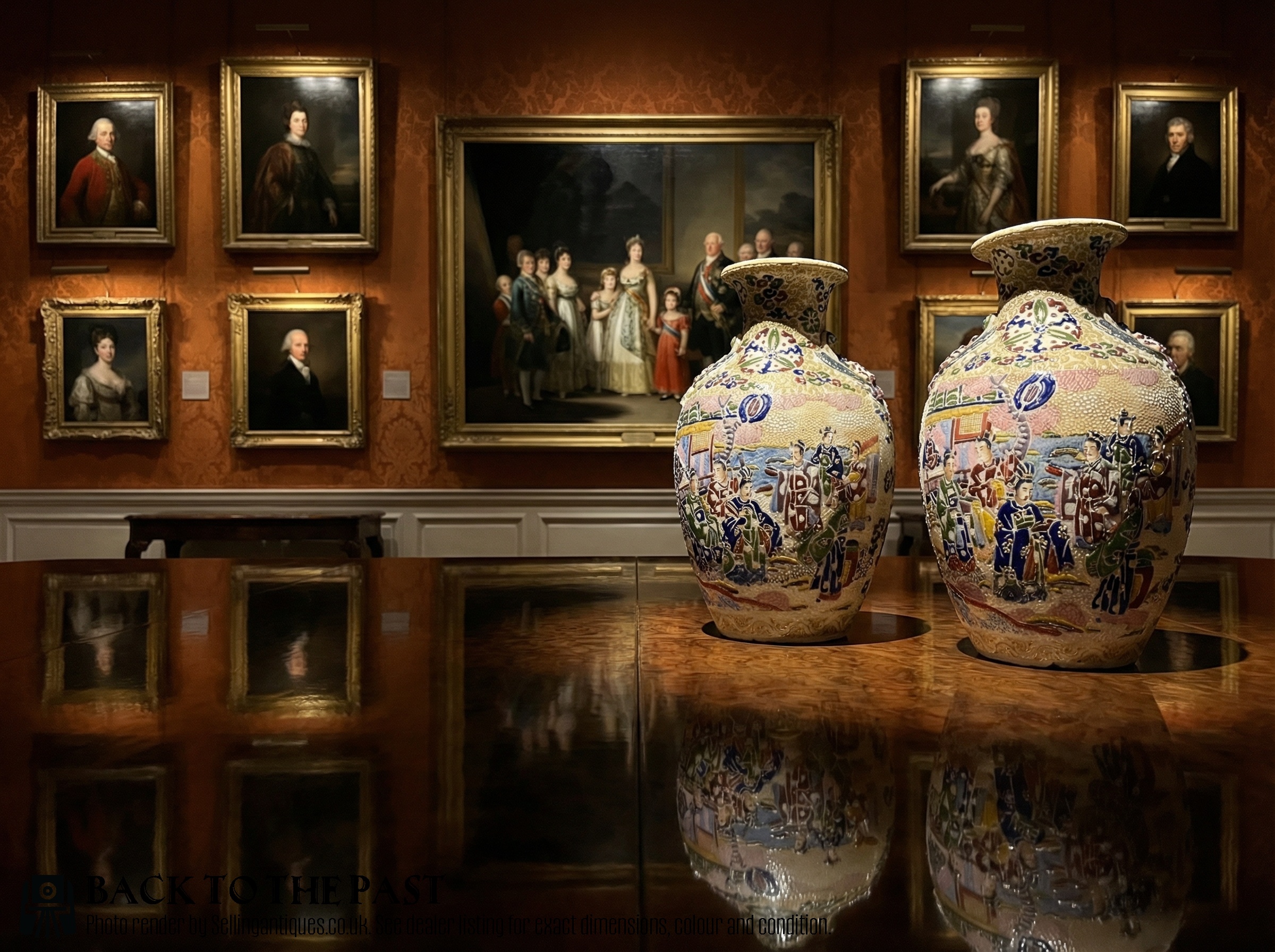
These vases suit prominent display on sideboards, mantels, or dedicated cabinets where their detailed painting and gold leaf can catch the light. Pairs and garniture sets work well when arranged symmetrically.
Due to the delicate nature of enamel and gilding, placement should avoid direct, harsh sunlight and areas of heavy household traffic.
How can I tell the period?
Dating relies on stylistic markers such as Meiji period aesthetic conventions, specific ceramic bodies like eggshell porcelain, and traditional workshop signatures. Nineteenth-century pieces often show distinct crackle glaze characteristics and hand-mixed enamels.
Comparing the form and the density of the painted decoration helps distinguish Victorian era exports from later twentieth-century items.