
Hand Painted Urn Pair
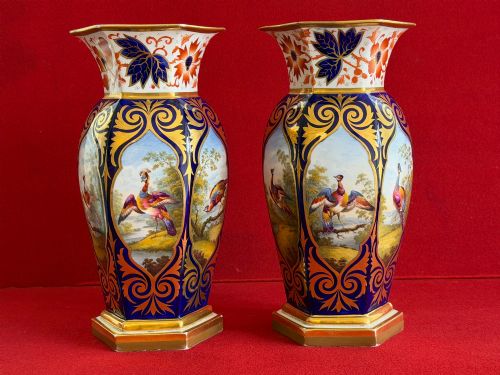
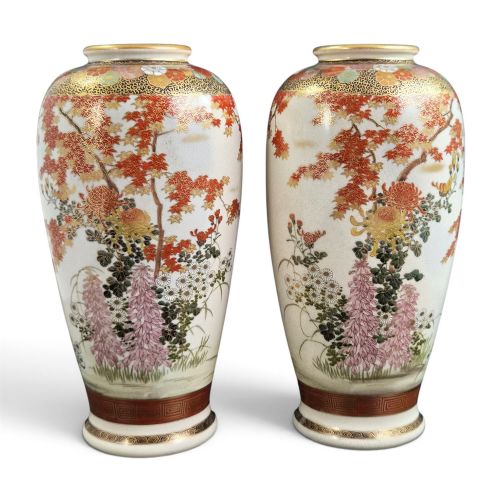
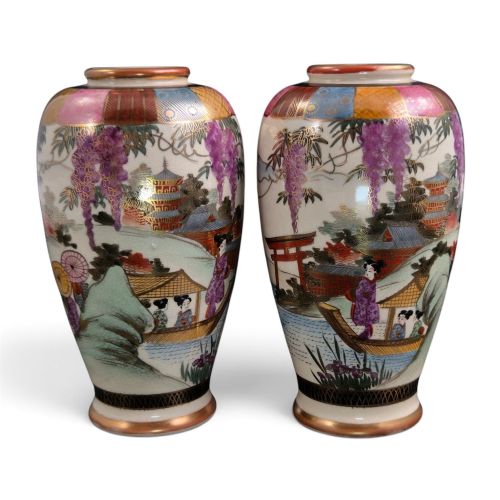
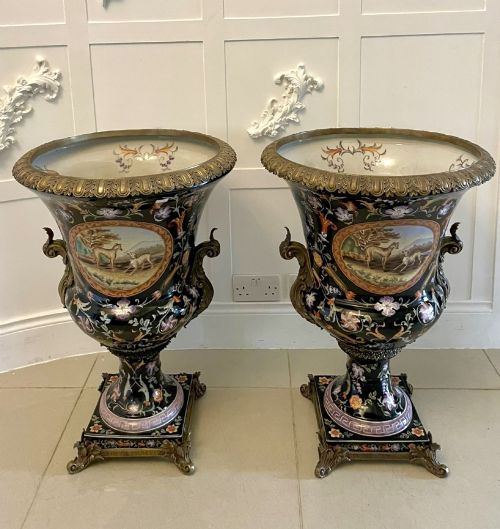
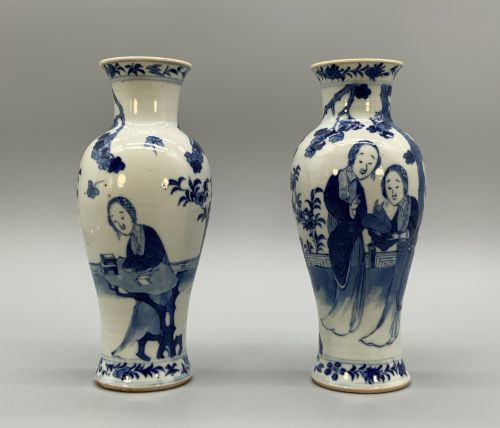
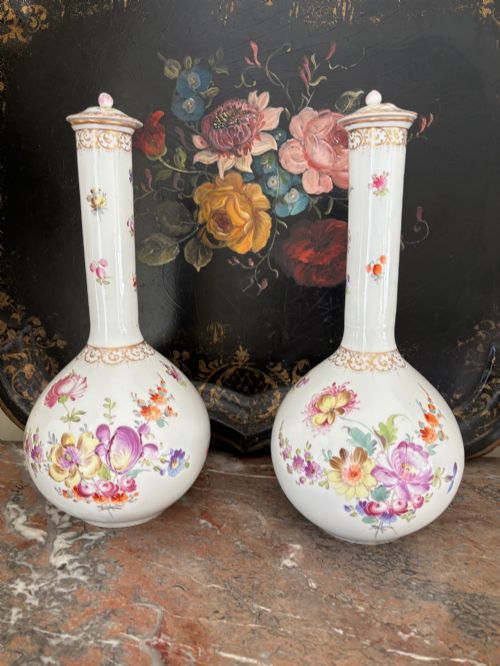
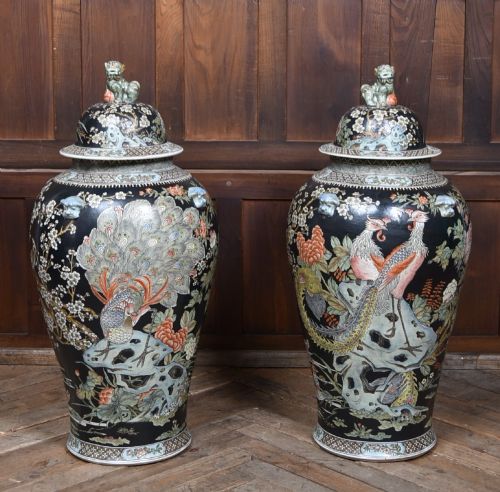
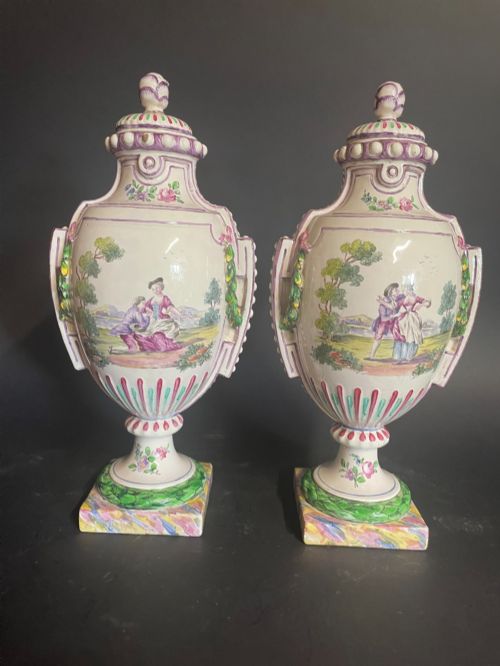
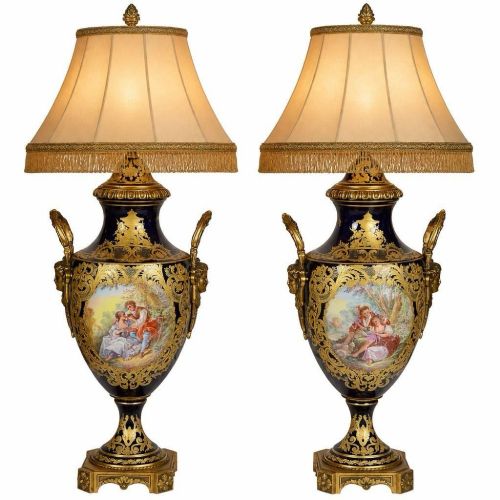
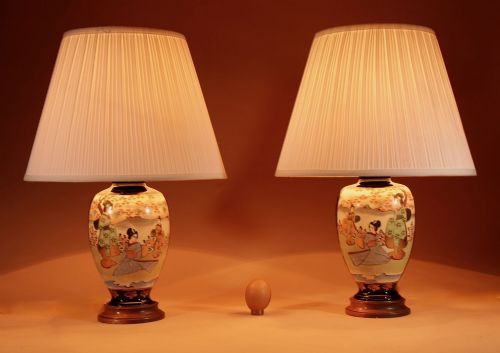
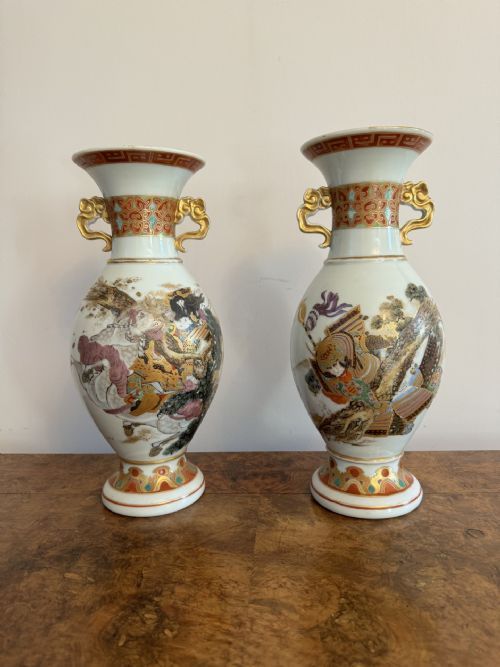
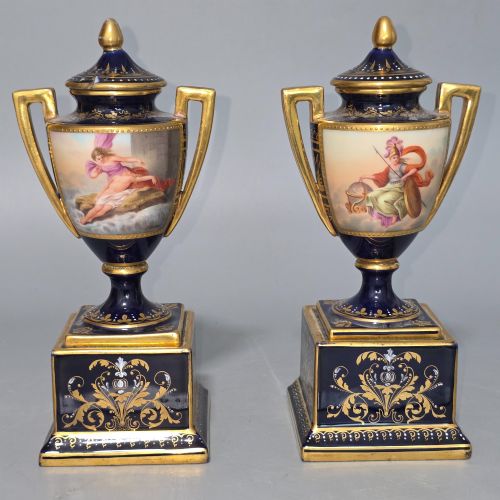
These hand painted urn pair selections bring symmetry and painted detail into a room, spanning porcelain, earthenware, and faience from the nineteenth and early twentieth centuries.
Hand Painted Urn Pair
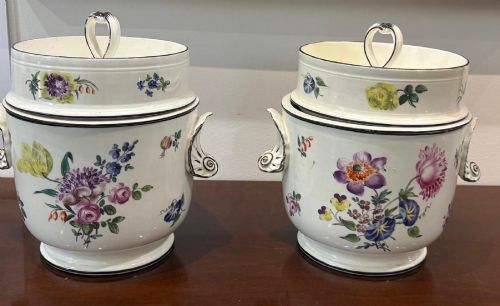
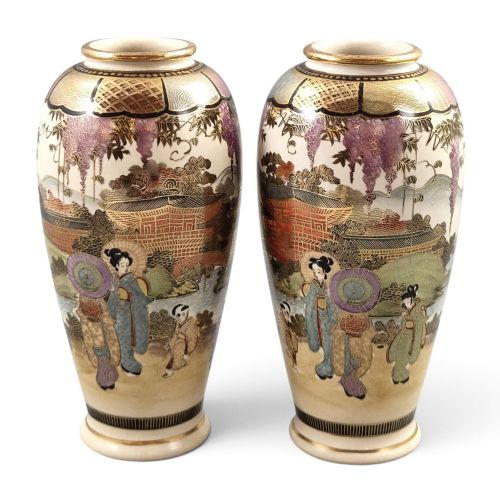
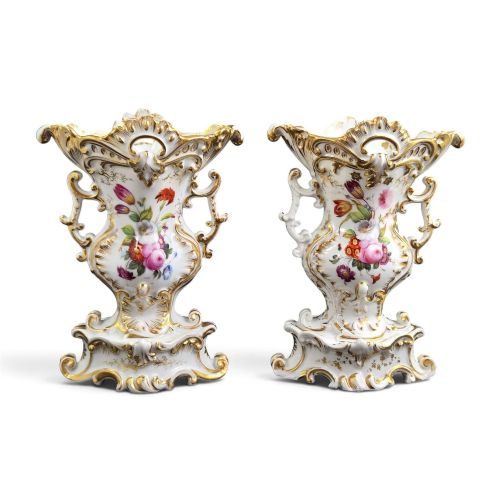
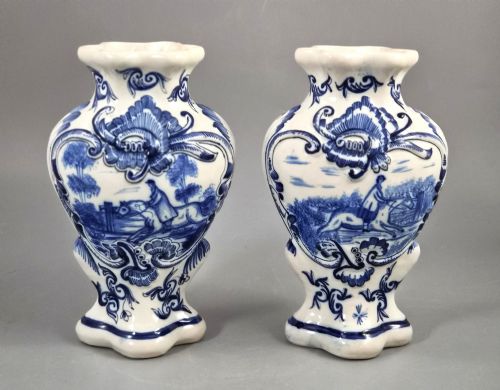
A hand painted urn pair brings balanced decorative presence to a mantelpiece, table, or floor, taking the form of lidded urns, vases, jardinières, and ice pails. The selections on this page draw predominantly from nineteenth-century European factories and Japanese Satsuma production, alongside Chinese porcelain and English earthenware.
Makers across France, England, Germany, and Japan produced these symmetrical pairs for display, utilising distinct regional palettes and motifs ranging from floral studies to figural scenes. Buyers encounter French Sevres style pieces, Worcester porcelain, and Japanese Imari alongside earthenware vessels from various European kilns.
How They Were Made
Potters shaped ceramic, porcelain, creamware, and faience on the wheel or in moulds before applying glazes and hand-painted pigments. Artisans then added gold leaf, gilding, and enamel highlights, sometimes mounting the finished bodies in brass or incorporating covers.
Firing techniques varied by medium, with earthenware and porcelain undergoing high-temperature kiln processes to fix the cobalt blues, polychrome enamels, and lustre finishes recorded across the pieces.
Several fish-design lustre vases swim through the records alongside traditional floral urns.
What Varies in Quality
The precision and detail of the hand painting separate standard production wares from exhibition pieces, where artists invested greater time in intricate floral sprays, landscapes, and figural compositions. Finer pairs display controlled brushwork, harmonious palettes, and carefully applied gilding that remains crisp across both matching vessels.
The quality of the ceramic body, the clarity of the glaze, and the inclusion of cast brass mounts or bespoke covers influence the character of an urn pair. Factory provenance, such as marks from Worcester, Royal Worcester, or Sevres style workshops, marks out pieces executed to higher commercial or artistic standards.
Flight, Barr and Barr·Maruni Kobe·Shozan·Fourmaintraux Courquin·Jacob Petit·Sitzendorf·Sceaux·F Koller·Samson Paris·Walter Slater·Helena Wolfsohn·Royal Worcester·Doulton Lambeth·TG Green·Royal Vienna·Chivers
The Hand Painted Urn Pair Glossary
- Satsuma
- Earthenware originating from Japan, typically characterised by a crackle-glaze ivory ground decorated with polychrome enamels and raised gold.
- Faience
- Tinned-glazed earthenware produced across Europe, known for absorbent clay bodies and painted decoration applied directly to the unfired glaze.
- Creamware
- A refined light-coloured earthenware developed in England during the eighteenth century, finished with a transparent lead glaze.
- Gilding
- The application of gold leaf or powdered gold to ceramic surfaces, used to highlight rims, handles, and painted panels.
- Bleu Céleste
- A distinctive turquoise blue enamel ground colour famously utilised at the Sèvres porcelain factory in France.
Hand Painted Urn Pair: Frequently Asked Questions
How were urn pairs used?
Historically, people placed matching urns on mantelpieces, consoles, or tables to create balanced focal points within formal interiors.
Some iterations functioned practically as ice pails or jardinières, while others remained purely ornamental.
How do I live with them?
Display matching pairs symmetrically on sturdy sideboards, mantels, or pedestals where their painted details and gilding catch the light.
Keep them away from direct sunlight and dust them gently with a dry cloth to protect the enamel and gold leaf.
How do I tell periods apart?
Nineteenth-century pieces often exhibit heavy gilding and revival styles like Rococo or Empire, while Edwardian and 1920s examples show softer blush ivory or distinct lustre finishes.
Examining factory marks, paste types, and stylistic motifs helps narrow down the decade of manufacture.