





Bleu Celeste Sevres Vase
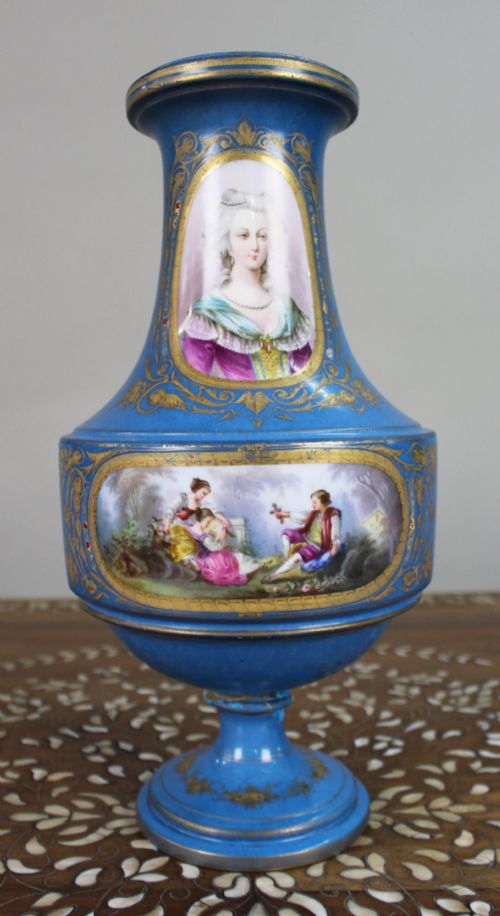
These bleu celeste sevres vase pieces bring brilliant turquoise porcelain and rich ormolu mounts to any room, offering the unmistakable grandeur of nineteenth-century French reception rooms.
Bleu Celeste Sevres Vase
A bleu celeste sevres vase is a decorative ceramic object defined by its distinctive sky-blue ground colour, often produced in the French taste during the nineteenth century. These items take the form of lidded urns, pot pourri vessels, table lamps, and classical vases that reflect the styles of the French chateau and Rococo revival periods.
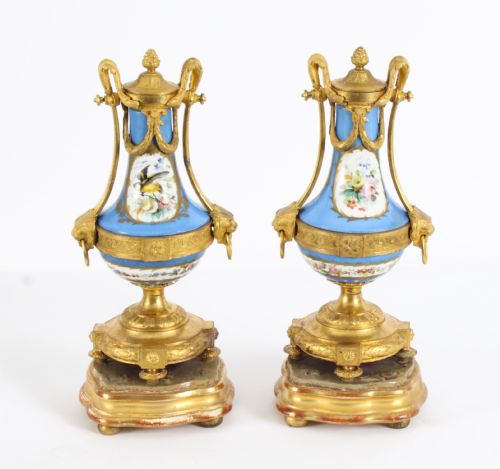
The pieces available on this page date principally from the nineteenth century, including specific items from around eighteen eighty and eighteen seventy. Alongside traditional vases, buyers encounter matched pairs and converted table lamps incorporating gilt metal or ormolu bases.
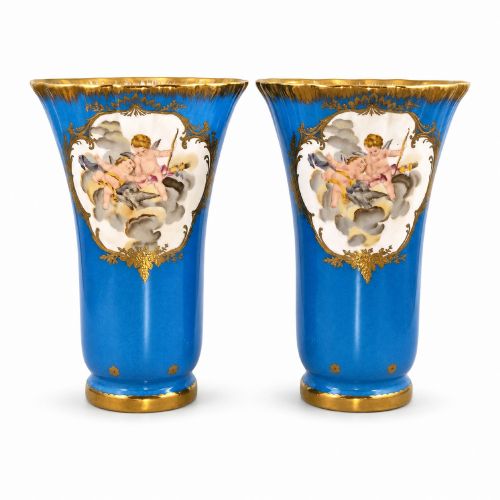
Many of these works follow the sevres style rather than originating from the royal French factory, with several examples attributed to makers such as Samson Paris. They typically feature painted scenes of putti and floral motifs set against the bright turquoise background.
How they were made
Makers formed these pieces from white porcelain, applying the characteristic bleu celeste enamel ground by hand before firing. Artisans then added detailed painted decoration, incorporating gold leaf and gilt highlights around the pictorial panels.
Many examples incorporate cast ormolu and gilt bronze mounts, which frame the porcelain bodies and provide handles, bases, and lids. These metal mounts utilise classical and rococo scrollwork, secured to the ceramic vessels with precision.
Bleu Celeste Sevres Vase Retail Price Guide 2026
Typical asking prices for bleu celeste sevres vase among the pieces listed under this phrase on Sellingantiques today, from the lower quarter to the upper quarter. They describe what is for sale here now, not the wider market.
Even chubby painted putti need a proper grip, which is why these grand turquoise urns come with hefty ormolu handles.
What varies in quality
Quality in a bleu celeste sevres vase rests upon the precision of the hand-painted details, particularly the finesse of the putti and floral subjects. Superior examples display delicate brushwork and rich, consistent turquoise enamel across the porcelain body.
The execution and weight of the ormolu and gilt bronze mounts also distinguish the pieces. Finer mountings exhibit crisp chasing and secure integration with the ceramic vessel, enhancing the overall sculptural presence.
Samson Paris
The Bleu Celeste Sevres Vase Glossary
- Bleu celeste
- A bright sky-blue enamel ground colour used on porcelain. This distinctive hue forms the defining visual characteristic of these vases and urns.
- Ormolu
- Gilt bronze mounted on decorative objects. This technique involves applying a finely ground high-carat gold amalgam to bronze.
- Putti
- Depictions of chubby male infants, often winged, appearing in classical art. They frequently decorate the painted panels of nineteenth-century French porcelain.
- Pot pourri
- A vessel designed to hold dried plant material for scenting a room. These lidded vases feature pierced porcelain or metal covers to release fragrance.
- Rococo revival
- A nineteenth-century design movement inspired by eighteenth-century French styles. It is characterised by asymmetrical scrollwork, naturalistic motifs, and exuberant ornamentation.
Bleu Celeste Sevres Vase: Frequently Asked Questions
Are these vases from the actual Sevres factory?
Most pieces listed are produced in the nineteenth-century sevres style or created by alternative makers such as Samson Paris, rather than originating from the royal French factory.
They capture the aesthetic and decorative qualities of the original eighteenth-century royal works while dating predominantly to the eighteen hundreds.
How do I clean an ormolu mounted vase?
Clean the porcelain body gently with a soft, dry cloth to remove dust without harming the enamel or gilt decoration.
Avoid using water or chemical cleaners on the ormolu mounts, as moisture can damage the gilded surface.
Can these converted table lamps be restored?
Many items have been adapted into table lamps during the nineteenth or twentieth centuries to suit domestic interiors.
Restoration depends on the wiring method used, but the underlying porcelain and ormolu mounts generally remain unaltered by the conversion.
Where should I display a large lidded urn?
Large urns and lidded vases suit prominent positions on heavy furniture, mantelpieces, or dedicated pedestals where their height and colour can be appreciated.
Ensure the placement protects the piece from accidental knocks, particularly given the protruding ormolu handles and decorative lids.