


Victorian Porcelain Mantel Urns
Victorian porcelain mantel urns combine hand-painted ceramics with gilt metal mounts to anchor a room with nineteenth-century presence.
Victorian Porcelain Mantel Urns
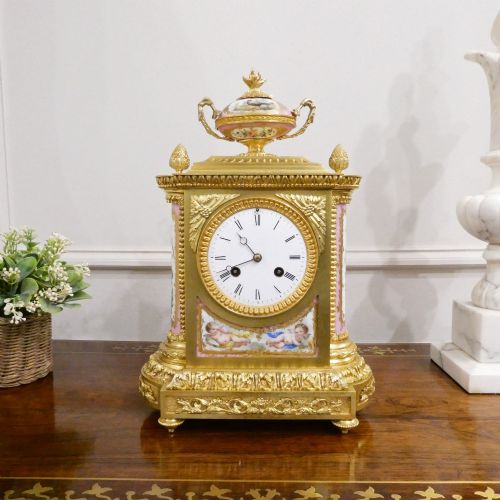
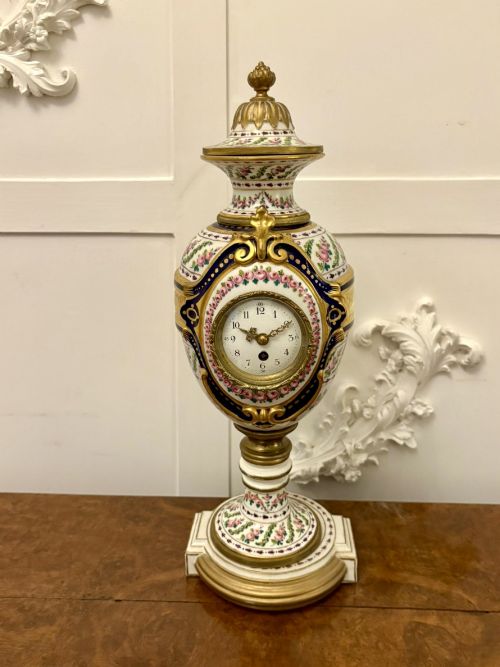
Victorian porcelain mantel urns are decorative ceramic vessels designed to sit upon fireplace mantels, often accompanied by matching side vases or clock garnitures. When exploring this selection, buyers encounter pieces that span the nineteenth century, including continental factories and domestic makers.
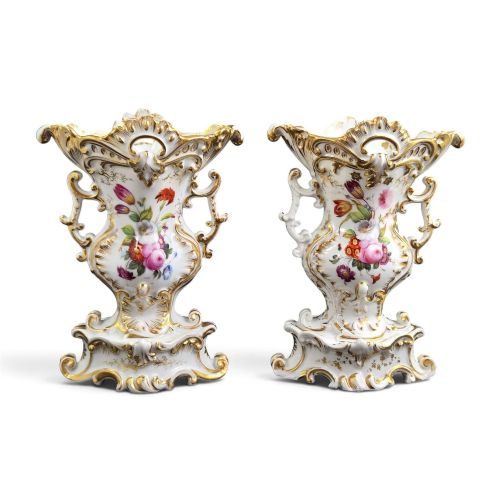
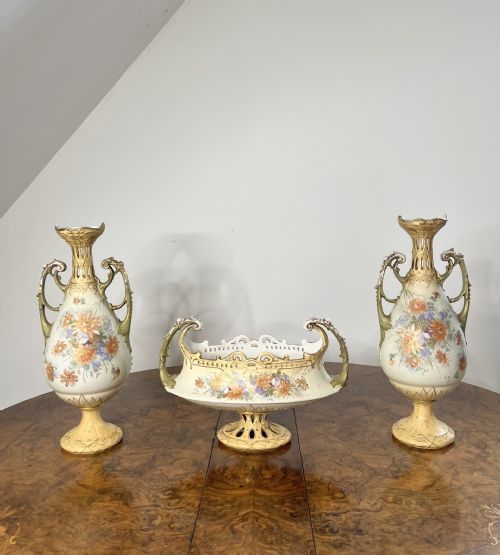
The objects frequently appear in pairs or sets of three, incorporating lidded urn forms alongside ginger jars and centrepieces. Stylistic influences range from French Rococo Revival and Louis XVI Revival to Japanese Meiji Period and Victorian Chinoiserie.
Most examples originate from the broader Victorian era and the latter half of the nineteenth century. These vessels serve as focal points in period interiors, displaying hand-painted floral motifs and classical scenes.
Assessing quality and craftsmanship
Quality rests upon the fineness of the porcelain body and the precision of the hand-painted details. Superior pieces display crisp enamel work and carefully applied gilding that retains its depth and brilliance.
The integration of the metal mounts distinguishes finer examples from simpler work. Well-cast ormolu or gilt bronze mounts fit the ceramic contours seamlessly, whereas lesser pieces show uneven joints or plain brass fittings.
Listings feature nineteenth-century porcelain, enamel, gold leaf, gilt bronze, glass, and ormolu across Rococo Revival, Victorian, and Chinoiserie styles.
Jean-Baptiste Delettrez·Jacob Petit·Royal Vienna·Wolfsohn Dresden·KPM Berlin·Royal Worcester·Royal Crown Derby
The Victorian Porcelain Mantel Urns Glossary
- Garniture set
- A matched group of three or more decorative vessels, typically comprising a central clock or urn flanked by matching side vases. These sets were designed to sit symmetrically upon a mantelpiece.
- Ormolu
- A gilded bronze technique used extensively in nineteenth-century French metalwork. It provides a rich golden finish to mounts and decorative details.
- Enamel
- A decorative glass-like substance fused to the porcelain surface through firing. It creates vibrant, durable colours in floral and figurative designs.
- Chinoiserie
- A European artistic style reflecting Chinese aesthetic traditions. It appears on nineteenth-century ceramic decoration through motifs and patterns.
Victorian Porcelain Mantel Urns: Frequently Asked Questions
How were these urns used originally?
These urns functioned primarily as decorative centerpieces on drawing room mantelpieces, positioned to catch the eye and display household refinement. They frequently anchored symmetrical displays alongside matching side vases or mantel clocks.
While some feature lids, their purpose was purely ornamental rather than functional for holding liquids or provisions.
How do I style them at home?
Place a pair of urns symmetrically on a mantelpiece, sideboard, or console table to establish a formal focal point in a traditional interior. Ensure the surrounding decor allows the hand-painted details and gilt mounts to stand out clearly.
They work well as standalone statements or as part of a larger nineteenth-century decorative arrangement.
How do I identify the period?
Dating relies on stylistic markers such as Rococo Revival curves, Louis XVI symmetry, or Meiji influences, combined with factory marks on the porcelain base. Nineteenth-century pieces typically exhibit hand-painted enamels and heavy gilt bronze or ormolu mounts.
Comparing the potting style and mount construction helps distinguish Victorian work from later reproductions.