
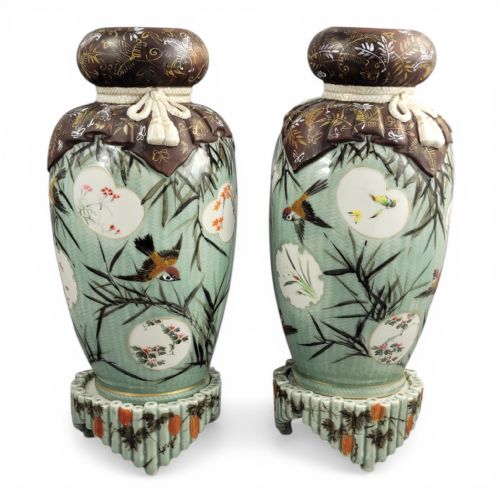


Japanese Ceramic Floor Vases
These large Japanese ceramic floor vases command space with their bold scale and detailed decoration, bringing a strong historical presence to any interior.
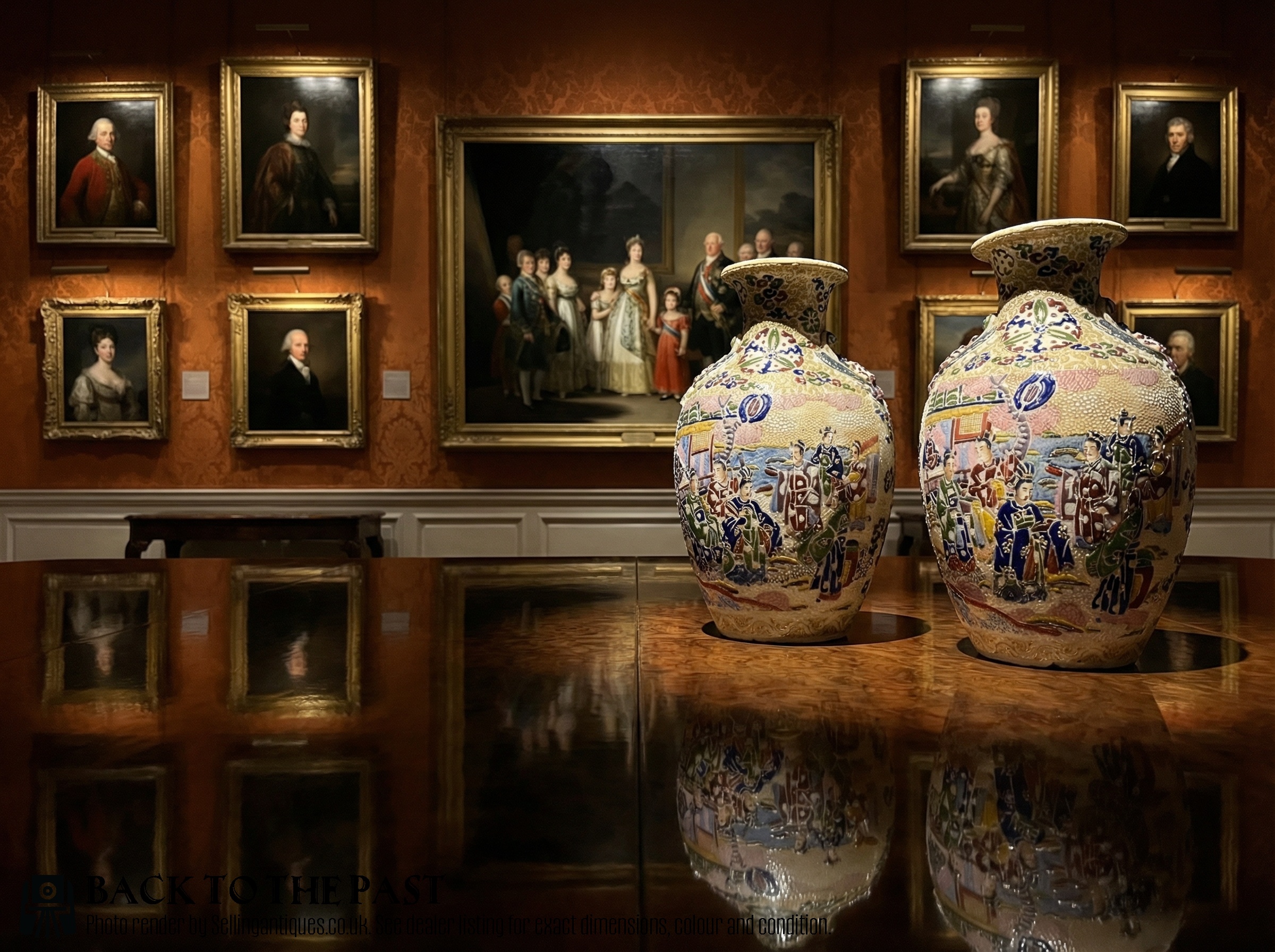
Japanese Ceramic Floor Vases
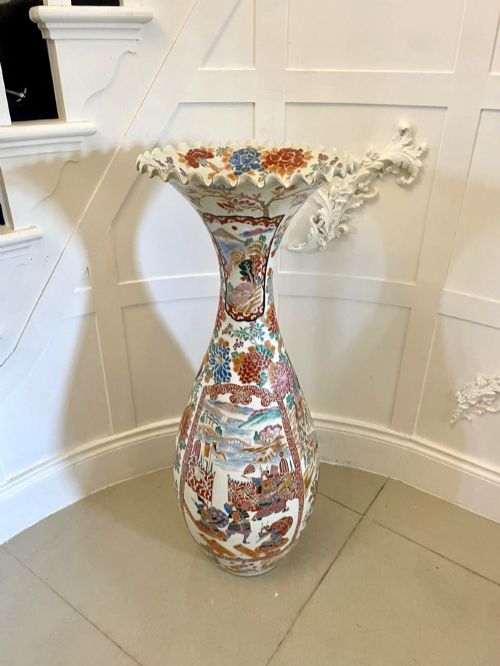
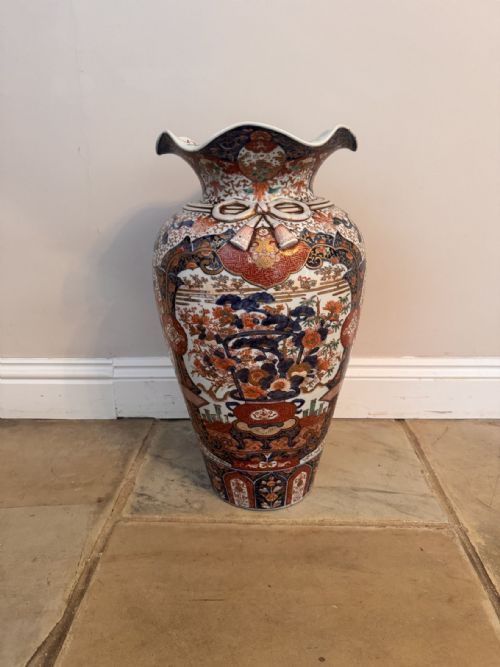
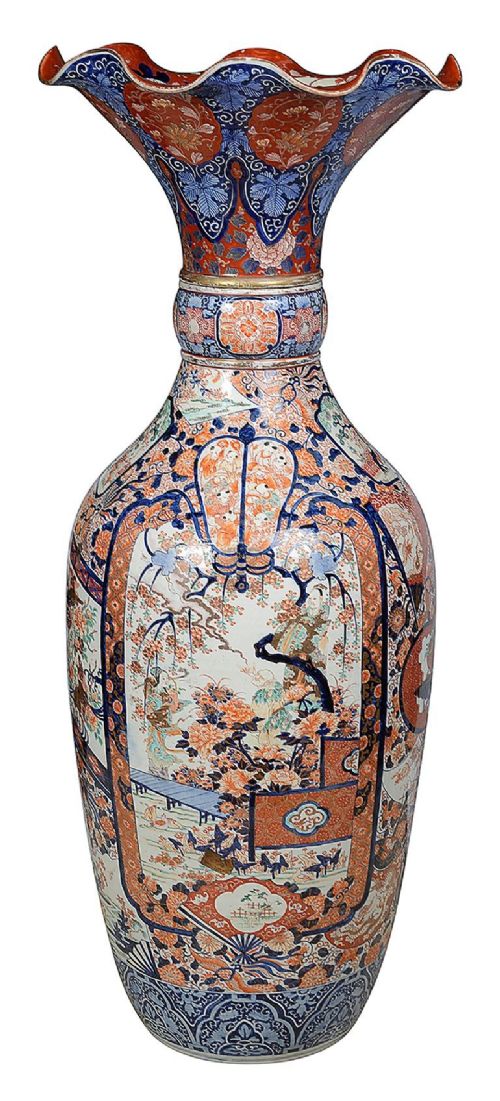
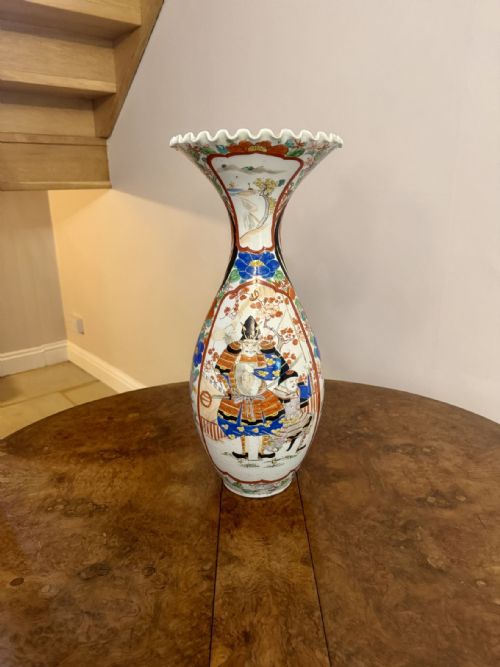
Japanese ceramic floor vases encompass grand, imposing vessels designed to stand directly upon the floor rather than on furniture. The selection on this page consists predominantly of substantial 19th-century pieces, including large Imari and Satsuma examples originating from the Meiji period.
Forms range from tall bulbous bodies and flared necks to lidded vessels and paired sets standing well over a metre in height. Many incorporate traditional decorative styles such as Japanese Imari palettes, Kutani designs, and detailed blue and white patterns.
How they were made
Potters shaped these large bodies from porcelain and earthenware, often working in sections to achieve monumental heights before firing. Surface enrichment relied on intricate enamel work, applied gold leaf, and vibrant glaze compositions.
Certain pieces integrate mixed media elements such as wood, lacquer panels, and lacquer over black paint applied to ceramic or porcelain structures. Stands made from matching porcelain or wood were frequently produced to support the heavier floor-standing vessels.
The listings span the 19th and early 20th centuries, featuring periods from the 1880s through to the 1920s.
What varies in quality
Scale and ambition set the standard among these large vessels, where monumental pairs and documented works by notable makers represent the pinnacle of production. The crispness of the enamel painting and the complexity of the gilt work separate standard decorative items from superior artistic achievements.
The integration of secondary materials, such as original matching porcelain stands or intricate lacquer panels, distinguishes the most complete and ambitious examples. Condition and stability at such a grand scale remain vital, as the structural integrity of tall ceramics dictates their survival.
Kato Sanhei·Kinkozan
The Japanese Ceramic Floor Vases Glossary
- Imari
- A style of Japanese export ceramics characterised by a distinctive palette of underglaze blue, iron red, and gold. It appears frequently on 19th-century floor vases.
- Satsuma
- A type of earthenware with a fine crackle glaze, typically decorated with elaborate polychrome enamels and gilding. Pieces often date from the Meiji period.
- Meiji Period
- The era in Japanese history spanning from 1868 to 1912, marked by significant artistic production for international export. Much of the porcelain and earthenware on this page originates from this time.
- Kutani
- A style of Japanese ceramics known for bold, colourful designs and pictorial scenes. These wares often feature flared necks and large proportions.
- Spill vase
- A tall, slender vessel originally intended to hold wooden spills used for lighting fires or candles. They appear in larger formats within this collection.
Japanese Ceramic Floor Vases: Frequently Asked Questions
How were Japanese floor vases used?
These large vessels served as prominent decorative furnishings in grand interiors, often placed in hallways, reception rooms, or empty architectural corners to anchor the space.
Due to their impressive height and weight, they functioned primarily as standalone display pieces rather than practical containers for cut flowers.
How do I identify a Meiji period vase?
Meiji period pieces often display dense, meticulous ornamentation combining rich enamel colours and gold leaf over porcelain or earthenware bodies. Examining the specific painting style and traditional motifs provides strong clues to this era of Japanese production.
Many of these vessels also bear historical associations with late 19th-century export styles, reflecting the craftsmanship of workshops active between 1868 and 1912.
What is the difference between Imari and Satsuma?
Imari ceramics typically utilise a porcelain body decorated in a strong palette of underglaze blue, iron red, and gilt details. They offer a crisper, more vitreous feel compared to earthenware.
Satsuma wares feature an earthenware body covered in a characteristic ivory crackle glaze, which provides a textured surface for elaborate polychrome and gilded figure scenes.
How should I display a floor vase safely?
Given their considerable height and weight, these vessels require a stable, level surface away from heavy foot traffic or doors. Placing them directly on the floor or on their matching original stands ensures proper weight distribution.
Avoid positioning them where they might be bumped, and ensure any associated lids or stands are securely aligned with the main body.