
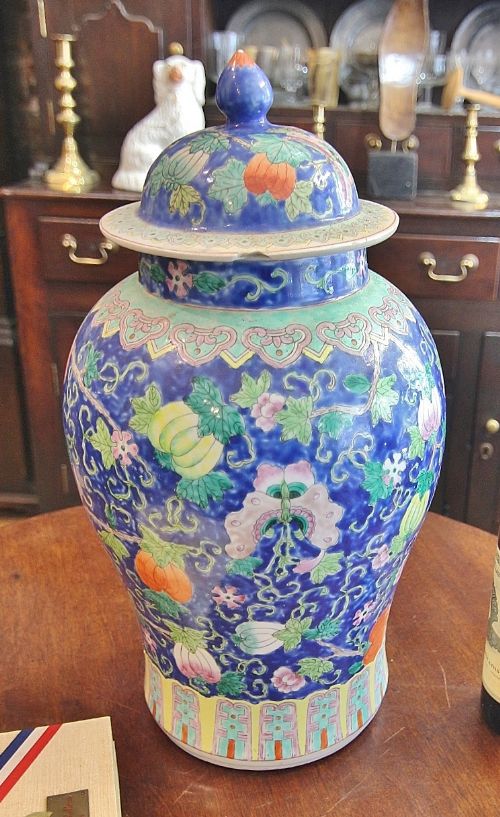


Oriental Porcelain Display Urns
These oriental porcelain display urns and large decorative vases bring rich hand-painted palettes and monumental scale from nineteenth-century Japan and China into a room.
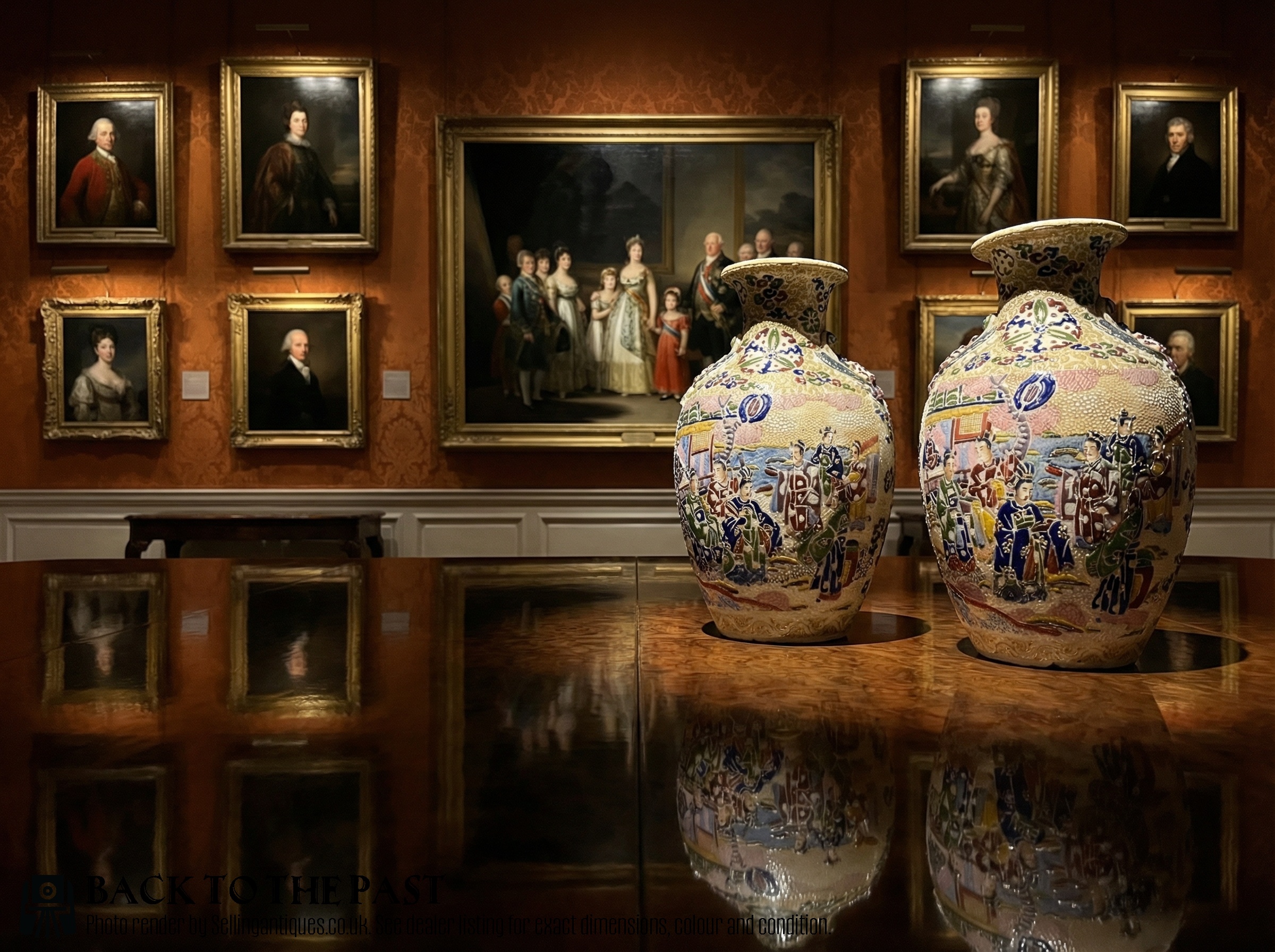
Oriental Porcelain Display Urns
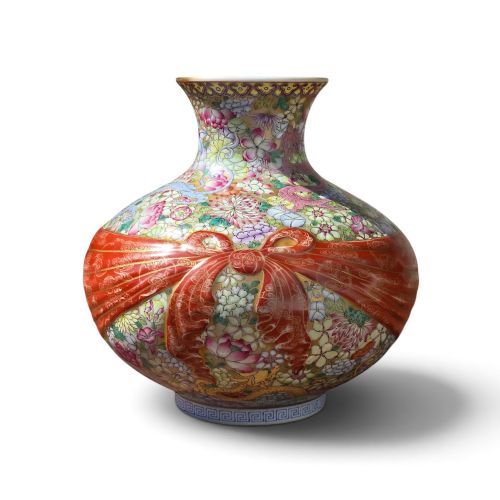
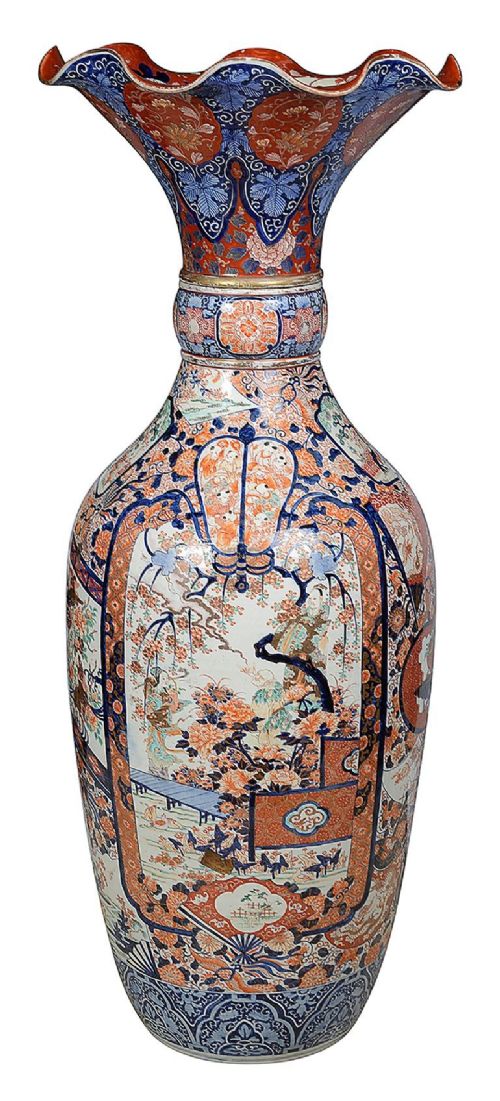
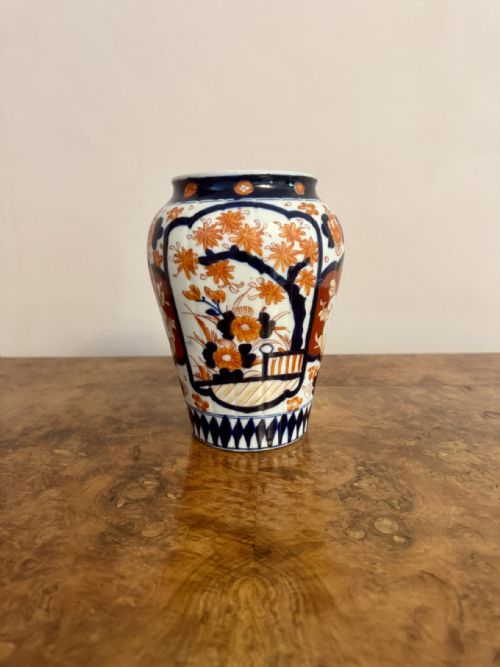
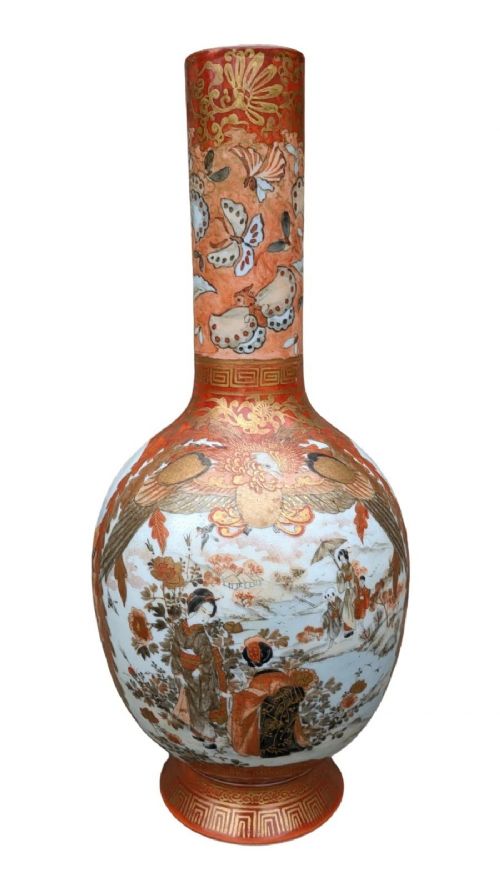
When you search for oriental porcelain display urns, you encounter large decorative vases, covered ginger jars, and floor-standing vessels originating from Japanese and Chinese kilns. The selection spans the nineteenth century, including the Meiji period, Late Qing, and Edwardian eras.
Japanese Imari and Satsuma wares dominate the offerings, alongside Chinese Famille Rose, Canton, and Doucai pieces. Forms range from miniature cabinet vessels to monumental pairs standing several feet high.
Buyers select these items to anchor a room as decorative focal points, utilising their rich cobalt, iron-red, and gilt colour schemes to add historical weight to an interior.
How they were made
Potters shaped high-fired porcelain and earthenware bodies on the wheel or in moulds, often adding ribbed, moulded, or bamboo-handle details before applying initial glazes. Artisans then executed intricate hand-painted designs using underglaze blue and overglaze enamel colours.
Many Satsuma and Imari pieces incorporate heavy gold leaf and raised moriage work to accentuate figural processions, court scenes, and floral panels. Select vessels feature secondary treatments such as lacquer applied over black paint or bronze ormolu mounts.
Listings feature periods spanning the Victorian and Edwardian eras, alongside the Meiji period, Qing Dynasty, and Late Qing to Early Republic.
What varies in quality
Quality rests in the precision of the hand-painted brushwork, the density and execution of the gilding, and the crispness of the porcelain moulding. Pieces marked by distinguished studios or specific master potters exhibit superior control over complex figural and floral compositions.
Scale and completeness also dictate distinction, with large matched pairs, lidded ginger jars, and exhibition-quality Satsuma works demonstrating greater ambition than standard domestic decorative vases.
Chosei Mark·Seiko-en Chokei·Hododa·Kinkozan
The Oriental Porcelain Display Urns Glossary
- Imari
- A style of Japanese export porcelain featuring a distinct palette of underglaze blue, iron-red, and gilt highlights. The designs typically incorporate intricate floral and brocade patterns.
- Satsuma
- A type of Japanese earthenware characterised by a crackle-glaze ivory body, typically decorated with polychrome enamels and extensive gilding. Pieces often portray court figures or landscapes.
- Moriage
- A decorative technique using piped slip to create raised, textured dots and outlines on pottery. This method adds a tactile, dimensional quality to figures and floral motifs.
- Mon
- A Japanese emblem or crest used to decorate heraldic items and fine Satsuma pottery. These family crests indicate specific lineage or patronage.
- Doucai
- A Chinese porcelain technique combining underglaze blue outlines with overglaze polychrome enamels. The method requires multiple firings to set the contrasting colour schemes.
Oriental Porcelain Display Urns: Frequently Asked Questions
Were these vessels meant to hold water?
Many large display urns, ginger jars, and floor vases served purely decorative purposes in nineteenth-century interiors. Their grand scale and intricate overglaze enamels or gilt finishes meant they functioned as ornamental objects rather than utilitarian vessels.
Using them for fresh flowers requires caution, as older glazes and earthenware bodies can be porous or sensitive to moisture.
What is a ginger jar?
Ginger jars are broad-shouldered storage vessels fitted with removable lids, originally produced in China to transport spices, oils, and porcelain. Nineteenth-century examples evolved into purely ornamental display pieces for the export market.
Finding a piece with its original matching lid significantly enhances its completeness and visual balance.
How do I clean antique porcelain?
Dust these decorative vessels gently with a soft, dry brush to protect delicate overglaze enamels and gold leaf. Avoid harsh chemical cleaners or submerging pieces with vulnerable surface treatments like lacquer or ormolu mounts.
Routine maintenance requires nothing more than careful dusting in a stable environment away from direct sunlight.