
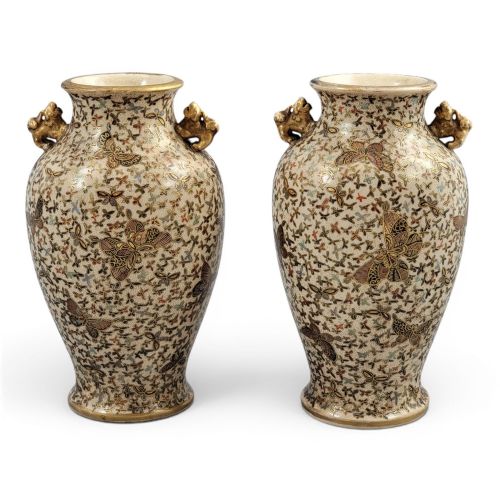


Gilded Satsuma Crackle Vase
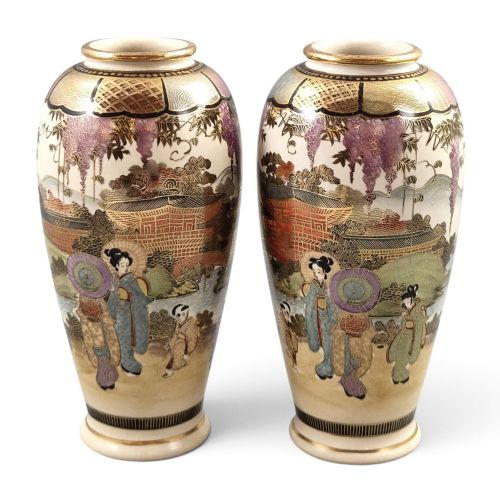
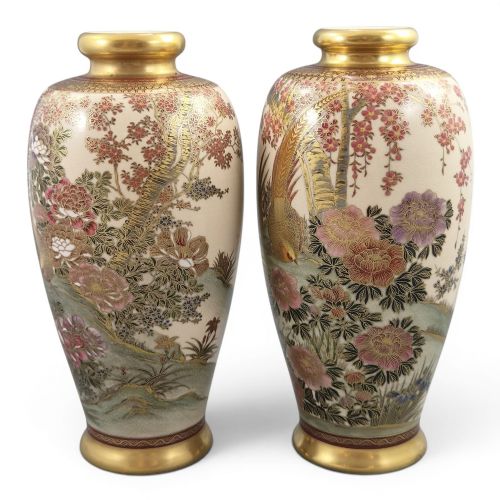
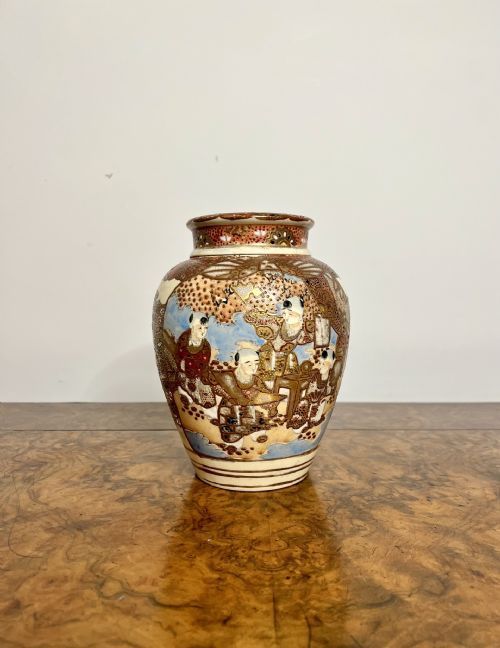
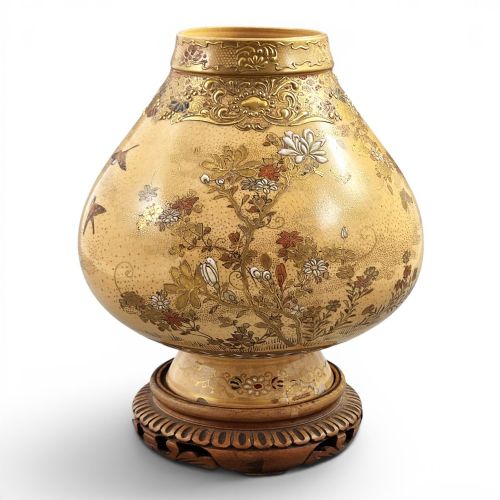
These gilded satsuma crackle vases are earthenware vessels carrying intricate enamel and gold leaf decoration from the Meiji, Taisho, and early Showa periods.
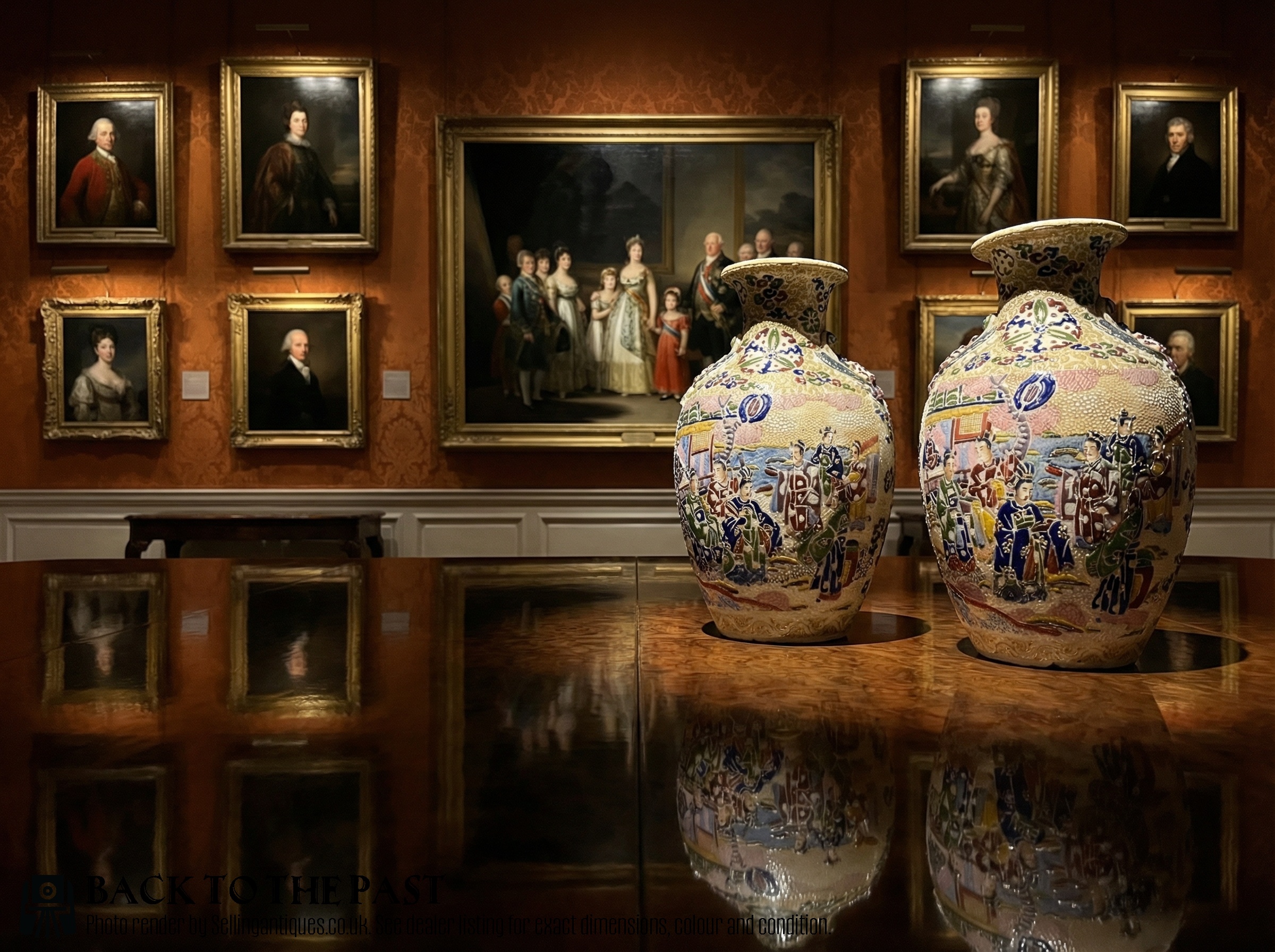
Gilded Satsuma Crackle Vase
A gilded satsuma crackle vase is a ceramic vessel originating from Japan, commonly seen here from the late nineteenth century through to the early twentieth century. These pieces encompass forms ranging from miniature vessels and ginger jars to large hexagonal shapes and monumental garnitures.
The objects frequently feature distinct Japanese stylistic periods such as the Meiji, Taisho, and early Showa eras. Buyers encounter pairs and individual pieces decorated with court figures, landscapes, Rakan, dragons, and motifs like thousand butterflies or flowerheads.
Originating largely from production centres such as Kyoto and makers associated with specific workshops, these earthenware pieces reflect distinct regional decorative traditions. The physical presence combines a characteristic micro-crackled glaze with substantial enamel work and gold gilt highlights.
Materials and construction methods
The foundation of a gilded satsuma crackle vase is earthenware, finished with a distinct glaze that forms fine network cracks across the surface. Artisans then applied enamel pigments alongside gold leaf and gilt to build up dense figurative and landscape scenes.
Many examples incorporate raised moriage decoration to give texture and depth to the robes of court figures and surrounding ornaments. Workshops utilised hand-painted techniques, often signed with artist or studio marks on the base.
The listings show earthenware vessels spanning the Victorian era, the 19th century, and the Taisho and early Showa periods.
Distinguishing quality across pieces
Quality in these vases rests upon the precision and restraint of the hand-painted enamels and the crispness of the gilt work. Superior examples demonstrate finely detailed facial expressions on figures and controlled application of gold leaf rather than heavy or crowded brushwork.
The finesse of the underlying crackle glaze and the balance of the ceramic form itself dictate the standing of a piece. Well-executed works from known makers or workshops exhibit superior throwing, cleaner kiln results, and more harmonious compositions.
Shozan·Manpei·Kinkōzan Workshop·Kinzan·Chosei·Seiko-en Chokei·Hattori·Hayakawa
The Gilded Satsuma Crackle Vase Glossary
- Satsuma ware
- A type of Japanese earthenware traditionally characterised by a ivory-coloured, crackled glaze and elaborate polychrome and gilt decoration. It developed significantly during the Meiji period for export markets.
- Moriage
- A decorative technique using slip or enamel applied in raised dots or lines to create a tactile, three-dimensional effect on ceramics. This method highlights robes, borders, and architectural details.
- Gilt
- Gold or a gold-simulating material applied to the surface of ceramics to provide metallic accents and borders. It catches the light and frames the painted enamel scenes.
- Meiji Period
- A span of Japanese history lasting from 1868 to 1912, marked by industrialisation and the extensive export of decorative arts including fine ceramics. Pieces from this era often display exceptional detail.
- Garniture
- A set of matching vases or jars designed to be displayed together as a symmetrical decorative arrangement on a mantelpiece or sideboard.
Gilded Satsuma Crackle Vase: Frequently Asked Questions
What is satsuma ware?
Satsuma ware refers to Japanese earthenware pottery featuring a distinctive creamy glaze covered in a fine network of cracks. Artisans decorate these surfaces using detailed enamel paints and gold leaf.
Production expanded significantly during the nineteenth century, particularly to satisfy international demand for highly ornamental Japanese craft during the Meiji period.
How do I spot a crackle glaze?
The crackle effect is an intentional network of tiny microscopic fissures running through the clear glaze over the earthenware body. It gives the surface a textured, aged appearance.
This characteristic crazing allows the underlying ivory body to show through, forming an essential background texture for the painted enamel and gilt motifs.
Where were these vases made?
These vases were produced in Japan, with many notable examples originating from Kyoto workshops and other prominent manufacturing centres. Master artisans and specific kilns shaped the export market during the late nineteenth and early twentieth centuries.
Signature marks on the base often indicate the specific workshop or artist responsible for the painting.
How do I display a large vase?
Large vases and garniture sets require stable placement on sturdy sideboards, tables, or mantelpieces where their detailed hand-painted panels can be viewed clearly. Keeping them out of direct sunlight protects the delicate enamel and gold leaf.
Pairing matching vases symmetrically enhances their visual impact within a room.