
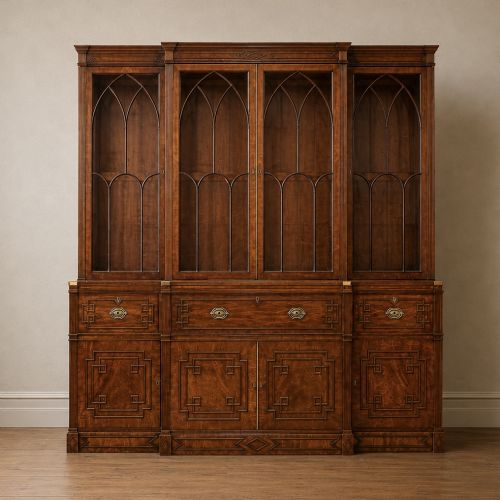
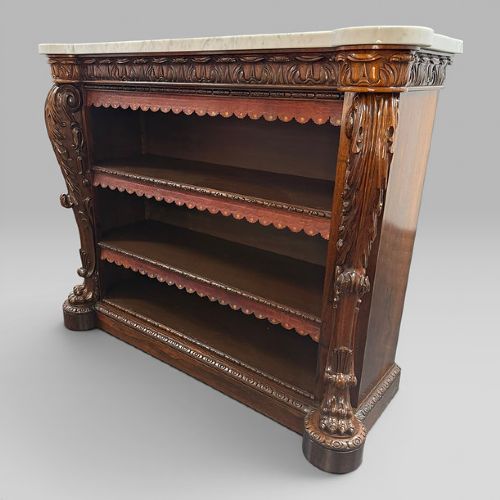


Gillows Style Cabinet
These gillows style cabinet pieces bring fine Lancaster craftsmanship and robust timbers into your home.
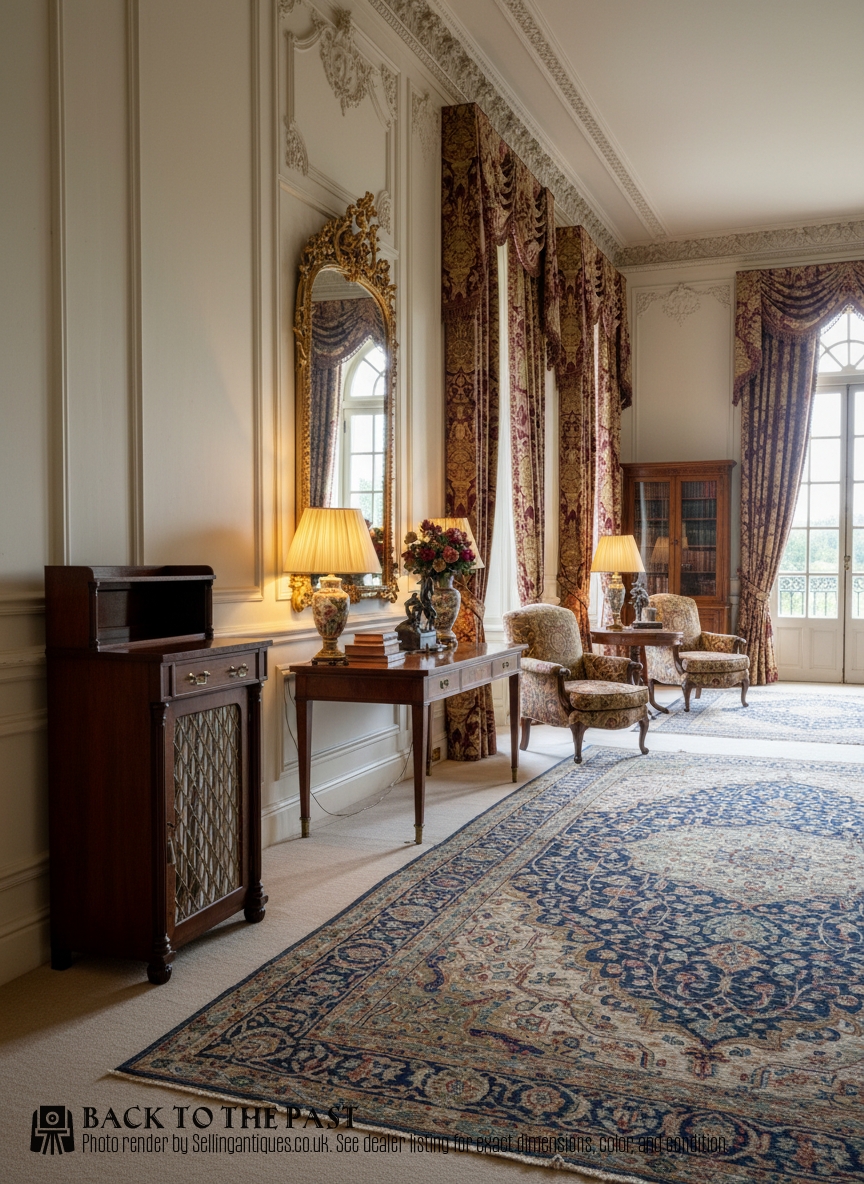
Gillows Style Cabinet
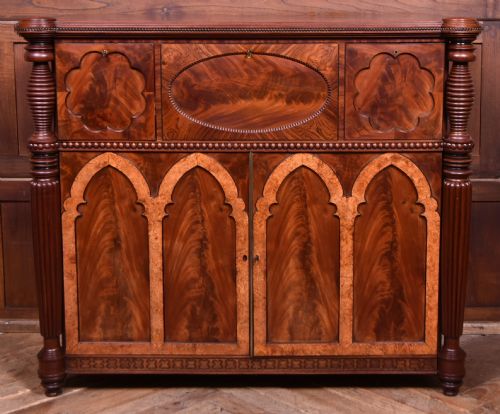
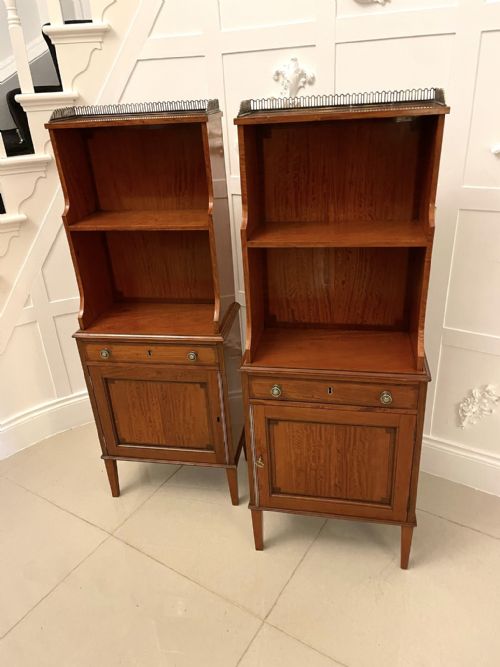
A gillows style cabinet encompasses a variety of storage furniture including bookcases, side cabinets, desks, and secretaire cabinets originating from the Georgian, Regency, and Victorian periods. Buyers seeking these items will find pieces spanning from the late eighteenth century through to the early twentieth century.
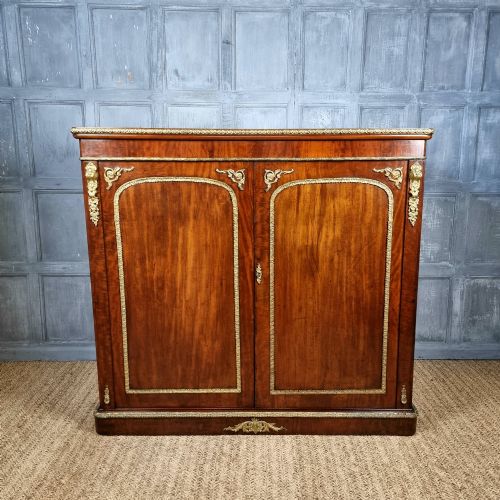
The version most commonly encountered on this page is the nineteenth century mahogany or rosewood cabinet, reflecting the workshop traditions of Lancaster and London. These range from library bookcases to bedside cupboards and sideboards.
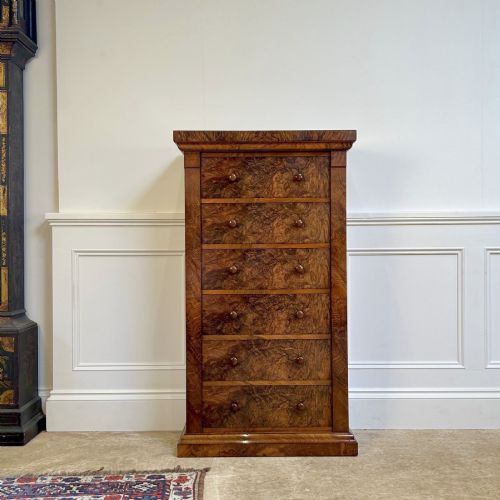
The selection also includes specialised forms such as Wellington chests, Davenport desks, and chiffoniers. Each piece displays the functional design and quality timber associated with the maker's legacy.
Materials and construction
Cabinet makers utilised dense hardwoods such as mahogany, rosewood, and satinwood, often selecting figured veneers like flame mahogany and burr walnut for visual depth. These timbers were chosen for both their durability and their capacity to take a fine polish.
Secondary materials such as brass for hardware and occasional marble tops appeared on specialised library and bedside pieces. Construction relied on traditional joinery methods that ensured structural stability across large bookcases and heavy sideboards.
Gillows Style Cabinet Retail Price Guide 2026
Typical asking prices for gillows style cabinet among the pieces listed under this phrase on Sellingantiques today, from the lower quarter to the upper quarter. They describe what is for sale here now, not the wider market.
One Wellington chest relies on a clever locking side flap to keep all its drawers secure at once.
Quality factors in cabinet making
The hierarchy of quality depends heavily on the selection of timber veneers and the precision of the cabinet maker's joinery. Superior examples demonstrate careful matching of flame mahogany or burr walnut across drawer fronts and doors.
Hardware selection and internal fittings also distinguish finer pieces, from original brass mounts to well-executed secretaire drawers with fitted pigeonholes. The crispness of carved details, whether in Regency or Chippendale revival styles, marks the distinction between standard production and workshop excellence.
Gillows·Waring & Gillow·Waring s Gillow
The Gillows Style Cabinet Glossary
- Secretaire
- A cabinet or desk featuring a pull-down writing drawer that conceals smaller drawers and pigeonholes. This form provides a compact writing surface within a standard chest or bookcase profile.
- Chiffonier
- A low sideboard or cabinet developed during the Regency period, typically fitted with shelves or enclosed storage below. It served practical storage needs in dining rooms and libraries.
- Wellington chest
- A tall, narrow chest of drawers secured by a single locking side flap that fastens over the drawer edges. This specific form became popular during the nineteenth century for efficient storage.
- Davenport
- A small desk featuring a sloped writing surface above a pedestal of drawers. The design allowed for compact writing and storage in domestic interiors.
- Breakfront
- A piece of furniture whose central section projects forward from the flanking sections. This architectural arrangement adds visual depth to large library bookcases and sideboards.
Gillows Style Cabinet: Frequently Asked Questions
How do I identify a Gillows cabinet?
Look for crisp proportions, high-grade mahogany or satinwood timbers, and thoughtful internal fittings like fitted secretaire drawers. Documentation or stamped signatures occasionally confirm workshop origin.
Attribution often relies on characteristic construction details and distinctive design traits rather than explicit makers' marks.
What periods do these cabinets cover?
The inventory spans the Georgian, Regency, and Victorian eras, extending into early twentieth-century revival pieces. Each period brings distinct timber choices and stylistic influences.
Early pieces lean towards George III and Regency neoclassical lines, while later items embrace Victorian Gothic revival and Chippendale revivals.
Where were these cabinets used?
These pieces functioned primarily in libraries, formal dining rooms, and private studies for storing books, linen, and correspondence. Bookcases and library cabinets housed expanding private collections.
Sideboards and chiffoniers managed dining room service, while Davenport desks and secretaire cabinets provided private writing spaces.
How should I care for timber surfaces?
Maintain mahogany, rosewood, and walnut surfaces with gentle dusting using a soft, dry cloth. Avoid harsh chemical polishes that can degrade nineteenth-century finishes.
Keep wooden furniture away from direct heat sources and strong sunlight to prevent the timber and veneers from drying out or fading.