
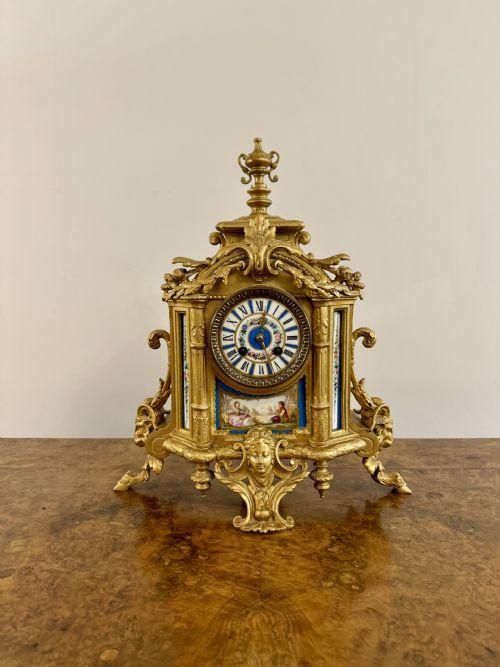


Gilded Brass Shelf Clock
These gilded brass shelf clock pieces bring nineteenth-century French and Victorian craftsmanship into domestic interiors.
Gilded Brass Shelf Clock
A gilded brass shelf clock sits on a mantelpiece or bracket, combining timekeeping with decorative metalwork. Most examples on this page date from the nineteenth century, spanning Victorian Britain and various French revival styles.
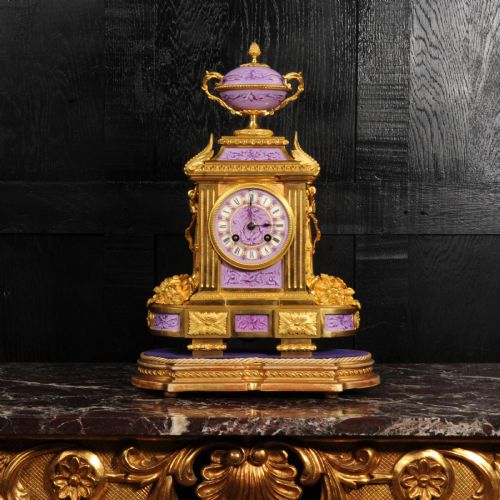
The assortment includes heavy marble mantel pieces, delicate carriage clocks with glass panels, and ornate ormolu designs. Buyers encounter everything from simple architectural cases to elaborate figural compositions featuring porcelain panels.
How they were made
Makers shaped the cases from brass, gilt bronze, and ormolu, often mounting them on white or red marble bases. Skilled founders cast the metal elements before applying mercury gilding or modern electroplating techniques.
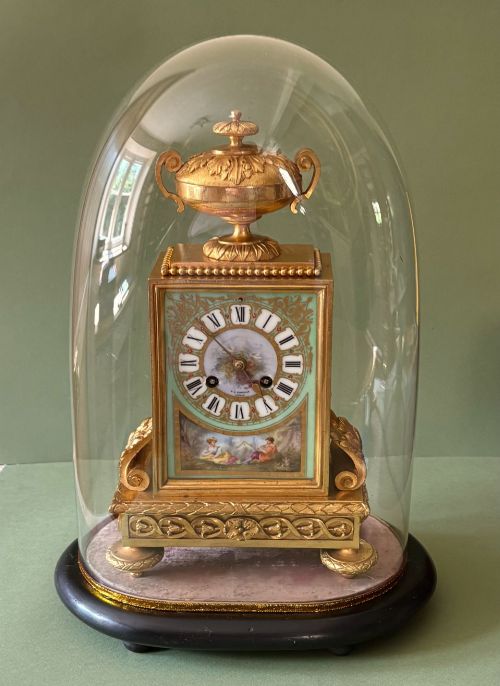
Dial faces frequently incorporate painted enamel alongside inset Sèvres style porcelain plaques. Movements rely on brass gear trains, driven by springs or weights, housed within glazed four-glass cases or solid metal housings.
Gilded Brass Shelf Clock Retail Price Guide 2026
Typical asking prices for gilded brass shelf clock among the pieces listed under this phrase on Sellingantiques today, from the lower quarter to the upper quarter. They describe what is for sale here now, not the wider market.
Materials span gilt bronze, ormolu, brass, enamel, porcelain, and various coloured marbles.
What varies in quality
Quality rests in the crispness of the metal chasing and the depth of the gilding across the brass and ormolu surfaces. Finer pieces display sharper relief in figural elements like putti and doves, whereas lesser examples show softer, flatter casting.
The complexity and reputation of the movement maker dictate the standing of an individual clock. Signed dials and works by known makers command attention for their mechanical precision alongside the artistry of the case.
Achille Brocot·Philippes Paris·Drocourt·JP Delettrez·Japy Freres·Bently and Beck London·P.H Mourey·Henri Dasson
The Gilded Brass Shelf Clock Glossary
- Ormolu
- Gilded bronze produced by applying a mercury and gold amalgam to the base metal and heating it. This technique creates a durable, warm golden finish seen on nineteenth-century French clocks.
- Carriage clock
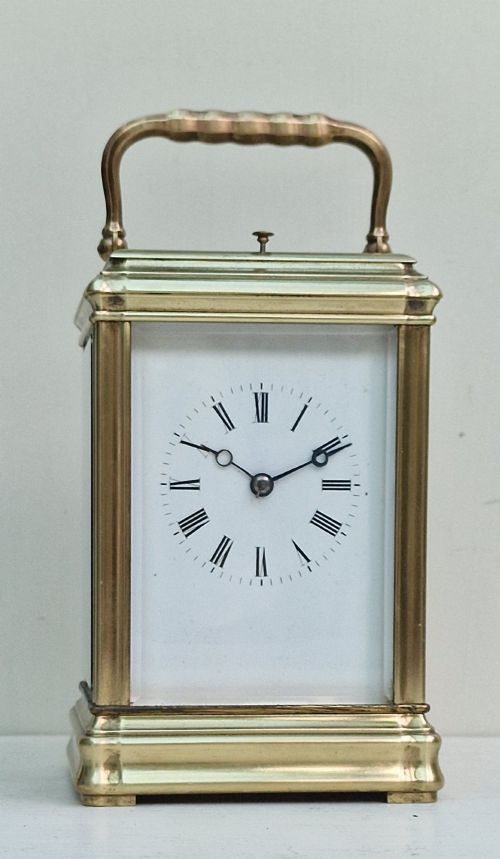
- A portable spring-driven timepiece designed for travel, housed in a brass frame with glass panels. These typically feature swing handles and lever escapements.
- Four glass clock
- A mantel clock enclosed in glass on all four sides, allowing an unobstructed view of the mechanical movement. They often feature mercury pendulum compensation.
- Fusee
- A conical pulley used in clock movements to maintain equal power as the mainspring unwinds. This mechanism improves timekeeping accuracy over the duration of the wind.
- Chinoiserie
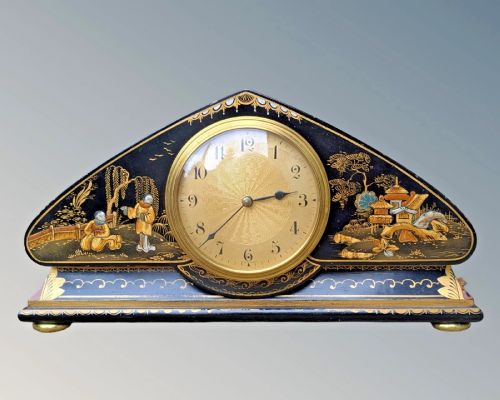
- A European decorative style reflecting Chinese artistic motifs. These clocks feature painted or lacquered scenes of oriental landscapes.
Gilded Brass Shelf Clock: Frequently Asked Questions
How do I wind a mechanical shelf clock?
Most eight-day movements require a key inserted into the dial holes to tension the springs every week. Turn the key gently until resistance increases, avoiding over-winding.
Ensure you do not force the hands backward when setting the time, especially on striking models. Moving the minute hand forward slowly allows the internal count wheel to align with the hour strikes correctly.
Where should I place a heavy marble mantel clock?
Select a sturdy surface like a fireplace mantel or a dedicated wall bracket capable of supporting considerable weight. The location must remain stable and level for the pendulum to beat evenly.
Keep the clock away from direct sunlight and damp environments to protect the gilt metal surfaces and enamel dials. Stable room temperatures prevent expansion issues in the brass and marble components.
What is the difference between ormolu and gilt brass?
Ormolu specifically describes high-status bronze gilded through a mercury amalgamation process, yielding a rich, enduring lustre. Gilt brass uses similar gold-coloured finishes on a different copper and zinc alloy base.
Visual inspection reveals the depth of the finish, with traditional ormolu displaying a softer, warmer glow than standard electroplated brass. Nineteenth-century French makers favoured ormolu for their most elaborate sculptural clock cases.
How do I identify a French nineteenth-century clock?
Examine the movement backplate for stamped foundry marks, serial numbers, and maker medallions. French makers often stamped their medals for excellence directly onto the brass mechanisms.
Stylistic cues such as Rococo revival scrolls, porcelain plaque inserts, and pendulum suspensions provide further dating evidence. The integration of gilt bronze and marble points directly to Victorian and Second Empire workshops.