


Brass Horological Clock
A brass horological clock brings mechanical precision and metalwork into domestic spaces, ranging from portable carriage pieces to substantial longcase dials.
Brass Horological Clock
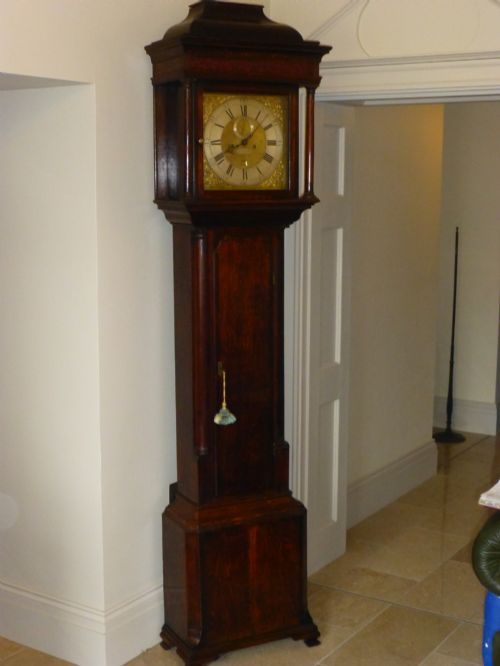
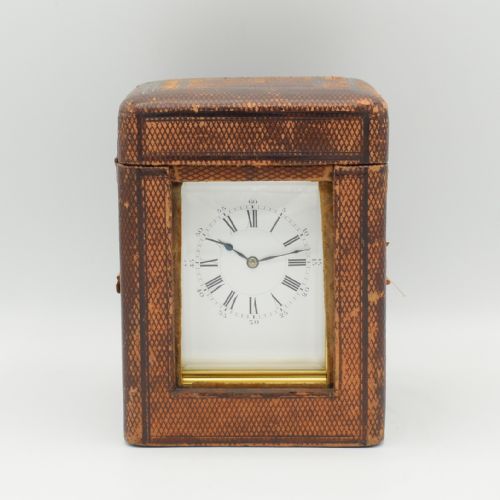
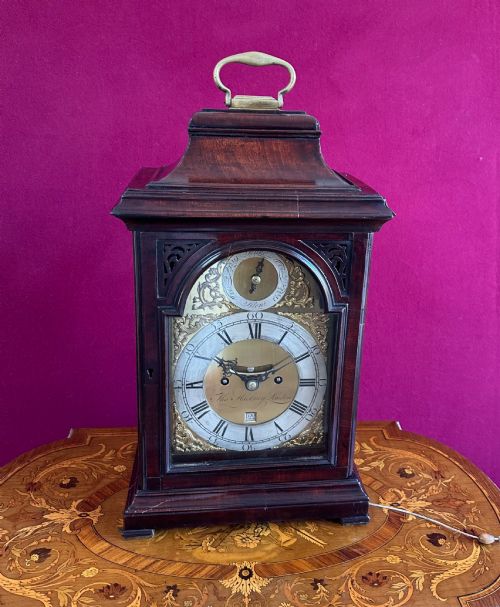
A brass horological clock encompasses timepieces driven by weights or springs, utilising brass for movements, dials, and cases alongside glass and enamel components. The selection spans longcase clocks, carriage clocks, skeleton clocks, and bracket clocks from the seventeenth century onwards.
Carriage clocks and mantel clocks dominate the offerings, often housed in glass panels or gilt bronze frames. Buyers frequently encounter French and English examples featuring escapements, strikes, and alarms.
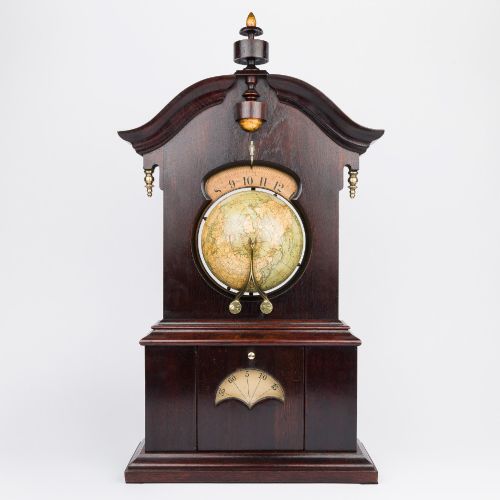
Early specimens include longcase clock dials and walnut or oak bracket clocks alongside later novelty items like lamp-shaped compendiums and beam engine automata.
Materials and construction
Brass forms the structural backbone for movements and plates, combined with steel for pinions and springs, and glass panels to enclose delicate mechanisms. Enamel provides the canvas for Roman and Arabic numerals on chapter rings and dials.
Cabinets and cases utilise timber varieties such as mahogany, oak, walnut, and ebony, sometimes enhanced with gilt bronze or champleve enamel mounts. Fusee and verge movements regulate the power delivery from springs or suspended weights.
Brass Horological Clock Retail Price Guide 2026
Typical asking prices for brass horological clock among the pieces listed under this phrase on Sellingantiques today, from the lower quarter to the upper quarter. They describe what is for sale here now, not the wider market.
Materials appearing across the inventory include gilt bronze, champleve enamel, mahogany, oak, walnut, and steel alongside brass.
Distinctions in quality
The refinement of the escapement and the complexity of the striking train dictate the mechanical grade of the piece. Advanced complications like grand sonnerie, repeating mechanisms, or detent escapements separate standard timepieces from masterwork productions.
The crispness of engraving on the brass dial mask and the retention of original glass, cases, and travel boxes influence the overall integrity. Maker signatures inscribed on plates or dials mark higher standards of workshop output.
Richard Corless of Stockport·Henri Jacot·Antoine Redier of Paris·Brunelot·L Epee·Joseph Windmills·Guilmet·William Evans of Handsworth·Drocourt and Holingue·Mathias Bauerle·Perigal and Duterrau·Andre Guilmet·John Walker·James Maitland London·Barwise London
The Brass Horological Clock Glossary
- Verge escapement
- An early mechanical regulator using a crown wheel and pallets. This mechanism creates the back-and-forth motion that controls the drop of weight-driven power.
- Fusee
- A conical pulley connected to the mainspring by a cord or chain. It equalises the declining torque of the spring as it unwinds to maintain steady timekeeping.
- Skeleton clock
- A timepiece with an open framework designed to display the gear train and escapement. The structure removes conventional wooden or metal housing to expose the mechanics.
- Carriage clock
- A small, portable spring-driven timepiece fitted with a handle and glass panels. Travellers used these robust clocks during transit in the nineteenth century.
- Grand sonnerie
- A striking train complication that sounds both the hours and the quarters automatically on every quarter hour. It represents an elevated level of clockmaking skill.
Brass Horological Clock: Frequently Asked Questions
How do I wind a carriage clock?
Insert the key into the arbour at the back of the movement and turn it gently clockwise until resistance is met. Avoid over-winding to protect the mainspring.
Ensure the clock is placed on a level surface before setting the hands to the correct time by turning the minute hand.
What is a fusee movement?
A fusee is a conical drum that regulates the pull of the mainspring through a fine chain. As the spring loses tension, the chain moves to a wider part of the cone to maintain even power.
This system ensures consistent force reaches the escapement throughout the running cycle.
Why buy a skeleton clock?
Skeleton clocks offer a visual display of gears, escapements, and pendulum swings without traditional case obstructions. They allow light to pass through the movement from all sides.
Collectors appreciate the intricate brass framing and the transparency of the inner mechanics.
How do I date an antique clock?
Examine the style of the brass dial, chapter ring, and movement architecture. Maker signatures and patent marks often provide clues to the production era.
Materials like ebony veneer or champleve enamel point to specific decorative periods from the seventeenth to the twentieth century.