




Leather Cased Clock
A leather cased clock is a portable timepiece housed in a protective outer shell, combining mechanical precision with travel-friendly durability for collectors.
Leather Cased Clock
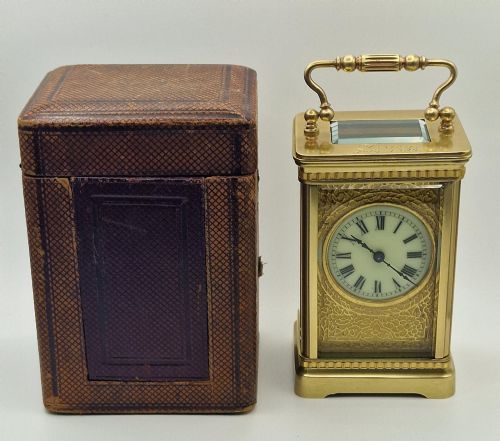
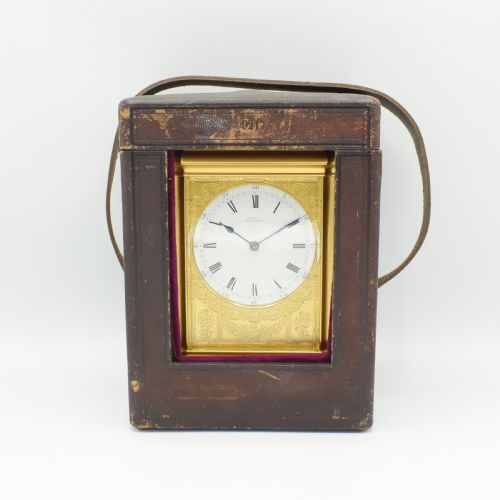
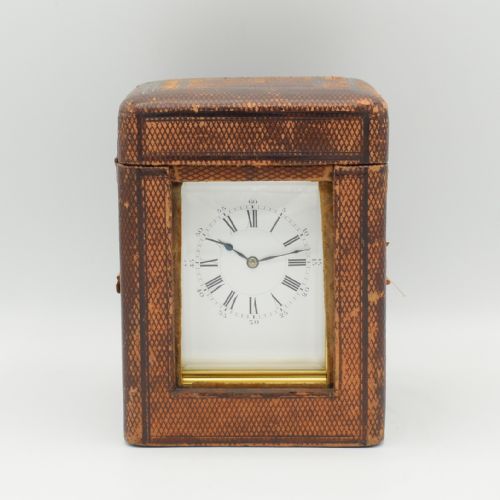
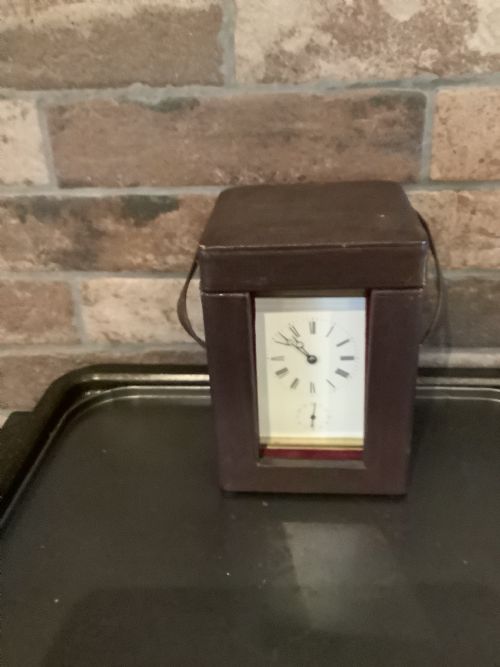
A leather cased clock encompasses portable timepieces designed for travel, most commonly found as carriage clocks, desk clocks, and travel alarms originating from the nineteenth and early twentieth centuries. When searching for a leather cased clock, buyers frequently encounter French carriage clocks housed in fitted leather travel cases or protective outer boxes.
The selection ranges from Victorian and Edwardian examples to later Art Deco chrome-plated travel clocks and specialised boudoir timepieces. These objects bridge the gap between stationary mantel clocks and modern portable timekeeping.
Makers and retailers of the period housed delicate brass, gilt, and enamel movements inside sturdy leather outer cases to ensure safe transport. Surviving examples often retain their original boxes, keys, and fitted leather travel cases alongside the clock itself.
How they were made
Durable outer cases utilise moulded leather, often lined with velvet or silk to cushion the delicate clock body inside. Bevelled glass panels set within gilt frames allow visibility of the enamel dials while protecting the hands and escapement from dust and damage.
Leather Cased Clock Retail Price Guide 2026
Typical asking prices for leather cased clock among the pieces listed under this phrase on Sellingantiques today, from the lower quarter to the upper quarter. They describe what is for sale here now, not the wider market.
Some travel clocks are small enough to sit in the palm of a hand, ready for a Victorian journey.
What varies in quality
Quality in a leather cased clock depends upon the sophistication of the movement and the integrity of the exterior case. Fully engraved gilt brass framing, grand sonnerie striking complications, and complex alarm mechanisms elevate an ordinary timepiece into a masterwork of horology.
The preservation of the original outer leather case and fitted box significantly influences the desirability of the piece. Crisp engraving on the mask and dial, combined with signed movements from established makers, distinguishes superior examples from standard production.
Henri Jacot·Harrods of London·Hunt and Roskell·Alfred Hollinge·Jaeger LeCoultre
The Leather Cased Clock Glossary
- Carriage clock
- A portable spring-driven clock designed for travelling during the nineteenth century. These clocks typically feature a rectangular brass case with glass panels and a swing handle on top.
- Gorge case
- A distinctively shaped carriage clock case style characterised by moulded upper and lower cornices. This stepped architectural design was popular among fine nineteenth-century French makers.
- Grand sonnerie
- A complex clock striking mechanism that chimes both the hours and the quarters automatically as they pass. Such movements represent a higher tier of horological craftsmanship.
- Boudoir timepiece
- A small, elegant clock intended for private residential chambers rather than public reception rooms. These pieces often incorporate delicate enamel decoration or precious metals.
- Escapement
- The internal mechanism that controls the unwinding of the mainspring by delivering impulses to the balance wheel or pendulum. It translates the stored power into regulated ticking.
Leather Cased Clock: Frequently Asked Questions
How do I wind a carriage clock?
Most carriage clocks use a dedicated key inserted into winding squares on the backplate to tension the mainspring.
Care must be taken not to over-wind the mechanism, stopping as soon as resistance is felt.
Were leather cases original to the clocks?
Many high-quality travel clocks were supplied with custom leather outer cases designed to protect the brass and glass housing during journeys.
Surviving original boxes and fitted cases add historical context and protection to the timepiece.
How do I date an antique travel clock?
Dating relies on stylistic clues such as the shape of the brass case, the typography of the enamel dial, and any maker signatures stamped on the backplate.
French and Swiss movements from the nineteenth and early twentieth centuries often bear registration numbers or maker marks that narrow down the production era.