


Gilded Blush Porcelain
Gilded blush porcelain brings together soft ivory ceramic bodies and gleaming gold highlights, mostly from Victorian and Edwardian British potteries.
Gilded Blush Porcelain
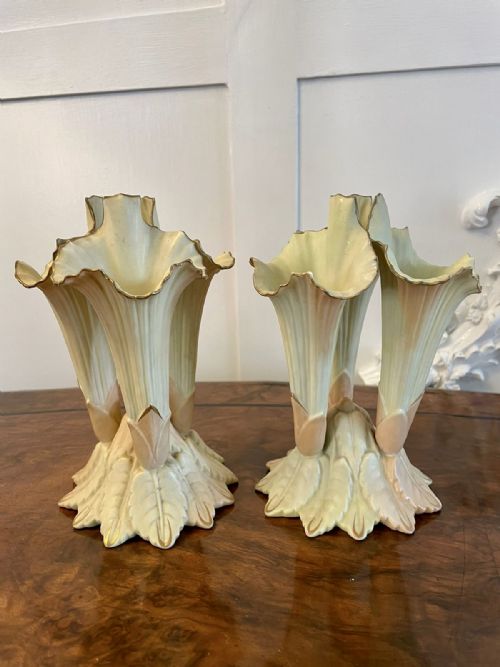
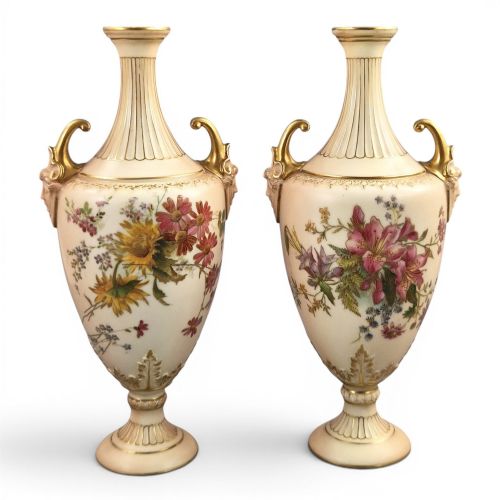
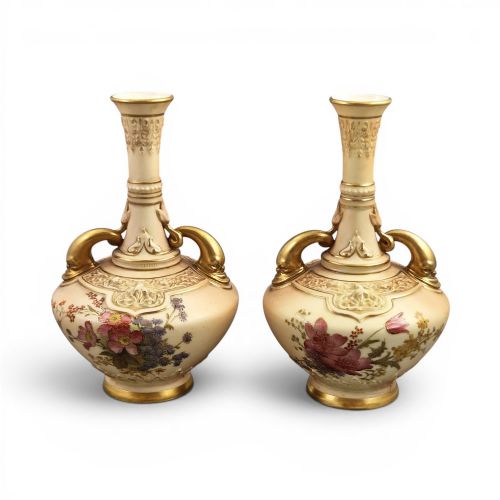
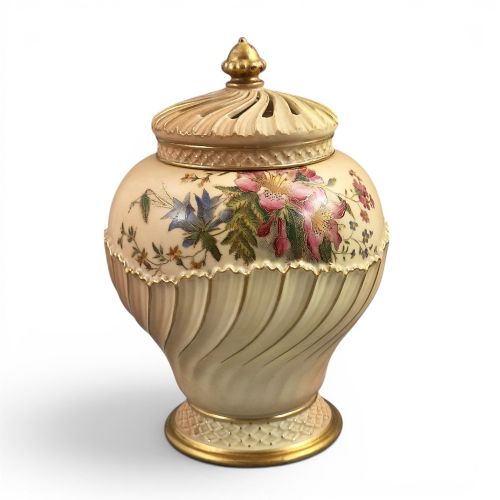
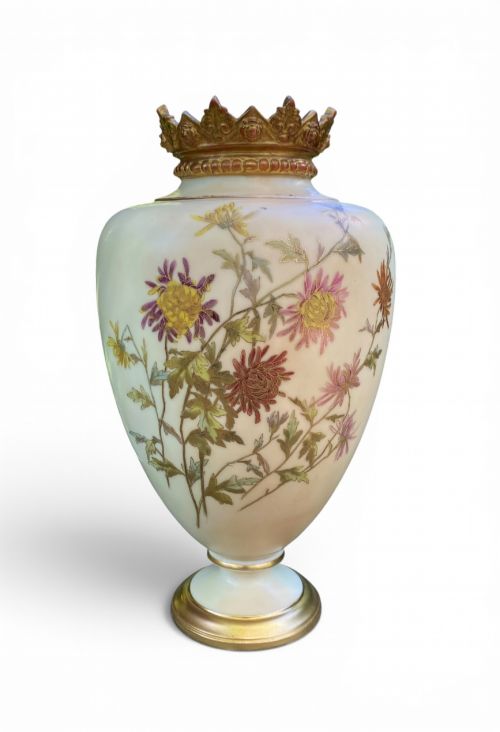
When you search for gilded blush porcelain, you encounter decorative ceramics dominated by late nineteenth and early twentieth century British production, particularly from Worcester. The forms span functional tablewares like teapots and serving trays alongside purely decorative objects such as ewers, jardinières, figures, and spill vases. Edwardian and Victorian pieces form the core of this selection, often displaying gentle pastel backgrounds paired with rich metallic accents.
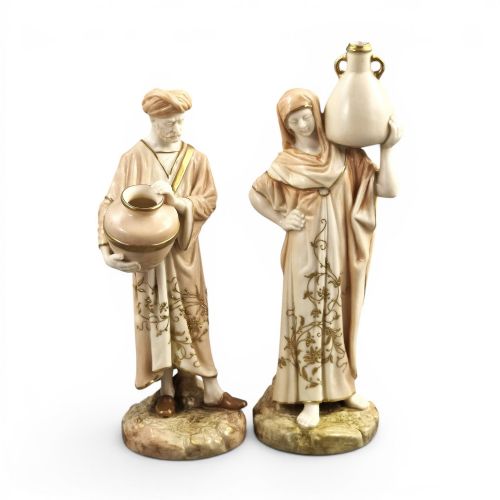
Vases and ewers appear frequently, frequently taking inspiration from classical, Eastern, or natural motifs including dolphins, storks, and floral sprays. Figures and sculptural groups by modellers such as James Hadley also emerge within these listings, showing detailed hand-painted elements. The aesthetic shifts from ornate Victorian revival styles toward simpler early twentieth century designs while retaining the characteristic pale ground and gold detailing.
Materials and methods
These pieces rely on a ceramic body finished with specialised glazes that create the characteristic soft, matte ivory appearance known as blush. Artisans applied enamel colours by hand over or under the glaze to render floral sprays, figures, and natural scenes. The surfaces were then enriched with gold leaf, gilt, and detailed gilding along handles, rims, and borders.
Firing techniques allowed the delicate enamel pigments to fuse with the ceramic body while preserving subtle tonal gradations. Skilled hands painted intricate details onto the porous surface before final glazing and gilding stages locked the design in place. The combination of tactile ceramic bodies and reflective metallic highlights defines the physical character of the work.
Listings span periods from 1860 through 1930, with a strong concentration of Victorian and Edwardian examples.
Assessing quality and execution
Quality rests upon the crispness of the modelling and the precision of the hand-painted decoration across the ceramic surface. Works designed by known modellers or painted by named artists typically display greater refinement in facial expressions, drapery, and floral detailing than standard factory output. The application of the gilding also sets examples apart, with heavier, burnished gold leaf indicating superior workshop standards.
The complexity of the form influences the overall standard, as pieces featuring pierced handles, applied figures, or elaborate shapes demand higher technical mastery. Preservation of the delicate enamel colours and the brightness of the gold leaf without rubbing or loss determines how well an individual object maintains its original visual impact.
Locke And Co·Royal Worcester·Carlton Ware·Kornilov Brothers
The Gilded Blush Porcelain Glossary
- Blush ivory
- A soft, matte cream-coloured ceramic ground developed during the late nineteenth century to mimic natural skin tones or aged ivory. It serves as the canvas for hand-painted floral and figurative designs.
- Gilt
- A thin layer of gold applied to the ceramic surface to highlight handles, rims, and decorative motifs. This metallic finish catches the light and frames the pastel body.
- Ewer
- A large jug with a wide spout and looped handle, often decorative rather than functional in these ceramic iterations. Victorian examples frequently draw on classical or Renaissance shapes.
- Pot-pourri
- A decorative jar or vessel featuring a pierced cover designed to hold scented dried plant material. These containers allow fragrance to diffuse while displaying intricate painted surfaces.
- Pâte-sur-pâte
- A labour-intensive technique where successive layers of liquid clay are built up on a ceramic background to create a low-relief cameo effect. This method requires exceptional skill from the decorator.
Gilded Blush Porcelain: Frequently Asked Questions
How were these pieces used?
Many items served as ornamental display objects for mantelpieces, drawing rooms, and sideboards rather than for daily dining. Ewers, jardinières, and large vases were designed purely to enhance domestic interiors.
Other forms like teapots, cups, and serving trays combined decorative appeal with practical function for formal afternoon tea service.
How do I care for gilded porcelain?
These ceramic objects require gentle handling and should be cleaned only with a dry or very slightly damp soft cloth. Avoid using harsh detergents, abrasive sponges, or immersion in water.
Protecting the pieces from direct sunlight and sudden temperature changes helps preserve the delicate hand-painted enamels and gold leaf.
How do I identify Victorian pieces?
Victorian examples often carry specific factory date codes, impressed numbers, or printed backstamps underneath the glaze. Stylistic clues such as ornate revival motifs and heavy gilding also point toward the nineteenth century.
Earlier pieces tend to feature more elaborate sculptural elements and complex hand-painted subjects compared to later twentieth century production.