




Royal Worcester Ornaments
Royal Worcester ornaments bring 19th-century and 20th-century porcelain figures, vases, and candle snuffers into a room.
Royal Worcester Ornaments
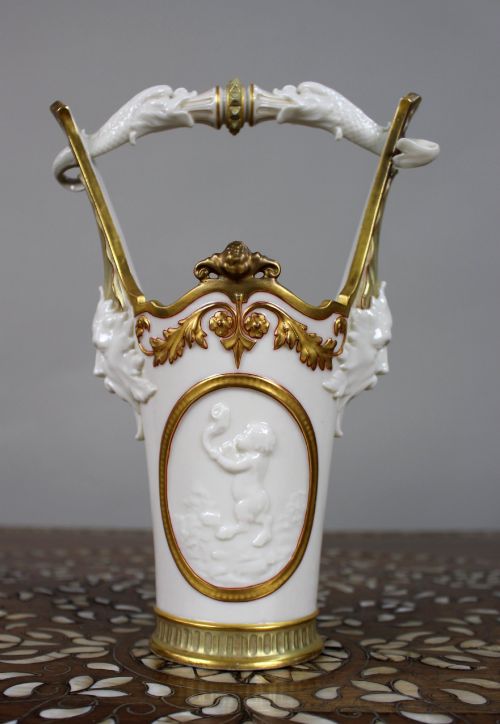
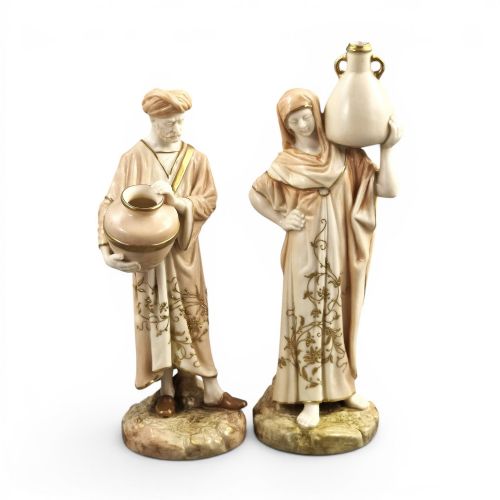
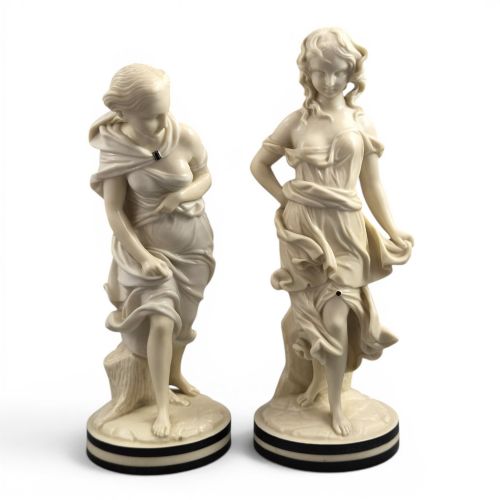
Royal worcester ornaments encompass decorative figurines, sculptural vases, jardinieres, and candle snuffers produced across the Victorian, Edwardian, and mid-20th-century periods. A buyer exploring this selection encounters figural groups, classical maidens, orientalist water carriers, and animal models bearing historical factory marks. These objects reflect shifting aesthetic movements from Victorian classical revival to art deco.
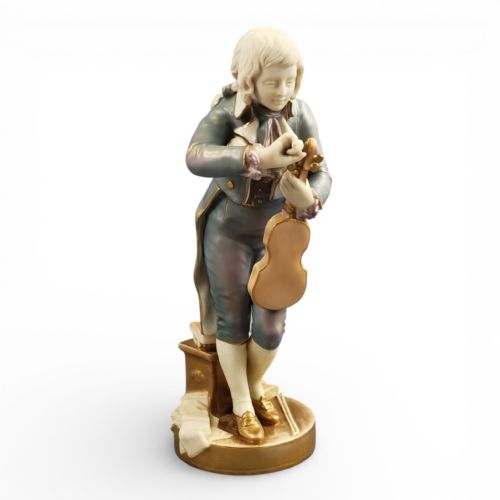
Figurines modelled by notable designers like James Hadley and Freda Doughty dominate the selection alongside utilitarian spill vases and majolica pieces. Pieces range from detailed nineteenth-century exhibition wares to early twentieth-century earthenware and porcelain models. The curation highlights factory output spanning from the Kerr and Binns era through to mid-century character studies.
How they were made
Potters shaped these objects using moulded ceramic and porcelain bodies, frequently enhancing surfaces with glaze and parian ware finishes. Artisans applied hand-painted details, gilding, and gold leaf to accentuate sculptural contours and costume folds. Specific bodies like blush ivory and patent metallic finishes required specialised firing and pigment layering techniques.
Model makers carved intricate figures and vessels which were cast in moulds, assembled, and fired at high temperatures. Painters and gilders then added surface decoration by hand, utilising enamel colours and metallic lustres before final glazing.
A porcelain fox wearing a hunting cap stands ready to put out the bedside candle.
What varies in quality
The sophistication of the modelling and the precision of the hand-painting set individual pieces apart. Finer examples display subtle facial expressions, delicate polychrome enamel work, and crisp relief moulding that preserves intricate details in hair, fabric, and botanical motifs.
The application of gilding and the preservation of the original glaze integrity influence the overall standard of a piece. Earlier works overseen by master modellers often exhibit superior sculptural depth and complex multi-part assembly compared to later production runs.
James Hadley·Freda Doughty·William Ricketts·Stinton
The Royal Worcester Ornaments Glossary
- Parian ware
- An unglazed biscuity porcelain developed to imitate marble, frequently used for Victorian figures and classical statuary.
- Blush ivory
- A soft cream-coloured porcelain body introduced by the factory, often decorated with floral sprays and gilt highlights.
- Jardiniere
- A large decorative ceramic flower pot or plant holder designed to sit on a table or floor.
- Candle snuffer
- A small figural extinguisher fitted with a handle, used historically to put out candle flames safely.
- Majolica
- A type of earthenware covered in an opaque coloured glaze, known for vibrant hues and relief-moulded animal or human forms.
Royal Worcester Ornaments: Frequently Asked Questions
What is blush ivory porcelain?
Blush ivory is a signature matte cream ceramic body developed during the Victorian period. It provides a warm background for delicate hand-painted flowers and raised gold gilding.
This finish is characteristic of late nineteenth and early twentieth-century decorative pieces produced at the factory.
How should I display porcelain figures?
Place figures on stable, flat surfaces away from direct sunlight and heavy foot traffic to protect delicate glazes and gilding. Enclosed cabinets offer the best protection against dust and accidental knocks.
Ensure pieces are positioned where their detailed modelling and hand-painted colours can be appreciated from multiple angles.
Are candle snuffers functional?
Candle snuffers are practical tools designed to extinguish flames without smoking, though many collectors treat them purely as display figurines. Their hollow conical hoods fit over wicks to cut off oxygen.
Historical examples depict animals, monks, and literary characters modelled in miniature porcelain.