
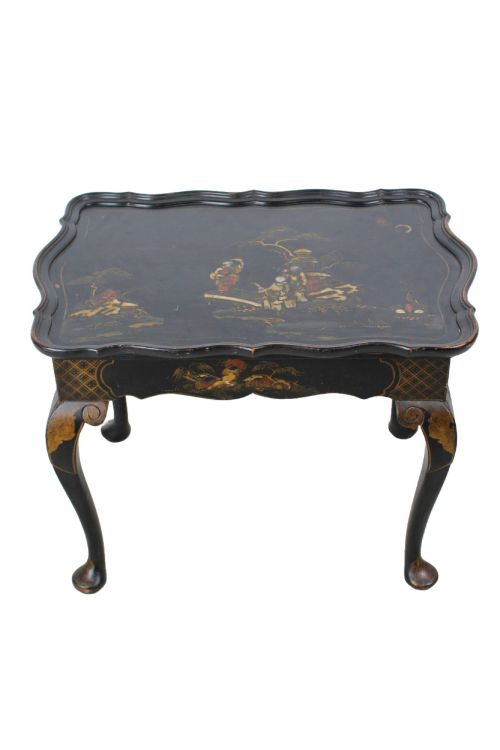
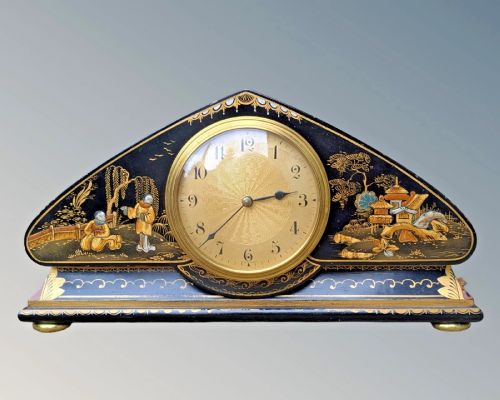
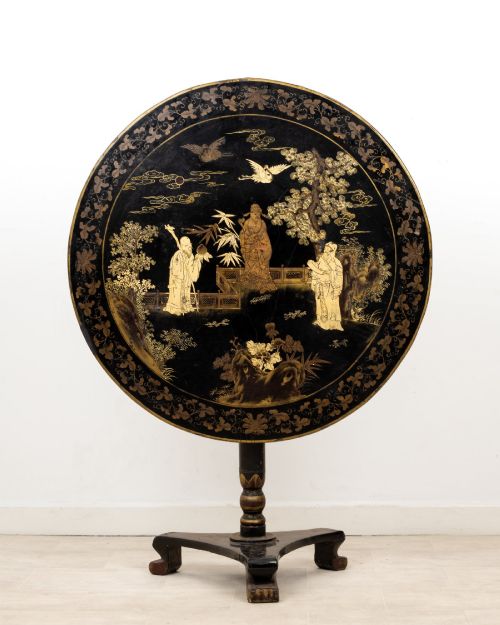
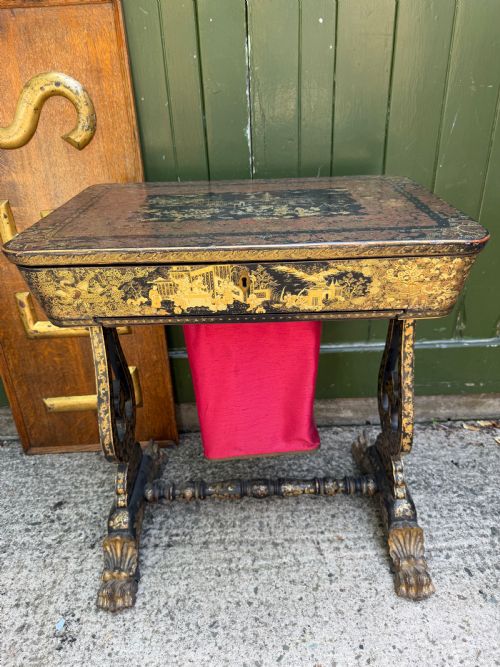
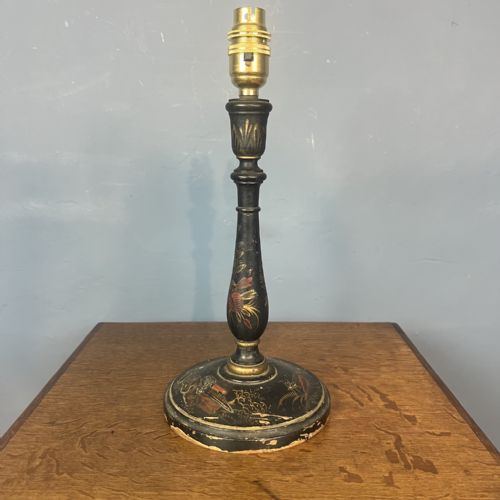


Gilded Black Lacquer Table
A gilded black lacquer table brings dark glossy depth and hand-applied metallic detail to a room, turning practical furniture into a focal point.
Gilded Black Lacquer Table
A gilded black lacquer table is a surface finished in dark resin and adorned with metallic highlights, appearing across several distinct centuries. The search phrase covers diverse forms, from nests of occasional tables to coffee tables and work tables.
Buyers meet pieces spanning the eighteenth century through the Edwardian era and the nineteen-twenties. The selection relies heavily on nineteenth-century Chinese export items and British interpretations in Chinoiserie and Regency styles.
Occasional tables, nests, and coffee tables dominate the current offerings. These items range from compact tray tables to elaborate sewing tables fitted with gilded decoration.
Materials and technique
Constructed primarily from wood, papier-mâché, or tole, the foundations receive layers of dark lacquer to build a smooth, reflective surface. Artisans apply gold leaf or detailed gilding by hand to render intricate figurative and botanical motifs.
Techniques combine traditional Asian export methods with British Japanning and papier-mâché production, notably utilised by makers such as Jennens and Bettridge. Brass and other metals occasionally appear in mounts, hinges, and structural hardware.
Early papier-mâché mixing rooms relied on boiled paper pulp that workers pressed into iron moulds by hand.
Craftsmanship and condition
Quality rests in the depth of the dark finish and the crispness of the hand-painted or gilt decoration. Superior examples display intricate detailing that remains sharp across the surface without heavy fading or crude restoration.
The integrity of the structural support and the stability of the lacquer layers dictate the standing of a piece. Earlier papier-mâché and wood foundations require careful preservation to maintain the smooth expanse of the black ground.
Jennens and Bettridge·Henry Clay
The Gilded Black Lacquer Table Glossary
- Chinoiserie
- European decorative style reflecting Chinese artistic influences. This aesthetic is defined by motifs of landscapes, figures, and pavilions rendered in gold upon a dark ground.
- Japanning
- European imitation of East Asian lacquerwork. Artisans applied layers of varnish and heat-dried the finish before adding raised metallic designs.
- Papier-mâché
- Composite material made from paper pulp or sheets mixed with glue and pressed. Makers moulded this substance into trays and tables before lacquering the surface.
- Export lacquer
- Items produced in China or Japan specifically for the Western market. These pieces combine Eastern lacquering techniques with forms suited to European homes.
- Nest of tables
- Set of graduated tables designed to fit neatly beneath one another. They provide versatile surface space in compact arrangements.
Gilded Black Lacquer Table: Frequently Asked Questions
What is a gilded black lacquer table?
A gilded black lacquer table is a wooden or papier-mâché furniture piece coated in dark resin and detailed with gold leaf or metallic paint. These surfaces often feature Chinoiserie scenes, floral motifs, or geometric patterns.
Such tables function as practical furniture and decorative accents. They introduce reflective surfaces and historic craftsmanship into modern and traditional interiors.
How do I style one at home?
Place an occasional table or nest beside a neutral sofa to let the dark finish and gold details stand out without competing with other patterns. These pieces also suit corners where a reflective surface brightens a dim area.
Avoid placing them in direct sunlight to protect the lacquer finish over time. Pairing them with simple modern surroundings highlights their historic character.
How do I date a lacquer table?
Examine the materials and construction methods underneath the lacquer, such as the type of wood or the composition of the papier-mâché base. Eighteenth-century and Regency pieces often show distinct joinery and hand-mixed finishes compared to later Edwardian examples.
Stylistic cues also help distinguish periods, as Chinese export items differ from British Japanned or Victorian interpretations. Comparing the motifs to documented pieces narrows down the decade of production.
What is the difference between Japanning and lacquer?
True lacquer is made from the processed sap of the toxicodendron vernicifluum tree native to East Asia, building up hard and durable layers over months. Japanning is the European technique of imitating this finish using shellac, varnish, and heat treatment on a wooden base.
Both methods produce a dark, glossy surface that accepts gold leaf decoration. British makers adapted Asian styles through Japanning to meet domestic demand for exotic furniture.