








Oriental Tripod Side Table
An oriental tripod side table brings a rich, exotic character to a room, offering a compact surface with deep regional carving and lacquered finishes.
Oriental Tripod Side Table
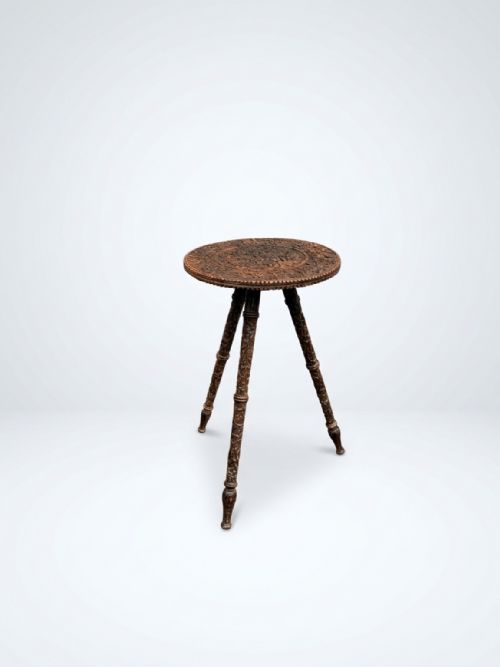
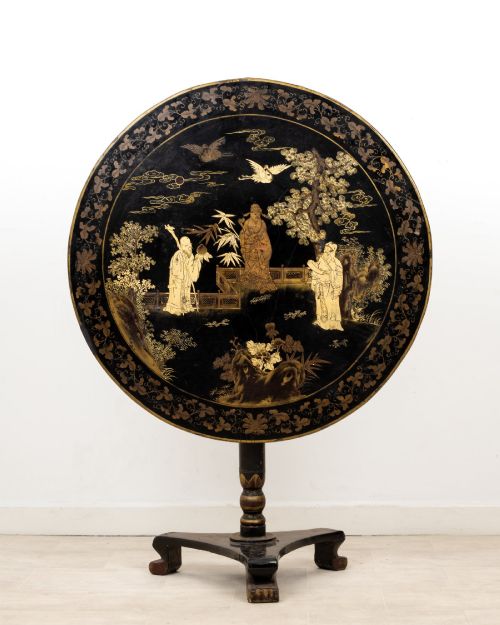
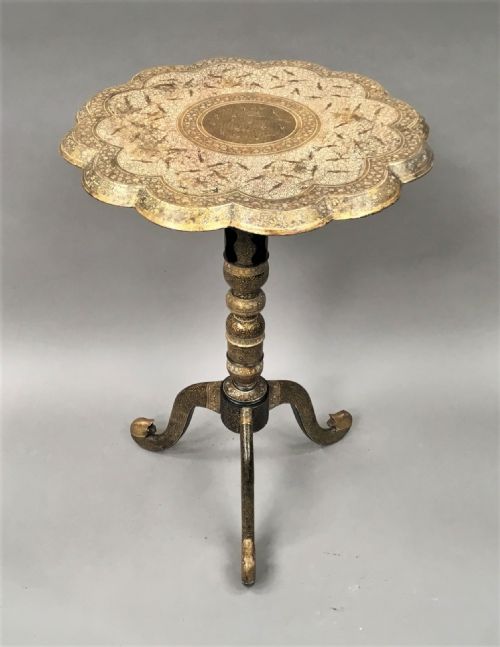
An oriental tripod side table is a compact surface supported by a three-legged base, emerging from nineteenth-century workshops across Asia and British colonial outposts. These tables function as occasional surfaces, wine tables, or tilt-top pieces, designed to occupy small footprints while providing striking visual focal points in a room.
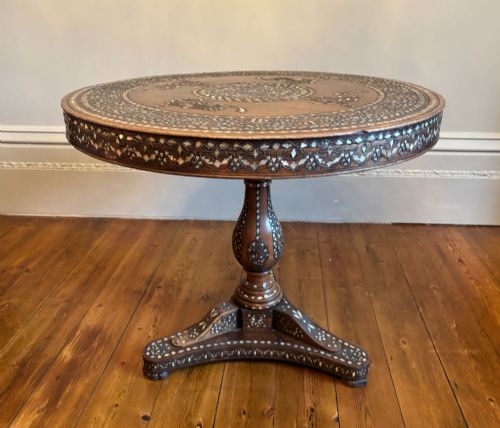
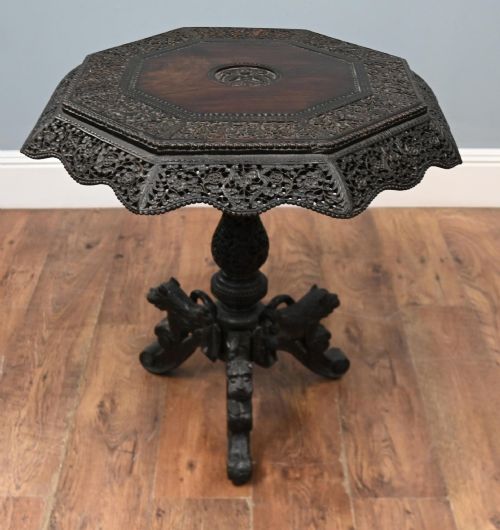
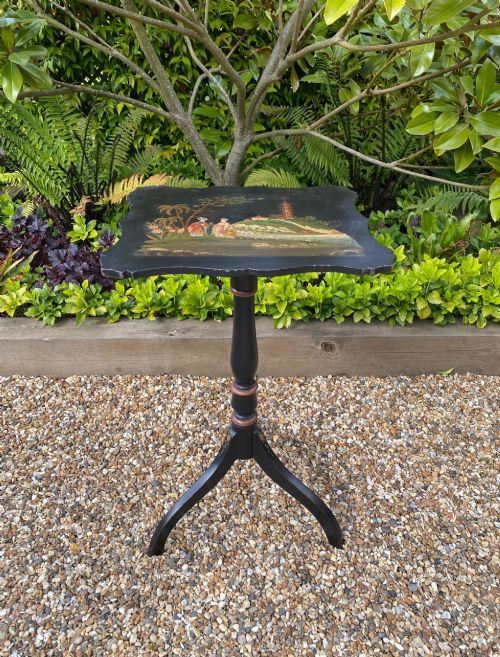
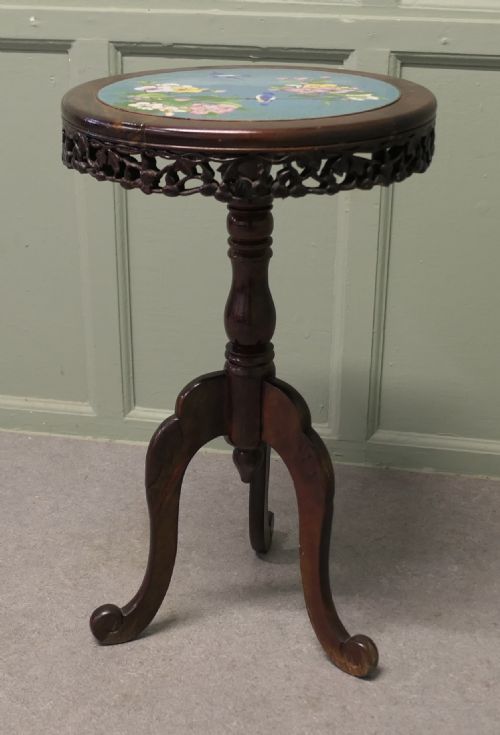
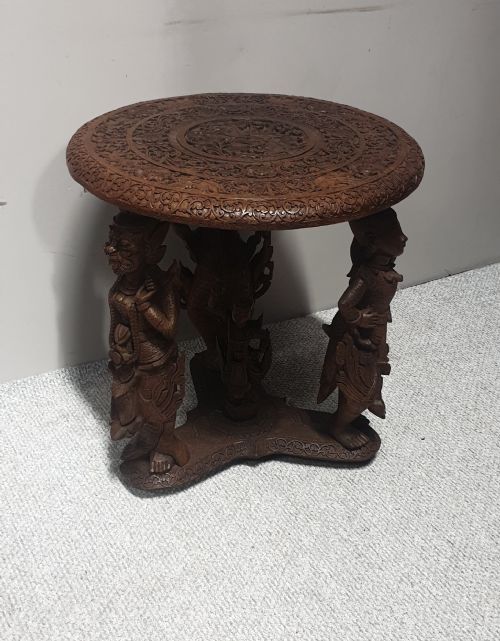
The pieces appearing on this page span several distinct regional styles, including Anglo-Indian, Chinoiserie, Anglo-Burmese, and Qing Dynasty pieces. Hardwood, rosewood, teak, and lacquer dominate the physical forms, often enriched with detailed carving or painted decoration.
Materials and construction
Cabinetmakers utilised dense timbers such as hardwood, rosewood, padauk, and teak to construct these tables, allowing for deep, intricate relief carving without splitting the wood. Turned pedestals and tripartite bases provide the necessary structural support for the three-legged design.
Surface decoration relies heavily on traditional lacquer work, gold leaf, and fine paintwork, alongside inset elements like marble panels or cloisonné enamel. Carving techniques include high-relief figures, animal motifs such as elephants and dragons, and elaborate floral patterns.
Oriental Tripod Side Table Retail Price Guide 2026
Typical asking prices for oriental tripod side table among the pieces listed under this phrase on Sellingantiques today, from the lower quarter to the upper quarter. They describe what is for sale here now, not the wider market.
A few tables feature carved elephant heads peering out from beneath the top, guarding your tea.
Judging quality in oriental tables
Quality rests primarily on the depth and crispness of the carving, where master carvers achieved sharp, clean details in hard timbers rather than soft, rounded edges. The integrity of the tripartite base and the stability of the tripod joint dictate the structural longevity of the piece.
Surface treatments further separate standard examples from superior ones, visible in the smoothness of the black lacquer, the precision of painted details, and the snug fit of inset marble or cloisonné panels. Timber selection also matters, with dense woods like padauk and rosewood holding finer detail than plain wood.
The Oriental Tripod Side Table Glossary
- Tripod base
- A support structure comprising three legs radiating from a central pedestal, common in nineteenth-century small tables.
- Chinoiserie
- European interpretation and imitation of Chinese artistic traditions, frequently applied to lacquered furniture and decorative objects.
- Tilt top
- A table top hinged to the pedestal so it can pivot vertically when not in use, saving space in domestic interiors.
- Cloisonné
- An enamelling technique where metal wire forms compartments on a surface, filled with coloured glass paste and fired.
- Japanned
- A European process of finishing furniture with heavy varnishes and lacquers to imitate East Asian lacquerware.
Oriental Tripod Side Table: Frequently Asked Questions
Where should I place an oriental tripod side table?
These compact tables suit corners, beside armchairs, or as lamp tables where their detailed carving and lacquer work can be appreciated up close.
Because they have a small footprint, they integrate easily into various room layouts without dominating the floor space.
How do I care for a lacquered table surface?
Lacquered and painted surfaces require dusting with a soft, dry cloth and protection from direct sunlight and heat sources.
Avoid using modern chemical polishes or water, which can damage delicate finishes and nineteenth-century paintwork.
What is the difference between Chinoiserie and Chinese Export?
Chinoiserie describes European-made furniture styled with oriental motifs, while Chinese Export pieces were manufactured in China specifically for Western markets.
Both styles appear in nineteenth-century interiors but stem from different cultural workshops.
Are these tables sturdy enough for daily use?
Most hardwood and solid timber examples offer robust construction suitable for holding lamps, books, or drinks.
Tables with delicate tilt-top mechanisms or intricate carved legs require gentle handling to prevent strain on the joints.