



Gilt Wood Occasional Table
A gilt wood occasional table brings bright warmth and sculptural detail to a room, drawing the eye with polished metallic surfaces and historic form.
Gilt Wood Occasional Table
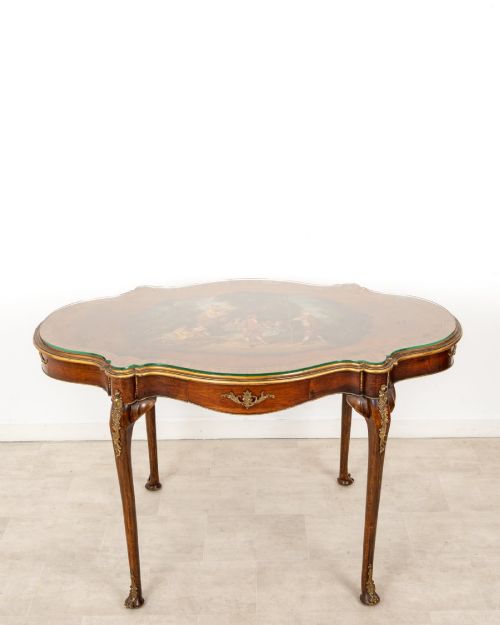
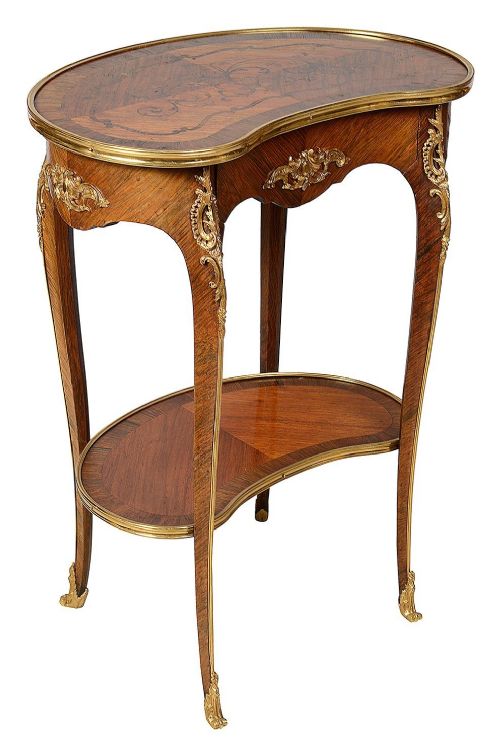
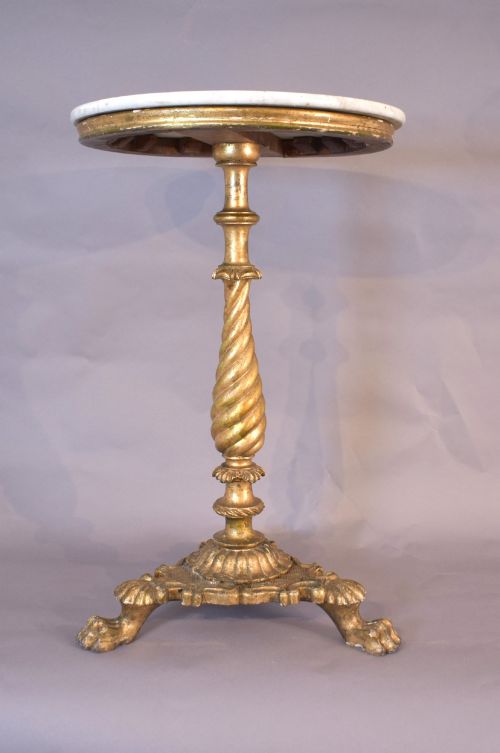
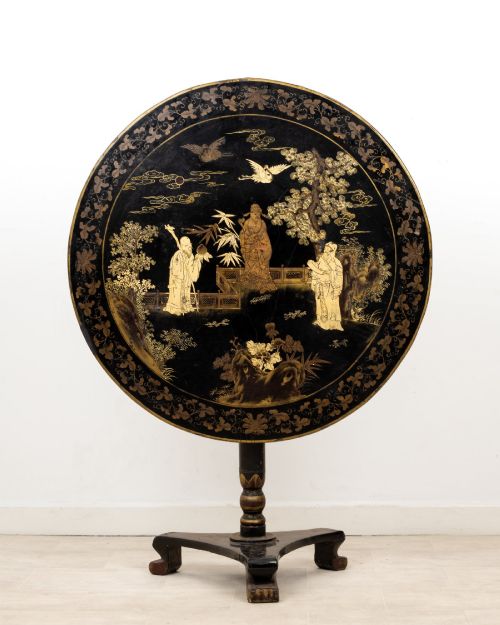
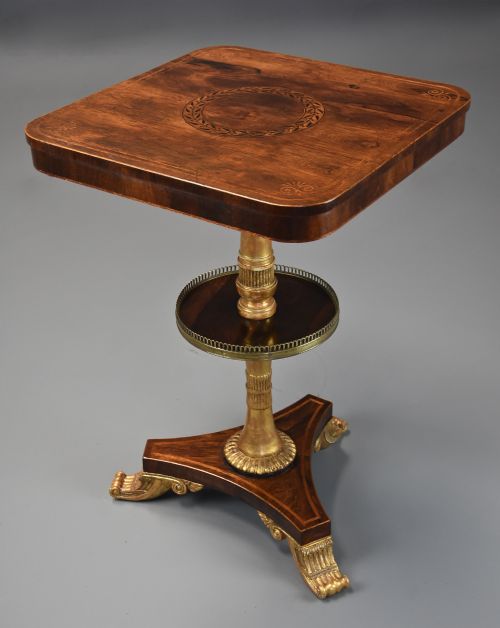
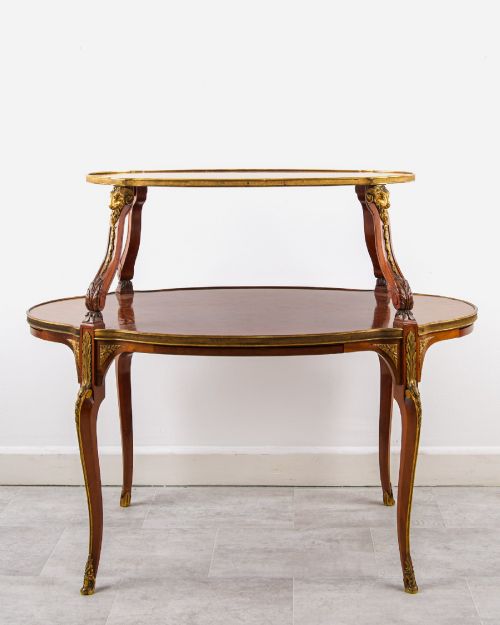
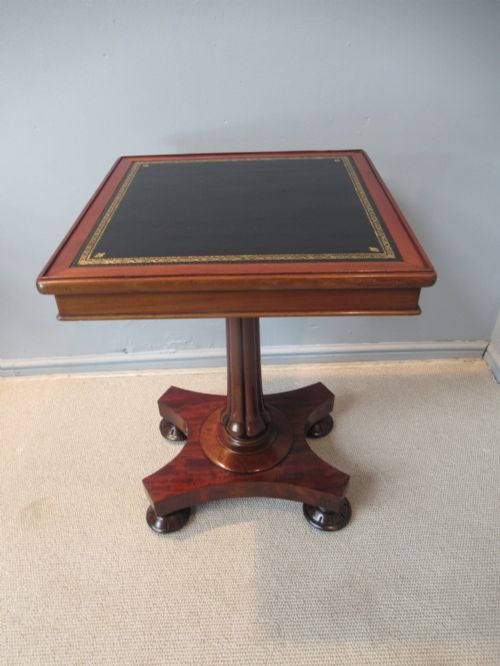
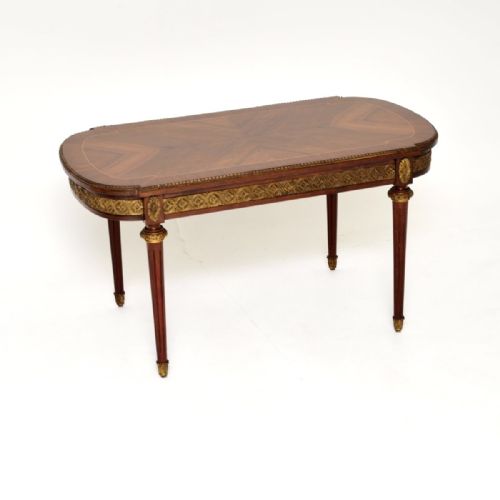
A gilt wood occasional table is a small, versatile surface designed for display or general use, often taking the form of a side table, centre table, or lamp table. These pieces span the nineteenth century and early twentieth century, drawing heavily on Regency, Victorian, and French revival styles such as Louis XV and Louis XVI.
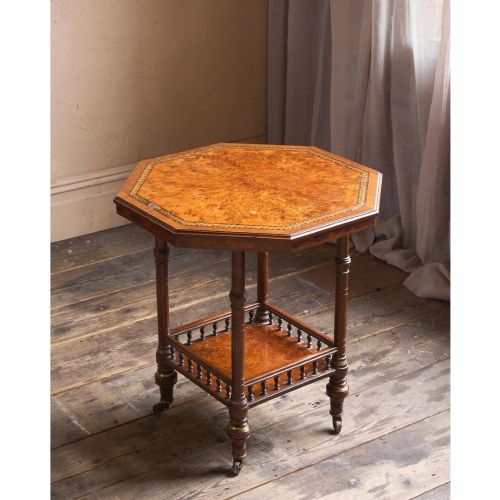
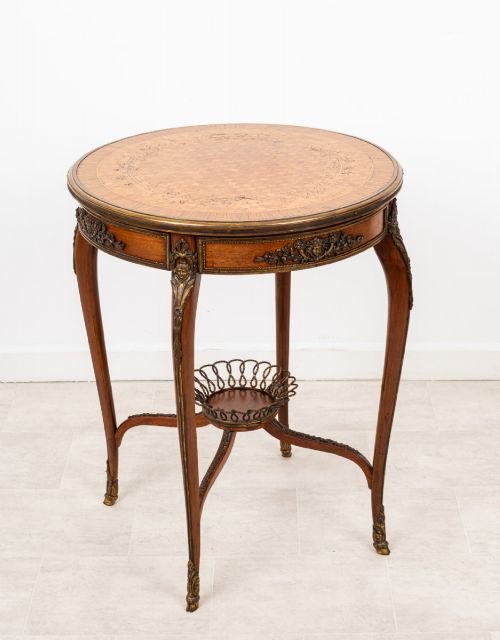
The selection ranges from simple tripod stands and two-tier étagères to substantial marble-topped centre pieces embellished with marquetry and intricate carving. They appear in diverse woods including rosewood, mahogany, kingwood, and walnut, frequently paired with giltwood, parcel gilt, or ormolu mounts.
Buyers encounter examples influenced by continental design alongside British cabinet-making traditions, reflecting both formal drawing-room furnishings and lighter decorative pieces intended for intimate spaces.
How They Were Made
Craftsmen built these tables using dense hardwoods such as mahogany, rosewood, kingwood, and walnut, often applying delicate veneers and marquetry in floral or geometric patterns. Structural stability relied on traditional joinery, while secondary timbers formed internal framing and drawer construction.
Gilding was applied using gold leaf or liquid paint over prepared wooden mouldings and carved elements to create a brilliant reflective surface. Metal ornamentation involved cast brass, ormolu, and gilt bronze, secured with pins and screws to accentuate corners, aprons, and legs.
Listings feature periods spanning from the eighteenth century through the 1930s, encompassing Regency, Victorian, and Edwardian eras.
What Varies in Quality
Quality rests upon the crispness of the carved ornament and the precision of the gilding, where hand-tooled depth distinguishes superior work from flat, mechanical finishes. The choice of timber also dictates standing, with figured grains, fine marquetry, and heavy inset marble slabs marking out more ambitious commissions.
Construction integrity separates standard production from exceptional cabinet-making, visible in tight joints, substantial weight, and the integration of fine cast bronze or ormolu mounts rather than stamped sheet metal.
Gillows·François Linke·George Bullock·Donald Ross·Marsh and Tatham
The Gilt Wood Occasional Table Glossary
- Giltwood
- Wood that has been coated with gold leaf or powder. This finish adds a reflective metallic sheen to carved mouldings and frames.
- Ormolu
- Gilded bronze used for decorative mounts and fittings. It gained widespread popularity in French furniture during the eighteenth and nineteenth centuries.
- Marquetry
- The art of applying thin pieces of veneer to a structure to form decorative patterns. Craftsmen use varied timber species to create contrasting pictorial designs.
- Étagère
- A set of open shelves for displaying small objects or books. These freestanding tiers provide additional surface space while maintaining a light visual profile.
- Parcel gilt
- Wood or metal decoration where only specific raised portions receive gold leafing. This technique highlights carved details against a contrasting dark wood or painted ground.
Gilt Wood Occasional Table: Frequently Asked Questions
What is a gilt wood occasional table used for?
These pieces function as versatile stands for lamps, decorative objects, or drinks within a principal room. Their compact proportions allow them to sit easily beside seating or serve as central display surfaces.
Historically, they provided flexible utility in drawing rooms and boudoirs where large furniture was impractical. Today, they continue to serve similar domestic roles while introducing historic character to modern interiors.
How do I identify a nineteenth-century piece?
Examination of the timber, construction methods, and hardware reveals the era of manufacture. Nineteenth-century examples often feature dense hardwoods, hand-cut dovetails, and heavy cast bronze or ormolu mounts.
Stylistic cues such as French revival motifs or Regency classical lines also point directly to this period. Secondary woods and tool marks on hidden surfaces further confirm age.
How should I care for gilt wood and ormolu?
Maintenance requires gentle dusting with a soft, dry cloth to prevent the accumulation of grit on delicate surfaces. Moisture and chemical polishes must be avoided entirely, as they damage fragile gold leaf and historic finishes.
Keeping the table away from direct sunlight and steady heat sources protects both the wood substrate and the metallic leafing from cracking or fading.
What distinguishes French revival styles from Regency designs?
French revival pieces, particularly in the Louis XV or Louis XVI taste, emphasise flowing organic curves, elaborate marquetry, and lush ormolu mounts. They lean towards decorative exuberance and refined courtly elegance.
Regency tables favour architectural symmetry, classical restraint, and dark exotic woods with restrained parcel gilt or brass inlay. These British pieces often reflect archaeological discoveries from ancient Greece and Rome.