






Black Lacquer Tilt Table
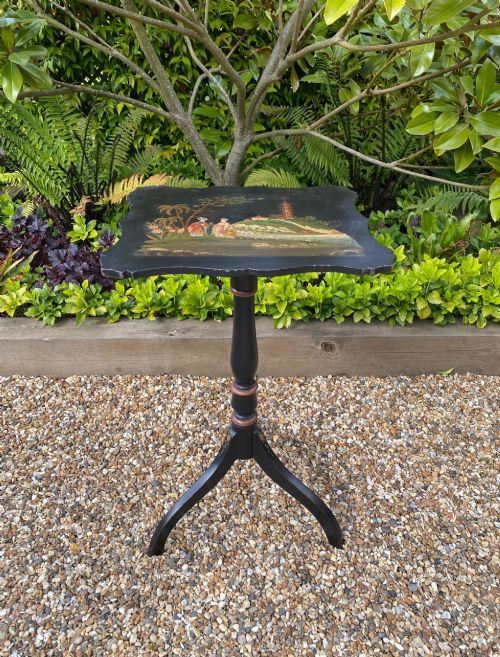
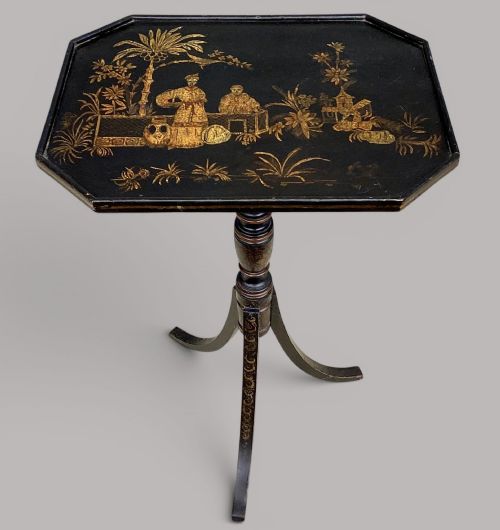
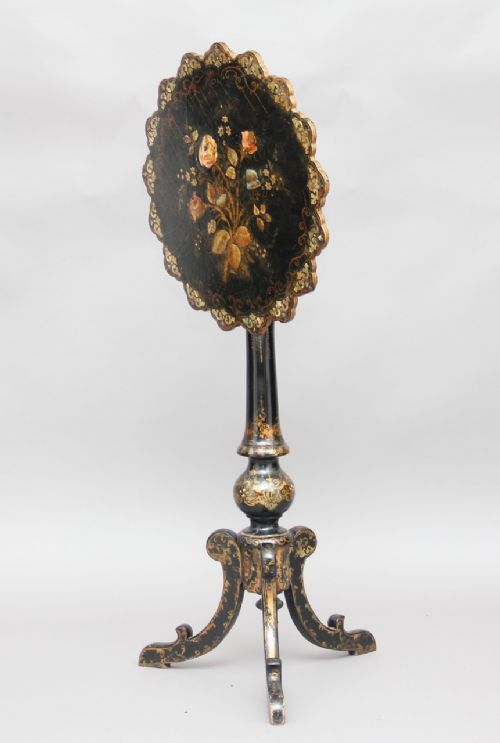
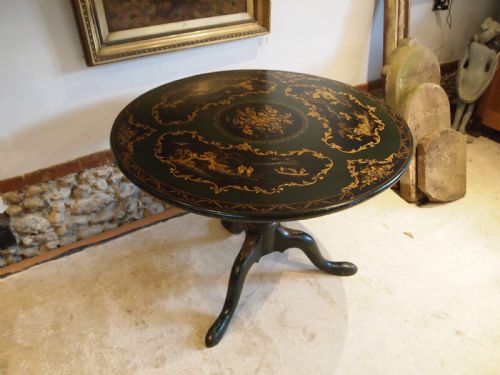
These black lacquer tilt table designs bring hand-painted motifs and folding tripod bases straight into sitting rooms.
Black Lacquer Tilt Table
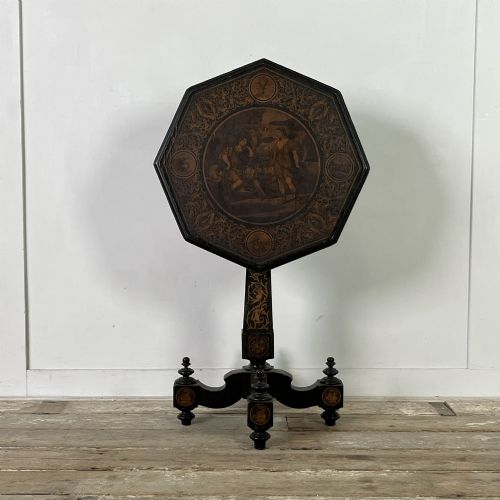
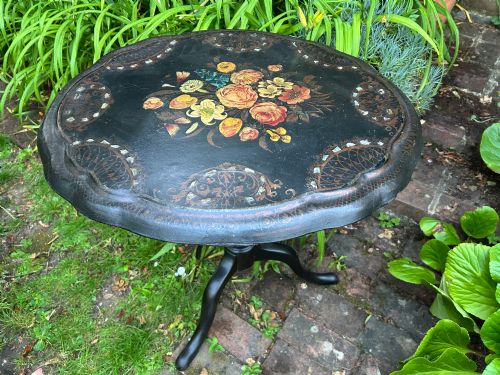
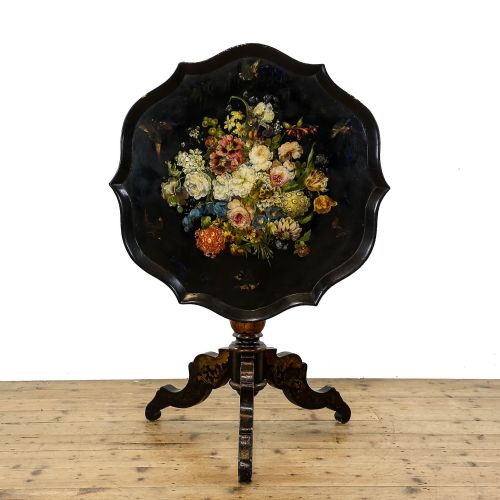
When you search for a black lacquer tilt table, you look at folding occasional furniture spanning the Georgian, Regency, Victorian and Edwardian eras. These pieces combine dark surfaces with hinged top mechanisms designed to tilt upright against a wall when not in use.
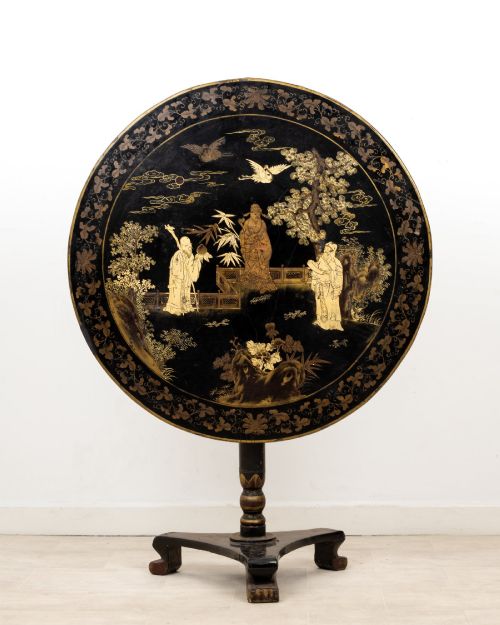
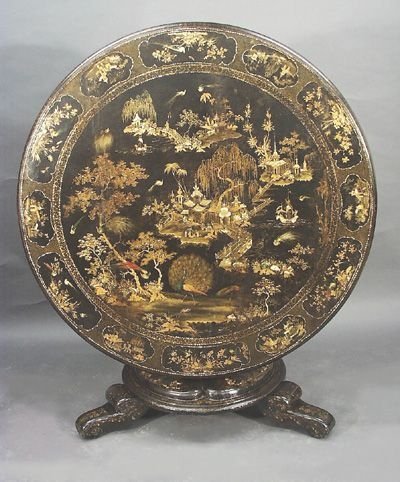
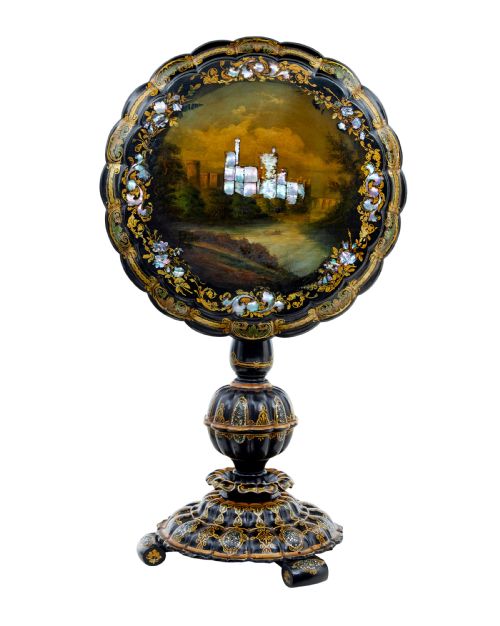
You are most likely to meet Victorian papier-mâché examples alongside 19th-century wooden tripod tables finished with hand-painted Chinoiserie decoration. Formats vary from round wine tables and side tables to rectangular tray tops supported by turned pedestals.
How they were made
Cabinet makers built the structural foundations using wood or moulded papier-mâché, applying dark lacquer finishes over the primary surfaces. Artisans then built tilting mechanisms using brass or iron catches to allow the tops to pivot flat or vertical.
Decoration relied on hand painting, gold leaf application, and parcel gilt detailing, often incorporating inlaid mother of pearl or fine ink work. Chinoiserie motifs dominated the ornamental schemes across Georgian, Regency and Victorian workshops.
Black Lacquer Tilt Table Retail Price Guide 2026
Typical asking prices for black lacquer tilt table among the pieces listed under this phrase on Sellingantiques today, from the lower quarter to the upper quarter. They describe what is for sale here now, not the wider market.
Several tops double as removable trays, letting you carry the drinks before you tilt the furniture away.
What varies in quality
Quality rests in the crispness of the hand-painted Chinoiserie details and the depth of the lacquer finish. Pieces with intricate mother of pearl inlay or delicate ink work demonstrate superior artisan input compared to simpler painted surfaces.
The mechanical integrity of the tilt-top mechanism and the stability of the tripod base dictate structural merit. Heavier papier-mâché mouldings and well-balanced pedestal supports distinguish finer examples from standard production.
The Black Lacquer Tilt Table Glossary
- Chinoiserie
- European decorative style reflecting Chinese artistic traditions. This aesthetic appears frequently in painted lacquer landscapes and figures.
- Papier-mache
- Composite material made from paper pulp mixed with glue and dark resin. Pressed and hardened forms created durable, smooth tabletops.
- Tilt top
- Tabletop mounted on a pivoting catch that turns vertical. This mechanism allowed furniture to save floor space.
- Japanned
- European imitation of East Asian lacquerwork using layered varnish and paint. Artisans cured these glossy finishes to mimic imported wares.
Black Lacquer Tilt Table: Frequently Asked Questions
How do you tilt the top?
A brass or wooden catch beneath the surface releases the pivot mechanism. This lets the top swing into a vertical position.
You simply press the release and guide the surface upward until the catch locks it securely against the pedestal.
Where were they used?
These pieces served primarily as occasional, wine or side tables in principal sitting rooms. Owners moved them easily beside chairs for tea or reading.
When tilted upright, they stood against walls as decorative panels to preserve valuable floor space.
How do I date a table?
Dating relies on combining the material construction with stylistic details like Chinoiserie motifs and turning styles. Georgian and Regency pieces show different pedestal profiles than Victorian papier-mâché examples.
Looking at the tilt mechanism and underlying wood type also helps narrow down the period of manufacture.
Are they sturdy enough for daily use?
Tripod bases provide stable support on even floors, though the tilt mechanism requires gentle handling. Regular placement of everyday items poses no trouble for sound frames.
Care should be taken not to lean heavy weight against the edges when the top is locked flat.