
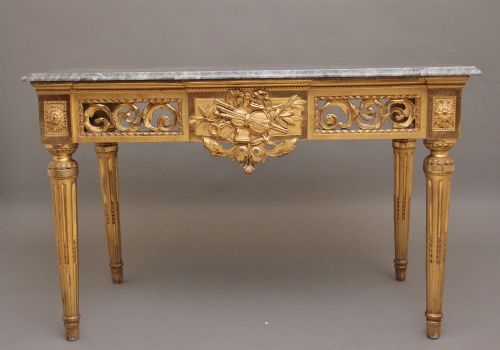
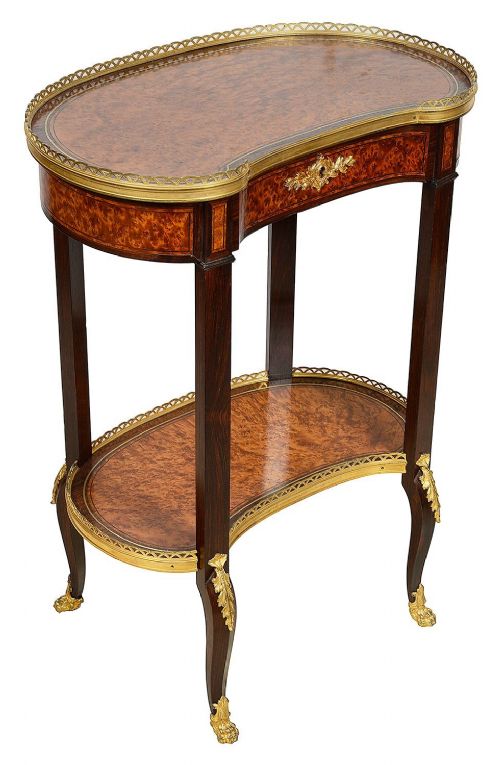
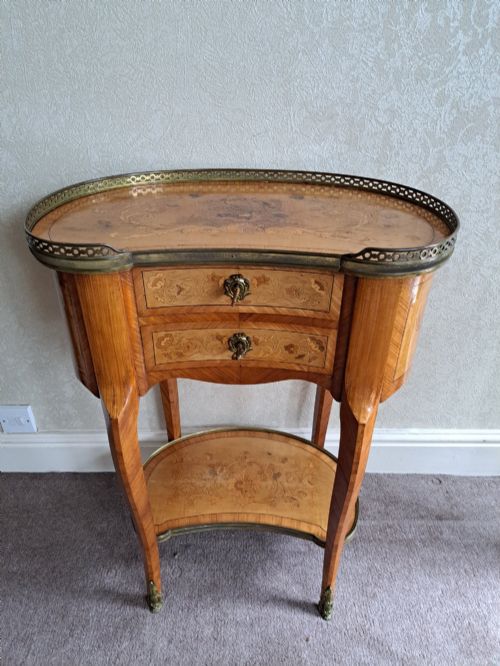
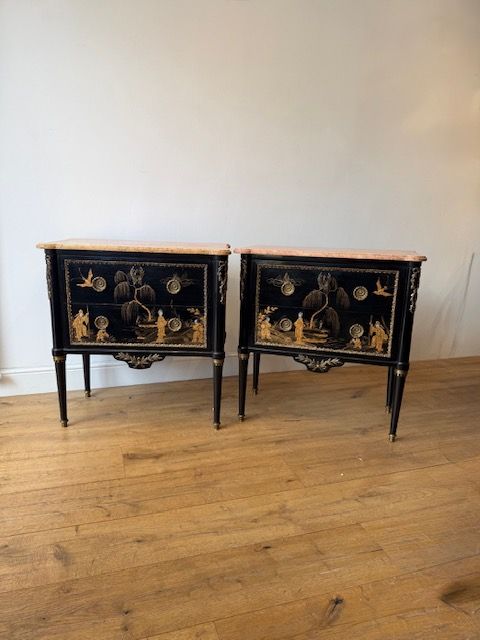
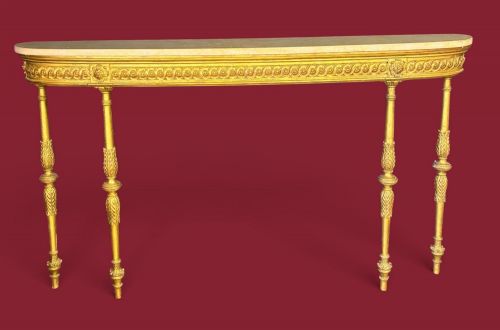


Louis XVI Style Side Table
A louis xvi style side table brings balanced neoclassical proportion and refined brass mounts to a room.
Louis XVI Style Side Table
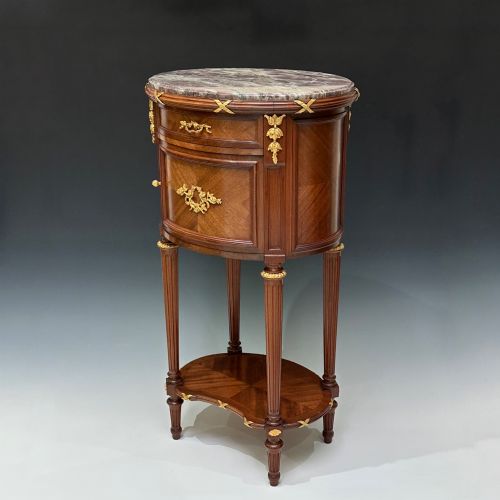
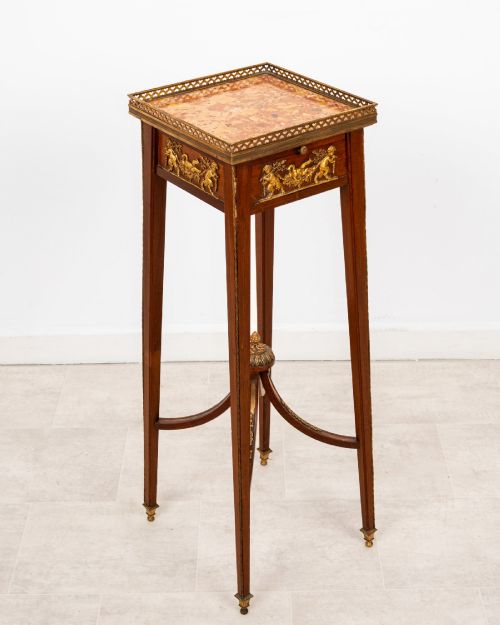
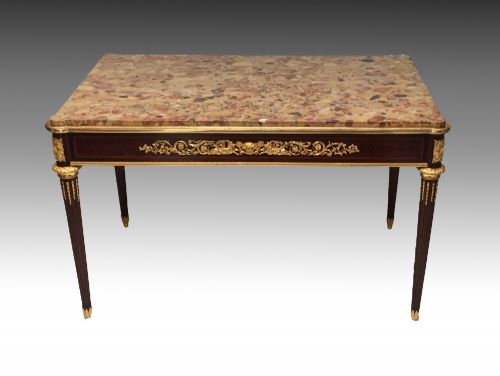
A louis xvi style side table displays the restrained geometry, straight tapered legs and classical symmetry characteristic of late eighteenth-century French design. The pieces available here span the nineteenth and early twentieth centuries, capturing revivals that echo earlier craftsmanship through standardised forms.
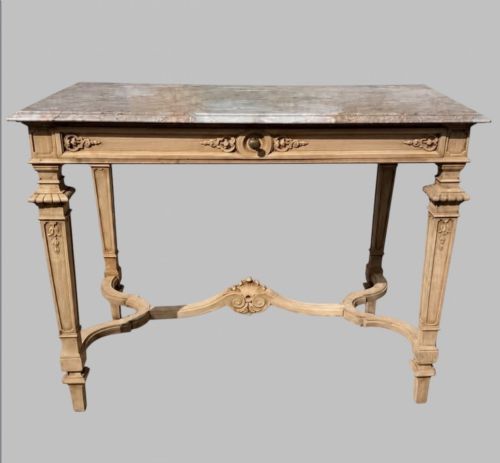
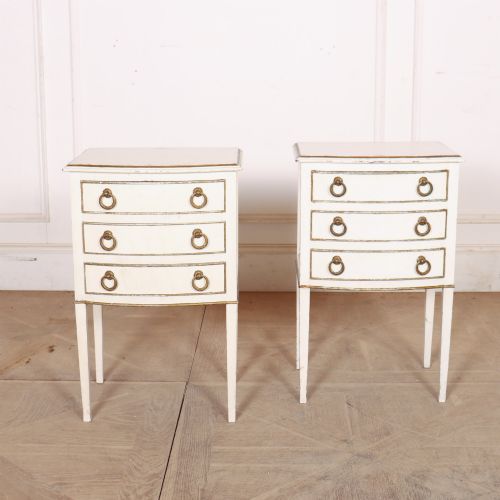
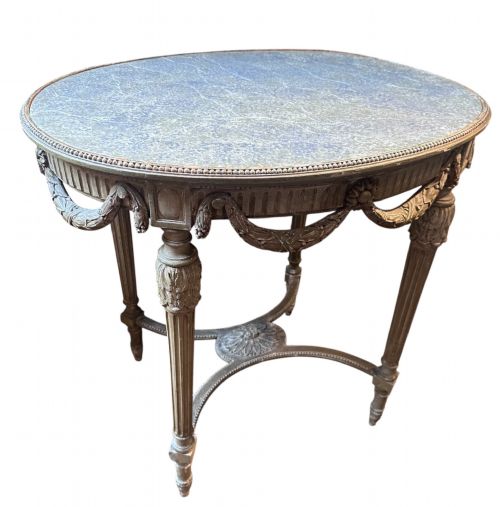
Most examples function as side tables, bedside cabinets, gueridons or compact console tables designed for intimate domestic spaces. These forms often incorporate inset marble tops or galleried edges intended to protect the wooden surface during daily use.
The aesthetic draws heavily on French neoclassical vocabulary, prioritising architectural lines over exuberant curves. Makers working in this idiom adopted lighter proportions and symmetrical marquetry patterns to align with period taste.
Materials and construction methods
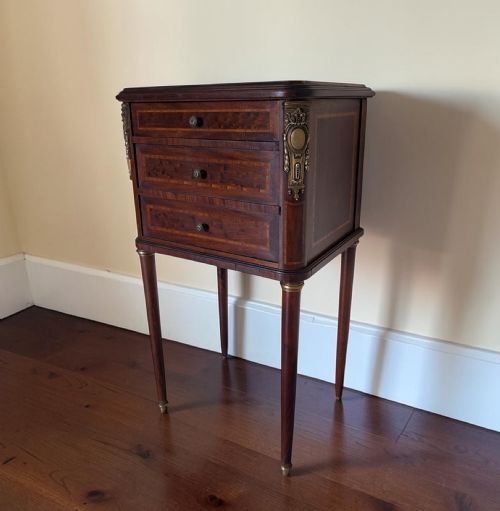
Cabinetmakers utilised dense timbers such as mahogany, walnut, kingwood and rosewood as primary structural substrates for veneering. These woods provided stable foundations for intricate parquetry and marquetry patterns arranged in geometric motifs.
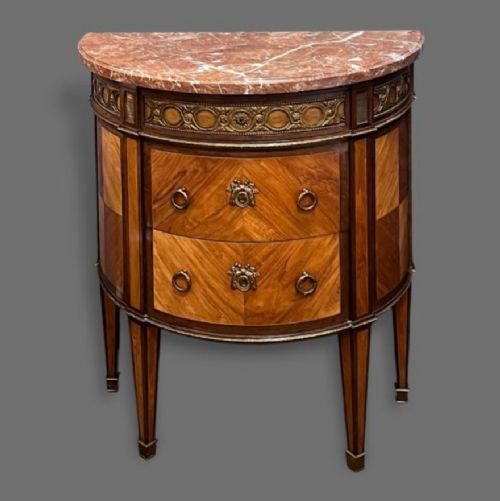
Mounts cast in ormolu, gilt bronze or brass articulate the structural corners, aprons and feet of the furniture. Artisans secured these metal elements with precise mechanical fastenings to complement the polished stone surfaces.
Listings feature mahogany, walnut, kingwood, rosewood, brass, ormolu and marble across nineteenth and early twentieth-century periods.
Assessing craftsmanship and execution
The refinement of the cast metal mounts distinguishes superior examples from standard production pieces. Finely chased ormolu displays crisp detail and careful hand-finishing, whereas lower-tier mounts often appear soft and uniform in texture.
Timber selection and veneer alignment reveal the maker's discipline in balancing grain patterns across curved and flat surfaces. Rigorous construction of internal joinery ensures stability across tables featuring marble or onyx tops.
François Linke·A Hugnet Paris·Tehan·Zwiener·Weisweiler
The Louis XVI Style Side Table Glossary
- Ormolu
- Gilded bronze used for decorative mounts and accents on furniture. This technique involves applying a fine layer of gold amalgam to a bronze base before firing.
- Gueridon
- A small round table supported by a central column or multiple legs. These versatile tables frequently feature inset marble or onyx tops surrounded by a raised gallery.
- Marquetry
- Decorative veneer patterns assembled from various coloured woods to create pictorial or geometric designs. Craftsmen cut these thin slices of timber to fit tightly together within a background veneer.
- Demi-lune
- A half-moon shape applied to console tables and chests designed to sit flush against a wall. This profile saves floor space while maintaining a formal architectural presence.
Louis XVI Style Side Table: Frequently Asked Questions
How do I place a louis xvi style side table?
These compact tables fit readily beside seating or against hallway walls where surface space is required without visual bulk.
Their restrained neoclassical lines allow them to complement both traditional interiors and modern minimalist rooms.
Are marble tops original to these tables?
Many nineteenth and twentieth-century revivals incorporated fitted marble or onyx slabs from the outset to provide a durable and cool working surface.
Veining and colour vary by piece, reflecting the specific stone quarried for individual workshops.
What is the difference between side and centre tables?
Side tables are constructed to stand primarily against walls or beside upholstery with finished fronts and simpler backs.
Centre tables are finished on all sides to sit independently in the middle of a room.
How should I clean bronze mounts?
Dust metal mounts gently with a dry microfibre cloth to prevent the accumulation of grit in recessed details.
Avoid abrasive chemical polishes that can strip the original gilding from the bronze surface.