


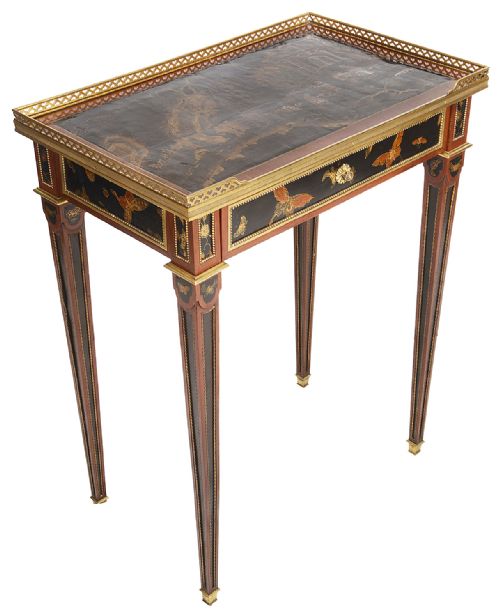

French Chinoiserie Side Table
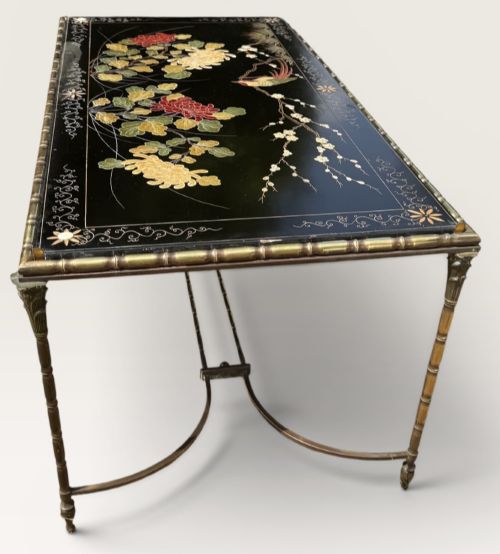
These french chinoiserie side table pieces bring decorative lacquer and painted finishes into the room, offering a distinct focal point for collectors.
French Chinoiserie Side Table
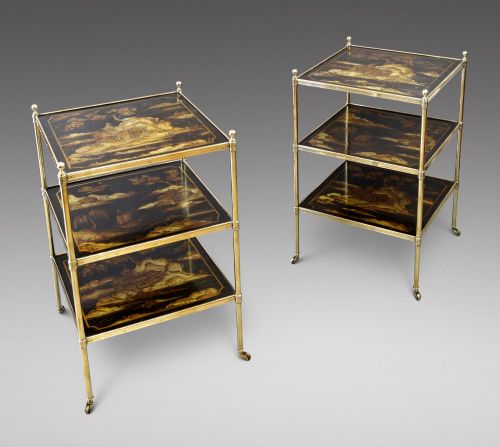
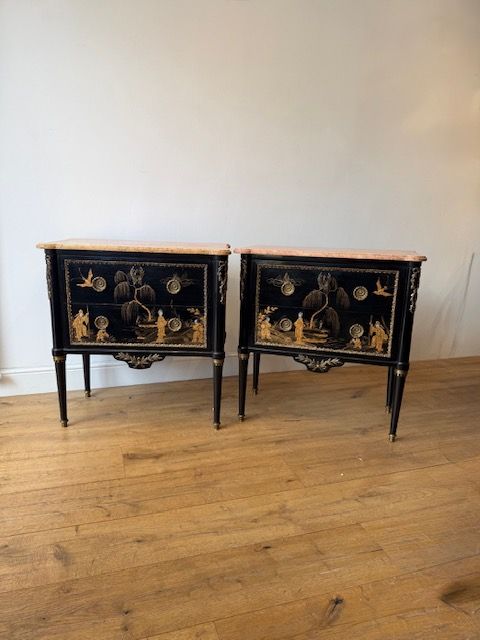
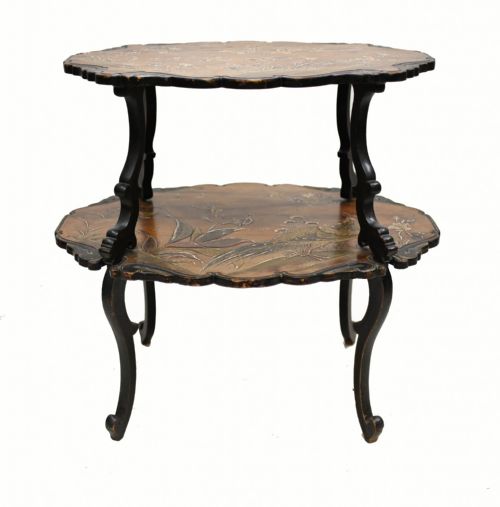
A french chinoiserie side table brings together European furniture forms and decorative lacquer work inspired by East Asian motifs. These pieces appear in various configurations including occasional tables, nests of tables, and etageres alongside related forms like commodes and coffee tables.
The selection ranges across the nineteenth century and into the early decades of the twentieth century. Makers and workshops worked within styles such as Louis XVI Chinoiserie, French Provincial, and Japonisme to produce painted and lacquered surfaces.
Buyers will most frequently encounter nineteenth-century examples alongside items from the 1890s and the 1930s. The forms span from folding faux bamboo frames to multi-tiered tables and marble-topped centre tables.
How they were made
Wood serves as the primary structural material for these tables, often enhanced with lacquer, japanning, or floral painted decoration. Craftsmen applied multiple layers of finish to build up the characteristic glossy or decorated surface.
Mounts and details in brass and gilt bronze appear alongside wood and lacquered wood structures. Some pieces utilise faux bamboo turnings and parcel-gilt highlights to echo imported aesthetic models.
Form variations across the inventory include nests of tables, etageres, commodes, and occasional tables with painted or japanned finishes.
What varies in quality
The standard of the hand-painted and lacquered decoration dictates the character of each piece. Finer examples display meticulous detail in the motifs and a smooth, consistent application of the surface finish.
Material selection and structural execution also differentiate the range. The integration of solid brass hardware, marble tops, and refined subsidiary tiers marks out superior workshops.
Maison Bagues·Gabriel Viardot
The French Chinoiserie Side Table Glossary
- Chinoiserie
- European decorative style reflecting Chinese artistic influences, prominent in furniture and lacquer work.
- Japonisme
- Late nineteenth-century interest in Japanese art and aesthetics that influenced European design and manufacturing.
- Japanning
- European imitation of East Asian lacquer work, created using layers of varnish and heat-cured finishes.
- Etagere
- Open tiered furniture designed for display, frequently used as a side table or occasional table.
- Parcel-gilt
- Partially gilded woodwork or metalwork, where gold leaf highlights specific carved or moulded details.
French Chinoiserie Side Table: Frequently Asked Questions
What is a french chinoiserie side table?
These items are small decorative tables produced in France or within the French design tradition, featuring lacquered or painted ornamentation inspired by Asian art.
They function as versatile accent pieces within a room, combining European joinery with pictorial motifs.
How do I date a french chinoiserie side table?
Dating relies on examining the construction methods, wood types, and the specific style of the lacquer or paintwork. Pieces range from nineteenth-century interpretations to 1930s modernist adaptations.
Changes in hardware, such as the use of brass or gilt bronze, also help establish the period of manufacture.
Where should I place a french chinoiserie side table?
These tables suit placement beside seating areas as occasional or side tables, or as display surfaces in hallways and reception rooms. Their decorative surfaces allow them to stand alone as focal points.
Care should be taken to keep them away from direct heat sources and strong sunlight to protect the lacquer finish.
What is the difference between chinoiserie and Japonisme?
Chinoiserie draws on Chinese decorative traditions and motifs, featuring narrative scenes and pavilion architecture. Japonisme reflects the nineteenth-century European fascination with Japanese aesthetics, flora, and fauna.
Both styles appear on furniture from this category, sometimes overlapping in eclectic late-nineteenth-century designs.