


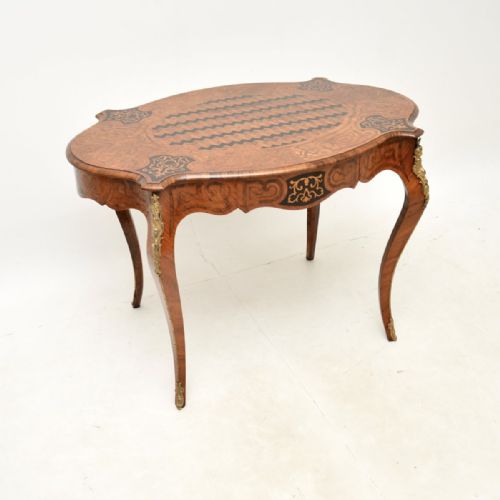
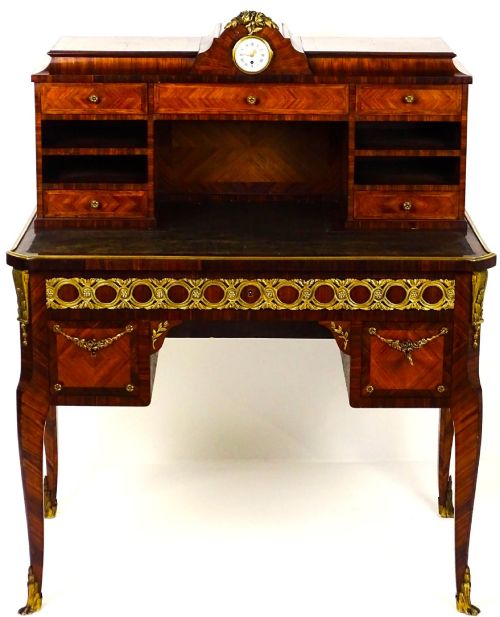
Bronze Mounted Table
When you search for a bronze mounted table, you enter a world of nineteenth-century French cabinetmaking where exotic timbers meet heavy cast metal ornaments.
Bronze Mounted Table
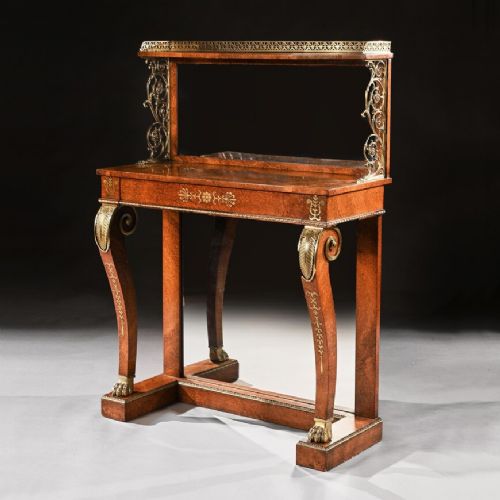
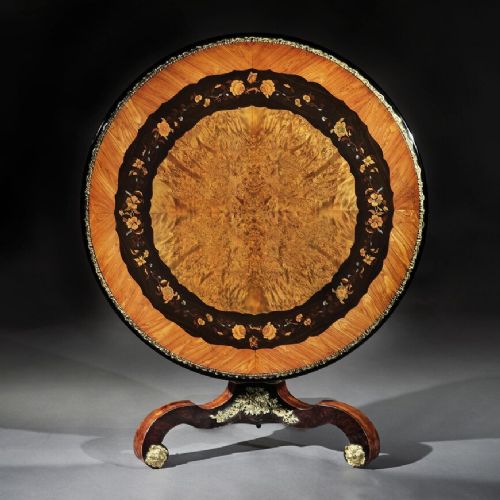
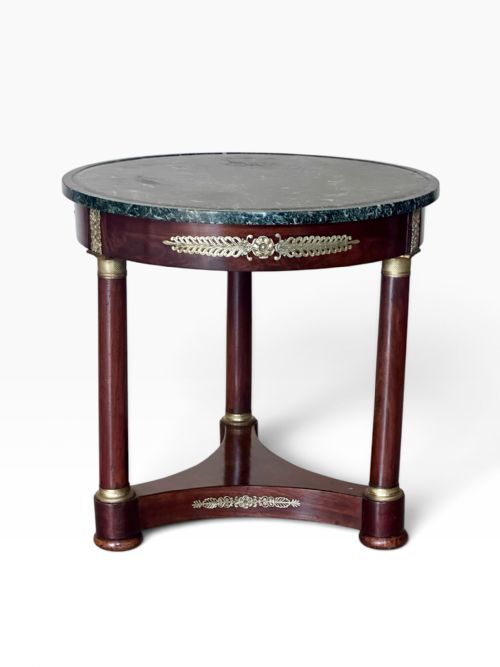
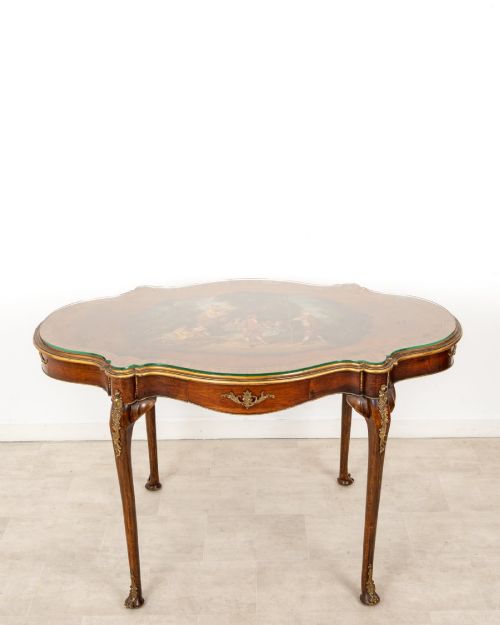
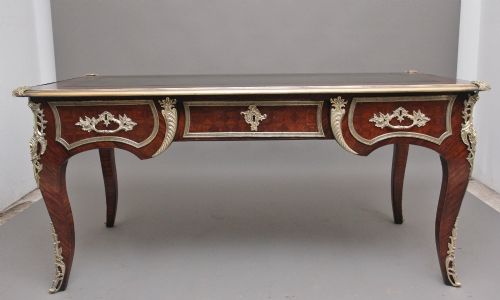
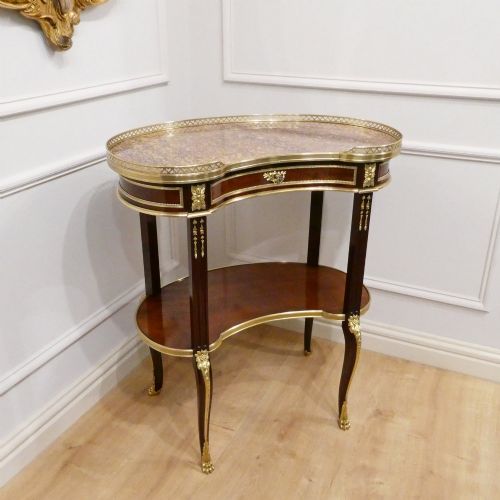
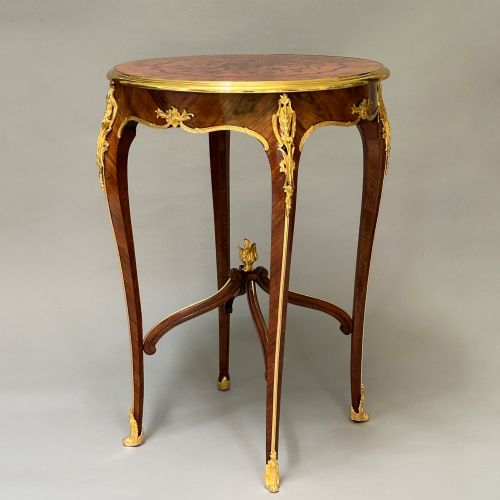
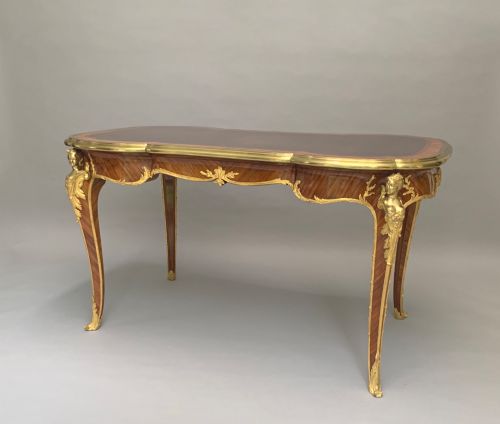
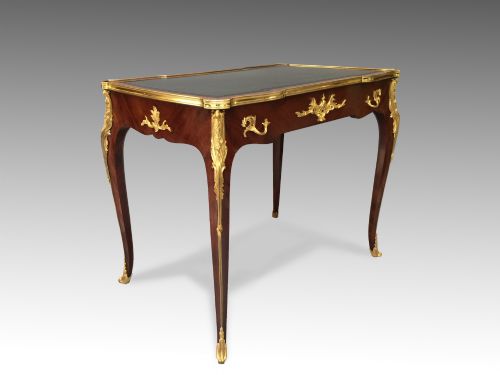
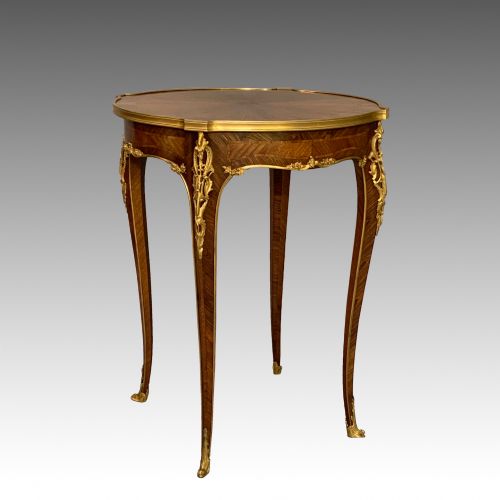
A bronze mounted table combines a wooden or marble surface with cast metal mounts, predominantly originating from nineteenth-century French workshops. The selection on this page spans utilitarian desks, writing tables, and bureau plats alongside decorative centre tables, occasional tables, and console tables.
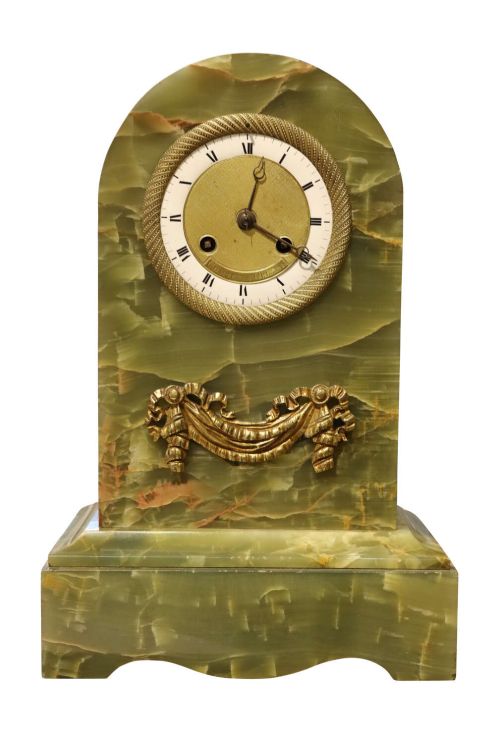
Makers drew heavily on historical revivals, producing pieces in Louis XV, Louis XVI, and French Empire styles. Alongside these functional forms, the category extends to specialised display items, coffee tables, and lighting supports adorned with gilded bronze or ormolu details.
How they were made
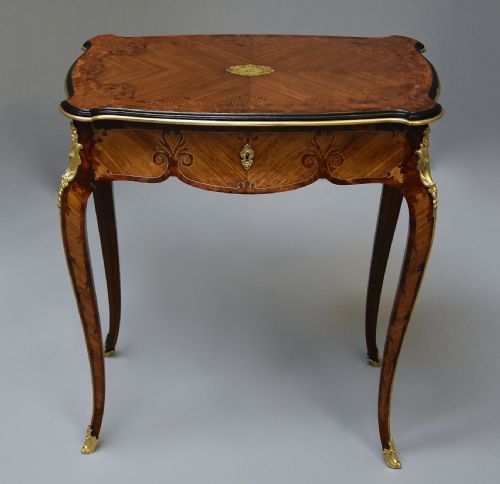
Cabinetmakers constructed the carcases using dense timbers such as kingwood, mahogany, rosewood, and walnut, often applying intricate parquetry, marquetry, or amboyna veneers. Selected pieces incorporate porcelain plaques, marble slabs, or leather writing surfaces into the wooden framework.
Mounts of ormolu, gilt bronze, or brass were cast, chased, and secured to the corners, aprons, and legs to accentuate the architectural lines of the furniture. Complex mechanisms and fitted drawers further demonstrate the high standard of nineteenth-century joinery.
Some tables conceal elaborate writing slides and secret compartments behind hidden panel releases.
What varies in quality
The precision and depth of the metal chasing on the ormolu mounts set finer examples apart from standard production pieces. Crisp casting details and heavy, fire-gilded bronze indicate superior workshop output compared to lighter brass or lacquered substitutes.
The sophistication of the underlying cabinetry, seen in complex serpentine carcases, matched timber grains, and signed maker stamps, determines the standing of an individual desk or table within the period.
Edward Holmes Baldock·Maison Millet·Charles à Orléans·François Linke·Edwards and Roberts·Joseph-Emmanuel Zwiener·Paul Sormani·Thuret Paris·CH Jeanselme and Co·Durand·Krieger Paris·Gillows
The Bronze Mounted Table Glossary
- Ormolu
- Gilded bronze applied to furniture mounts and decorative objects. The technique involves a mercury amalgam method to bond gold to a bronze base.
- Bureau plat
- A freestanding double-sided writing desk featuring a leather-inset top and multiple drawers. These typically display extensive mounts along the frieze and cabriole legs.
- Marquetry
- The art of applying pieces of veneer to a structure to form decorative patterns. Craftsmen utilised dyed woods, shell, and ivory to create pictorial scenes.
- Gueridon
- A small circular table supported by a central column or multiple legs. Originating in the seventeenth century, nineteenth-century iterations frequently incorporated marble tops and bronze mounts.
- Parquetry
- Geometric mosaic woodwork used for flooring and furniture surfaces. It differs from marquetry by relying on angular repeating shapes like cubes or chequers.
Bronze Mounted Table: Frequently Asked Questions
What is a bureau plat?
A bureau plat is a flat-topped writing desk designed to stand freely in the centre of a room rather than against a wall. These desks usually feature a leather-lined writing surface and drawers integrated into the frieze.
Craftsmen decorated them extensively with gilt bronze mounts along the legs and edges. They represent some of the finest achievements of nineteenth-century French cabinetmaking.
How do I identify ormolu?
Ormolu consists of finely cast bronze that has been coated with a gold amalgam and fired to create a durable, luminous finish. It feels heavy and cold to the touch, displaying sharp chisel marks from the chasing process.
Cheaper substitutes often use polished brass or painted base metals that lack the deep, warm lustre of genuine nineteenth-century fire-gilding.
Where should I place a centre table?
Centre tables are designed to be viewed from all angles, making them well-suited for the middle of a principal reception room or a large hallway. They serve as display surfaces for lamps, clocks, or decorative objects.
Ensure the piece has clearance on all sides so the marquetry and bronze mounts can be appreciated without obstruction.
What is the difference between marquetry and parquetry?
Marquetry involves arranging pieces of veneer to create pictorial motifs, floral sprays, or complex scrollwork across the table top. It allows craftsmen to depict elaborate scenes using varied timber tones.
Parquetry uses geometric wood tiles to form repetitive patterns such as cubes, lozenges, or squares. Both techniques were frequently combined on nineteenth-century surfaces.