


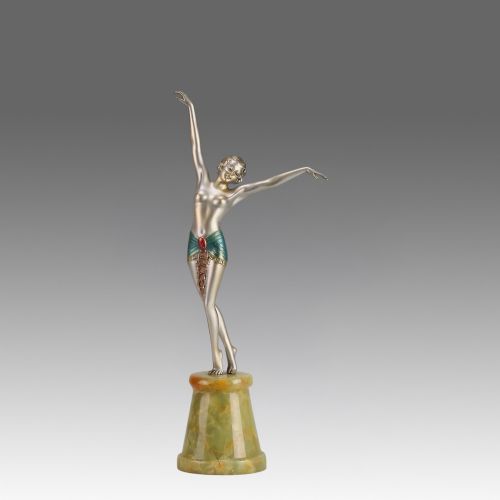





Silvered Bronze Table
A silvered bronze table brings striking metallic contrast and refined French design to a room.
Silvered Bronze Table
A silvered bronze table combines cast metal frameworks with surfaces of marble, onyx, or glass, often appearing in pairs as occasional tables. These pieces frequently incorporate exotic woods such as thuya alongside malachite and silvered bronze mounts.
The aesthetic bridges several distinct periods, drawing heavily on French Empire, Napoleon III, and Art Deco sensibilities. Surviving examples demonstrate how makers integrated silvered finishes into domestic furniture and centrepieces over the nineteenth and twentieth centuries.
Materials and construction
Makers utilised bronze and spelter as base metals, applying silver plating or silvered finishes to achieve a bright, reflective surface. These metal components were cast, chased, and mounted onto stone tops including grey breccia marble and onyx.
Cabinetmakers and metalworkers combined timber frames with applied metalwork, securing marble inserts and glass elements with traditional joinery and mechanical fasteners.
Silvered Bronze Table Retail Price Guide 2026
Typical asking prices for silvered bronze table among the pieces listed under this phrase on Sellingantiques today, from the lower quarter to the upper quarter. They describe what is for sale here now, not the wider market.
Design styles include Art Deco, French Empire, Napoleon III, and Chinoiserie.
Assessing quality and craftsmanship
Quality rests in the crispness of the metal chasing and the depth of the silvered finish over the bronze substrate. Superior examples display sharp detail in figural mounts and precise fitting between the stone tops and metal frames.
The integration of secondary materials like malachite, thuya wood, or specific marbles distinguishes standard production from more ambitious workshop output.
Ferdinand Barbedienne·Auguste Moreau·Josef Lorenzl·Geo Maxim·Paul Joris
The Silvered Bronze Table Glossary
- Silvered bronze
- Bronze that has been coated with a thin layer of silver to create a bright metallic finish. This technique offers the durability of bronze with the appearance of solid silver.
- Spelter
- A zinc alloy commonly used as a substitute for bronze in decorative metalwork. It takes silvering and patination well, though it is softer than bronze.
- Napoleon III
- A French design period spanning the mid to late nineteenth century. It is characterised by eclectic revivals of earlier historical styles combined with lavish ornamentation.
- Art Deco
- A design style from the early twentieth century defined by streamlined geometric forms and modern materials. Pieces from this era often feature stylised figures and clean lines.
- Occasional table
- A small, portable table designed for specific, intermittent uses within a room. These frequently serve as display surfaces for lamps, clocks, or centrepieces.
Silvered Bronze Table: Frequently Asked Questions
What is a silvered bronze table?
A silvered bronze table is a piece of furniture featuring a metal frame with a silvered finish, frequently paired with marble or wood surfaces.
These tables often reflect French design influences from the nineteenth and early twentieth centuries.
How do I care for silvered bronze?
Clean silvered bronze surfaces gently with a soft, dry cloth to remove dust without disturbing the metal finish. Avoid abrasive cleaners or chemical polishes that can wear away the silvering.
Keep these pieces away from direct moisture and excessive humidity to protect the underlying metal and stone.
How do I date a silvered bronze table?
Dating relies on stylistic clues, such as the geometric lines of Art Deco or the ornate ornamentation of Napoleon III and French Empire designs. Construction methods and materials like specific marbles also help place the piece within the nineteenth or twentieth century.
Comparing the casting quality and mounting techniques to documented workshop standards provides further context.
Where were these tables placed?
These tables served as decorative surfaces in principal reception rooms, often holding lamps, clocks, or centrepieces. Their reflective metallic finishes were intended to catch candlelight or natural light.
Pairs of occasional tables were frequently arranged symmetrically within a room scheme.