


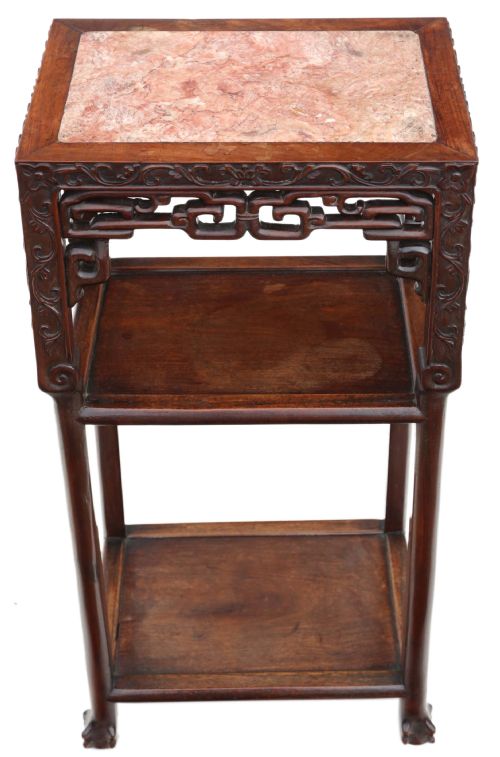
Carved Hardwood Tier Table
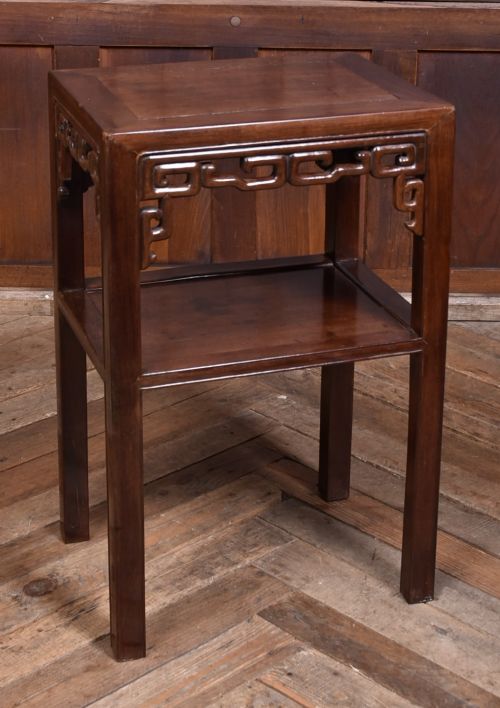
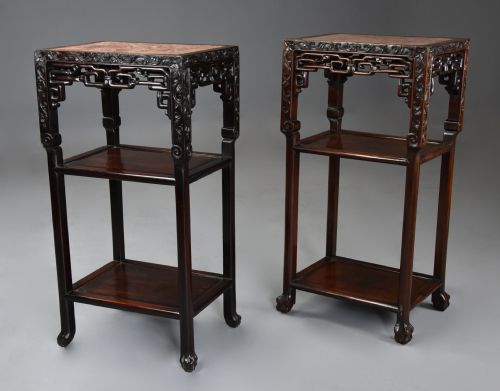
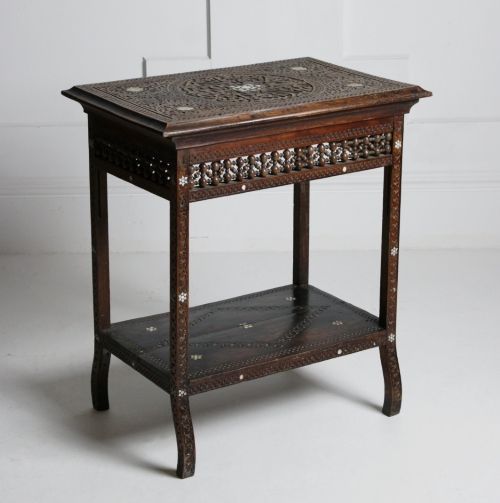
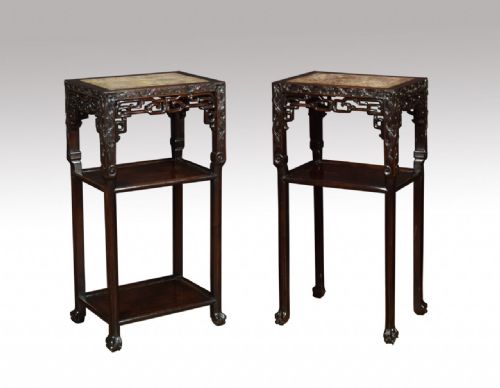
These carved hardwood tier table examples bring structural complexity and deep grain into a room, offering multiple levels for display.
Carved Hardwood Tier Table
A carved hardwood tier table provides multiple surfaces arranged vertically, appearing most frequently as two-tier and three-tier stands originating in the nineteenth century. These pieces serve as side tables, lamp tables, occasional tables, and jardiniere stands.
The selections span Chinese Qing Dynasty production, Syrian work, and Japanese-influenced European design, bringing varied regional carving traditions together.
Buyers encounter rectangular forms, square forms, and freestanding designs alongside paired stands intended to flank a space.
What varies in quality
The depth and crispness of the carving separate standard production from superior examples, particularly in pierced aprons and articulated leg joints.
The choice of material creates distinction, with dense hongmu and heavy rosewood sitting above general mixed hardwoods.
The integration of inset marble panels and the stability of multi-tiered structures determine the overall execution of the piece.
Several stands include marble tops specifically sized to catch stray water drips from heavy indoor ferns.
Liberty of London·Gabriel Viardot
The Carved Hardwood Tier Table Glossary
- Hongmu
- A dense tropical hardwood prized in Chinese furniture making for its deep colour and heavy weight. It is often left unpolished to show the natural grain.
- Jardiniere
- A large ornamental pot or stand designed to hold plants and flowers. These stands feature reinforced top platforms to bear the weight of heavy ceramic vessels.
- Qing Dynasty
- The final imperial dynasty of China, spanning from sixteen-forty-four to nineteen-twelve. Furniture from this era is noted for complex relief carving and traditional mortise and tenon joinery.
- Ebonised
- Wood treated with a finish to imitate ebony. This technique darkens lighter timbers to create a solid black appearance.
- Marble inset
- A stone slab fitted flush into the centre of a wooden tabletop. This cool surface provides a durable resting place for decorative objects.
Carved Hardwood Tier Table: Frequently Asked Questions
What is a tier table used for?
These tables provide stacked surfaces to display lamps, ceramics, and plants without taking up excessive floor space.
In period rooms, they functioned as occasional tables or urn stands placed beside seating or in corners.
How do I identify a Qing Dynasty table?
Look for traditional Chinese hardwood species like hongmu and rosewood combined with deep relief carving.
Turned columns, pierced aprons, and multi-tiered construction frequently mark pieces from this tradition.
Are marble top tables heavy?
The inclusion of an inset marble panel adds substantial weight to the overall structure of the table.
This stone insert provides a stable, heat-resistant surface originally intended for heavy planters and vases.
Where should I place a plant stand?
Plant stands and jardiniere tables suit corners, window spaces, or hallways where vertical display works best.
Their narrow footprints allow them to fit into tighter gaps while offering elevated display areas.