
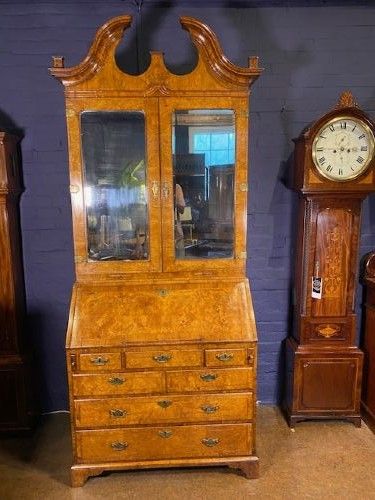
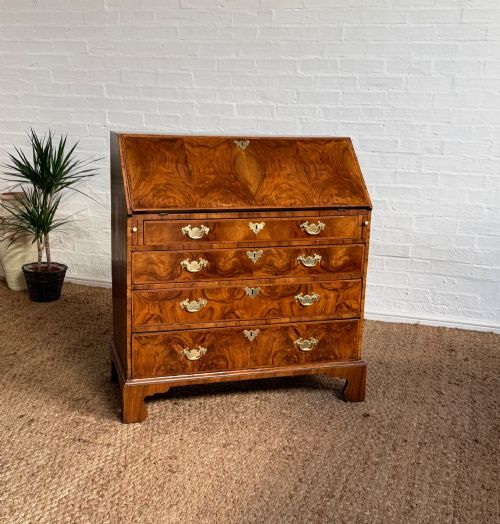
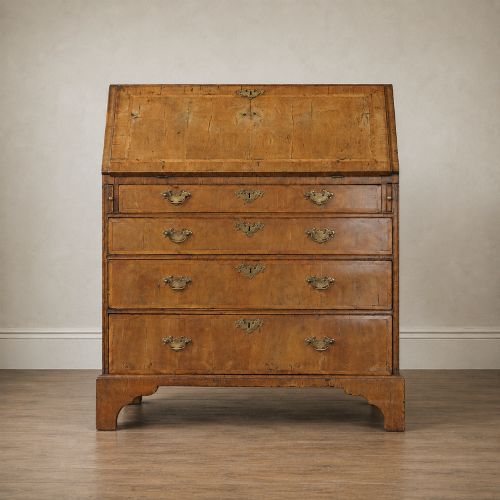
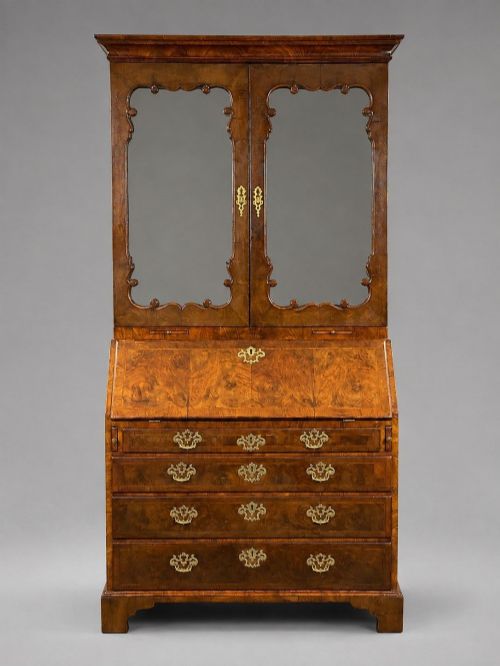
Georgian Walnut Writing Cabinet
A georgian walnut writing cabinet combines compartmented storage with a fall-front writing surface, offering a handsome workspace scaled for domestic interiors.
Georgian Walnut Writing Cabinet
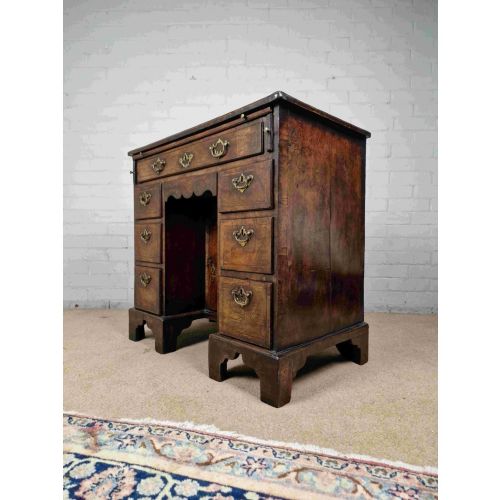
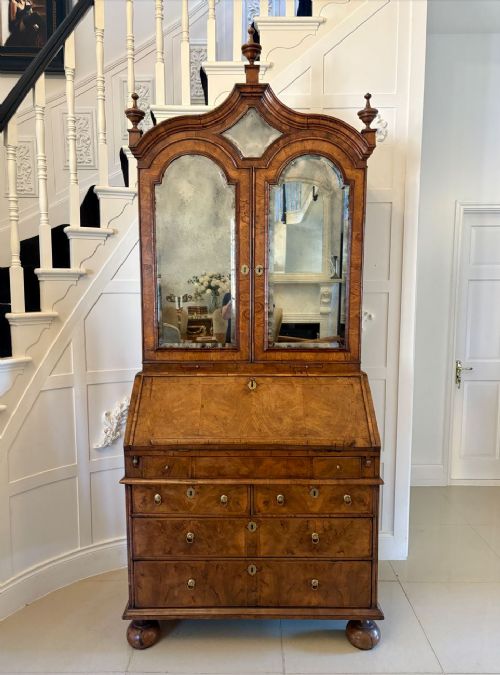
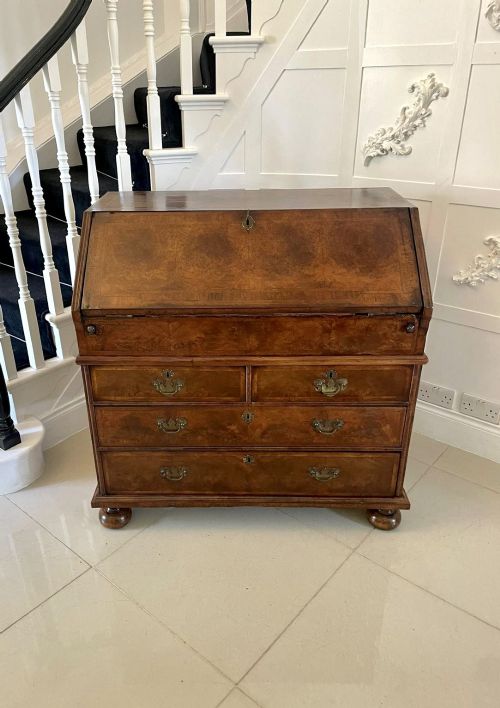
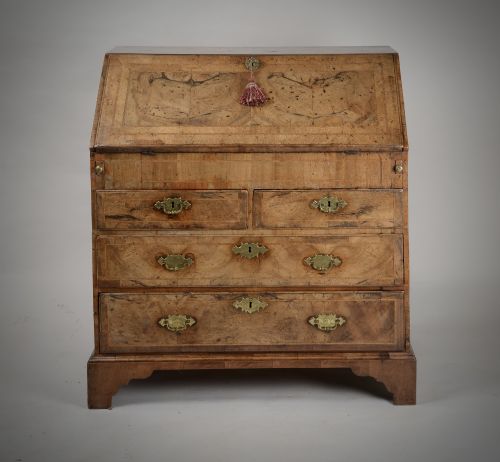
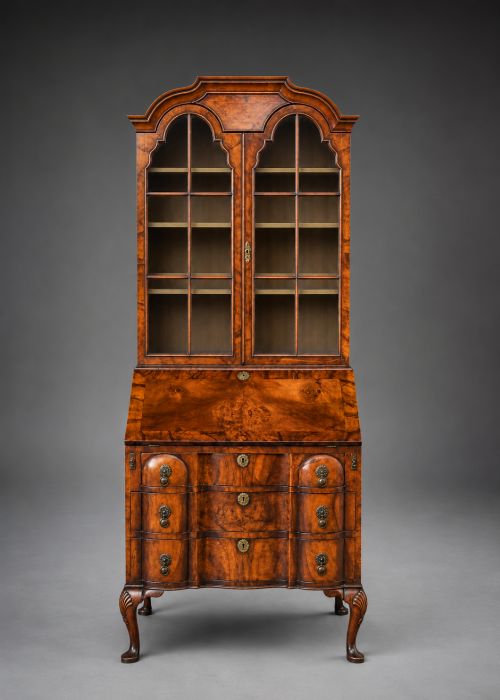
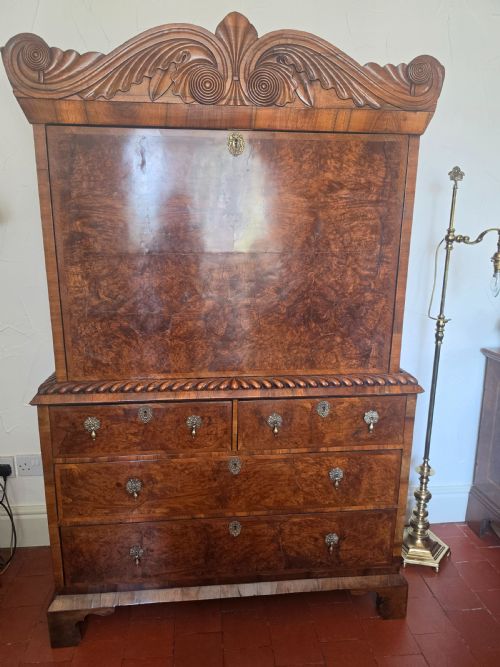
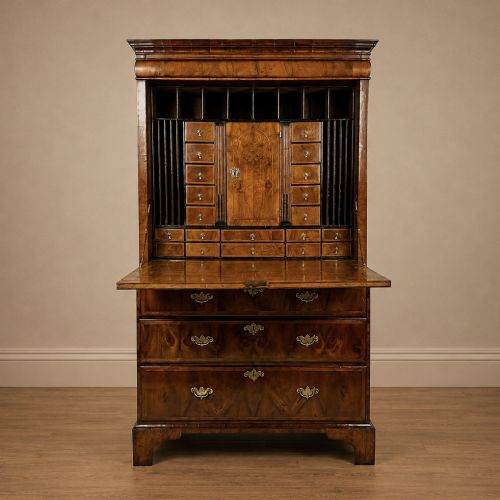
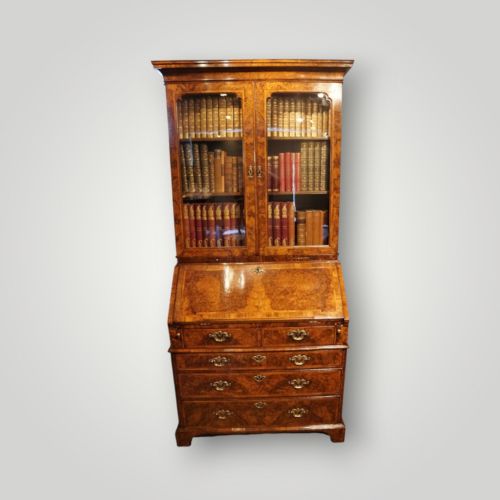
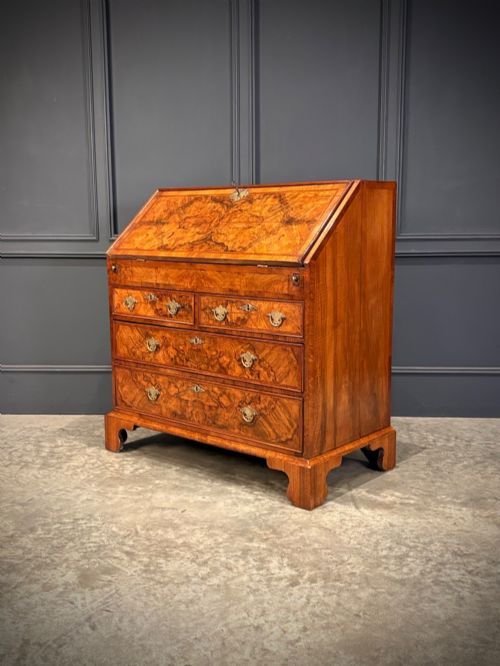
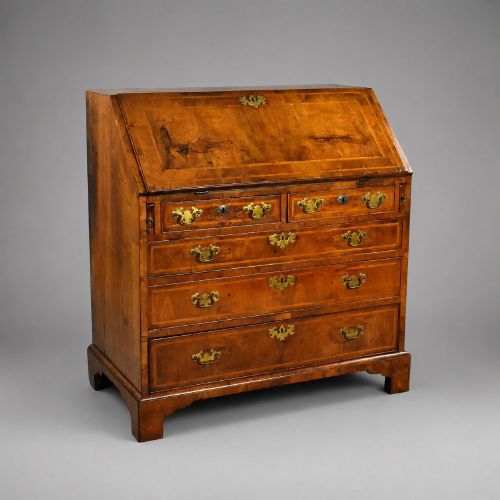
A georgian walnut writing cabinet encompasses bureau bookcases, fall-front desks, and escritoires dating primarily from the seventeenth and eighteenth centuries, alongside later revival pieces. These items serve as compact storage units equipped with internal pigeonholes and drawers concealed behind a drop-down flap or upper glazed doors.
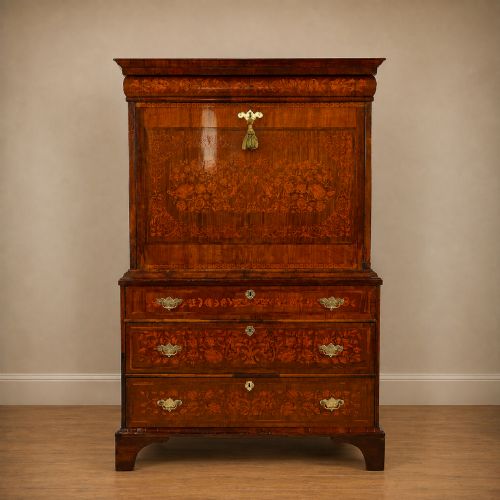
Bureau bookcases dominate the selection, combining a lower writing section with an upper cabinet for books or display. Escritoires and tall secretaire chests provide alternative vertical formats, occasionally incorporating candle slides or tiered drawers beneath the fall-front writing surface.
Origins stretch across English workshops as well as Dutch makers producing marquetry or bombe-fronted variants. While eighteenth-century examples form the core of the items, Edwardian interpretations also appear, mirroring earlier Queen Anne and George I aesthetics.
Assessing craftsmanship
Quality rests in the choice of timber figure, where symmetrical burr walnut veneers and precise featherbanding elevate a piece beyond plain stock. The integration of original brasses and untouched patination distinguishes superior examples from heavily restored counterparts.
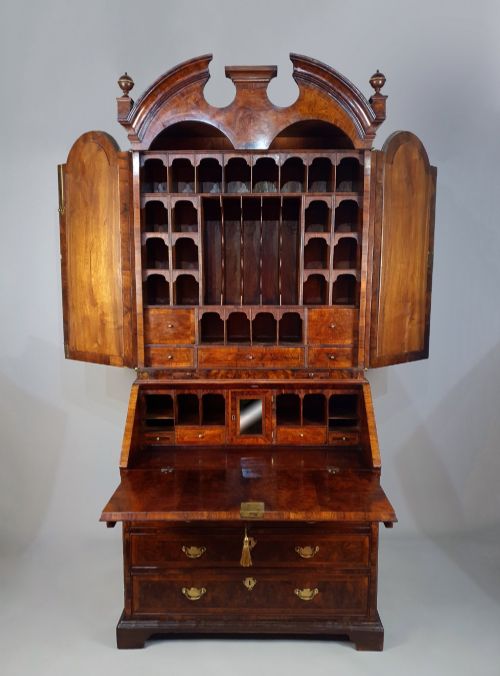
Internal complexity dictates the tier of the piece, with stepped pigeonholes, secret compartments, and finely fitted small drawers marking higher workshops. Structural coherence, particularly the alignment of fall-front hinges and multi-section carcass construction, defines the execution.
Georgian Walnut Writing Cabinet Retail Price Guide 2026
Typical asking prices for georgian walnut writing cabinet among the pieces listed under this phrase on Sellingantiques today, from the lower quarter to the upper quarter. They describe what is for sale here now, not the wider market.
Listings feature walnut, burr walnut, oak, and glass across 18th-century, Georgian, and Edwardian periods.
The Georgian Walnut Writing Cabinet Glossary
- Burr walnut
- Timber taken from walnut tree growths, producing swirling, highly decorative grain patterns prized for veneering. It forms the primary decorative surface on high-status cabinets.
- Escritoire
- A tall writing cabinet featuring a fall-front writing flap that conceals an arrangement of small drawers and pigeonholes. This form often includes drawers beneath the writing compartment.
- Featherbanding
- A type of inlay where thin strips of veneer are laid in a herringbone or V-shaped pattern around drawer perimeters and panel edges. It frames the figured walnut fields.
- Bureau bookcase
- A dual-purpose furniture form comprising a sloping-front desk base beneath a glazed or panelled upper shelving cabinet. These pieces provide both storage and display functions.
- Candle slide
- A pull-out wooden board positioned beneath the main writing flap to support light sources. They retract flush into the cabinet frame when not in use.
Georgian Walnut Writing Cabinet: Frequently Asked Questions
How do I use a fall-front desk?
The drop-down flap lowers to create a horizontal writing surface supported by internal arms or pull-out lopers. This mechanism provides access to the fitted stationary compartments housed within.
When writing is complete, the flap returns to the vertical position and secures with a lock, concealing the contents and tidying the room.
Where were these cabinets placed?
These cabinets functioned primarily in private studies, libraries, and principal bedchambers where estate management and correspondence took place. Their vertical orientation maximised storage floor space.
In modern rooms, they serve as focal points in studies or living areas, housing books or modern writing materials while maintaining period character.
How do I distinguish between periods?
Early pieces from the William and Mary or Queen Anne eras often display simpler walnut surfaces, herringbone banding, and tall proportions. Subsequent George I and George II examples frequently employ rich burr walnut and more elaborate internal configurations.
Edwardian interpretations replicate these earlier styles using older vocabulary, identifiable through construction details and secondary woods that differ from eighteenth-century standards.