


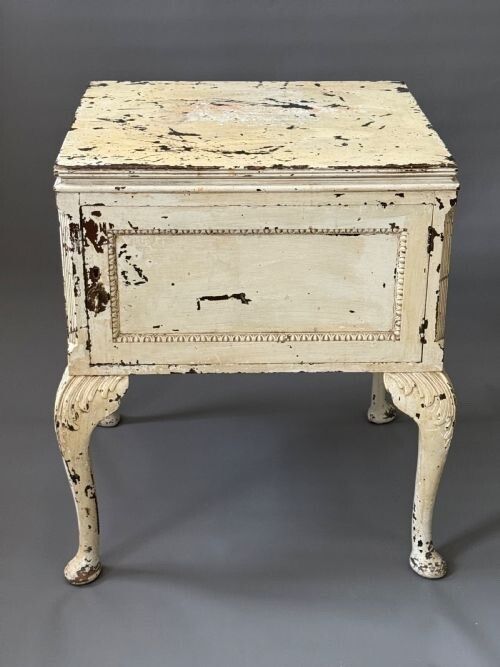
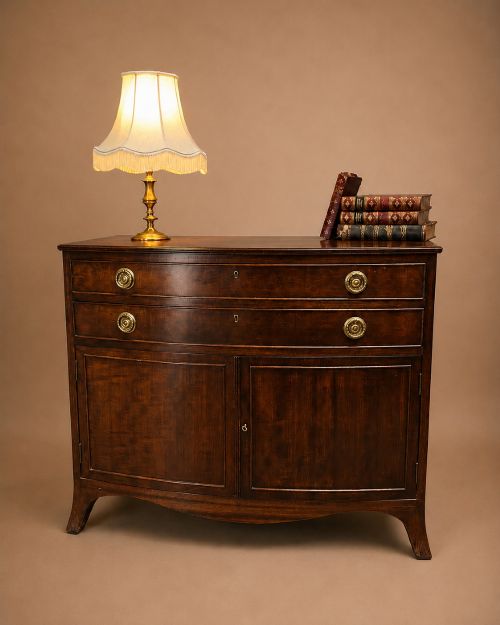
Georgian Style Cupboard
A georgian style cupboard brings balanced proportion and rich timber grain to a room, offering practical storage disguised in classic architectural lines.
What these pieces are
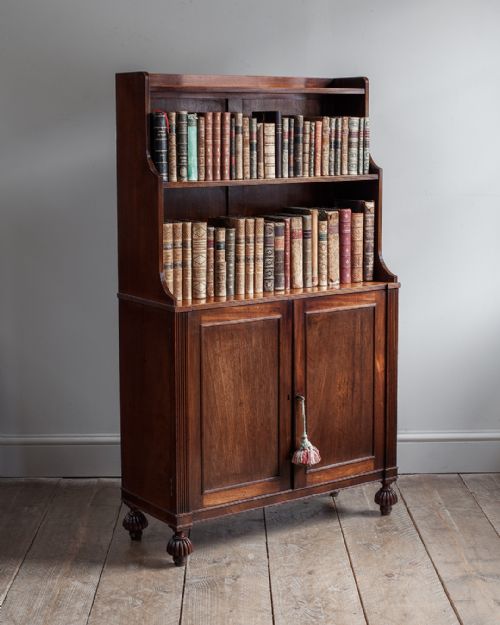
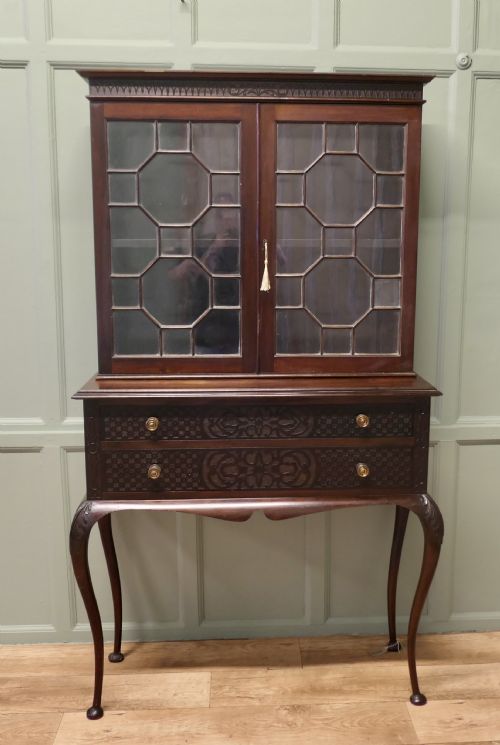
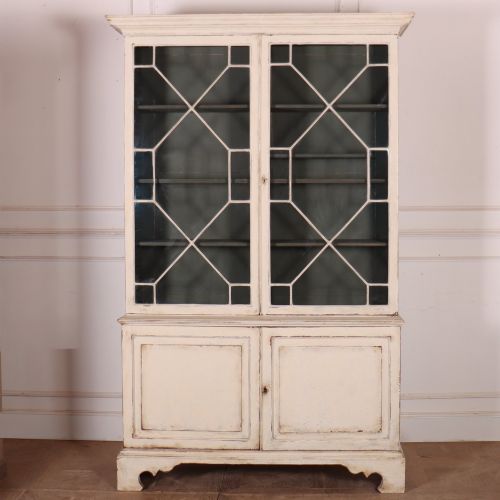
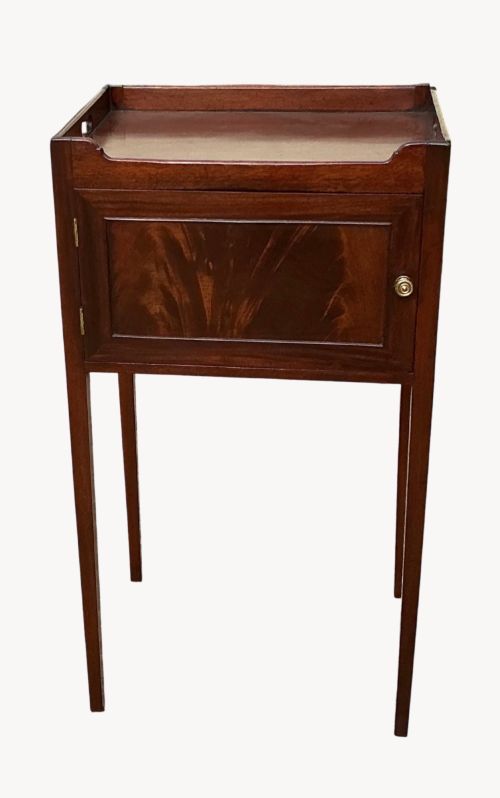
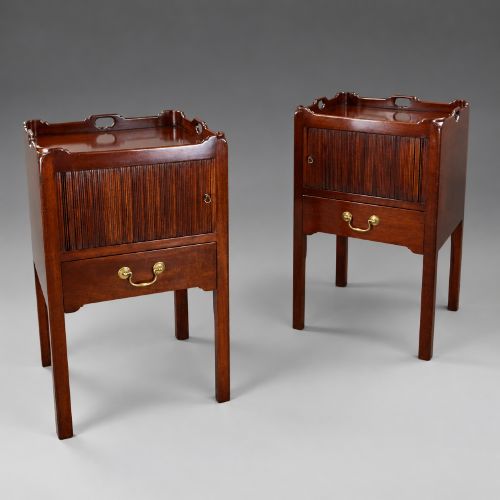
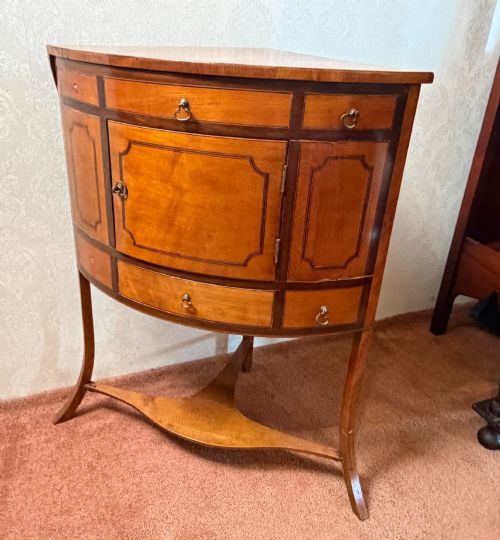
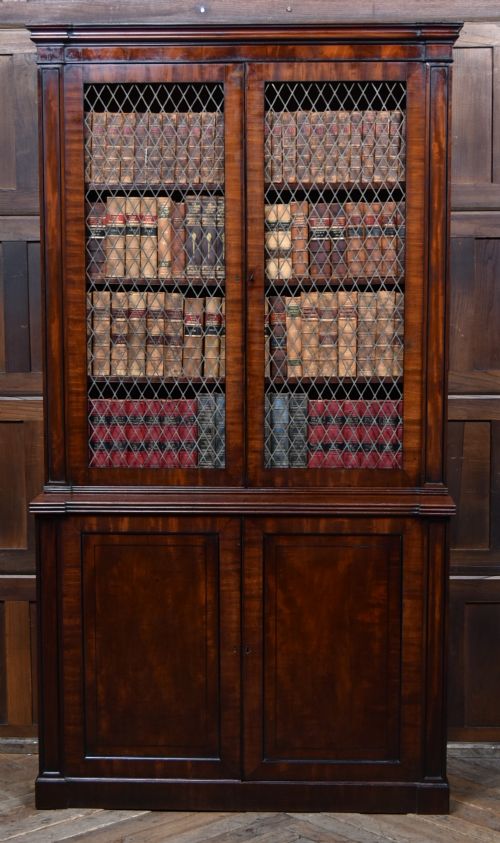
When a buyer enters a search for a georgian style cupboard, they encounter a diverse array of storage furniture built across multiple eras to emulate eighteenth-century design. The selection ranges from compact bedside units and corner cabinets to tall dwarf housekeepers presses, wardrobe halls, and glazed library bookcases.
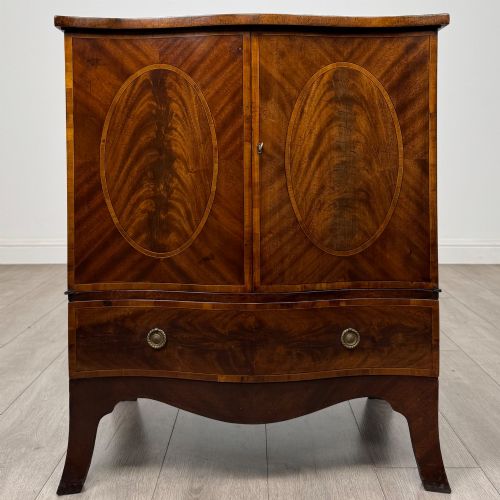
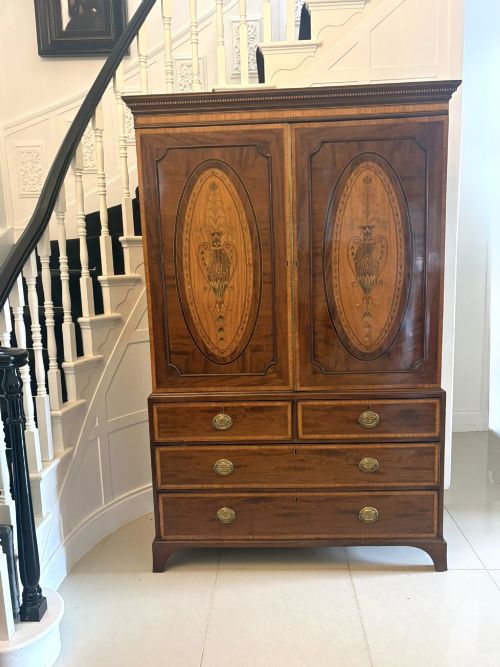
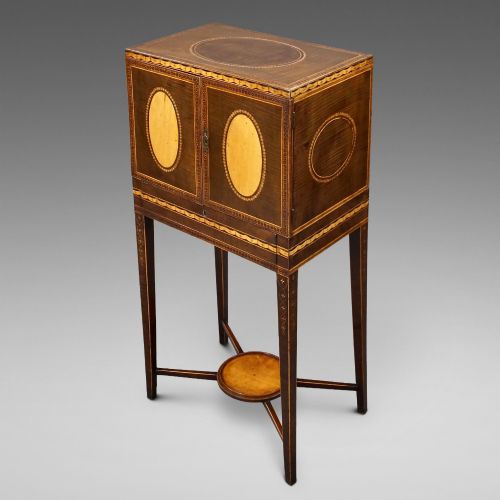
Most examples found in these records date from the nineteenth and early twentieth centuries, spanning the Victorian, Edwardian, and 1920s periods. Makers during these later eras adopted classic proportions, often pairing traditional forms with satinwood inlay or flame mahogany veneer.
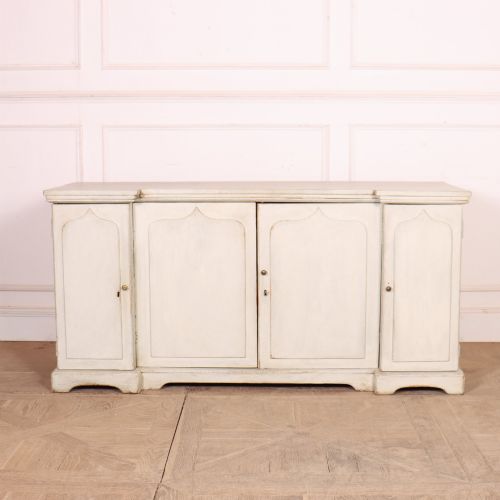
The physical formats vary widely, accommodating different domestic spaces through shallow hall wardrobes, bowfront cabinets, and two-door sideboard bases. Buyers often find pieces finished with brass hardware and fitted with fabric accents or glass panels.
How they were made
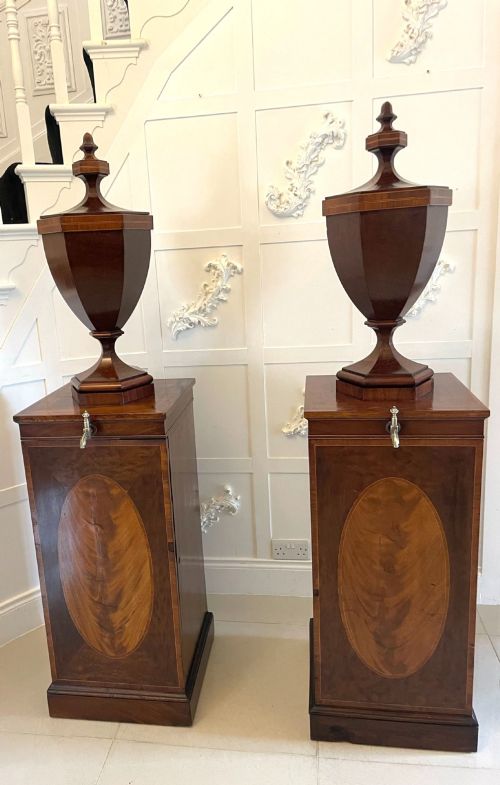
Construction relies heavily on mahogany, pine, and fruitwood, often enhanced by decorative veneers such as flame mahogany. Workshops applied satinwood inlay for contrast, while iron and brass provided structural support and operating hardware.
Surfaces received careful treatment, resulting in aged appearances like waxed pine and faded mahogany patina. Glazing techniques created transparent doors for display cabinets and bookcases, while internal structures utilised solid timber and fabric linings.
Retail Price Guide 2026
Typical UK retail prices for georgian style cupboard, calculated from the Sellingantiques database of over a million retail prices indexed since 2003. This retail price guide relies exclusively on Sellingantiques data; no external sources or auction records are used, so the figures do not describe the wider market.
The listings combine mahogany, pine, and fruitwood with glass, fabric, and brass hardware across multiple eras.
What varies in quality
The distinction between standard and superior pieces rests on timber selection and decorative restraint. Fine examples employ carefully matched flame veneers and subtle banding, whereas simpler iterations rely on plain pine or basic fruitwood.
Execution of detail also separates the range, observed in the crispness of satinwood inlay and the depth of the finished patina. Superior items display harmonious proportions and integration of brass mounts that complement the underlying wood.
Gillows·S and H Jewell
The Georgian Style Cupboard Glossary
- Bowfront
- A convex, curved cabinet front that projects outward in a smooth arc. This shape softens the corners of a room while adding visual depth.
- Dwarf housekeepers cupboard
- A lower-profile storage unit traditionally used for linens and household provisions. These pieces provide substantial internal capacity without dominating wall height.
- Flame mahogany veneer
- A thin slice of timber cut from where a branch joins the trunk, producing a rippling, flame-like grain pattern. Cabinetmakers laid these veneers symmetrically across door panels for decorative impact.
- Satinwood inlay
- Contrasting light-coloured wood inserted into recesses in a darker primary timber. This technique creates delicate geometric borders and decorative motifs.
- Linen press
- A tall cupboard featuring sliding trays or shelves behind upper doors, often sitting atop a chest of drawers. They were originally designed to store flat textiles.
Frequently Asked Questions
What is a georgian style cupboard?
A georgian style cupboard is a piece of storage furniture produced after the eighteenth century that adopts the architectural proportions, classical details, and timber choices of the Georgian era.
These cabinets include tall bookcases, corner units, bedside tables, and linen presses built during the Victorian, Edwardian, and early twentieth-century periods.
How do I tell an original Georgian cupboard from a later copy?
Later copies often display construction methods, secondary timbers, and hardware characteristic of the nineteenth or twentieth century, such as machine-sawn backing boards or specific veneer thicknesses.
Examining the internal drawer construction and timber shrinkage helps clarify the actual period of manufacture.
Where should I place a corner cupboard?
A corner cupboard fits neatly into unused room angles, making it an efficient choice for dining rooms, hallways, or sitting rooms where wall space is limited.
Glazed versions work well for displaying glassware, while solid-door variants conceal everyday items.
What is a dwarf housekeepers cupboard?
A dwarf housekeepers cupboard is a lower-stature storage unit designed for domestic management, typically housing linens, tableware, or dry goods.
Their reduced height allows the top surface to function as a sideboard or display area.
How do I care for mahogany and waxed pine surfaces?
Maintenance involves gentle cleaning with a soft, dry cloth and avoiding direct sunlight to prevent the timber and veneer from fading unevenly.
Waxed pine benefits from occasional application of appropriate furniture wax to nourish the grain.