
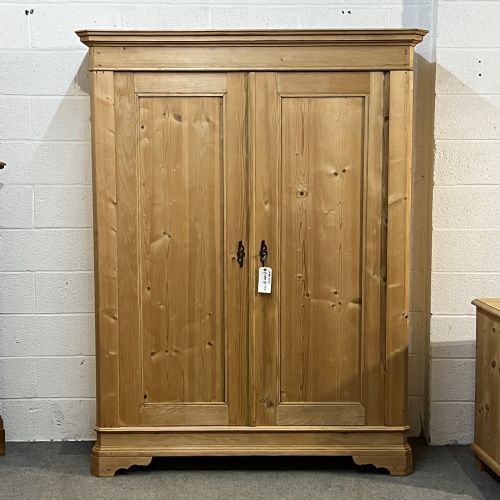
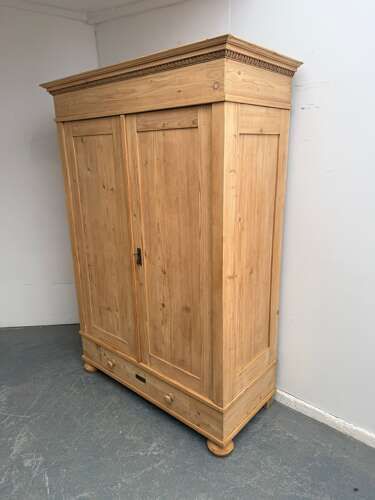
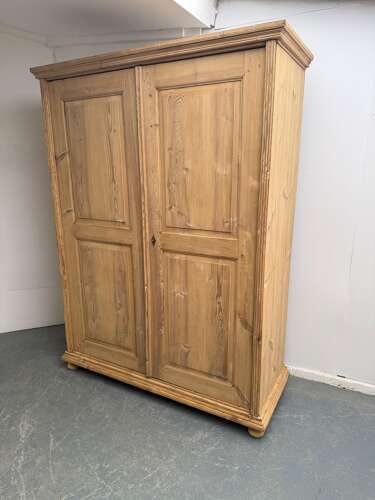
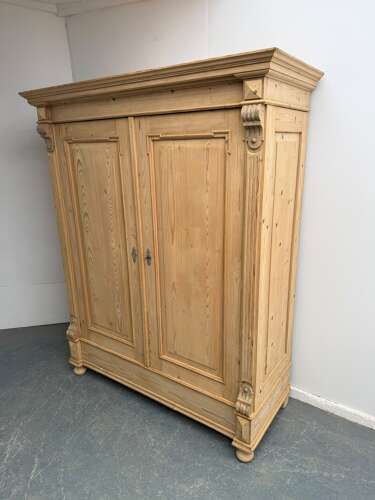
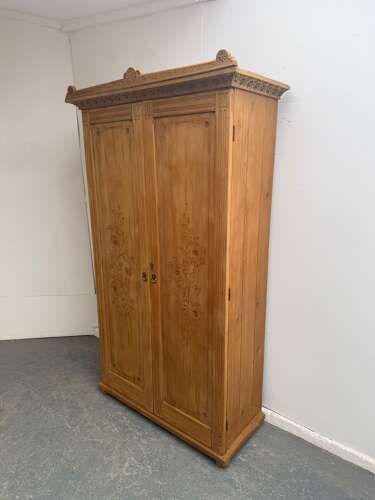
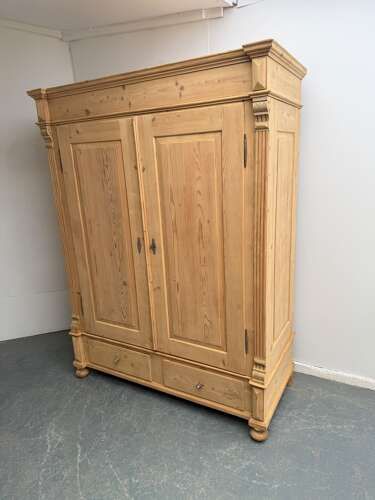
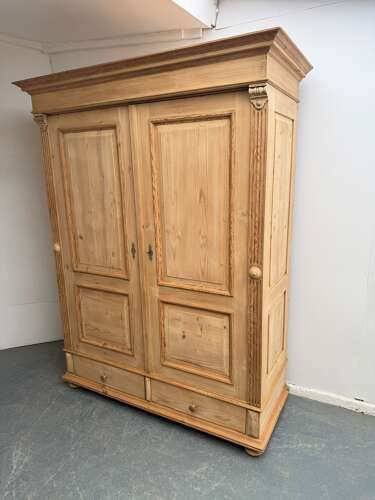
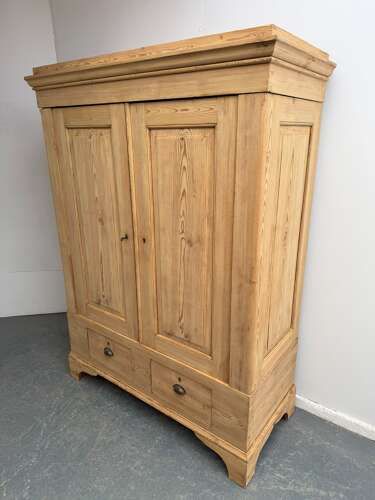
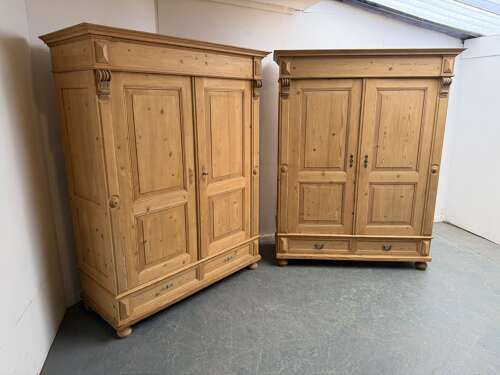
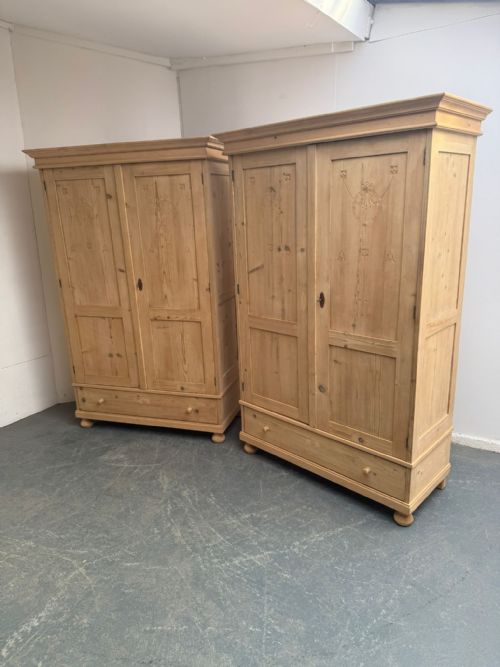
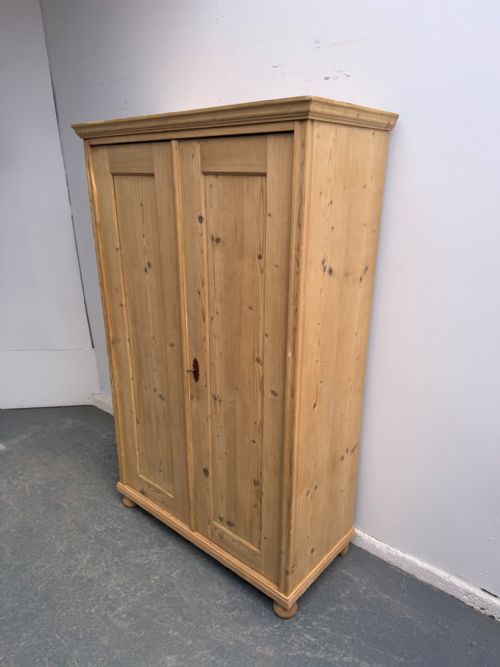
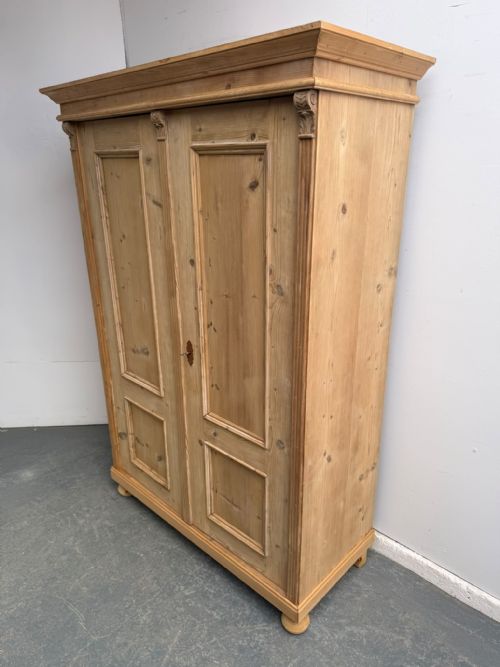
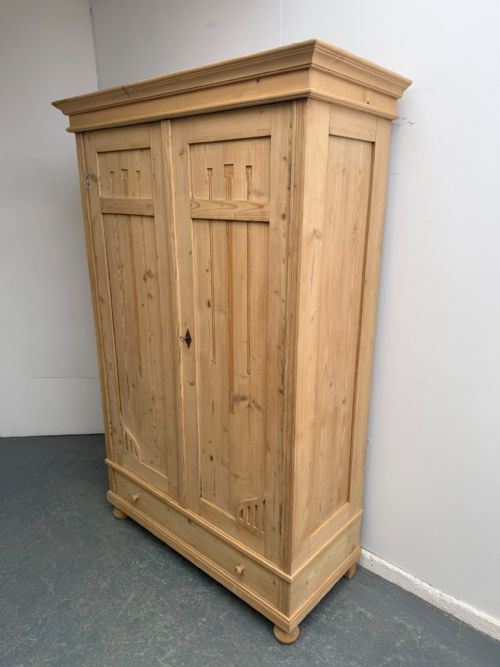
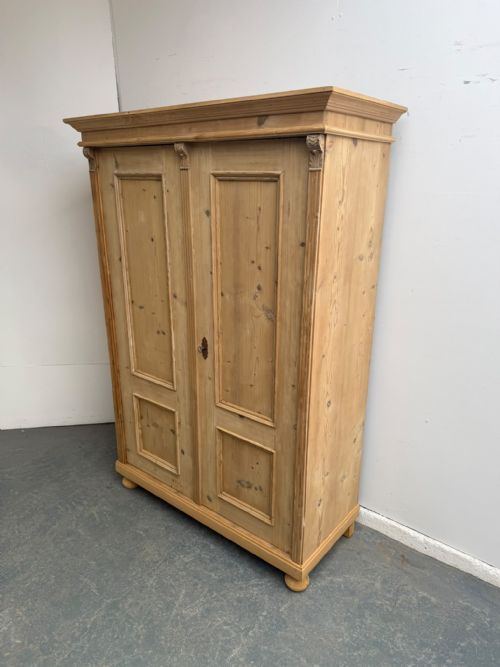
Waxed Pine Wardrobe
A waxed pine wardrobe brings honest domestic storage to a bedroom, combining generous hanging space with the warm sheen of traditional timber finishes.
Identifying a waxed pine wardrobe
A waxed pine wardrobe provides substantial storage through tall single or double doors, often complemented by bottom drawers or interior hanging rails. These pieces range from compact child or hall wardrobes to large multi-piece bedroom furniture.
The selections span distinct periods, featuring Georgian country models, Victorian pieces, and later Arts and Crafts or Art Nouveau examples. Many items originate from English or Hungarian workshops, alongside German and Flemish regional designs.
Buyers encounter various structural formats, including one-piece cupboards and knockdown versions that dismantle for transport. Details such as arched tops, carved panels, and brass or iron hardware define the visual character of these utilitarian cabinets.
Construction and materials
Craftsmen built these wardrobes primarily from solid pine, finished with protective wax to nourish the grain and impart a soft lustre. Iron, brass, and occasional ceramic or glass components appear on handles, hinges, and hanging fittings.
Construction methods vary from fixed one-piece carcases to knockdown designs secured with pegged joints or internal bolts for ease of movement. Surface treatments combine original paint remnants with clear or tinted wax applications.
Retail Price Guide 2026
Typical UK retail prices for waxed pine wardrobe, calculated from the Sellingantiques database of over a million retail prices indexed since 2003. This retail price guide relies exclusively on Sellingantiques data; no external sources or auction records are used, so the figures do not describe the wider market.
Some Hungarian hall wardrobes carry subtle tool marks left by country joiners who worked entirely by natural light.
Assessing quality and craftsmanship
Superior examples demonstrate precise joinery in the door frames and drawer construction, ensuring doors hang square and drawers run smoothly within the carcase. The thickness of the pine boards and the integrity of original backboards distinguish robust cabinetmaking from simpler regional builds.
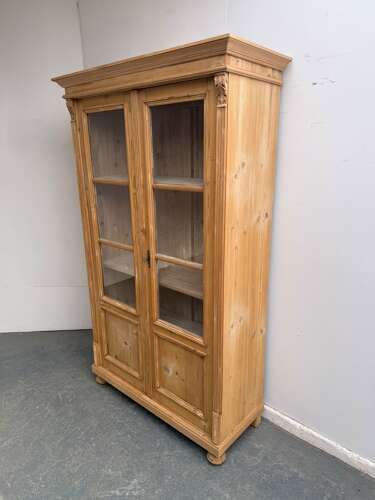
Distinction also lies in the hardware and decorative flourishes, where hand-carved panels, columned pilasters, and original brass or iron mounts elevate the piece above plain utility furniture.
The Waxed Pine Wardrobe Glossary
- Knockdown
- A piece of furniture designed to dismantle into several sections for easier transport and installation.
- Hall wardrobe
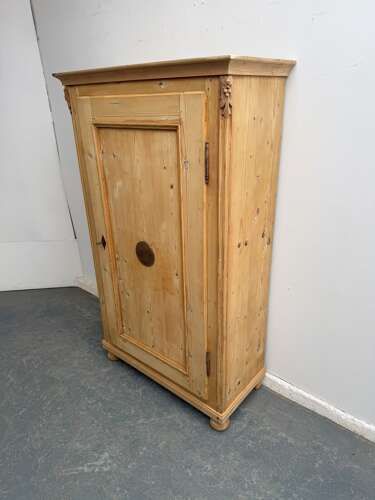
- A shallow wardrobe traditionally used in hallways or smaller rooms for outerwear rather than full bedroom storage.
- Arched top
- A curved upper profile on a door or pelmet, frequently seen in traditional cabinet design.
- Waxed finish
- A protective surface treatment using natural wax to enhance the timber grain and provide a soft sheen.
- Pilaster
- A vertical architectural element resembling a column projecting from the wardrobe side or door frame.
Frequently Asked Questions
Do these wardrobes dismantle for moving?
Many examples are built as knockdown pieces that separate into panels, cornices, and bases to navigate tight stairways and doorways.
Buyers should check individual listings to confirm whether a specific wardrobe is a one-piece carcase or designed to take apart.
How do I care for a waxed pine finish?
Maintenance involves applying a quality bees-wax periodically to feed the timber and preserve the soft sheen against everyday wear.
Avoid placing these wardrobes in direct sunlight or near heat sources to prevent the pine from drying out or splitting.
What is the difference between a hall wardrobe and a regular wardrobe?
Hall wardrobes are typically shallower in depth and narrower, designed to fit into entranceways or compact rooms for coats and daily wear.
Standard bedroom wardrobes offer greater depth and wider double doors to accommodate bulky clothing hangers.
How can I tell a Victorian pine wardrobe from a Georgian one?
Victorian pieces often feature bolder proportions, turned columns, or more elaborate panel carving reflecting nineteenth-century tastes.
Georgian country pieces tend to display simpler lines, subtle proportions, and construction methods tied to regional domestic traditions.