
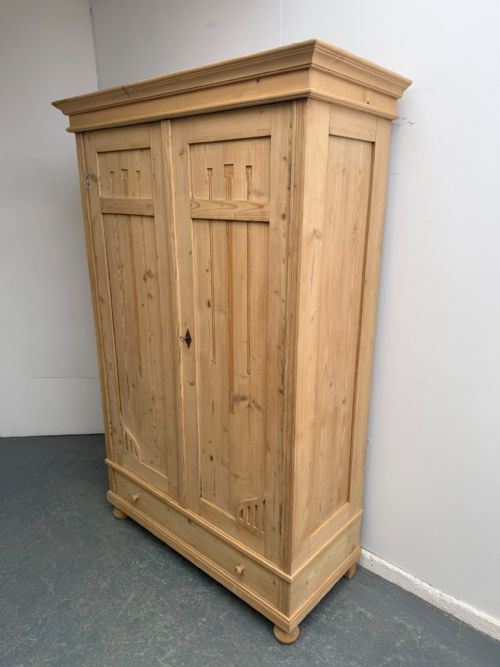
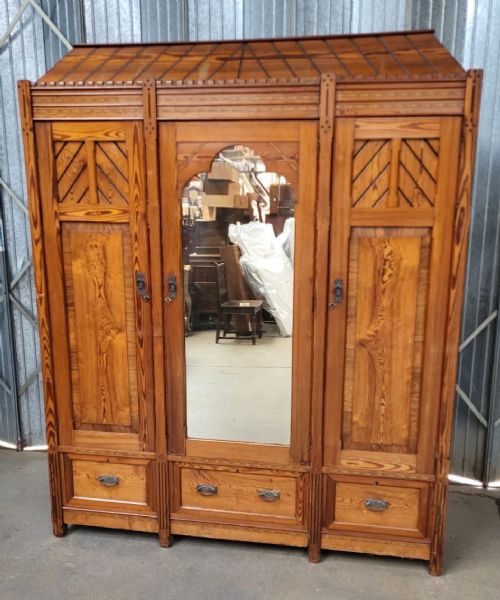
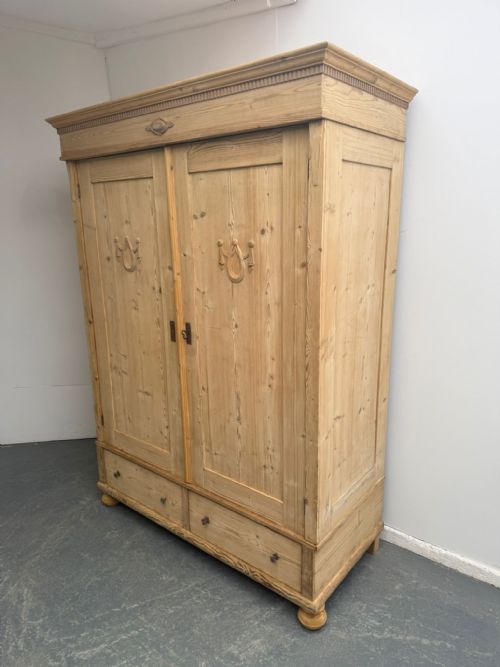

Arts and Crafts Armoire
These arts and crafts armoires offer solid timber construction and practical storage, making them a sturdy addition to any bedroom.
What the pieces are
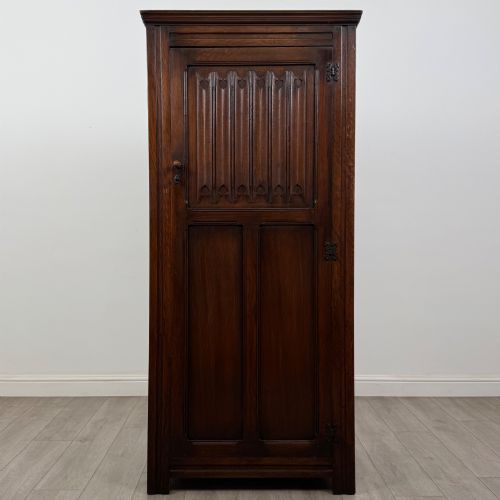
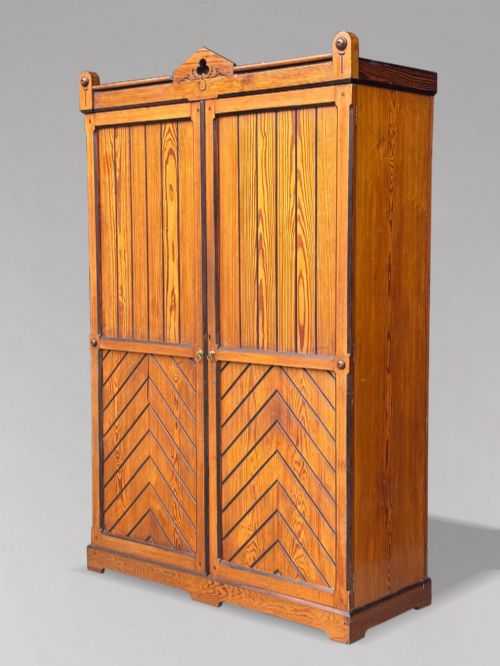
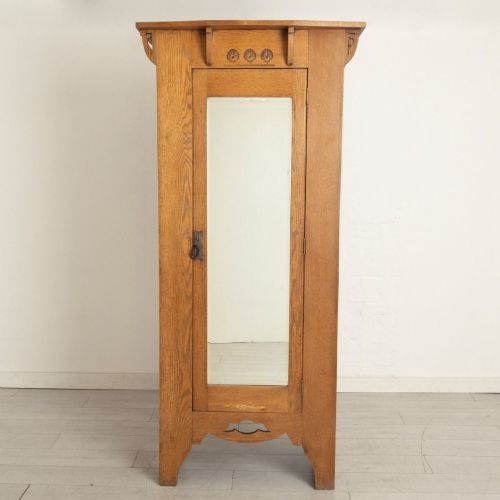
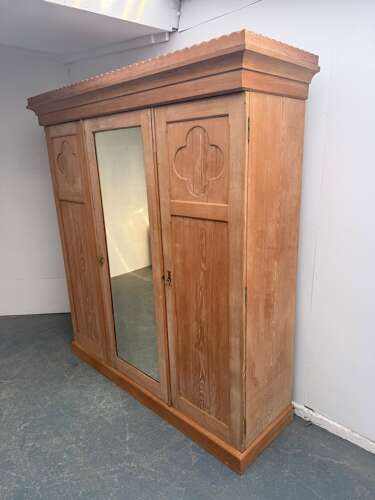
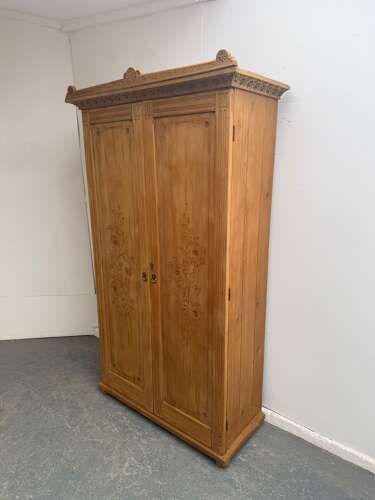
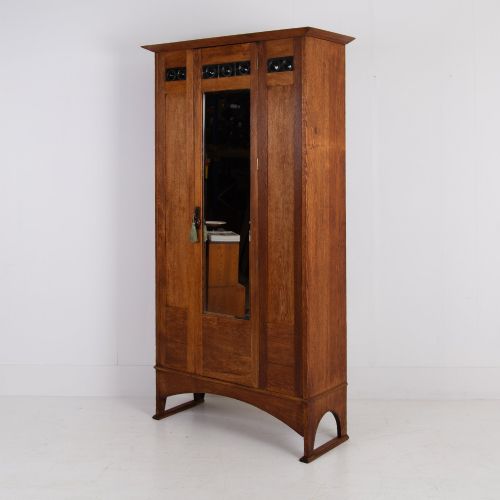
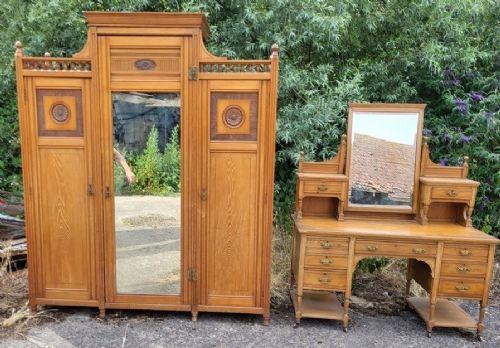
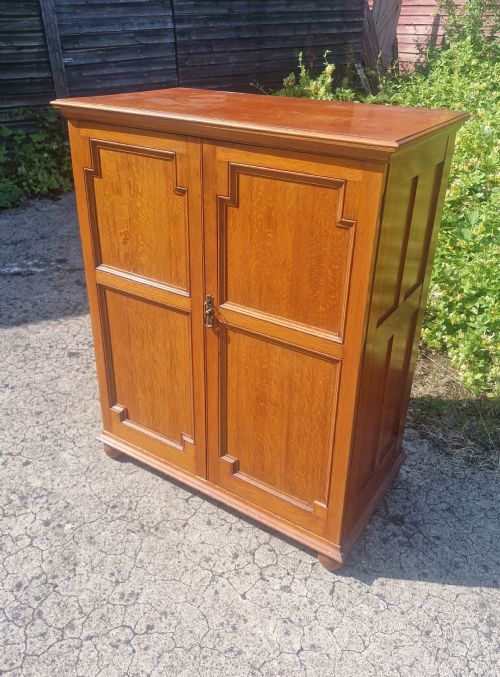
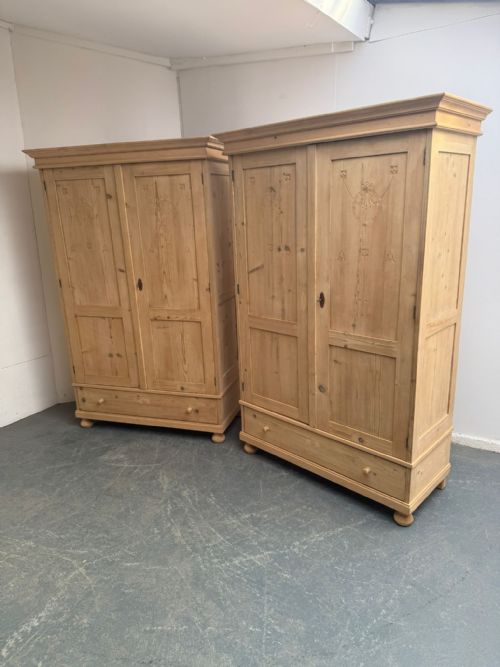
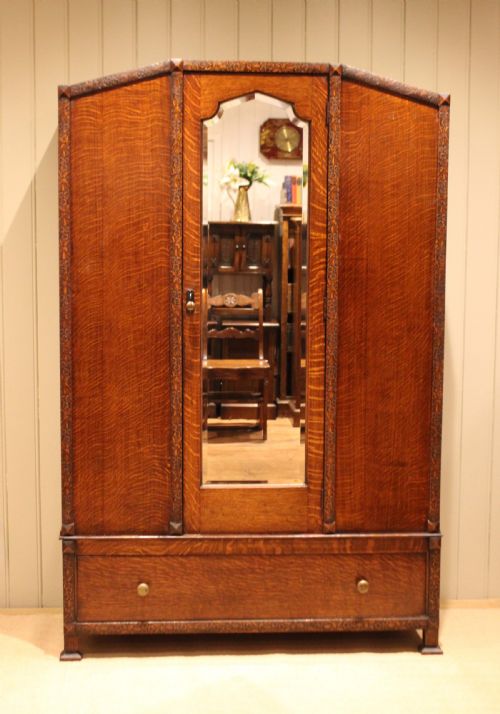
An arts and crafts armoire combines functional bedroom storage with distinctive period design, appearing most frequently as oak or pine wardrobes and hallrobes from the late nineteenth and early twentieth centuries. These pieces encompass various configurations, ranging from single door hall robes to expansive three door compactum wardrobes and combined bedroom suites.
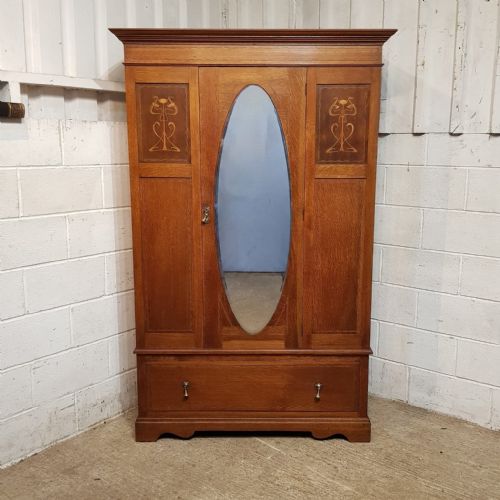
Makers and workshops produced these wardrobes across different regional styles, resulting in British examples alongside continental French pieces. The forms span from compact hall wardrobes designed for smaller spaces to larger combination wardrobes incorporating mirrors and pedestal dressing tables.
How they were made
Craftsmen utilised robust timbers such as oak, ash, walnut, and pine, often leaving the wood in a waxed finish or preparing it to take paint. Construction methods prioritised durability, combining solid timber panels with carved decorative elements.
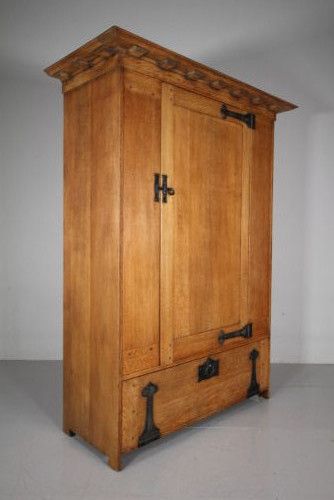
Functional hardware played an essential role in the construction of these pieces, featuring brass fittings, glass panels, and mirrors integrated into the doors. Metal accents complement the natural grain of the wood, aligning with the material honesty promoted by the movement.
Retail Price Guide 2026
Typical UK retail prices for arts and crafts armoire, calculated from the Sellingantiques database of over a million retail prices indexed since 2003. This retail price guide relies exclusively on Sellingantiques data; no external sources or auction records are used, so the figures do not describe the wider market.
Listings feature pieces spanning from 1890 through the Edwardian period up to 1910, constructed in oak, ash, pine, walnut, and mahogany.
What varies in quality
The choice of primary timber establishes the baseline for a piece, with select hardwoods like oak and ash commanding attention alongside alternative finishes in waxed pine and mahogany. Superior examples demonstrate greater ambition in their proportions and scale, such as multi door configurations or matching bedroom suites.
Execution of decorative details separates standard production from finer work, visible in carved elements and the integration of brass hardware. The presence of original mirrored panels and fitted interior compartments further distinguishes the construction standard.
Shapland and Petter·Georges Ernest Nowak
The Arts and Crafts Armoire Glossary
- Armoire
- A tall wardrobe or cupboard used primarily for hanging garments and storing clothing. This term often describes continental European pieces.
- Compactum
- A large, compartmentalised wardrobe offering diverse storage options including hanging space, drawers, and shelving within a single unit.
- Hallrobe
- A narrower wardrobe designed specifically for entrance halls or smaller rooms, intended for coats and everyday outerwear.
- Pedestal dressing table
- A vanity table featuring banks of small drawers supporting a mirror, frequently found paired with matching wardrobes in bedroom suites.
Frequently Asked Questions
What is an arts and crafts armoire?
An arts and crafts armoire is a wooden wardrobe or hallrobe produced during the late nineteenth or early twentieth century, reflecting the design principles of the movement.
These pieces typically feature straightforward construction in oak, pine, ash, or mahogany, often with distinctive brass hardware or carved details.
How do I care for a waxed pine wardrobe?
Waxed pine surfaces require periodic application of traditional furniture wax to maintain the finish and protect the timber from drying out.
Keep these wardrobes away from direct heat sources and strong sunlight to prevent the wood from warping or splitting over time.
What materials were used to build these wardrobes?
Common materials include domestic hardwoods like oak and ash, alongside pine, mahogany, and walnut. Metal hardware in brass and fitted glass or mirrors are also standard.
Some pieces were left in a natural waxed finish while others were prepared to take paint.
Can I use an armoire as a main wardrobe?
Many of these pieces offer substantial hanging space and internal shelving, making them fully functional for daily clothing storage.
Larger three door compactum versions and combination wardrobes provide ample room for modern apparel.