




Georgian Mahogany Cutlery Box
A georgian mahogany cutlery box brings refined dining storage into a room, combining rich timber with practical compartments.
Georgian Mahogany Cutlery Box
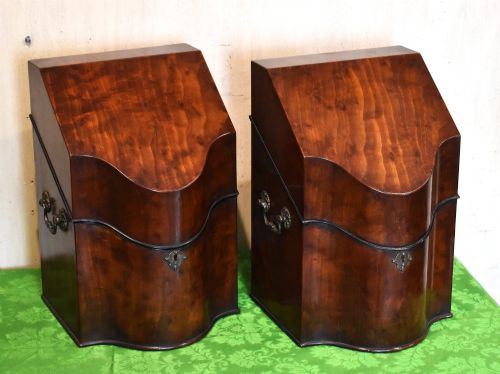
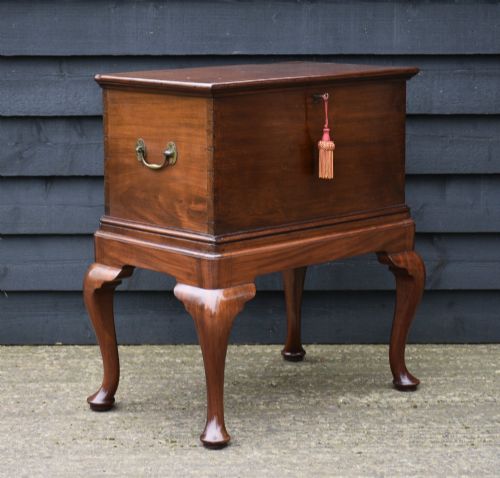
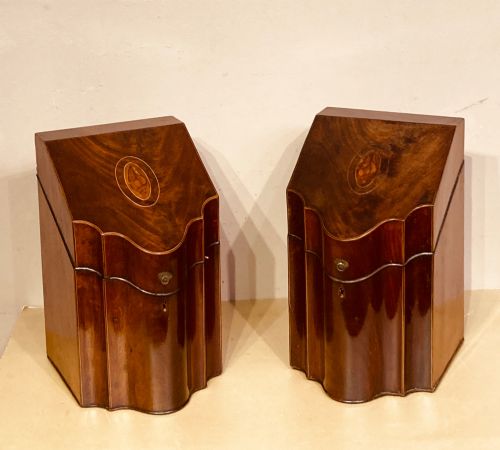
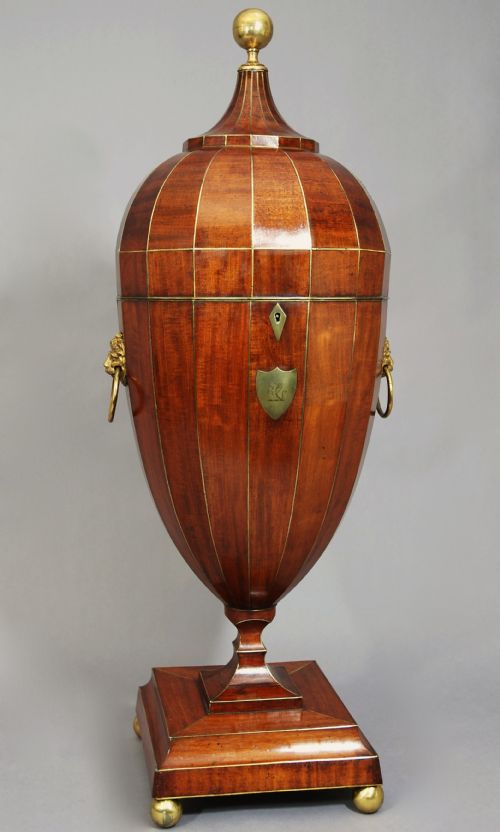
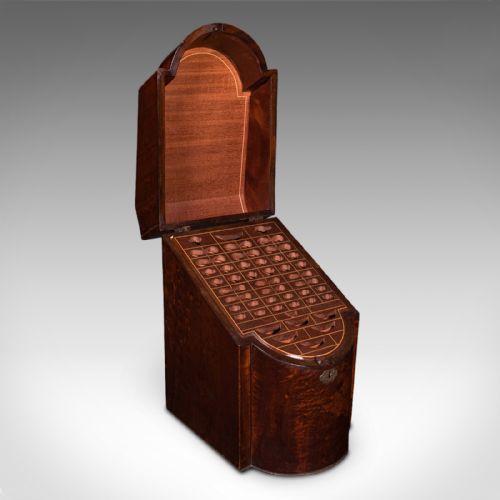
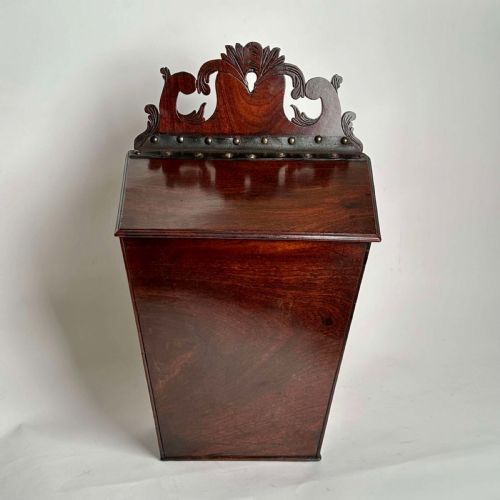
When you search for a georgian mahogany cutlery box, you encounter structured wooden containers designed to hold dining implements securely upon a sideboard. The pieces listed span forms such as knife boxes, serpentine fronts, cutlery urns, and storage chests dating primarily from the eighteenth century and the broader Georgian era.
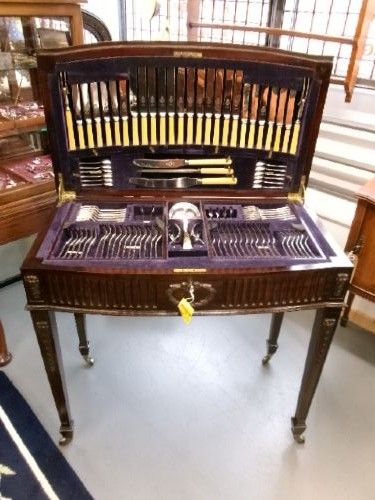
You meet pairs frequently in the evidence, often featuring slanted lids or serpentine shapes designed to house flatware in grand dining settings. Alongside traditional knife boxes, related items like trays, canteens, and letter holders appear, reflecting the versatile storage needs of period households.
The materials centre on rich mahogany, frequently enhanced with boxwood and satinwood inlay, brass handles, and occasionally solid silver mounts. These pieces range from compact single boxes to monumental urns and matched pairs designed for formal dining rooms.
Construction and Materials
Cabinetmakers constructed these pieces using solid and figured mahogany timbers, often selected for strong grain patterns and deep natural warmth. Workshops shaped the wood into serpentine fronts, bow fronts, and vertical urn profiles requiring advanced joinery.
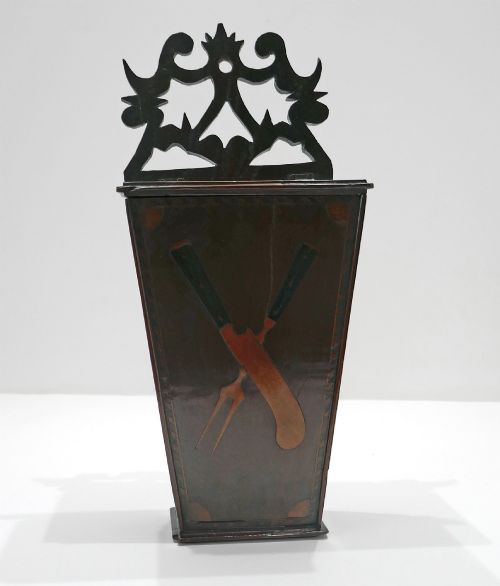
Surface decoration relied on precision woodworking techniques such as contrasting wood inlay using satinwood and boxwood. Craftsmen completed the pieces with cast brass fittings, handles, and occasional silver mounts to secure and adorn the lids.
Georgian Mahogany Cutlery Box Retail Price Guide 2026
Typical asking prices for georgian mahogany cutlery box among the pieces listed under this phrase on Sellingantiques today, from the lower quarter to the upper quarter. They describe what is for sale here now, not the wider market.
Listings for a georgian mahogany cutlery box include forms with brass fittings, boxwood inlay, and serpentine profiles dating from the eighteenth century onward.
Factors of Quality
Quality rests upon the selection of timber figures, where highly figured mahogany and crisp wood inlay distinguish finer examples from plain constructions. The architectural harmony of the serpentine or bow front shape dictates the visual success of the piece.
Original brass fittings and intact internal partitions elevate a box, showing that it retains its functional integrity alongside its decorative presence. The crispness of the joinery and the depth of the timber patina separate standard utility boxes from exceptional examples.
The Georgian Mahogany Cutlery Box Glossary
- Serpentine
- A gently curving front line swelling outward in the centre and curving inward at the sides. This contour requires skilled carpentry and defines finer eighteenth-century boxes.
- Bow front
- A convex curved front profile that projects outward in a smooth arc. It appears frequently on late eighteenth-century storage pieces.
- Cutlery urn
- A tall, vase-shaped lidded vessel used for storing table knives and flatware on sideboards. These grand forms represent the most formal style of dining storage.
- Inlay
- A decorative technique where contrasting woods like satinwood and boxwood are inserted into recesses in the mahogany surface. It creates geometric or floral borders.
- Escutcheon
- A small protective plate surrounding a keyhole, usually cast in brass. It serves both a functional and a decorative purpose on the lid or front.
Georgian Mahogany Cutlery Box: Frequently Asked Questions
How were cutlery boxes used?
These boxes sat upon sideboards in formal dining rooms to keep steel knives, forks, and spoons protected and close at hand during meals. Servants brought them out when setting the table and stored the flatware securely afterwards.
Over time, many of these boxes transitioned to hold stationery, letters, or general household items as dining customs changed and fitted canteens became more common.
Are these boxes always sold in pairs?
Many examples appear as matched or original pairs, reflecting the symmetrical demands of eighteenth-century dining room decoration. Placing matching knife boxes at either end of a sideboard created a balanced display.
Single boxes also appear frequently in the listings, suited for smaller spaces or standalone placement on desks and side tables.
What wood types are used?
Mahogany forms the primary body of these pieces, valued for its durability and deep reddish-brown tone. Figured variations show distinctive grain patterns that catch the light.
Craftsmen incorporated contrasting timbers such as satinwood and boxwood for decorative stringing and inlay work, adding visual detail to the exterior surfaces.
How do I spot a Georgian piece?
Georgian pieces display characteristic proportions, traditional joinery methods, and period timber patination developed over centuries. Details like brass carrying handles and internal dividers align with eighteenth-century dining habits.
Later Victorian reproductions and styles also exist in the records, showing similar forms but distinct secondary woods and construction traits.